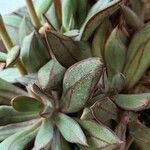
Echeveria nodulosa
Painted Echeveria
Description
Source: leafsnapEcheveria nodulosa is a succulent plant in the Crassulaceae family, native to Mexico. It thrives in rocky areas at high altitudes. The plant forms a rosette shape with fleshy, green leaves adorned with white spots and red edges. These leaves are arranged in a spiral pattern, giving the plant an attractive appearance. During the summer, Echeveria nodulosa produces small, bell-shaped flowers on tall stems. The flowers, which are pink or red, attract pollinators such as bees and butterflies. This plant is easy to care for, requiring minimal watering and tolerating drought conditions well. It prefers well-draining soil and plenty of sunlight, but it can also grow indoors if placed near a sunny window. Echeveria nodulosa is popular for ornamental purposes due to its unique appearance, making it an excellent addition to any garden or indoor space. Its low-maintenance requirements make it an ideal choice for those who want beautiful plants without dedicating too much effort or time to their care.
🌳 The painted echeveria's decorative appearance, marked by red patterns on green leaves, makes it a highly desired plant for ornamental gardening and succulent arrangements. Its visual appeal enhances landscapes and it is becoming popular with garden enthusiasts due to its easy care and striking appearance. Potential uses beyond ornamental purposes have not yet been thoroughly explored.
🎭 ability to keep going through tough, tiring situations
Care Guide
💧 Water Every 7 days
The painted echeveria, a succulent native to arid regions, is drought-tolerant and stores water in its leaves. It thrives in dry climates and requires minimal moisture. Water it only once every 2-3 weeks, ensuring the soil is completely dry between watering sessions. As an evergreen succulent, it is best grown indoors with plenty of light.
How should I water my Painted echeveria?
To properly water Painted echeveria, wait until spring when new leaves begin to grow. Only water when the soil inside the pot is completely dry. You can use tap water or distilled water, but avoid watering from above. Instead, water at the base of the plant by applying water slowly and evenly across the soil surface. This ensures consistent moisture without wetting the above-ground parts of the plant. Keep watering until you see a light stream of excess water draining from the pot's hole.
What should I do if I give too much or too little water to my Painted echeveria plant?
Overwatering a Painted echeveria is more common than underwatering. It is important to avoid overwatering as it can quickly kill the plant. To prevent overwatering, allow the soil to dry completely before watering. Many people mistakenly water the plant improperly, especially during dormancy. In this case, we will focus on how to fix the problem of overwatering. When your Painted echeveria shows signs of overwatering, it is best to remove it from its pot. Inspect the roots and remove any that show signs of rot or moisture-related disease. Some roots can be saved after a simple cleaning. Then, repot the plant in well-draining soil to decrease the chances of future overwatering. Although less likely, underwatering can also occur. In this case, water the plant slightly more frequently, being careful not to overcorrect and overwater it.
How frequently should I water my Painted echeveria plant?
Painted echeveria is a succulent plant that requires less water than most other plants due to its origin in a hot and dry region. To properly care for this plant, it's important to let the soil completely dry out between waterings. This typically takes around two weeks to a month. The frequency of watering depends on the season. During spring and summer, when the plant is in a growing state, it may take 2-3 weeks for the soil to dry out completely. In summer, the soil may dry out even faster. However, when the temperature drops below 60 degrees or exceeds 85 degrees Fahrenheit, the plant goes dormant or semi-dormant and doesn't require watering. Instead, you should reduce or stop watering to keep the soil dry until the temperature becomes suitable for growth again.
How much water does my Painted echeveria plant need?
Painted echeveria does not require frequent watering. This plant can go without water for a while. However, when it's time to water it, make sure to give it a generous amount. There is no specific quantity, but you should continue watering until the soil is completely moist. If you're growing it in a pot, water until you see water coming out of the drainage holes at the bottom. You can also use a pencil or similar object to check the moisture level by inserting it into the soil. If the pencil comes out moist, you've given enough water.
How can I know if I am giving enough water to my Painted echeveria?
In general, overwatering is a bigger problem than underwatering. If you overwater, you will quickly see the leaves lose their shape, become mushy, and change colors. This is very different from the healthy leaves of a living stone, which should be firm and retain their shape. Underwatering is highly unlikely for Painted echeveria, as they can often survive without any water. But if it does happen, you will usually notice the leaves turning different colors and becoming dry.
☀️ Light Full sun
Painted echeveria does best in locations with abundant sunlight during the day, though it can tolerate light shade. Native to regions with plentiful sun, this plant shows stronger growth, vigor, and flowering under those conditions. Excessive sun exposure can cause scorching, while insufficient light results in stretching and faded colors.
How much sunlight does the Painted echeveria need in order to grow?
To ensure the well-being of painted echeveria, it is recommended to provide them with a minimum of 6 hours of sunlight daily, though more is preferred. The exact amount may differ based on the intensity of sunlight and other factors in the environment. However, it is uncommon for painted echeveria to receive an excessive amount of sunlight, as they can tolerate and thrive with up to 14 hours of sunlight each day.
What kind of sunlight does Painted echeveria prefer?
To ensure the best growth for painted echeveria, they require ample bright sunlight. These plants thrive with either direct light or bright indirect sun, as they are classified as full-sun plants. While certain varieties can manage with partial sun exposure, it is generally recommended to provide them with greater amounts of sunlight.
Do I need to shield Painted echeveria from the sun?
Painted echeveria thrives in extremely sunny and hot climates, so it doesn't require sun protection. However, if you want to move your Painted echeveria to a sunnier location, it's important to do so gradually. Plants need time to adjust to new conditions, so begin by exposing the plant to a couple of hours of sun each day and gradually increase the duration. Once the plant has adapted, it can handle full sun without any protection.
What happens if Painted echeveria doesn't receive enough sunlight?
In order for Painted echeveria to grow well, it needs sufficient sunlight. If it doesn't get enough sunlight, you may notice symptoms like pale colors, wilting leaves, and leaves falling off. The plant might also become stretched out and have a limp and sparse look, which is known as etiolation or legginess.
What will happen if the Painted echeveria receives too much sunlight?
Painted echeveria can change colors to red, pink, or orange in response to strong sunlight, so some people intentionally expose these plants to moderate sun stress during the summer. This is not harmful, as they will return to their normal coloring when the light levels decrease from autumn to spring. However, if placed suddenly in direct sunlight, Painted echeveria can get sunburned, which appears as white or brown spots on the top leaves exposed to the most sun. To remedy this, the sunburned plant should be moved to a shadier spot and watered if necessary. Any sun-damaged leaves can be removed, and new growth will eventually replace them.
🌡️ Temperature 20–37.8°C
The painted echeveria prefers temperatures from 68 to 100℉ (20 to 38℃). It comes from regions with warm climates and high humidity but can adjust to drier conditions if watered regularly. In the hottest months, give it shade or move it to a cooler location to prevent damage.
What temperature is best for Painted echeveria?
To provide the best conditions for your Painted echeveria, it is recommended to keep them in a temperature range of 60-75℉ (15-25℃). While they can tolerate slightly higher or lower temperatures, this range will support their optimal growth. If the temperature drops below 40℉ (10℃) or exceeds 95℉ (35℃), the plant will enter a dormant phase and stop growing. Extended periods in temperatures above 95℉ (35℃) can be harmful and may even lead to the plant's demise.
Do different stages of growth for Painted echeveria need different temperatures?
Painted echeveria go through different phases in their life, and the temperatures they need vary for each phase. During the summer, they enter a dormant phase and during the winter they go through a growing phase. To actively grow, painted echeveria require cooler temperatures, but not too cold. If the temperature goes below 40℉(10℃), regardless of the season, they will enter a dormant state. On the other hand, high temperatures can also induce dormancy, which restricts growth and reduces the need for watering. It's important to avoid overwatering during dormancy as it can drown the plant and cause root rot. Make sure to water the soil only when it feels dry.
Here are three suggestions to help keep the temperature of Painted echeveria plants balanced.
Here are some tips to help you care for your Painted echeveria during high temperatures: Tip #1: Don't over-water during summer. Despite what you may think, these plants actually need less water in hot weather. To check if the soil has enough moisture, stick your finger two inches below the surface. If it's dry, you can water it. However, if it's already wet and you continue to water, it can lead to root rot. Tip #2: Don't panic if temperatures fluctuate. While it's best to keep your Painted echeveria within the optimal temperature range, they can still survive if it gets too hot or too cold temporarily. Temperature changes usually cause the plants to enter a dormant state and conserve water. Try to get them back to the correct temperature range as soon as possible, but don't worry if there's a sudden shift. Tip #3: Avoid exposing your Painted echeveria to extreme heat. Prolonged exposure to very high temperatures can cause damage and changes in the appearance of the plant. Initially, the leaves may change color in a pleasing way, turning red, yellow, or orange. However, if the heat continues, the plant will wither and eventually die, putting a stop to its growth.
Does Painted echeveria require different temperatures depending on the season?
Painted echeveria grow actively during winter, but their flowers appear in spring when temperatures are warmer. If you are planting these succulents indoors, their temperature requirements are not greatly affected by the seasons. Instead, it is more important to ensure they receive the right amount of sunlight. In winter, it can be difficult for Painted echeveria to get enough light, while summers may provide too much. Excessive sunlight can harm the leaves and stems, slowing down or stopping their growth completely. For best results, place your Painted echeveria in an area with bright but indirect light.
How can I make sure my Painted echeveria is kept at the right temperature?
To successfully grow Painted echeverias indoors, it's important to keep them in an area with climate control. If you live in a warmer region, an A/C unit can help maintain the right temperature, while a heater is suitable for colder regions. However, ensure that the air from these systems doesn't directly touch the plants. While allowing natural airflow, try to avoid dramatic changes in temperature. Additionally, it's important to provide these plants with adequate but indirect sunlight. Place them in rooms with plenty of window lighting. For outdoor Painted echeverias, controlling the temperature is crucial. Position the plants to receive optimal sunlight, but avoid exposing them to direct sunlight and excessive heat during midday. These echeverias thrive in full sun or partial shade, so it's best to provide them with dappled sunlight that is filtered through a tree, plant, or fabric structure. Too much sunlight can lead to high temperatures, potentially causing dormancy and damage to the plants.
💨 Humidity dry (<40%)
This plant prefers dry conditions, so don't mist it. However, watering it less often can also thrive in higher humidity.
🪴 Soil 6-7
🌱 Fertilizer
Painted echeveria only needs light fertilizer applications once or twice a year during the growing season. Do not fertilize in winter or in summer when the plant is dormant. Use less fertilizer for plants that have been repotted and wait a couple of months after repotting before you start fertilizing. Fertilizing helps maintain healthy growth and encourages flowering.
Why do I have to put fertilizer on my Painted echeveria plant?
Fertilizing Painted echeveria helps add nutrients to the soil, supporting healthy growth. While these plants can store water and nutrients, applying plant food during the growing season is beneficial. Fertilizing also encourages mature specimens to produce blooms.
When should I fertilize my Painted echeveria?
Painted echeveria plants only require a small amount of fertilizer during their growing season. It is recommended to fertilize them 1-2 times a year, specifically in the spring and autumn, while avoiding winter and summer when they are dormant. If you have recently repotted your plant, be cautious about the amount of fertilizer you apply. It is best to wait a few months after repotting before fertilizing.
When is it not a good time to add fertilizer to my Painted echeveria plant?
Painted echeveria, like other plants, goes through a dormancy period. This is the time when you should avoid using fertilizer. The plant stops growing in summer and winter, so it is best to refrain from fertilizing during these seasons. Additionally, it is advisable to hold off on fertilizing for the first few months after repotting in the spring.
What kind of fertilizer should I use for my Painted echeveria?
To properly fertilize Painted echeveria, it is recommended to use a liquid plant food specifically made for succulents and cacti. Dilute the fertilizer with water to half its strength to avoid soil buildup. Apply the fertilizer at the base of the plant and ensure thorough watering, allowing any extra moisture to drain from the container or seep into the ground.
How should I fertilize my Painted echeveria?
When fertilizing Painted echeveria, it is recommended to use liquid plant food as it is easier. However, granules can also be used. It is important to follow the instructions on the packaging and dilute liquid fertilizers to half-strength. Whether you choose granules or liquid plant food, always apply it directly to the soil. After application, cover the granules with a thin layer of soil and water the plant, regardless of the type of plant food used.
🪴 Pot & Repot Every 2 years
When repotting Painted echeveria, choose a pot slightly larger than the current one that provides good drainage. Use a gritty, well-draining succulent or cactus mix. Gently remove the plant from its old pot, brush off excess soil, and plant it at the same depth. Wait a few days before watering to allow any root damage to heal. Repot in spring or fall and place it in a brightly lit location.
✂️ Pruning
To keep your painted echeveria in good shape, prune it in the spring and fall by removing any dense or redundant branches. If you want to propagate your echeveria, cut a sturdy stem with 5-6 leaves. Apply sulfur powder to the cut to prevent infection, and let it heal before planting it in slightly moist soil.
🌿 Propagating
🐛 Diseases & pets
☠️ Toxicity
Good news, pet parents — succulents in the Echeveria genus are safe to grow around pets and humans! In fact, Echeverias are commonly used as decorations on wedding cakes, although organically grown succulents are recommended. Nevertheless, mischievous pets and children should be supervised around Echeverias as although they are non-toxic, consuming them is not recommended.
Characteristics
- Plant Type
- Succulent, Herb
- Life Cycle
- Perennial
- Genus
- Echeveria
- Family
- Crassulaceae
- Hardiness Zone
- 9-12
- Mature Height
- 30 cm to 61 cm
- Mature Spread
- 61 cm to 91 cm
- Leaf Color
- Green, Red
- Leaf Type
- Evergreen
- Flower Color
- Red, Yellow
- Flower Size
- 2.54 cm
- Bloom Time
- Late spring, Early summer, Mid summer
- Planting Time
- Spring, Summer, Autumn
- Harvest Time
- Summer
- Native Area
- Mexico