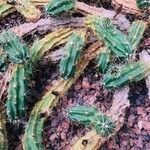
Echinocereus cinerascens
Description
Source: leafsnapEchinocereus Cinerascens (Echinocereus cinerascens) is indigenous to Central Mexico. It is a caespitose, open cactus with masses of vivid pink or purple flowers up to 12 cm in diameter that eventually yield edible and tasty fruits (tastes similar to strawberries just like Echinocereus engelmannii and Echinocereus stramineus do). It varies greatly. It has soft, light green (that becomes red in full sun and in cold weather), highly spiky, semi-erect or decumbent stems. Its greenish-spiky fruits are 2-3 cm in diameter and almost spherical.
Care Guide
💧 Water Every 2-3 weeks
Echinocereus cinerascens is a drought-tolerant plant that requires infrequent watering. When the soil has completely dried out, water the plant thoroughly, making sure any excess water is drained away. During the growing season, which spans from spring to fall, water the plant once or twice a week. In winter, reduce watering to about once a week. It is best to use rainwater or distilled water for this plant.
☀️ Light
🌡️ Temperature 20–41°C
If kept dry before and throughout cold weather, it is said to be fairly frost resistant (hardy to 23 degrees Fahrenheit for short periods). This cactus needs a time of cool rest in the winter to produce an abundance of blossoms. Furthermore, as long as they have enough soil drainage, humidity is usually not a concern for them.
💨 Humidity
🪴 Soil
🌱 Fertilizer
These cacti do not need rich soil, although they will welcome some nourishment. During the summer, feed them a liquid cactus fertilizer according to the package directions. For the rest of the year, there’s no need to fertilize.
🪴 Pot & Repot
✂️ Pruning
Echinocereus cinerascens is known for its robust clumping form and bright blooms. To keep the plant healthy, prune it in early spring by removing any dead stems. This will encourage new growth. Be sure to use sharp tools to prevent infections. Proper pruning improves airflow and reduces the risk of pests. However, be careful not to over-prune, as this can affect the plant's health and shape.
🌿 Propagating
🐛 Diseases & pets
☠️ Toxicity
There has been no record of the toxicity of Echinocereus cinerascens. To be safe, keep it away from children and dogs, since it may cause injury if pierced by the thorns.
Characteristics
- Plant Type
- Cactus
- Life Cycle
- Perennial
- Genus
- Echinocereus
- Family
- Cactaceae
- Bloom Time
- Spring
- Native Area
- North America, Central America