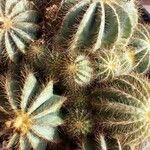
Echinocereus coccineus
سرئوس · California hedgehog · Mexican claret-cup cactus · Golden-rainbow hedgehog · Scarlet hedgehog cactus
Description
Source: leafsnapEchinocereus coccineus, commonly known as the scarlet hedgehog cactus, is a species native to the southwestern United States and northern Mexico. This small, slow-growing cactus typically reaches heights of 6 to 12 inches and can spread up to 2 feet wide. It features cylindrical stems covered in spines and produces bright red or orange flowers in the spring or early summer. Despite the plant's modest size, its flowers are notably large, measuring up to 3 inches across. Echinocereus coccineus thrives in well-draining soil and full sun exposure, though it can tolerate some shade. It is drought-tolerant but benefits from occasional watering during the hot summer months. Popular among collectors for its striking appearance and easy care requirements, the scarlet hedgehog cactus is an excellent addition to rock gardens or xeriscapes. However, it is important to note that collecting this species from the wild is illegal without proper permits, as it has been over-harvested in some areas. Overall, Echinocereus coccineus makes a stunning and low-maintenance addition to any garden, thanks to its beautiful blooms and adaptability.
🌳 Scarlet hedgehog cactus is a keystone species that plays a vital role in desert ecosystems. It blooms vividly, drawing a wide range of pollinators, including often-overlooked hummingbirds and bees. Additionally, its fleshy fruits feed various wildlife, serving as an important food source during times of scarcity. Beyond its ecological role, the scarlet hedgehog cactus also has landscaping potential because of its striking appearance.
🎭 ability to keep going through tough, tiring situations
Care Guide
💧 Water Every 7 days
The scarlet hedgehog cactus is well-suited to arid environments, thriving with very little moisture and exhibiting high drought tolerance. It needs to be watered only once every three weeks and features an extensive root system, making it an excellent choice for xeriscaping and rock gardens.
What do I do if I give my Scarlet hedgehog cactus too much or too little water?
The Scarlet hedgehog cactus, along with other succulents, can withstand long periods without water. However, if you neglect to water it for a month or more, you may notice signs of dehydration such as shriveled, dry, and flat leaves. In severe cases, the leaves may turn brown, crispy, and fall off. To remedy this, submerge the pot in water for 5-10 minutes until the soil feels moist. Remove any dried out leaves to make way for new growth. Overwatering is harmful to the Scarlet hedgehog cactus and can lead to root rot. This occurs when excess moisture allows fungi and bacteria to thrive, inhibiting the roots from absorbing nutrients. Symptoms of overwatering include yellow, swollen, and translucent leaves that may even burst open. If left untreated, the leaves may turn brown or black and easily fall off. To address overwatering, improve air ventilation and adjust the frequency of watering. Saving an overwatered plant can be challenging, but not impossible. Catching the issue early is crucial. Check for root rot by removing the plant from its pot and inspecting the roots. If the roots appear dark brown or black, soft, mushy, or slimy, the plant may not be salvageable. In such cases, propagate new plants from healthy leaves. If only some roots are affected, use sterilized cutting tools to remove unhealthy roots and dip the remaining ones in fungicide. Repot the plant in fresh, well-draining soil for the best chance of recovery.
How frequently do I need to water my Scarlet hedgehog cactus?
To determine how often to water Scarlet hedgehog cactus, you should check the soil first. If the soil is completely dry, it's time to water. You can check the soil by either sticking your finger in the pot or using a moisture meter to test the soil below the surface. If you planted the cactus in a deep pot, you can use a stick or chopstick to do this. If you feel any moisture, wait a few days and check again. In general, most people will need to water the cactus every two weeks in the summer and once a month in the winter. However, there are a few factors that can affect the watering frequency, and the next section will discuss some of these factors.
What things should I think about when giving water to my Scarlet hedgehog cactus?
To properly water your Scarlet hedgehog cactus, there are a few environmental factors to consider. The size of the container and type of soil you use will determine how often and how much water to use. It's recommended to use a container with good drainage to prevent overwatering. Smaller containers hold less moisture, so they should be watered more frequently. On the other hand, larger pots hold more moisture and require less frequent watering. Avoid using an oversized pot, as this can lead to overwatering. When repotting, choose a container that is only slightly larger than the current one, and opt for a shallow container since the cactus has shallow roots. In terms of seasons, the Scarlet hedgehog cactus requires less water in the winter when its growth rate is slower. Evaporation is lower in cooler winter air, so the soil remains moist for longer. Additionally, the climate of your area makes a difference. In humid and rainy regions, you will need to water less often compared to dry and arid areas. Keep in mind that the environmental conditions can also change within the same geographic location due to seasonal variations and indoor heating and cooling. If you've planted the Scarlet hedgehog cactus in the ground, it generally doesn't require additional watering once it has established a root system. However, during prolonged dry periods, occasional watering may be necessary. If the cactus is grown in a container, it can be moved outdoors in the spring and summer when the temperature is suitable, but it should be brought inside when temperatures begin to drop. Potted cacti kept outside will generally require more water than those kept indoors, as they receive more sun exposure even on a shaded porch.
How should I water the Scarlet hedgehog cactus?
To properly water the Scarlet hedgehog cactus, start by thoroughly soaking it and then allowing it to dry out before watering again. This plant can tolerate drought, so it's okay to let it get quite dry before the next watering. It's important to avoid overwatering, so when you do water the cactus, make sure to soak the soil throughout the entire pot by watering all around the rim of the planter. The amount of water needed will depend on the container size and the soil's absorption rate. Once you've watered, let the excess water drain out from the drainage holes and leave it in the saucer for about 20-30 minutes to allow the dry areas of the soil to absorb it. After that, discard any remaining water in the saucer to prevent waterlogging. Another effective watering method is bottom-watering, where you place the pot in a saucer of water and allow the soil to absorb moisture through the drainage holes. You'll know the soil has enough water when the top layer is moist. Although it takes longer than top-watering, bottom-watering ensures even water distribution throughout the pot. Since the Scarlet hedgehog cactus is native to dry habitats with occasional heavy rainfall, you can mimic this by bottom-watering when the soil is completely dry. Lastly, deep soil soaking is more beneficial than frequent light watering for the Scarlet hedgehog cactus.
☀️ Light Full sun
Hailing from desert habitats, the scarlet hedgehog cactus grows best when given consistent, full exposure to the sun each day. It can still do well in partial light, though the best growth and the most vibrant scarlet blooms typically occur under stronger light. However, too much sun can lead to sunburned or bleached cactus skin.
What are the sunlight requirements for a Scarlet Hedgehog Cactus?
The Scarlet Hedgehog Cactus, known botanically as Echinocereus coccineus, thrives in full sun exposure, requiring above 6 hours of sunlight to yield optimal growth and vibrant scarlet blooms. It can survive in partial sun, with about 3-6 hours of sunlight, but its growth and flowering might not be as abundant. Observing how sunlight moves through your garden and choosing locations with a balance of light and shade will support the health and happiness of your plants.
How does the Scarlet Hedgehog Cactus adapt to different lighting conditions?
Originating from desert environments, the Scarlet Hedgehog Cactus performs its best under steady, full exposure to sunlight. While it can still thrive in partial light, the most vigorous growth and the brightest flowers are usually seen in full sun situations. However, it is crucial to monitor the plant as overexposure can lead to sunburn or bleached skin. In less sunny spaces or during winter, artificial lighting such as LED lights can be employed to ensure adequate light, promoting healthier growth. Depending on the plant's sun requirements, the wattage of artificial light should be adjusted accordingly.
What symptoms indicate light deficiency in Scarlet Hedgehog Cactus?
When a Scarlet Hedgehog Cactus is placed in an area with insufficient lighting, it may exhibit several symptoms indicative of light deficiency. These include leggy or sparse growth, characterized by longer spaces between leaves or stems, leading to a thin appearance. Growth may slow down or completely halt, and the plant can develop chlorosis, where leaves lose their green color and turn yellow. Other symptoms like sunscald, leaf curling, wilting, and leaf scorching also signify too much direct light, showing the plant's struggle with the current lighting condition.
What solutions can address light-related issues in Scarlet Hedgehog Cactus?
To address light-related issues in Scarlet Hedgehog Cactus, indoor plants can be gradually moved to sunnier locations to receive at least 6 hours of direct sunlight daily, using south-facing windows for maximum exposure. Using artificial lighting like desk lamps or plant grow lights for at least 8 hours daily can supplement light for large or immobile plants. For outdoor and ground plants, reducing obstructions such as pruning trees to allow more sunlight and transplanting to sunnier locations during the plant's dormant period will help. It's vital to make these adjustments gradually to prevent sunburn and ensure the new growth is healthy.
🌡️ Temperature 15–37.8°C
Scarlet hedgehog cactus thrives in temperatures from 59 to 100 ℉ (15 to 38 ℃), reflecting the conditions of its native habitat in the Rocky Mountains and the high deserts of Western North America. In summer, it should be given some shade to prevent scorching. In winter the plant goes dormant and can tolerate temperatures as low as 23 ℉ (-5 ℃).
What are the ideal temperature conditions for Scarlet hedgehog cactus?
The Scarlet hedgehog cactus, also known as Echinocereus coccineus, thrives in temperatures ranging from 59°F to 100°F (15°C to 38°C), which mirrors the conditions of its native habitat in the Rocky Mountains and high deserts of Western North America. During summer, it's crucial to provide some shade to prevent the plant from scorching. As the winter approaches and the plant enters dormancy, it can withstand temperatures as low as 23°F (-5°C). When cultivated indoors during colder months, it's advised to place the cactus near a south-facing window to maximize sunlight exposure, supplementing with artificial lighting if necessary. Watering should be minimized or ceased entirely when temperatures drop below 59°F (15°C) to prevent root rot, especially for plants kept outdoors.
How should I care for my Scarlet hedgehog cactus in extreme temperatures?
In cases of low temperatures, if there's a forecast below -10°C, the Scarlet hedgehog cactus may become weak, wilt, and be prone to root rot. You should trim off any frost-damaged sections and check the roots for rot, cutting away as necessary. Repropagation can be done through cuttings if the roots are affected. The plant should be moved to a warmer indoor location, preferably near a south-facing window for sufficient sunlight; supplemental lighting can be used if natural light is inadequate. During high temperatures, particularly above 43°C, the plant may stop growing, experience water loss, wilting, and sunburn. You should remove any sunburned or rotten parts and shield the cactus from direct afternoon sunlight until it recovers, halting watering if there's any sign of root rot until new growth appears.
💨 Humidity dry (<40%)
This plant prefers dry conditions, so don't mist it. However, watering it less often can also thrive in higher humidity.
🪴 Soil 6-7
🌱 Fertilizer
For the Scarlet hedgehog cactus, small applications of fertilizer once or twice a year during the growing season are enough. Do not fertilize in winter or in summer when the plant is dormant. Use less fertilizer for plants that have been repotted, and wait a couple of months after repotting before applying feed. Fertilizing helps maintain healthy growth and promotes flowering.
Why should I put fertilizer on my Scarlet hedgehog cactus?
To support healthy growth and encourage blooming, it is beneficial to fertilize Scarlet hedgehog cactus during the growing season. This practice adds necessary nutrients to the growing medium, which is essential despite the cactus's ability to store water and nutrients. Additionally, fertilizing can stimulate mature specimens to produce blooms during the growing season.
When should I fertilize my Scarlet hedgehog cactus for optimal results?
Scarlet hedgehog cactus, like other plants, can benefit from extra nutrients, but it only requires a small amount of fertilizer during the growing season. To avoid over-fertilizing, it is recommended to fertilize the cactus 1-2 times a year. The best times to fertilize are in the spring and autumn, while avoiding the winter and summer when the cactus is dormant. When repotting the cactus, be cautious and reduce the amount of fertilizer used. It's also advisable to wait a couple of months after repotting before applying any fertilizer.
When shouldn't I give my Scarlet hedgehog cactus fertilizer?
The Scarlet hedgehog cactus, like other plants, goes through a dormancy period. This is the time when you should avoid using fertilizer. During both summer and winter, the plant stops growing, so it's best not to apply fertilizer at these times. Additionally, it's recommended to pause fertilizing for the first few months after repotting in the spring.
What kind of plant food should I use for my Scarlet hedgehog cactus?
When fertilizing Scarlet hedgehog cactus, it's recommended to use a liquid plant food specifically made for succulents and cacti. To avoid the fertilizer accumulating in the soil, dilute it with water at a half-strength ratio. Apply the diluted fertilizer to the base of the plant, ensuring that it is watered thoroughly. Make sure any excess moisture drains from the container or seeps into the ground.
How can I feed my Scarlet hedgehog cactus?
When fertilizing Scarlet hedgehog cactus, you have the option to use liquid plant food or granules. If you choose liquid plant food, make sure to dilute it to half-strength following the packaging instructions. Regardless of the type of plant food you use, always apply it to the soil. For granules, cover them with a thin layer of soil and water the plant.
🪴 Pot & Repot 2-3 years
Repot Scarlet hedgehog cactus in spring or summer, selecting a pot slightly larger than the current one with good drainage. Use a well-draining, sandy or gritty cactus mix. Handle it with care to avoid the spikes. Allow the cactus to dry out before repotting to prevent root rot. After repotting, wait for a week before watering to let the roots heal.
✂️ Pruning
The Scarlet hedgehog cactus requires very little pruning. Simply remove any withered flowers and branches to help the plant direct its nutrients toward healthy growth.
🌿 Propagating
🐛 Diseases & pets
☠️ Toxicity
Characteristics
- Plant Type
- Succulent, Herb
- Life Cycle
- Perennial
- Genus
- Echinocereus
- Family
- Cactaceae
- Hardiness Zone
- 8-12
- Mature Height
- 40 cm
- Mature Spread
- 91 cm
- Leaf Color
- Green, Blue
- Leaf Type
- Evergreen
- Flower Color
- Red, Orange, Purple
- Flower Size
- 3.05 cm
- Bloom Time
- Mid spring, Late spring, Early summer
- Planting Time
- Spring, Summer, Autumn
- Harvest Time
- Early summer, Mid summer
- Native Area
- North America, Central America