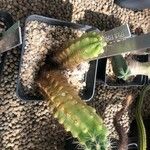
Echinocereus enneacanthus
Banana cactus · Prostrate hedgehog cactus · Purple pitaya · Cob cactus · Strawberry cactus
Description
Source: leafsnapEchinocereus enneacanthus, commonly known as the strawberry cactus, is a species of cactus native to the southwestern United States and northern Mexico. This small, slow-growing plant typically reaches heights of 6 to 12 inches and can spread up to 2 feet wide. Its cylindrical stems are covered in small spines and produce bright pink or red flowers in the spring or early summer. These flowers are followed by edible red fruits that resemble strawberries, giving the plant its common name. The strawberry cactus prefers well-drained soil and full sun exposure but can tolerate some shade. While it is drought-tolerant, it does require occasional watering during hot summer months to thrive. This plant is popular among collectors for its unique appearance and attractive blooms and serves as an important food source for wildlife such as birds and rodents in its native habitat.
🎭 Love, luck. Employed in love spells, its symbolism consists of love, temptation, passion, and rewarded effort.
Care Guide
💧 Water Every 7 days
Pitaya is well-suited to arid climates, demonstrating a high tolerance for drought and requiring minimal moisture. Watering should be done approximately every three weeks. It thrives in well-draining soil, making it ideal for outdoor growth in xeric landscapes, which helps prevent root rot while ensuring proper hydration.
How should I water my Pitaya plant in the best way?
To properly water this species, it is recommended to water from the bottom. This helps the roots absorb water more effectively and allows the nutrients to circulate throughout the plant. Spilling water on the top part can lead to the development of diseases and fungi. If you have an irrigation system, use small sprinklers, especially if you have Pitayaed in your garden. Opt for revolving sprinklers that can be adjusted to change the water delivery patterns as needed. Avoid using sprinklers on windy days. Whether your Pitaya is in a pot or in your garden, it is best to use the soak and dry method. This method ensures that moisture is evenly distributed across the root system, resulting in healthier growth. Some owners may consider installing a built-in drainage system for their succulents. This involves placing layers of porous materials, such as recycled glass or hydro stones, beneath the soil. These layers act as a reservoir for excess water, but it's important not to overwater and pour too much water into these built-in systems.
What should I do if I give too much or too little water to my Pitaya?
You can tell that the Pitaya needs attention when its color starts turning yellow. This could be due to either underwatering or overwatering. If the soil is too wet, it may lead to fungal infections, so it's important to let everything dry out and avoid overwatering. If the plant is getting too much moisture, you might notice symptoms such as browning and dropping. On the other hand, if there's not enough water, you might see yellow tips forming on the stems and branches. When purchasing a Pitaya, it's wise to inquire about its soil drainage. If the topsoil doesn't drain properly, the plant may not receive enough water in the future. Overwatering, particularly if the plant is exposed to excessive rain when planted outside, can cause the Pitaya to die. Using rainwater or distilled water is ideal because the plants don't tolerate high mineral content in their water. If you notice squishy stems, drooping growth, or discolored parts, these are signs of excessive moisture. Allow the species some time to recover and allow the pot to dry. To prevent root rot and excess dripping, it may be beneficial to transfer the plant to a different container. This is particularly important if it's planted outside, where transferring it to a pot during the winter can help with its recovery.
How often should I give water to my Pitaya?
Watering frequency for succulents can vary depending on the season. In the summer and spring, you typically only need to water them once every two to three weeks. However, during the winter and fall, it's best to reduce or avoid watering altogether since these plants become dormant. It's important to let the soil dry completely before watering again. It's better to slightly underwater than to overwater. When potted, deep watering at intervals promotes healthier soil growth. When planted outdoors, avoid watering lightly as this encourages shallow root growth. Instead, wait a few weeks and only water when the surrounding soil is too dry.
How much water does my Pitaya plant need?
To efficiently water this succulent, start by covering the entire pot. Place a saucer at the bottom to ensure the roots receive enough moisture. Once you notice the soil becoming saturated, promptly remove the saucer. The frequency and amount of water needed will depend on the pot's drainage holes and the amount of soil. For potted Pitaya plants, a can of water is usually sufficient. If planting them in the garden or outdoors, take into account the rainwater they receive. Approximately an inch of rainwater should sustain them for a few weeks, so avoid watering during this time. When they are outside, wait until the soil is completely dry before watering them in the morning with about a gallon of water. Sunlight will help evaporate any excess moisture.
Why do I need to water my Pitaya plant?
Watering the Pitaya is essential for the plant to effectively absorb nutrients from the soil. Insufficient moisture can lead to poor health or malnourishment of the Pitaya. It's important to water the plant when you notice signs of thirst. However, be cautious not to overwater, as this can be detrimental. The recommended watering method is the soak and dry method. When the soil becomes excessively dry, soak the plant until the water drips from the bottom of the pot. Then, allow the soil to rest without watering for a few weeks.
☀️ Light Full sun
Pitaya needs as much sunlight as it can get. In its native environment it experiences constant, intense light that supports its healthy development. Different growth stages do not greatly change this requirement for sun. Both too little light and too much exposure can damage the plant's overall health.
What are the sunlight requirements for Pitaya?
Pitaya, or Echinocereus enneacanthus, requires full sun, meaning it should receive above 6 hours of sunlight daily. This ensures the plant's healthy growth, reflecting its natural habitat that is accustomed to continuous, strong illumination. Observing how sunlight moves through your garden helps in choosing spots that offer a perfect balance of light and shade, crucial for the plant's well-being. Over or underexposure to sunlight can adversely affect Pitaya's health.
How does artificial lighting benefit indoor Pitaya plants?
Artificial lighting is paramount for indoor Pitaya plants' optimal growth, especially when natural sunlight is insufficient, like in winter or less sunny spaces. Adequate lighting promotes faster, healthier growth. LED lights, providing specific light wavelengths, are recommended. Full sun plants need 30-50W/sq ft, partial sun plants 20-30W/sq ft, and full shade plants 10-20W/sq ft of artificial light. The light source should be placed 12-36 inches above the plant for 8-12 hours per day, mimicking natural daylight hours.
What are the signs of inadequate lighting in Pitaya?
Pitaya shows various symptoms when exposed to suboptimal lighting: small or irregularly colored new leaves indicate light deficiency, suggesting lack of chlorophyll and nutrients. Spaces between leaves may elongate, causing a leggy, weak appearance. Early leaf drop, halted growth, chlorosis, sunscald, leaf curling, wilting, or leaf scorching are other signs of stress due to poor lighting conditions, whether it's insufficient or excessive sunlight.
What solutions exist for Pitaya experiencing light-related stress?
For indoor Pitaya plants, gradually moving them to sunnier locations or using artificial lighting (like LEDs for at least 8 hours daily) can help. Outdoors, adaptation to increased sunlight should be gradual to avoid sunburn. Removing obstructions or transplanting to sunnier locations can also be effective. Note that parts of the plant already damaged by inadequate light might not recover, but new, healthy growth can be encouraged by improving light exposure.
🌡️ Temperature 20–37.8°C
Pitaya originates from regions with temperatures between 68 and 100°F (20 to 38°C). It prefers warm conditions and thrives in heat. Temperatures should be adjusted as needed during seasonal changes.
What is the native temperature range for Pitaya?
Pitaya, also known by its botanical name Echinocereus enneacanthus, is native to environments with temperatures ranging from 68 to 100°F (20 to 38°C). It is a heat-loving plant that thrives in warmer conditions. As the seasons change, it is important to adjust temperatures accordingly to ensure the plant continues to thrive.
How does Pitaya respond to winter conditions?
During winter, Pitaya gradually stops its growth and enters a dormant state. It is not tolerant of low temperatures and should be kept above 0°C to avoid damage. When outdoor temperatures drop below this point, the plant should be moved indoors for cultivation, preferably near a south-facing window to maximize sunlight exposure. In the absence of sufficient natural light, supplemental lighting can be used. Additionally, when temperatures fall below 20°C, the plant's growth slows, and watering should be minimized or ceased to prevent root rot. For Pitaya grown outdoors, watering should be stopped completely during colder temperatures. To provide extra insulation, a temporary greenhouse can be set up, or the plant can be wrapped with plastic film or fabric.
What are the symptoms of low temperature exposure in Pitaya?
When exposed to low temperatures, Pitaya may become weak, wilt, and be prone to root rot, especially if the temperature falls below -5°C. Initially, there may not be any visible symptoms, but about a week later, the plant will gradually wither. The solution for low temperature exposure includes trimming off the frostbitten areas and checking for root rot. If root rot is present, the rotted roots should be cut off, and the plant can be propagated through cuttings. It is crucial to immediately move the plant to a warmer indoor environment and position it near a south-facing window for ample sunlight. Supplemental lighting can be used if natural light is insufficient.
How does Pitaya react to high temperatures?
Pitaya should ideally be kept below 38°C during the summer. Exposure to temperatures exceeding 43°C can halt the plant's growth and lead to water loss, wilting, and an increased risk of sunburn. To aid recovery from high temperature stress, remove any sunburned or rotten parts of the plant. Protect the Pitaya from direct afternoon sunlight until it shows signs of recovery and new growth. In cases of root rot, watering should be ceased until new roots begin to form.
💨 Humidity
🪴 Soil 6-7
🌱 Fertilizer
For Pitaya, small amounts of fertilizer applied 1–2 times a year during the growing season are sufficient. Avoid fertilizing in winter and summer when the plant is dormant. Cut back on fertilizer for repotted plants and wait a couple of months after repotting before applying feed. Fertilizing supports healthy growth and encourages blooming.
Why should I use fertilizer on my Pitaya?
When growing Pitaya, it is beneficial to fertilize the plant to add nutrients to the soil. While Pitaya does store water and nutrients, applying plant food during the growing season can help promote healthy growth. Additionally, fertilizing can also stimulate mature Pitaya plants to produce blooms during the growing season.
When should I fertilize my Pitaya?
Pitaya plants require a light dose of fertilizer during the growing season, which should be applied 1-2 times a year. It is recommended to fertilize the plant in the spring and autumn, avoiding winter and summer when it is dormant. For repotted plants, you should reduce the amount of fertilizer used, and it is advisable to wait a few months after repotting before applying any fertilizer.
When is the best time to not fertilize my Pitaya plant?
Pitaya, like other plants, has a period of dormancy, which is the time when fertilizer applications should be stopped. During both summer and winter, the plant stops growing, so it is best to avoid applying fertilizer. Additionally, it is recommended to cease fertilizing for the first few months after repotting in the spring.
What kind of fertilizer does my Pitaya plant need?
When fertilizing Pitaya, it is recommended to use a liquid plant food specifically made for succulents and cacti. Dilute the fertilizer by mixing it with an equal amount of water. It is important to avoid an excess buildup of fertilizer in the soil. Apply the diluted fertilizer directly to the base of the plant and be sure to water it thoroughly. This will ensure any excess moisture drains from the container or is absorbed into the ground.
How do I add fertilizer to my Pitaya plant?
When fertilizing Pitaya, it's easier to use liquid plant food, but you can also use granules. Just follow the instructions on the packaging and remember to dilute liquid fertilizers to half-strength. Whether you choose granules or liquid, always apply the plant food to the soil. For granules, cover them with a thin layer of soil and water. Regardless of the type of plant food, this step is important.
🪴 Pot & Repot 2-3 years
Repot your pitaya every 2-3 years in the spring, choosing a slightly larger container to support its root system. After repotting, place the plant in bright, indirect light and water it sparingly to help the roots heal. This will promote optimal health and vibrant blooms.
✂️ Pruning
Pitaya requires minimal pruning. Simply remove any withered flowers and branches to help optimize nutrient allocation for healthy growth.
🌿 Propagating
🐛 Diseases & pets
☠️ Toxicity
Characteristics
- Plant Type
- Shrub
- Life Cycle
- Perennial
- Genus
- Echinocereus
- Family
- Cactaceae
- Hardiness Zone
- 9-11
- Mature Height
- 30 cm to 40 cm
- Mature Spread
- 10 cm
- Leaf Color
- Dark Green
- Leaf Type
- Semi-evergreen
- Flower Color
- Purple, Red, Pink
- Flower Size
- 10.16 cm
- Bloom Time
- Mid spring, Late spring
- Planting Time
- Spring, Summer
- Harvest Time
- Early summer, Mid summer
- Native Area
- North America, Central America