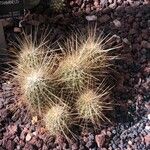
Echinocereus stramineus
Porcupine hedgehog cactus · Spiny strawberry hedgehog · Straw-color hedgehog · Strawberry cactus · Strawberry Hedgehog Cactus
Description
Source: leafsnapEchinocereus stramineus is a species of cactus in which stramineus means made of straw. There are various common names such as strawberry cactus, porcupine hedgehog cactus, straw-color hedgehog, and pitaya. The straw-colored spines make this particular plant distinguished from other Echinocereus. The aged spines may turn to white color and are very fragile.
🎭 Love, luck. Employed in love spells, its symbolism consists of love, temptation, passion, and rewarded effort.
Care Guide
💧 Water Every 3 weeks
The strawberry hedgehog cactus is an evergreen species native to arid regions and is highly drought-tolerant. It needs watering only once every three weeks. This cactus thrives in well-drained soil, similar to its natural habitat, making it ideal for dry climates.
☀️ Light Full sun
The strawberry hedgehog cactus requires abundant sun exposure to thrive, reflecting the arid conditions of its native habitat. Overexposure isn't a problem, while insufficient sunlight can impair its health. Its preference for sun remains unchanged through all growth stages, making it an easy choice for sun-drenched locals.
What are the sunlight requirements for the Strawberry Hedgehog Cactus?
The Strawberry Hedgehog Cactus (Echinocereus stramineus) thrives in full sun conditions, requiring above 6 hours of sunlight daily to grow optimally. It is vital to monitor how sunlight moves through your garden, aiming for spots that ensure a perfect balance of light and shade. Overexposure to sunlight is not a concern for this cactus, which hails from an arid environment, making it an excellent plant for locations that receive extensive sunlight. Lack of sufficient sunlight, however, can impede its vitality. Remember, its need for sunlight remains constant throughout all growth stages.
Can artificial lighting be used for the Strawberry Hedgehog Cactus and how?
Yes, artificial lighting can be a vital solution for the Strawberry Hedgehog Cactus, especially when natural sunlight is insufficient, such as during winter or in less sunny spaces. For optimal growth under artificial lights, LED lights are recommended because they can provide specific wavelengths of light plants need. Full sun plants like the Strawberry Hedgehog Cactus require 30-50W/sq ft of artificial light. Place the light source 12-36 inches above the plant to mimic natural sunlight and ensure the lighting duration mimics natural daylight hours, broadly 8-12 hours per day.
What are the symptoms of light deficiency in Strawberry Hedgehog Cactus, and how can it affect plants?
Strawberry Hedgehog Cactus may exhibit several symptoms when subjected to insufficient lighting, including smaller new leaves, leggy or sparse growth, faster leaf drop, slower or ceased growth, pale or irregularly colored new leaves, chlorosis, sunscald, leaf curling, wilting, and leaf scorching. These symptoms indicate a lack of chlorophyll and essential nutrients, making the plant appear sparse, weak, and unhealthy. Moreover, excessive sunlight can lead to conditions like chlorosis and sunscald, showing the importance of balancing sunlight exposure.
What solutions are available for managing sunlight exposure for Strawberry Hedgehog Cactus?
To manage sunlight exposure for Strawberry Hedgehog Cactus, indoor plants can be gradually moved to sunnier locations each week until they receive at least 6 hours of direct sunlight daily, using a south-facing window for maximum sunlight exposure. If the plant is large or not easily movable, consider using a desk or ceiling lamp for at least 8 hours daily or invest in professional plant grow lights. For outdoor plants, gradually move them to sunnier spots, avoiding sudden changes in light intensity to prevent sunburn. Obstructing elements like trees might require pruning to enhance sunlight exposure. In cases of light deficiency, new growth post-exposure adjustment will be healthy, though parts of the plant that suffered might not recover fully.
🌡️ Temperature 20–37.8°C
Strawberry hedgehog cactus originates from habitats with temperatures between 68 and 100 degrees Fahrenheit (20 to 38 degrees Celsius). During times of extreme heat or cold, adjust its environment to replicate its natural habitat.
What is the native environment of the Strawberry hedgehog cactus?
The Strawberry hedgehog cactus (Echinocereus stramineus) is native to environments where temperatures range from 68 to 100 degrees Fahrenheit (20 to 38 degrees Celsius). It is a heat-loving plant that prefers these conditions to thrive.
How should the Strawberry hedgehog cactus be cared for during extreme heat or cold?
During periods of extreme heat or cold, the Strawberry hedgehog cactus's setting should be adjusted to mimic its natural habitat. During winter or when outdoor temperatures drop below 5°C, it should be moved indoors. A location near a south-facing window is ideal to provide ample sunlight, and supplemental lighting can be used if natural light is insufficient. When temperatures fall below 20°C, the plant's growth slows, and watering should be reduced or stopped to prevent root rot. In cold weather conditions, outdoor cactus watering should be halted, and insulation, such as a temporary greenhouse, plastic film, or fabric wraps, can be beneficial.
What are the symptoms of low temperature stress in Strawberry hedgehog cactus, and how can it be treated?
Strawberry hedgehog cactus is not tolerant of low temperatures and thrives best above 20°C. Exposure to temperatures below 5°C can weaken the plant, leading to wilting and root rot. Mild frost damage might not show immediate symptoms but can cause gradual withering after a week. Treatment involves trimming off frostbitten areas, checking for and removing rotted roots, and propagating through cuttings if necessary. The plant should be moved indoors to a warm location with ample sunlight, utilizing supplemental lighting if needed.
What are the symptoms of high temperature stress in Strawberry hedgehog cactus, and how can it be treated?
During the summer, the Strawberry hedgehog cactus should be kept below 38°C to prevent cessation of growth, water loss, wilting, and susceptibility to sunburn. Temperatures exceeding 43°C can be particularly harmful. Treatment involves removing sunburned and rotten parts, protecting the plant from afternoon sunlight until recovery, and halting watering for plants with root rot until new roots begin to grow.
💨 Humidity
🪴 Soil 6-7
🌱 Fertilizer
For the Strawberry hedgehog cactus, a light application of fertilizer once or twice a year during the growing season is adequate. Do not fertilize in winter, and avoid fertilizing in summer when the plant is dormant. Use less fertilizer for repotted plants and wait a couple of months after repotting before you fertilize. Fertilizing helps maintain healthy growth and promotes blooms.
🪴 Pot & Repot 2-3 years
Repot the strawberry hedgehog cactus every 2 to 3 years during the spring. Choose a pot that fits snugly around the plant. After repotting, use well-draining soil and refrain from watering it for a week. The strawberry hedgehog cactus thrives in bright light and requires minimal care, exhibiting moderate growth.
✂️ Pruning
The strawberry hedgehog cactus needs very little pruning. However, it's important to regularly remove any withered flowers and branches. This helps optimize nutrient allocation, promoting healthy growth.
🌿 Propagating
🐛 Diseases & pets
☠️ Toxicity
Characteristics
- Plant Type
- Succulent
- Life Cycle
- Perennial
- Genus
- Echinocereus
- Family
- Cactaceae
- Hardiness Zone
- 10-11
- Mature Height
- 30 cm
- Mature Spread
- 91 cm
- Leaf Color
- Green
- Leaf Type
- Evergreen
- Flower Color
- Purple, Red, Pink
- Flower Size
- 7.62 cm to 11.43 cm
- Bloom Time
- Mid spring, Late spring
- Planting Time
- Spring, Summer, Autumn
- Harvest Time
- Early summer, Mid summer
- Native Area
- North America, Central America