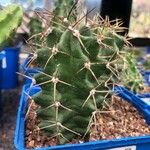
Echinocereus triglochidiatus
Rose's claret-cup cactus · Rose's hedgehog · Robust claret-cup hedgehog · Claret-cup cactus · King-crown cactus
Description
Source: leafsnapEchinocereus triglochidiatus, commonly known as the Claret Cup cactus, is a species native to the southwestern United States and northern Mexico. This small to medium-sized cactus typically grows up to 30 cm tall and 15 cm wide. Its cylindrical stems are covered in small spines and adorned with clusters of bright red flowers that bloom in late spring or early summer. The cup-shaped flowers, which feature numerous petals, can reach up to 5 cm in diameter. The Claret Cup cactus thrives in well-drained soil with full sun exposure but can also tolerate partial shade. It is drought-tolerant, although it does benefit from occasional watering during the growing season. Often used as an ornamental plant, this cactus is popular for its striking appearance, low maintenance requirements, and ability to attract pollinators such as bees and hummingbirds. Moreover, Echinocereus triglochidiatus has been used for medicinal purposes by indigenous peoples for centuries due to its anti-inflammatory properties, which have proven effective in relieving arthritis pain and other ailments. In summary, Echinocereus triglochidiatus is a beautiful desert plant that adds vibrant color and interest to any garden or landscape. It also offers medicinal benefits for those who seek it.
🎭 ability to keep going through tough, tiring situations
Care Guide
💧 Water Every 7 days
The Kingcup Cactus is perfectly adapted to arid environments, boasting a high tolerance for drought. It requires minimal watering—only once every three weeks. This cactus thrives in hot climates, making it an excellent choice for xeriscaping and rock gardens. Its efficient water storage capabilities ensure its survival even with infrequent moisture.
What should I do if I give my Kingcup Cactus too much or too little water?
Kingcup Cactus and other succulents are typically resilient to lack of water, but if you neglect to water them for a month or more, you may find your Kingcup Cactus looking thirsty or damaged. Signs of underwatering include a lackluster and wrinkled appearance, dried up or brown and crispy parts, and completely dried out soil. To revive an underwatered Kingcup Cactus, give it plenty of water by submerging the pot in water for 5-10 minutes until the soil feels moist on the surface. On the other hand, overwatering is dangerous for Kingcup Cactus and can lead to root rot. Root rot occurs when fungi and bacteria thrive in overly wet soil, preventing the roots from absorbing nutrients and water. Symptoms of overwatering include yellow, swollen, and translucent organs that may burst open, turning brown or black and falling off the plant. To address overwatering, improve air ventilation and adjust watering frequency. Check the soil to confirm overwatering as the cause. Saving an overwatered plant is challenging but possible if caught early. Begin by removing the plant from its pot and examining the roots and soil. If root rot is present, roots may be dark brown or black, soft, mushy, or slimy. If most of the roots are affected, it may not be salvageable. However, if only a portion has rot, remove unhealthy roots with a sterilized tool and dip healthy roots in fungicide. Repot the plant in fresh, well-draining soil. While not guaranteed, most succulents can recover and show new growth in the next growing season.
How many times a week should I water my Kingcup Cactus?
To determine how often to water Kingcup Cactus, it is best to check the soil and only water when it is completely dry. This can be done by sticking your finger or a moisture meter in the pot. If the soil feels slightly moist, wait a few days before checking again. Generally, watering Kingcup Cactus every two weeks in summer and once a month in winter is sufficient for most people. However, there are different factors to consider that may affect the frequency of watering. The following section provides a list of considerations to help determine the appropriate watering schedule.
What do I need to think about when watering my Kingcup Cactus?
To properly water your Kingcup Cactus, you need to consider several environmental conditions. These conditions include the size of the container, the type of soil, the temperature, and the humidity. Firstly, the container and soil you use will determine the frequency and amount of water needed. Make sure to choose a container with drainage holes so excess water can escape. A small container will hold less moisture, requiring more frequent watering, while a larger pot will stay wet for longer and need less watering. It's important not to put your Kingcup Cactus in an oversized pot, as this can lead to overwatering. When repotting, choose a container that is just one size larger than the current one. Additionally, a shallow container is better suited for Kingcup Cactus, as it has shallow root systems. The frequency of watering also depends on the season. In winter, when growth slows down and energy usage decreases, the cactus needs less water. The cooler winter air reduces evaporation, keeping the soil wet for longer. On the other hand, during the active growing seasons of spring and autumn, the cactus requires more frequent watering. Climate plays a role as well. If you live in a humid area with plenty of rain, you'll need to water less often compared to living in a dry and arid climate. Keep in mind that even in the same geographic location, conditions can vary with the season and indoor heating or air conditioning. For outdoor planting, once the Kingcup Cactus has established its root system in the ground, it generally doesn't require additional watering beyond what it receives naturally through precipitation and dew. However, during long dry periods, you may need to water it occasionally. If you can only grow the cactus in a container, you can place it outside during the suitable spring and summer temperatures and bring it indoors as temperatures drop. A potted Kingcup Cactus kept outside usually needs more water due to increased sun exposure, even on a shaded porch.
How should I water the Kingcup Cactus?
To effectively water your Kingcup Cactus, start by thoroughly soaking it and then allowing it to dry out before the next watering. This plant can tolerate dry conditions, so it's better to underwater than to overwater. When you do water, make sure to evenly soak the entire pot instead of concentrating the water in one spot. The amount of water needed depends on the size of the container and how well the soil absorbs water. Once you've watered the cactus, let the excess water drain out and allow it to sit in the saucer for about 20-30 minutes to ensure the dry pockets of soil absorb the moisture. After that, discard any remaining water in the saucer to prevent waterlogging. Another effective method is bottom-watering, which involves placing the pot in a saucer of water and allowing the soil to absorb moisture through the drainage holes. The soil has absorbed enough water when the top layer is moist. Although this method takes more time, it ensures an even distribution of water throughout the pot. Since Kingcup Cactus naturally thrives in a dry environment with occasional rainfall, mimicking this by bottom-watering when the soil is fully dry is ideal. Deeply watering the soil is better than lightly watering it frequently for this type of cactus.
☀️ Light Full sun
The kingcup Cactus flourishes with plenty of sun exposure. Sufficient sunlight is vital for its well-being and progress. If the sun exposure is inadequate, it could hinder the cactus's growth and potentially lead to sickness. However, excessive sunlight can also be harmful, resulting in burnt or wilting skin.
What are the sunlight requirements for the Kingcup Cactus?
The Kingcup Cactus (Echinocereus triglochidiatus) requires full sun, meaning it needs above 6 hours of sunlight daily to thrive. It's crucial to observe how sunlight moves through your garden to find spots that offer a perfect balance of light and shade, ensuring the plant's well-being. Both underexposure and overexposure to sunlight can harm the plant, causing stunted growth, wilting, or scorching of the skin.
How can I supplement light for indoor Kingcup Cactus plants?
Indoor Kingcup Cactus plants can benefit from artificial lighting when natural sunlight is insufficient, especially during winter or in less sunny spaces. LED lights are recommended because they can be customized to provide specific wavelengths beneficial for plant growth. For full sun plants, 30-50W/sq ft of artificial light is ideal, 20-30W/sq ft for partial sun plants, and 10-20W/sq ft for full shade plants. The light source should be placed 12-36 inches above the plant, mimicking natural sunlight as closely as possible, and provided for 8-12 hours per day.
What are the symptoms of inadequate light for a Kingcup Cactus?
When a Kingcup Cactus is placed in areas with insufficient light, it may exhibit several symptoms, including developing smaller new leaves, leggy or sparse growth, faster leaf drop, slower or halted growth, and lighter-colored new leaves. Excessive sunlight can cause chlorosis (yellowing of leaves), sunscald (pale or necrotic areas on the plant), leaf curling, wilting, and leaf scorching. These conditions negatively impact the plant's health and ability to photosynthesize.
What solutions exist for light-related issues in Kingcup Cactus?
To address light-related issues in Kingcup Cactus, gradually move plants to sunnier locations until they receive at least 6 hours of direct sunlight daily. Use south-facing windows and keep curtains open during the day. For large or non-movable indoor plants, consider artificial lights, keeping them on for at least 8 hours daily. Outdoors, move plants gradually to avoid sunburn. If sunlight is blocked by trees or other obstacles, prune them or consider transplanting smaller plants to sunnier locations during their dormant periods for better exposure and health.
🌡️ Temperature 15–35°C
Originating from warmer climates, the Kingcup Cactus thrives in temperatures between 59 and 95 °F (15 to 35 ℃). While it is fond of heat, it has the ability to adapt to lower temperatures if necessary. During seasonal shifts, especially in the winter, it's important to cautiously regulate the temperature to avoid causing strain to the plant.
What are the ideal temperature conditions for Kingcup Cactus?
Kingcup Cactus thrives in hot environments, preferring temperature ranges between 59 to 95 °F (15 to 35 °C). While it enjoys warmth, it can adapt to cooler temperatures but requires careful adjustment during seasonal transitions, especially in winter, to avoid stress. Once temperatures drop below -10°C, it's necessary to move the plant indoors to continue its cultivation, ensuring it's placed near a south-facing window for maximum sunlight exposure. As temperatures fall below 15°C, its growth slows, prompting a reduction or cessation in watering to prevent root rot. For outdoor plants, watering should stop entirely in cold temperatures. If possible, provide insulation through a temporary greenhouse or wrapping with plastic film or fabric.
How does Kingcup Cactus react to low temperatures?
Kingcup Cactus is a heat-loving plant that doesn't fare well in low temperatures. It grows best at temperatures above 15°C and must be kept indoors at temperatures above -10°C during winter. Exposure to temperatures below -15°C can weaken the plant, causing it to wilt and become susceptible to root rot. If frost damage occurs, symptoms might not appear immediately, but the plant will gradually wither over a week. To manage frost damage, trim the affected areas and check for root rot. If present, cut off the rotted roots, and propagate the plant from cuttings. Immediately move the plant to a warmer indoor setting near a south-facing window for ample sunlight. Supplemental lighting may be used if natural light is insufficient.
What should I do if my Kingcup Cactus is exposed to high temperatures?
During summer, it's crucial to ensure that Kingcup Cactus remains below 35°C to prevent growth halt, water loss, wilting, and sunburn susceptibility. If temperatures exceed 41°C, remove any sunburned or rotted parts of the plant. Provide shade from the afternoon sun until the plant recovers and resumes growth. In case of root rot, cease watering until new roots develop. The key is to manage the exposure to intense sun and provide the plant with a recovery period.
💨 Humidity
🪴 Soil 6-7
🌱 Fertilizer
For the Kingcup Cactus, applying light quantities of fertilizer 1-2 instances annually during the growth period is adequate. Refrain from fertilizing during the winter and summer seasons when the cactus is dormant. Lower the amount of fertilizer used for plants that have been repotted and allow a few months to pass after repotting before you start fertilizing again. The act of fertilizing aids in robust growth and promotes flowering.
Why should I put fertilizer on my Kingcup Cactus?
Fertilizing Kingcup Cactus is important for adding nutrients to the growing medium. While it does store water and nutrients, applying plant food during the growing season promotes healthy growth. Fertilizing can also stimulate mature specimens to produce blooms when it's the growing season.
When should I fertilize my Kingcup Cactus?
The Kingcup Cactus only requires a small amount of fertilizer during the growing season, around 1-2 times a year. It's best to fertilize in the spring and autumn, avoiding the winter and summer when the cactus is dormant. If you recently repotted your plant, be cautious with the amount of fertilizer used and wait a couple of months before applying any.
When should I not give fertilizer to my Kingcup Cactus?
Kingcup Cactus, like other plants, goes through a dormancy period. During this time, it's best to avoid using fertilizer. The plant stops growing in the summer and winter, so that's when you should refrain from applying fertilizer. Additionally, it's recommended to skip fertilizing for the first few months after repotting in the spring.
What kind of plant food does my Kingcup Cactus need?
When fertilizing Kingcup Cactus, it's recommended to use a liquid plant food made specifically for succulents and cacti. Dilute the fertilizer by mixing it with water to half-strength to prevent it from accumulating in the soil. Apply the fertilizer to the base of the plant and make sure to water it thoroughly, ensuring that any extra moisture drains from the container or seeps into the ground.
How should I add fertilizer to my Kingcup Cactus?
When fertilizing Kingcup Cactus, it's simpler to use liquid plant food, but you can also choose granules. Follow the instructions on the package and dilute liquid fertilizers to half-strength. Whether you're using granules or liquid plant food, apply it to the soil and cover granules with a thin layer of soil. Don't forget to water, regardless of the type of plant food used.
🪴 Pot & Repot 2-3 years
The Kingcup Cactus is a bushy plant that should be repotted every 2 to 3 years during the spring. When repotting, choose a slightly larger pot that provides good drainage to prevent excess water retention. After the cactus is settled into its new pot, make sure it receives plenty of bright light and minimal water. This will help it recover and avoid root rot.
✂️ Pruning
The Kingcup Cactus requires very little pruning. To encourage healthy growth, concentrate on removing any withered flowers and branches, which helps the plant direct nutrients where they are needed most.
🌿 Propagating
🐛 Diseases & pets
☠️ Toxicity
Characteristics
- Plant Type
- Succulent
- Life Cycle
- Perennial
- Genus
- Echinocereus
- Family
- Cactaceae
- Hardiness Zone
- 7-10
- Mature Height
- 25 cm
- Mature Spread
- 15 cm
- Leaf Color
- Bronze
- Leaf Type
- Evergreen
- Flower Color
- Red
- Flower Size
- 7.62 cm to 8.89 cm
- Bloom Time
- Mid spring, Late spring
- Planting Time
- Spring, Summer, Autumn
- Harvest Time
- Early summer, Mid summer
- Native Area
- North America, Central America