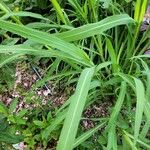
Echinochloa crus-galli
سوروف · Barnyardgrass · Barnyard Millet · Cocksfoot Grass · Cockshin Grass
Description
Source: leafsnapEchinochloa crus-galli is a type of wild grass originating from tropical Asia that was formerly classified as a type of panicum grass. It is commonly known as cockspur (or cockspur grass), barnyard millet, Japanese millet, water grass, common barnyard grass, or simply "barnyard grass" (which may refer to any species of Echinochloa or the genus as a whole however). This plant can grow to 60" (1.5 m) in height and has long, flat leaves which are often purplish at the base. Most stems are upright, but some will spread out over the ground. Stems are flattened at the base. The seed heads are a distinctive feature, often purplish, with large millet-like seeds in crowded spikelets. Considered one of the world's worst weeds, it reduces crop yields and causes forage crops to fail by removing up to 80% of the available soil nitrogen. It acts as a host for several mosaic virus diseases. Heavy infestations can interfere with mechanical harvesting. Individual plants can produce up to 40,000 seeds per year. Water, birds, insects, machinery, and animal feet disperse it, but contaminated seed is probably the most common dispersal method.
🌳 Although commonly seen as a bothersome weed, barnyard grass demonstrates valuable traits in its toughness and adaptability. Eaten as "Wild Primitive Rice" in East Asia, particularly in Laos, barnyard grass overcomes its weedy origins to be an important food crop. Its hardiness makes it a promising option for bioenergy research, and it can also be used in alcohol production. In addition, barnyard grass provides habitat for insects such as barnyard moths, aiding eco-friendly pest management.
Care Guide
💧 Water
Barnyard grass thrives in moist environments and prefers consistent moisture, although it can tolerate occasional droughts. To support its growth, it should be watered weekly. This annual grass does well outdoors during the growing season, with its water needs aligning with its life cycle.
What if I give too much or too little water to my Barnyard grass?
Proper watering is essential for the health and performance of this beautiful ornamental grass. In the ground, watering problems can be addressed, but in a container, too much or too little water can quickly kill Barnyard grass. Insufficient water can cause the grass to stop growing, while overwatering can lead to yellow leaves with brown tips. Underwatering may result in drooping leaves, weak seed head production, and browned leaves. If you suspect your Barnyard grass has watering issues, the first step is to determine if it is receiving too much or too little water. In the case of overwatering, stop watering immediately and wait for the heavy soil to dry out, which may take weeks. Once new growth appears, test the soil moisture and decide if more water is needed. Conversely, if the grass is receiving too little water, simply give it a deep drink and see if it shows improvement. Always remember that deep watering is better than frequent shallow waterings because it encourages the growth of deep roots, making the grass more drought resistant and less prone to watering-related problems.
How many times a week should I water my Barnyard grass?
The watering needs of Barnyard grass depend on where it is planted. Generally, you should water this grass every week. In hot climates, watering once or twice a week may be necessary during the summer. In moderate climates, watering once every seven days or more may be enough. Grass in containers generally need more frequent watering than grasses in the ground. However, the location also matters for Barnyard grass, as shaded grasses need less frequent watering compared to in-ground grasses. To determine when to water, there are several cues you can look for. Checking the soil moisture level by pressing your finger a couple of inches into the soil is one way. For potted grass, you can also weigh the grass or feel the weight of the pot to determine if it's light from lack of water. Additionally, if the blades of the grass appear folded along their centers and thinner than usual, it is an indication that the roots lack sufficient water. Despite its drought tolerance, regular and deep waterings will result in a beautiful color for the grass. In its natural habitat of open scrubland, Barnyard grass is exposed to extreme heat, bright sun, and intermittent rain. Although it is drought resistant, this grass still requires care and attention. Gardeners agree that consistent watering helps Barnyard grass thrive, even though it can handle harsh and dry conditions. When first planted, Barnyard grass needs more frequent watering until it establishes deep roots. For potted Barnyard grass, the soil can dry out quickly, especially if the pot is in hot, direct sun for most of the day. Testing the soil every 3 to 4 days and watering only when it feels dry is recommended. In-ground Barnyard grass generally needs less watering, but this depends on the type of soil it is grown in. Heavy clay soil may feel dry at the surface but retains moisture below ground, while sandy soils that drain quickly will require more frequent watering.
What things should I watch out for when watering my Barnyard grass at different times of the year, in different climates, or during different stages of growth?
To determine if you're watering enough, pay attention to how fast your grass is growing. During the hottest months, barnyard grass can double in size within a year. If the weather is hot but the grass isn't growing vigorously, you might need to adjust your watering schedule. In winter, you may be able to water just once a month, but still check the soil for moisture. During the warmest months when the grass is actively growing, it will require more water. However, during winter and cooler months, the water needs will be much lower. Remember, it's important to let the soil dry out completely before watering barnyard grass.
☀️ Light Full sun
Barnyard grass grows best with abundant sunlight. It can also tolerate lower-light conditions, including fairly dark environments. The plant originated in an environment largely exposed to sunlight, which supports its growth. Excessive or insufficient light can interfere with its development.
What are the sunlight requirements for barnyard grass?
Barnyard grass thrives under full sun, requiring more than 6 hours of sunlight daily. It can also grow in partial sun to full shade conditions, which means about 3-6 hours of sunlight. It's crucial to watch how sunlight moves through your garden to pick locations that offer the ideal light balance for your plants, ensuring their success.
What are the essentials for optimal growth of barnyard grass?
Optimal growth of barnyard grass is seen under ample sunlight, indicative of its origin in sunny habitats. Although it can survive in lower light or darker conditions, its development might be hindered if the light is too scarce or too abundant. In such cases, artificial lighting can be an essential supplement, especially indoors where natural light may be insufficient. Indoor plants benefit significantly from the proper type of artificial light, such as LEDs, which should be tailored to the plant's specific light needs, including the amount of wattage per square foot and the duration of exposure.
What are common symptoms of inadequate light in barnyard grass?
When barnyard grass is grown indoors or under insufficient light, several symptoms can manifest, including smaller new leaves, leggy or sparse growth, faster leaf drop, slower or no new growth, and lighter-colored new leaves. Other symptoms like chlorosis, sunscald, leaf curling, wilting, and leaf scorching indicate either insufficient or excessive sunlight exposure, affecting the plant's ability to photosynthesize and maintain overall health.
What solutions can help overcome light deficiency in barnyard grass?
To combat light deficiency in barnyard grass, gradually moving the plant to a sunnier location to ensure at least 6 hours of direct sunlight daily is essential, especially near a south-facing window. If moving the plant is not feasible, consider artificial lighting such as desk or ceiling lamps, or professional grow lights for at least 8 hours a day. Outdoors, it's important to introduce the plant to sunnier spots gradually to prevent sunburn. Minimizing obstructions by pruning or relocating the plant can also increase sunlight exposure. Note that parts of the plant damaged by poor light may not recover, but new growth should be healthy with improved light conditions.
🌡️ Temperature 5–35°C
Barnyard grass is native to areas with temperatures between 68 and 95 °F (20 to 35 ℃). It prefers the upper end of that range. In seasons with significant temperature variation, adjustments should be made accordingly.
What is the native temperature range for Barnyard grass?
Barnyard grass is native to regions where temperatures fluctuate between 68 to 95 °F (20 to 35 °C), thriving best at the higher end of these temperatures. It's crucial to adjust care routines accordingly during seasons with significant temperature variations to accommodate its preference for warmer climates.
Is Barnyard grass resistant to cold temperatures?
Yes, Barnyard grass has strong cold resistance and does not generally require special frost protection measures during winter. However, if temperatures are anticipated to drop below -25°C, taking steps to protect the plant is important. This includes covering the plant with insulating materials such as soil or straw and ensuring the soil around it is moist prior to the first freeze, which helps prevent drought and water scarcity during the colder months.
How does Barnyard grass react to low temperatures?
Barnyard grass is cold-tolerant, preferring temperatures above 20°C and requiring protection to ensure it remains above 0°C during winter. When exposed to temperatures below -25°C, there might not be noticeable changes immediately, but it can lead to decreased sprouting or lack of sprouting in spring. To manage this, remove any parts of the plant that have failed to sprout when spring arrives.
What should be done if Barnyard grass is exposed to high temperatures?
To protect Barnyard grass from high temperatures, especially above 35°C, it's crucial to prevent the plant from experiencing stress due to excessive heat. Symptoms of stress include leaves becoming lighter, curling, becoming prone to sunburn, or in severe cases, the plant wilting and drying out. Trim away damaged parts of the plant, relocate it to a shaded area or use shade cloth to protect it from intense midday and afternoon sun, and water it during cooler morning and evening hours to maintain soil moisture.
What is the botanical name of Barnyard grass?
The botanical name of Barnyard grass is Echinochloa crus-galli.
💨 Humidity
🪴 Soil 5-7
🌱 Fertilizer
🪴 Pot & Repot
✂️ Pruning
🌿 Propagating
🐛 Diseases & pets
☠️ Toxicity
Characteristics
- Plant Type
- Grass
- Life Cycle
- Annual
- Genus
- Echinochloa
- Family
- Poaceae
- Hardiness Zone
- 5-9
- Mature Height
- 0.3 m to 1.83 m
- Mature Spread
- 20 cm
- Leaf Color
- Green, Blue, Purple
- Leaf Type
- Deciduous
- Flower Color
- Green
- Flower Size
- 10.16 cm to 20.32 cm
- Bloom Time
- Early summer, Mid summer
- Planting Time
- Spring, Summer, Autumn
- Harvest Time
- Mid summer, Late summer
- Native Area
- Sri Lanka, Libya, Burkina Faso, Turkey, Slovakia, Madagascar, Montenegro, Pakistan, Slovenia, Morocco, Croatia, Uganda, Tanzania, Belarus, Germany, Koppen, Romania, Latvia, Belgium, Portugal, Netherlands, Saudi Arabia, Tunisia, Philippines, Cyprus, Bulgaria, Laos, Ukraine, Lebanon, Afghanistan, Syria, Kyrgyzstan, Kazakhstan, Japan, Mongolia, Eswatini, Iran, Azerbaijan, Lesotho, Egypt, Malaysia, Austria, Yemen, Uzbekistan, Russia, Iraq, Oman, South Korea, Qatar, Botswana, France, Nepal, Tajikistan, Czech Republic, Sudan, Armenia, Poland, Greece, Serbia, Lithuania, Spain, Switzerland, Vietnam, Myanmar, Bhutan, Singapore, Albania, Algeria, Hungary, Turkmenistan