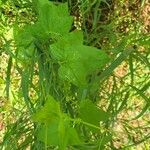
Echinocystis lobata
Prickly-Cucumber · Wild Balsam-apple · Wild Balsamapple · Wild Cucumber · Wild Mock-cucumber
Description
Source: leafsnapEchinocystis is a monotypic genus in the gourd family, Cucurbitaceae. The sole species is E. lobata, commonly called wild cucumber, prickly cucumber or bur cucumber. It is an annual, sprawling plant that is native to North America.
🌳 Wild cucumber has distinct uses beyond being seen simply as a clingy vine. Its rapidly growing foliage can outcompete weeds, possibly functioning as an eco-friendly weed suppressant. The plant’s hollow form can provide habitat for insects and act as a natural insect trap. Recent research suggests wild cucumber has potential for phytoextraction, absorbing heavy metals from contaminated soils and thus contributing to bio-remediation.
🎭 Purity, Restoration, Fruitfulness
Care Guide
💧 Water Twice per week
Wild cucumber flourishes in environments that resemble its native wetlands, where moisture is constant. It prefers consistent hydration and can withstand only brief periods of drought. To keep the plant properly hydrated, water it twice a week. When grown outdoors near streams, the natural humidity enhances its growth, especially during its active season.
How should I water my Wild cucumber plant?
To properly water the Wild cucumber, it is recommended to use filtered water at room temperature. Tap water may contain harmful particles, so filtered water is preferable. It is important to use water that is at room temperature or slightly warmer because the Wild cucumber is used to warm climates and cold water can be a shock to its system. Additionally, avoid watering the plant from above as this may cause problems with its foliage. Instead, gently pour the filtered room temperature water directly onto the soil until it is completely saturated. This method of watering benefits the plant by moisturizing the roots and promoting their spread throughout the soil to absorb necessary nutrients.
What should I do if I give my Wild cucumber too much or too little water?
Overwatering is a more common issue than underwatering for the health of your Wild cucumber. When this species receives too much water, its stems and leaves may wilt and turn yellow. Prolonged overwatering can also lead to diseases like root rot, mold, and mildew, which can be fatal to your plant. Underwatering is less common due to the plant's decent drought tolerance, but it is still a possibility. Signs of underwatering include brittle and brown leaves. It is important to recognize the signs of overwatering early to prevent irreversible damage. If you notice these signs, reduce your watering schedule immediately. Check the quality of the soil, and if it drains poorly, replace it with well-draining potting mix. If your Wild cucumber is not receiving enough water, simply water more regularly until the signs of underwatering disappear.
How much do I need to water my Wild cucumber?
If your Wild cucumber plant is in a pot, the most precise way to determine if it needs water is to check the soil moisture by inserting your finger into the soil. If the top two to three inches of soil feel dry, it is time to water it. If you are growing your Wild cucumber outdoors in the ground, you can use a similar method to test the soil moisture. Once again, if the first few inches of soil are dry, it is time to add water. Typically, during the spring and early fall, watering your Wild cucumber once a week using this method will be sufficient. However, during extremely hot weather, you may need to increase your watering frequency to two or more times per week. It is worth noting that mature and well-established Wild cucumber plants have a remarkable ability to withstand drought conditions.
How much water does my Wild cucumber require?
When watering your Wild cucumber, make sure to give it plenty of water. Wait until the first two to three inches of soil are dry, and then water the plant thoroughly, making sure the soil is completely soaked. Add enough water so that excess water drains out of the pot through the drainage holes. If you don't see excess water draining, you may not have given enough water. However, be careful not to let water accumulate inside the soil, as this can harm the plant. Similarly, if water doesn't drain properly, it may indicate poorly draining soil, which is bad for the plant's health. If the plant is outside, 1 inch of rain per week will be enough.
How do I give water to my Wild cucumber as it grows?
The water needs of the Wild cucumber vary depending on its growth stages. In the beginning years and when transplanting, more water is needed because the plant focuses on developing new roots to support future growth. These roots function better with extra moisture. As the plant matures, it requires less water. Additionally, during the bloom period, when flowers are developing, the Wild cucumber may need additional water to meet the increased moisture demand.
☀️ Light Full sun
Wild cucumber does best with plenty of sunlight, though it can cope in places with intermittent light. Its native habitat, largely open areas, influenced its preference for strong sun. At every stage of growth it benefits from steady light. Too little sunlight can slow its growth, while too much can lead to drying out.
What are the sun requirements for wild cucumber (Echinocystis lobata)?
Wild cucumber requires full sun exposure, which is defined as more than 6 hours of direct sunlight daily, to thrive. It can also grow in partial sun, about 3-6 hours of sunlight. Observing how sunlight moves through your garden and choosing spots that provide the perfect balance of light and shade is crucial for the plant's health. Wild cucumber's preference for ample sunlight stems from its natural habitat in open sites, which influences its growth at various stages. Inadequate sunlight may slow its growth, while too much sun can lead to dehydration.
How does artificial lighting benefit indoor wild cucumber plants?
For indoor wild cucumber plants, artificial lighting is essential when natural sunlight is insufficient, especially during winter or in less sunny locations. Artificial lights, like LEDs that can be customized to provide specific light wavelengths, promote faster, healthier growth by mimicking natural sunlight. Full sun plants require 30-50W/sq ft, partial sun plants need 20-30W/sq ft, and full shade plants should have 10-20W/sq ft of artificial light. The lights should be placed 12-36 inches above the plant for 8-12 hours a day to mimic natural daylight hours.
What are the symptoms of inadequate sunlight in wild cucumber plants?
Wild cucumber plants showing insufficient sunlight may display symptoms such as smaller new leaves, leggy or sparse growth, faster leaf drop, slower or halted growth, and paler new leaves. Conditions such as chlorosis (leaves turning yellow), sunscald (damage from intense sun), leaf curling, wilting (due to excessive water loss), and leaf scorching can also occur, indicating issues with the plant's exposure to sunlight.
How can I manage sunlight exposure for healthier wild cucumber plants?
Managing sunlight exposure for wild cucumber involves several strategies. Indoors, gradually move plants to sunnier locations each week to achieve at least 6 hours of direct sunlight daily, utilizing south-facing windows and artificial lighting if needed. Outdoors, adapt plants gradually to sunnier spots to avoid sunburn. Minimize obstructions like overhanging branches to increase sunlight exposure. For smaller plants, consider transplanting during their dormant period to a location with ample sunlight and good drainage. Note that while parts of the plant affected by low light may not recover, new growth should be healthy after adjusting light exposure.
🌡️ Temperature 5–37.8°C
Wild cucumber is indigenous to areas where the average temperature falls between 68 and 100.4 °F (20 and 38 °C). To achieve optimal growth, maintain that temperature range and adjust it as the seasons change.
What is the native environment of wild cucumber?
Wild cucumber, botanically known as Echinocystis lobata, thrives in environments where the average temperature ranges from 68 to 100.4 °F (20 to 38 °C). These conditions represent its native habitat, indicating a preference for warmer climates. To ensure optimum growth, maintaining this temperature range is crucial, with adjustments necessary to accommodate the change of seasons.
How does wild cucumber respond to cold temperatures?
Wild cucumber exhibits strong cold resistance, meaning special frost protection measures are generally not required during winter. However, in anticipation of winter temperatures dropping below the plant's cold tolerance limit, it is advised to take preventive measures to protect the plant. Wrapping the trunk and branches with insulating materials such as non-woven fabric or cloth can offer adequate protection. Also, watering the plant abundantly before the first freeze in autumn helps keep the soil moist. This moisture ensures the soil enters a frozen state, which helps prevent drought and water scarcity for the plant during the winter and early spring months.
What are the important temperature-related symptoms to watch for in wild cucumber?
Temperature extremes can adversely affect wild cucumber. During colder months, keeping the temperature above the plant's minimum tolerance limit is important. Failure to do so might not show immediate signs of damage, but come spring, the branches may become brittle, dry, and fail to produce new shoots. On the flip side, during summer, temperatures should remain below the plant's maximum tolerance level. Exceeding this limit can result in lighter leaf coloration, dry and withered leaf tips, and increased susceptibility to sunburn. These symptoms are crucial indicators of the plant's well-being and suggest the need for immediate attention.
What solutions are available for temperature-induced problems in wild cucumber?
For issues arising from low temperatures, such as brittle and dry branches, pruning away the dead branches that have failed to produce new leaves in spring is advisable. For problems caused by high temperatures, like sunburn and dry leaf tips, trimming away the damaged parts is a good practice. Additionally, moving the plant to a shaded location or employing a shade cloth to protect it from the midday and afternoon sun can be beneficial. Ensuring the soil remains moist by watering in the morning and evening is also crucial in managing high temperature stress.
💨 Humidity
🪴 Soil 5-7
🌱 Fertilizer
Wild cucumber benefits from regular, light applications of fertilizer to encourage healthy leaf development. Fertilize Wild cucumber about once a month throughout the summer. Nitrogen is important for foliage, and providing nitrogen-rich sources helps Wild cucumber thrive.
Why should I put fertilizer on my Wild cucumber plant?
Plants rely on nutrients to grow, but certain types, like wild cucumber, can obtain what they need naturally without fertilizer supplementation. Wild cucumber, like all plants, utilizes nutrients for growth and internal functions. Nitrogen, phosphorus, and potassium are the primary nutrients that plants require, and nitrogen specifically assists foliage development. However, wild cucumbers often struggle to acquire sufficient nitrogen from the soil, prompting gardeners to opt for nitrogen-rich supplements to nourish these plants.
When should I put fertilizer on my Wild cucumber?
Wild cucumber grows well and can be given a fertilizer boost once a month during its active growth period in the spring and summer. However, it is not necessary to fertilize during the fall and winter when the plant is less active and requires fewer nutrients. To determine when to start fertilizing, look for signs of new growth. Whether the Wild cucumber is grown outside or in a container indoors, the fertilization schedule remains the same. If the plant is in a container, it may not need fertilization for the first one to two months as the potting soil already provides sufficient nutrients. Only begin fertilizing after the plant has been in the same soil for a while.
When is the best time to not fertilize my Wild cucumber plant?
To ensure proper plant health, avoid fertilizing a Wild cucumber that is already unhealthy due to disease or insect infestation. Similarly, refrain from fertilizing a dehydrated plant as it can exacerbate the issue. Only apply fertilizer to healthy plants. When watering, be mindful not to splash fertilizer onto the leaves or stem, as this can cause burned spots. Unless using a specific foliage fertilizer, take caution to prevent direct contact between the plant and the fertilizer.
What kind of fertilizer does my Wild cucumber need?
Fertilizers for Wild cucumber contain important elements like nitrogen, potassium, and phosphorus, as well as iron, manganese, and zinc. These nutrients are essential for promoting growth in Wild cucumber. A balanced fertilizer, like an all-purpose one with a 10-10-10 NPK number, is suitable for Wild cucumber. For natural fertilizers, options like blood meal or worm castings are effective. Another option is a fertilizer with higher nitrogen levels, such as fish fertilizer, which helps support leaf growth. Since most people are mainly interested in the leaves of Wild cucumber, there's no need to provide excessive supplements for flowers or seeds unless that is your specific goal.
How can I make my Wild cucumber grow better?
1. Follow the instructions on the fertilizer you purchased. 2. Start with half-strength fertilizer to avoid over-fertilization. 3. Wild cucumber needs frequent fertilization, so be careful not to fertilize too much. 4. Don't apply fertilizer to dry soil - it should be somewhat moist already. 5. Water the soil after applying dry fertilizers. 6. Some fertilizers are mixed into the soil when planting, while others are applied on top and watered in. 7. For Wild cucumber, water soluble fertilizer is a good choice. 8. Mix the recommended dosage of fertilizer in a watering can and water the plant. 9. Slow-release granules or fertilizer spikes are also an option if you don't want to fertilize monthly.
🪴 Pot & Repot
✂️ Pruning
🌿 Propagating
🐛 Diseases & pets
☠️ Toxicity
Characteristics
- Plant Type
- Vine, Herb
- Life Cycle
- Annual
- Genus
- Echinocystis
- Family
- Cucurbitaceae
- Hardiness Zone
- 5-11
- Mature Height
- 7.92 m
- Mature Spread
- 20.12 m
- Leaf Color
- Green, Blue
- Leaf Type
- Deciduous
- Flower Color
- White
- Flower Size
- 7.62 cm to 15.24 cm
- Bloom Time
- Early summer, Mid summer
- Planting Time
- Spring, Autumn, Winter
- Harvest Time
- Mid summer