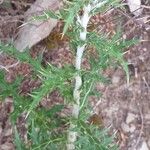
Echinops ritro
شکر تیغال · شکر تیغال جنوبی، · شکروک · Globe thistle · Small globe thistle
Description
Source: leafsnapEchinops ritro, the southern globethistle, is a species of flowering plant in the family Asteraceae, native to southern and eastern Europe (from Spain east to Turkey, Ukraine, and Belarus), and western Asia. The species is sparingly naturalized in scattered locations in Canada and the United States.Echinops ritro is a compact, bushy herbaceous perennial thistle, growing to 60 cm (24 in) tall, with broad prickly leaves and bearing globes of steel-blue flowers 2.5 cm - 4.5 cm in diameter, in late summer.Echinops ritro and the subspecies E. ritro subsp. ruthenicus have gained the Royal Horticultural Society's Award of Garden Merit. SubspeciesEchinops ritro subsp. meyeri (DC.) Kožuharov Echinops ritro subsp. ritro Echinops ritro subsp. ruthenicus (M.Bieb.) Nyman Echinops ritro subsp. sartorianus (Boiss. & Heldr.) Kožuharov Echinops ritro subsp. siculus (Strobl) Greuter Echinops ritro subsp. thracicus (Velen.) Kožuharov
🌳 The southern globethistle is known for its distinctive features: spiky, cobwebbed leaves and metallic-blue globe-shaped blooms perched on tall stems. It makes an excellent addition to the back row of garden beds and is a magnet for pollinators, making it perfect for wildlife and gravel gardens. This plant shines when paired with other late-summer bloomers like cardoons and echinaceas.
🎭 Nobleness and autonomy
Care Guide
💧 Water
The Southern globethistle thrives in temperate climates with varying rainfall patterns. It prefers moderate moisture levels and benefits from consistent watering, ideally once a week. While it can adapt to brief droughts, its deep root system allows it to conserve water effectively.
How should I water my Southern globethistle?
To ensure the health of your Southern globethistle, it is recommended to use filtered water at room temperature when watering. Tap water may contain harmful particles that can affect the plant. Since the Southern globethistle is native to warm environments, it is important to avoid using cold water, which can be a shock to its system. Additionally, overhead watering should be avoided to prevent issues with the foliage. Instead, gently saturate the soil with filtered water until it is completely soaked. This helps to moisturize the roots and support their spread through the soil for optimal nutrient absorption.
What should I do if I give my Southern globethistle too much water or too little water?
Overwatering is a common issue that can harm your Southern globethistle. It can cause wilting, yellowing leaves, and may result in diseases such as root rot, mold, and mildew that can kill the plant. Underwatering is less common due to the plant's drought tolerance, but it can still happen, causing leaves to become brittle and brown. It's important to identify and address signs of overwatering quickly, as some diseases may be irreversible if left untreated. Reduce watering if you notice early signs of overwatering and ensure the soil drains well. If your globethistle is receiving too little water, simply increase watering until the signs subside.
How frequently do I need to water my Southern globethistle?
If your Southern globethistle plant is in a pot, the most precise way to determine if it needs water is by checking the soil. Simply insert your finger into the soil, and if the top two to three inches are dry, it's time to water. For those growing the Southern globethistle outdoors in the ground, you can also use a similar method to test the soil. Again, if the first few inches of soil are dry, it's a sign that you need to add water. Typically, during the spring and early fall, this plant needs to be watered about once a week. However, during extremely hot weather, you may need to increase watering to about twice a week or even more. It's worth mentioning that mature, well-established Southern globethistle plants have a remarkable ability to withstand drought.
How much water does my Southern globethistle plant need?
When watering your Southern globethistle, be generous with the amount of water you give. Make sure that the first two to three inches of soil are dry before watering. It is important to thoroughly soak the soil, ensuring that the water flows out through the drainage holes at the bottom of the pot. If you don't see excess water draining out, it means you haven't watered enough. However, be careful not to let the water accumulate in the soil as this can harm the plant. Also, if the water doesn't drain properly, it could be a sign of poorly draining soil, which can negatively impact the plant's health. If the plant is outdoors, receiving 1 inch of rain per week will be enough.
How do I water my Southern globethistle as it grows at different stages?
The water needs of the Southern globethistle can vary depending on its growth stages. In the early years or after transplanting, you should water more to support the sprouting of new roots. These roots need more moisture to support future growth. As the plant matures, it will require less water. Additionally, during the bloom period, extra water may be needed to support flower development.
☀️ Light Full sun
Southern globethistle does best in full, unfiltered sun and can tolerate lower light levels. As a species native to bright, sunny habitats, ample daylight is important throughout its development. However, too much shade or insufficient light can cause poor growth or reduced vigor.
What are the sunlight requirements for Southern Globethistle?
Southern Globethistle thrives in full sunlight and benefits from being placed in areas that receive more than 6 hours of direct sunlight (full sun) or about 3-6 hours of sunlight (partial sun). It's essential to observe how sunlight moves through your garden to find spots offering the perfect balance of light and shade, ensuring the plant remains healthy and happy. In their natural habitats, these plants are accustomed to unobstructed sunlight, playing a vital role in their growth. However, too little light can lead to unhealthy growth and reduced vitality.
How does artificial lighting support plant growth indoors?
Indoor Southern Globethistle plants require adequate lighting, especially when natural sunlight is insufficient. Artificial lights, such as LED lights customized to provide specific wavelengths, can promote healthier and faster growth. For full sun plants, 30-50W/sq. ft. of artificial light is recommended; for partial sun plants, 20-30W/sq. ft.; and for full shade plants, 10-20W/sq. ft. The light source should be placed 12-36 inches above the plant, mimicking natural sunlight conditions. Matching the natural daylight hours, most plants will need 8-12 hours of artificial light daily.
What are the symptoms of light deficiency in Southern Globethistle?
Symptoms of light deficiency in Southern Globethistle can manifest as small or pale new leaves, leggy or sparse growth, faster leaf drop, a halt in new growth, and conditions like chlorosis or sunscald. These symptoms indicate that the plant is not receiving adequate light, leading to unhealthy growth or decreased vitality. Providing optimal sunlight or using artificial lighting correctly can help alleviate these issues, promoting healthier plant growth.
How can I improve the light conditions for my Southern Globethistle?
Improving light conditions for Southern Globethistle involves several strategies. Indoors, gradually moving the plant to sunnier spots until it receives at least 6 hours of direct sunlight, using south-facing windows, and considering artificial lighting for large or non-movable plants are effective methods. Outdoors, adjusting the plant's location for better sunlight access while avoiding sudden light intensity changes and pruning obstructions like tree branches can be beneficial. For smaller plants, transplanting during the dormant period to a location with ample sunlight and good drainage is also a key strategy. It's important to note that parts of the plant affected by insufficient sunlight may not recover, but new growth will be healthy with increased light exposure.
🌡️ Temperature 0–32.2°C
Southern globethistle is naturally adapted to temperatures between 68 and 95 °F (20 to 35 ℃). It does well in areas that experience notable temperature fluctuations, like its native temperate habitat. No changes to the plant’s care are necessary during cooler seasons.
What is the ideal temperature range for Southern Globethistle?
Southern Globethistle is well adapted to temperatures between 68 to 95 °F (20 to 35 °C). It thrives in environments with distinct temperature swings, characteristic of its temperate native habitat. The plant does not require adjustments in care during the cooler seasons, thanks to its strong cold resistance. However, protection from cold is advised if temperatures are expected to drop below -35°C, which can be done by covering the plant with soil or straw and watering it abundantly before the first freeze to ensure the soil remains moist throughout winter.
How does Southern Globethistle react to low temperatures?
Southern Globethistle shows a remarkable tolerance to cold, thriving best when temperatures stay above 20°C and should be kept above 0°C during winter. If temperatures fall below -35°C, the plant may not show visible signs of distress during winter but could experience reduced or nonexistent sprouting in spring. To mitigate this, parts of the plant that fail to sprout in spring should be removed.
What are the recommendations for Southern Globethistle in high temperatures?
In high temperatures, particularly during summer, it is advisable to keep Southern Globethistle below 35°C. Exposure to temperatures above 38°C can lead to the plant's leaves becoming lighter, curling up, becoming susceptible to sunburn, and in severe cases, the entire plant may wilt and dry out. To assist the plant in such conditions, trim away the sunburned and dried up parts, relocate it to a shaded area during midday and afternoon, or use a shade cloth for protection. Additionally, watering in the morning and evening will help keep the soil moist and cool.
What is the botanical name of Southern Globethistle?
The botanical name of Southern Globethistle is Echinops ritro.
💨 Humidity
🪴 Soil 6-7
🌱 Fertilizer
The best time to fertilize a Southern globethistle is in early spring, as it comes out of dormancy and starts active growth. Fertilization supplies essential nutrients for healthy development. Although Southern globethistle has relatively low fertilizer requirements, giving it fertilizer annually can improve its survival and encourage better, longer-lasting flowers.
Why is it necessary to add fertilizer to my Southern globethistle plant?
Fertilization is important for the Southern globethistle due to various reasons. By providing essential nutrients, fertilization supports the growth of the plant above and below the ground. However, Southern globethistle has relatively low fertilization needs and can sometimes survive without it. Nevertheless, annual fertilization can greatly benefit the plant, ensuring its survival and promoting the development of long-lasting, beautiful flowers. Therefore, those interested in optimizing the appearance of their Southern globethistle should consistently provide annual fertilization.
When should I fertilize my Southern globethistle?
The best time to fertilize a Southern globethistle is in late winter to early spring when it is transitioning from dormancy to active growth. This timing promotes healthy initial growth for the season. Fertilizing in early spring is most beneficial, but it is also acceptable to fertilize in the fall. However, it is not recommended to fertilize in the summer or winter.
When is it not a good idea to add fertilizer to my Southern globethistle?
To properly fertilize your Southern globethistle, remember to only do so in late winter or early spring. This plant has low fertilization needs, so one annual feeding at this time is enough. It is important to avoid fertilizing during spring, summer, and fall to prevent overfertilization and its associated problems. The exception is if you missed fertilizing in spring, then it is acceptable to feed the plant in fall. Additionally, it is unnecessary to fertilize during winter when the Southern globethistle is in a dormant phase and not actively growing.
What kind of plant food does my Southern globethistle need?
For Southern globethistle, any general-purpose fertilizer with balanced nutrients will work. However, there are specific blends that can be even more beneficial. Many gardeners believe higher phosphorus levels lead to stronger roots and better flowers, so using a phosphorus-rich fertilizer is recommended. Whether you choose granular or liquid form, ensure there are enough nutrients. Additionally, using organic materials like compost and manure can greatly improve the soil for your Southern globethistle.
How can I make my Southern globethistle grow better?
The most common way to fertilize a Southern globethistle is by applying granular or pellet fertilizer to the soil around the plant. It is best to do this when the plant is transitioning from its winter dormant phase to active growth. In early spring, wait for shoots to appear and then fertilize. Alternatively, some people prefer to use liquid fertilizer, but in that case, it should be diluted with water before application. Regardless of the type of fertilizer used, it is important to moisten the soil before, during, and after fertilizing.
🪴 Pot & Repot 2-3 years
When repotting Southern globethistle, select a pot 1-2 inches (2.5–5.1 cm) larger with good drainage. Use a well-draining potting mix. Repot in spring or fall, making sure the root ball sits slightly below the rim of the flower pot. Water thoroughly after repotting and place the plant in a warm spot with indirect sunlight.
✂️ Pruning
The Southern globethistle is known for its spiky, globe-shaped flowers and grey-green leaves. To encourage healthy growth, start by pruning in early spring to remove any damaged stems. This can be followed by light shaping in late spring. Additionally, make sure to remove spent flowers to prevent the plant from self-seeding. Proper pruning improves air circulation, reduces the risk of disease, and promotes overall plant health.
🌿 Propagating
🐛 Diseases & pets
☠️ Toxicity
Globe thistle is a non-toxic plant for people, dogs, cats, and horses.
Characteristics
- Plant Type
- Herb
- Life Cycle
- Perennial, Annual
- Genus
- Echinops
- Family
- Asteraceae
- Hardiness Zone
- 3-8
- Mature Height
- 61 cm
- Mature Spread
- 46 cm to 61 cm
- Leaf Color
- Green, Gray
- Leaf Type
- Deciduous
- Flower Color
- Blue, Green
- Flower Size
- 2.54 cm to 4.57 cm
- Bloom Time
- Early summer, Mid summer
- Planting Time
- Spring
- Harvest Time
- Mid summer
- Native Area
- Central Asia; Southeastern and South central Europe