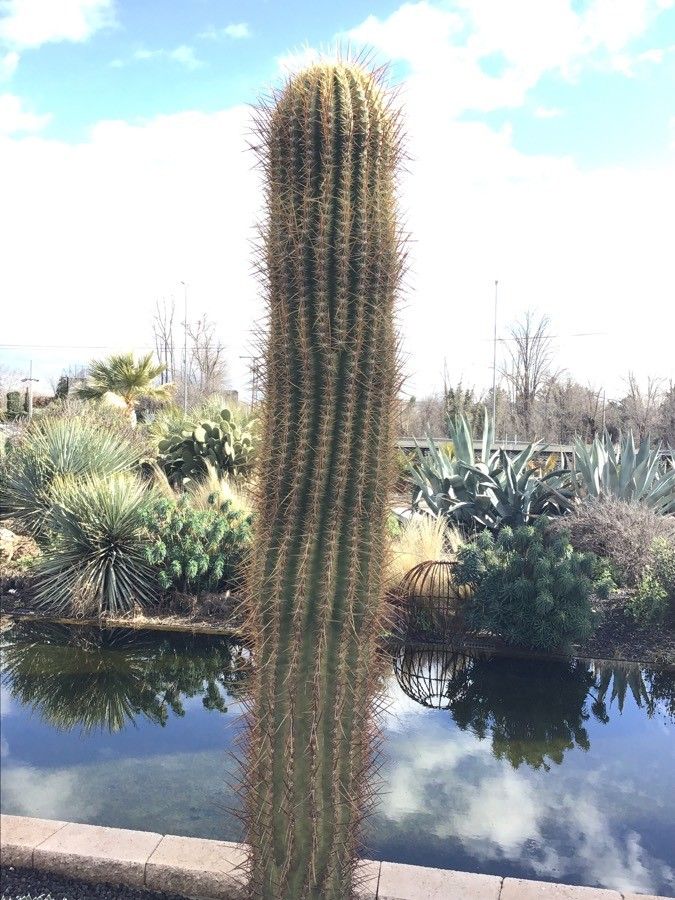
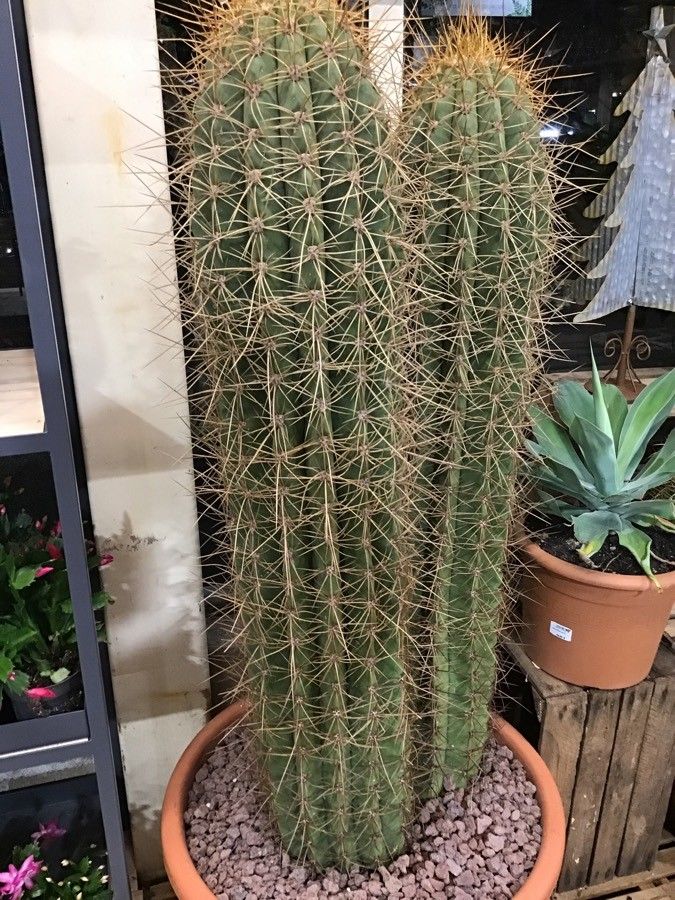
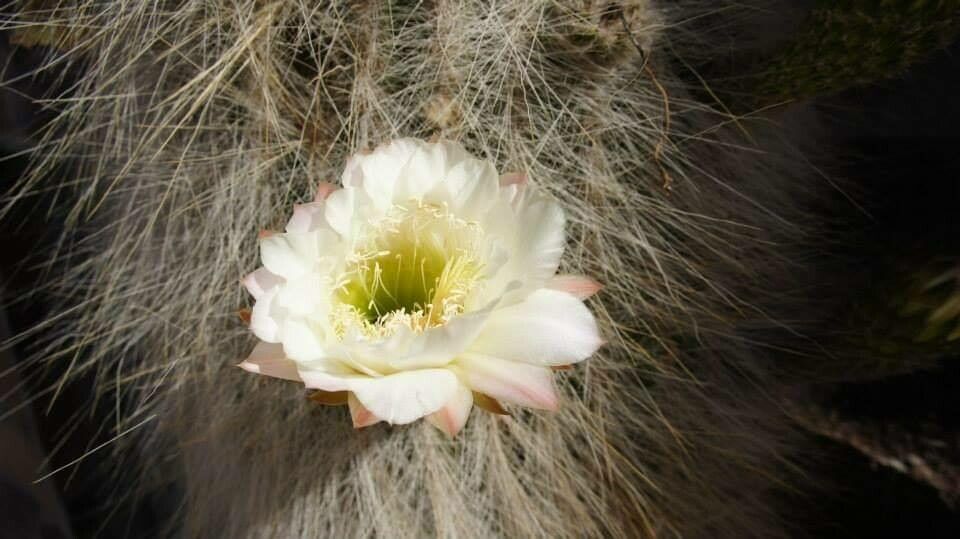
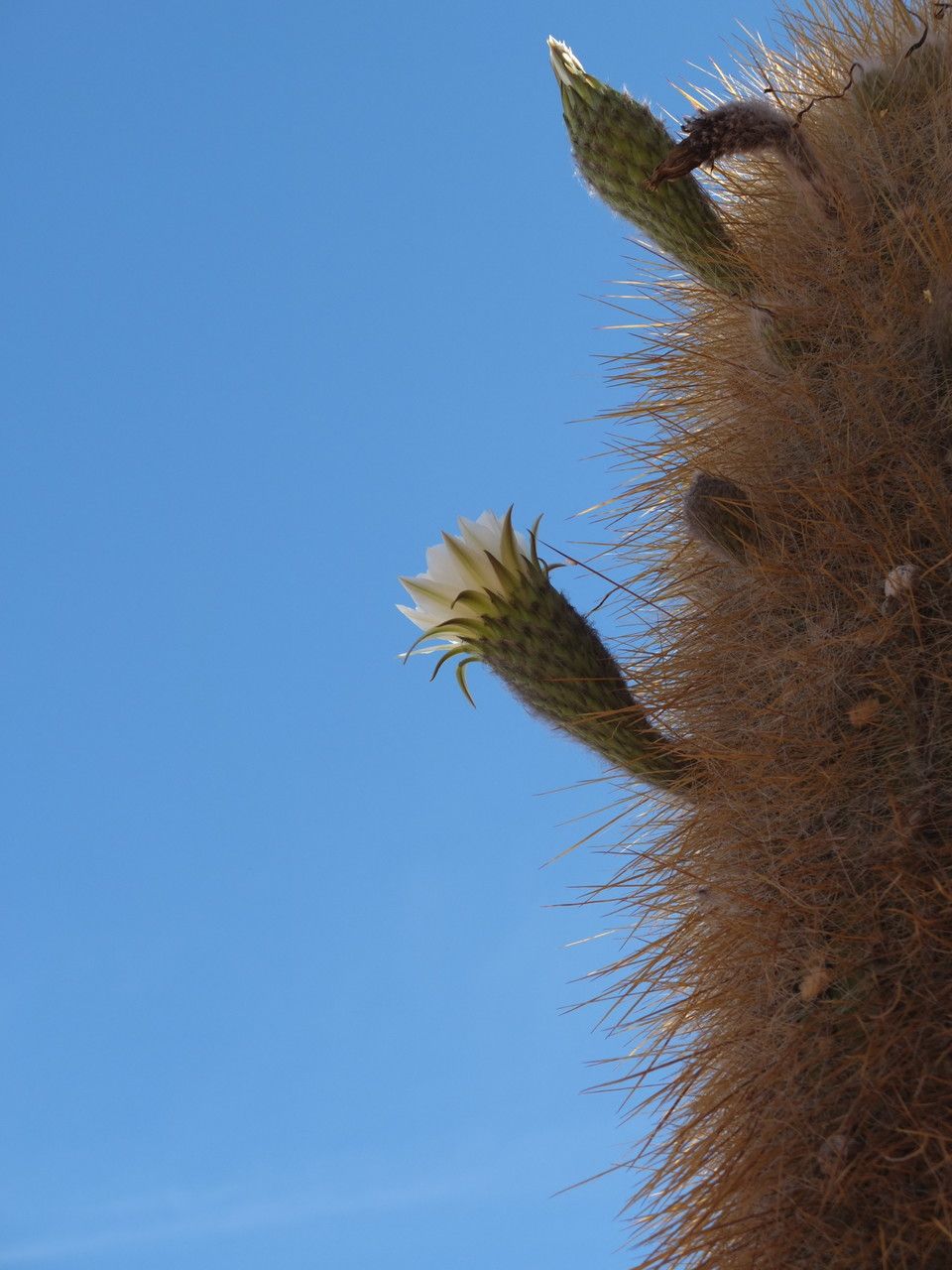
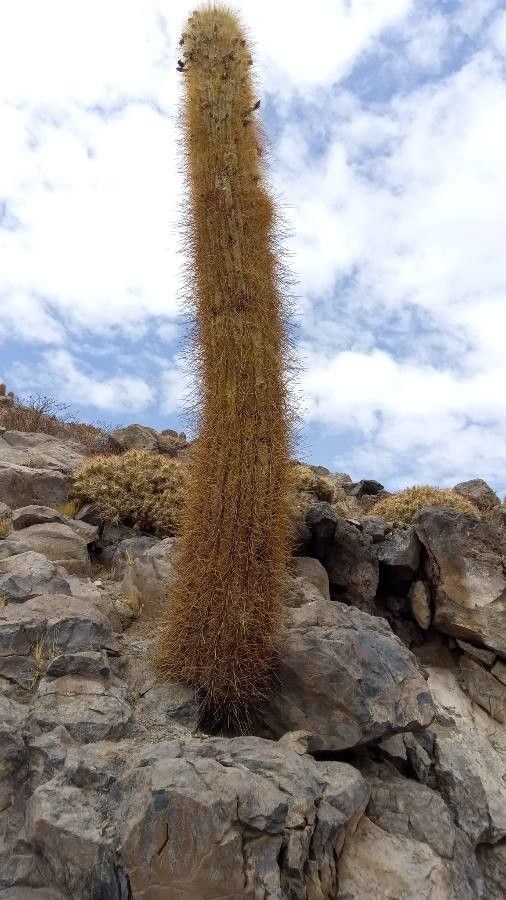
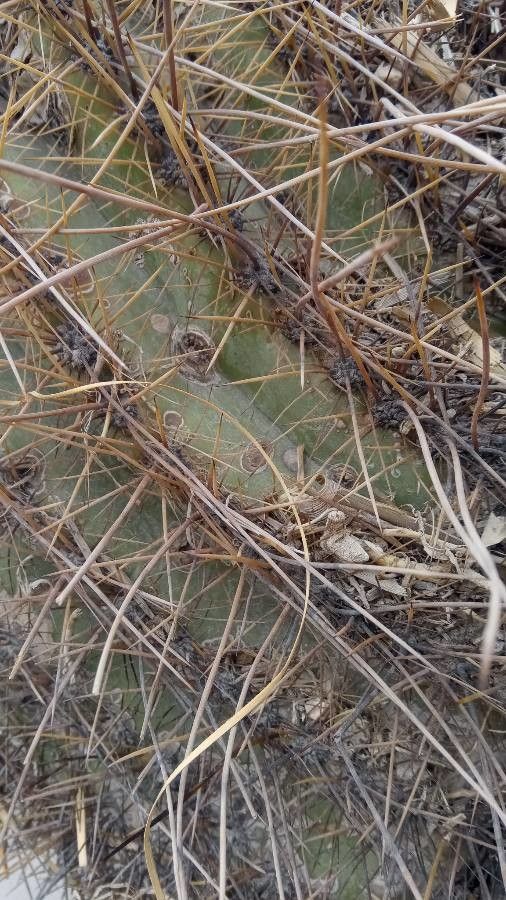
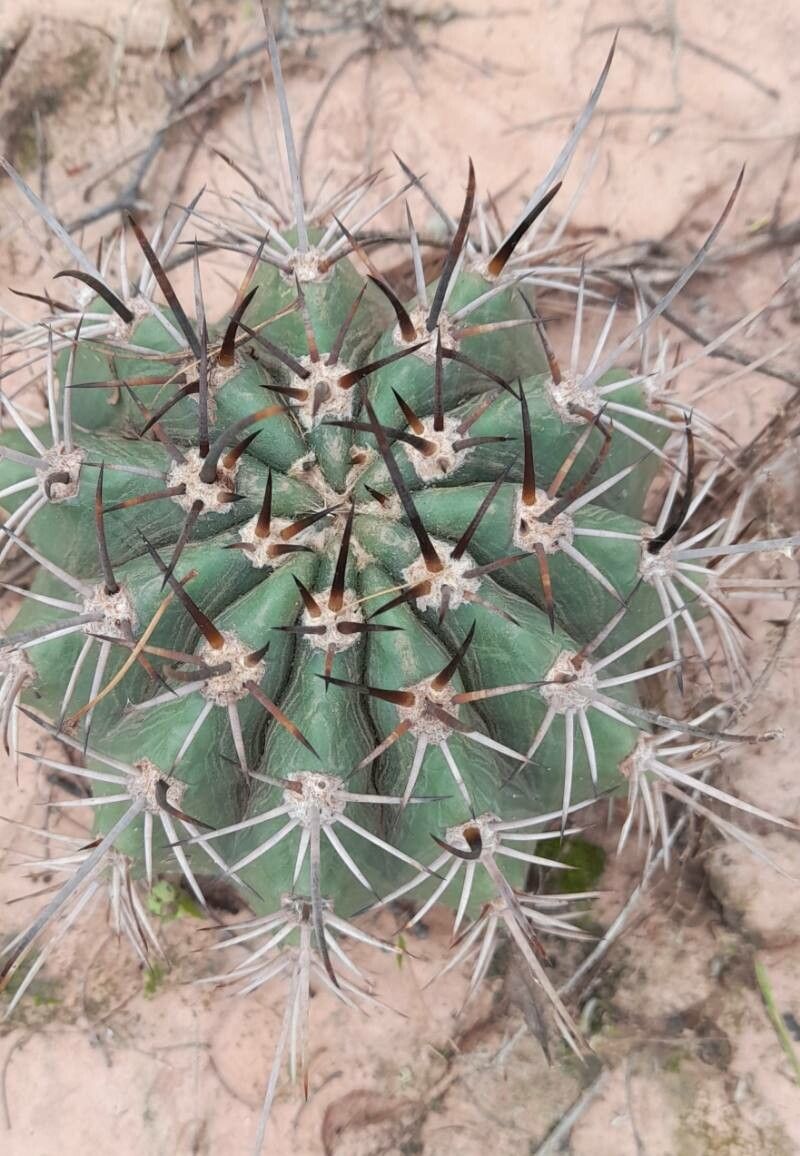
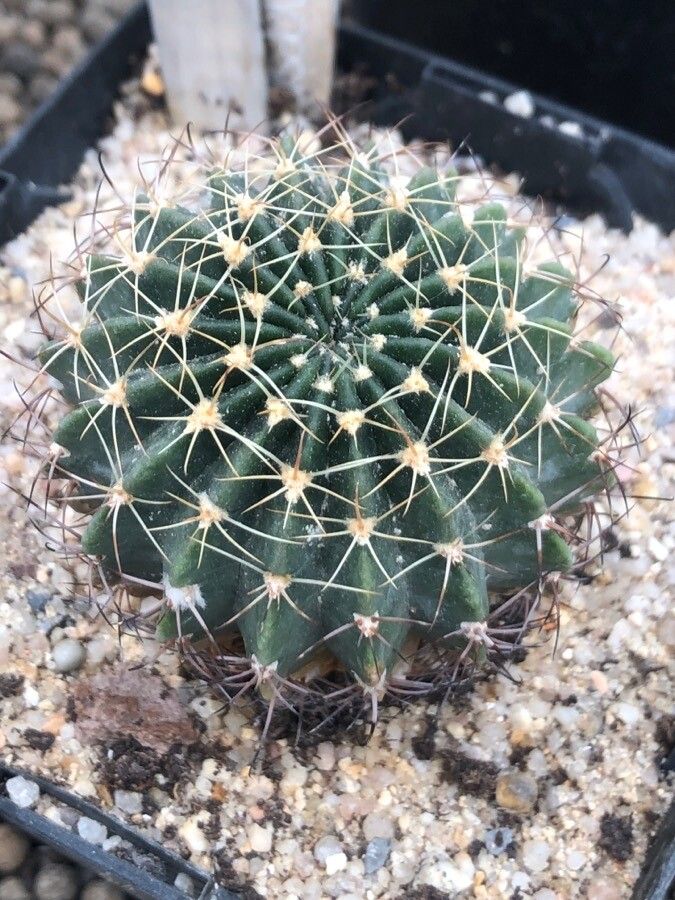
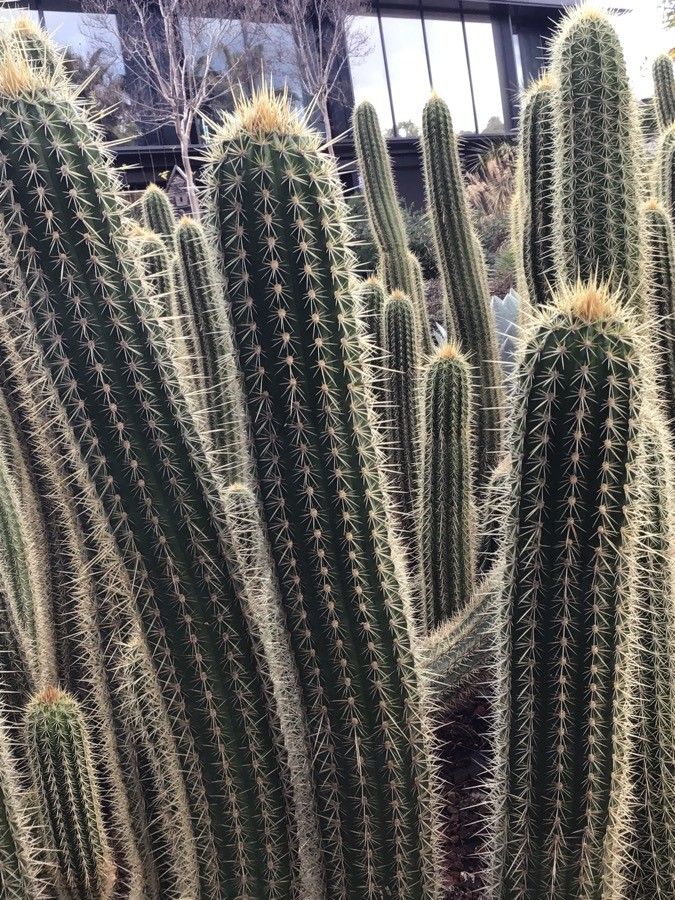
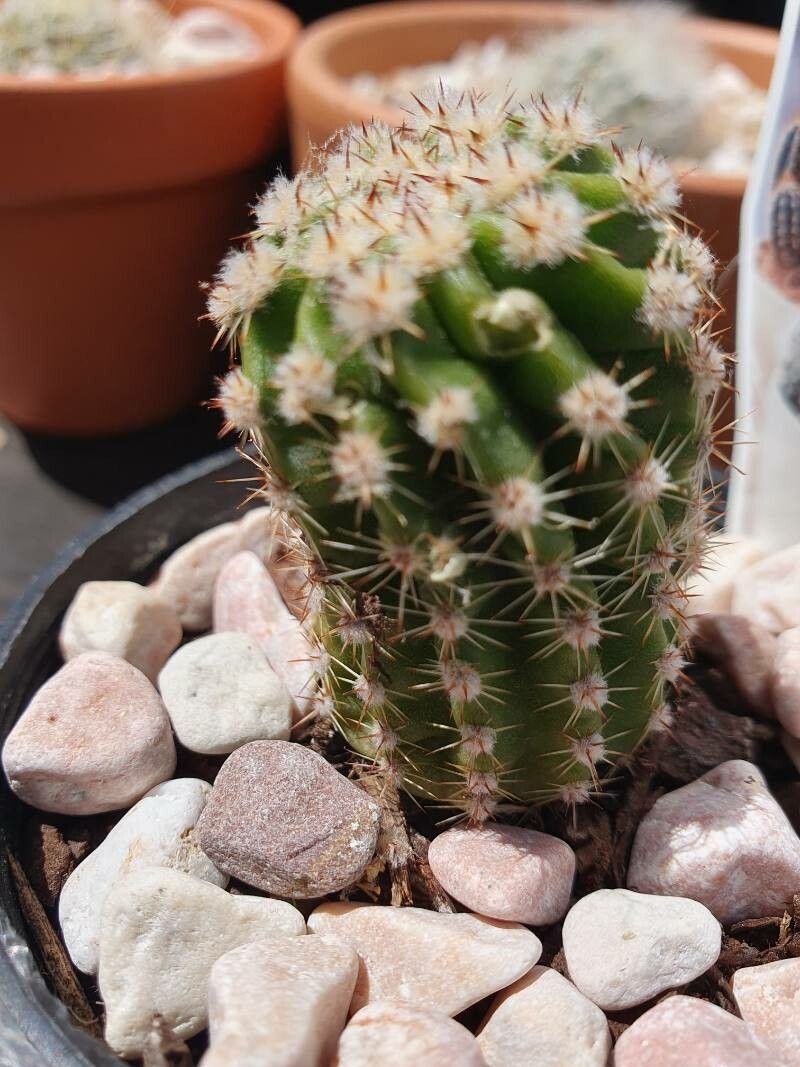
Echinopsis atacamensis, commonly known as the Atacama Torch cactus, is a species native to the Atacama Desert in Chile. This columnar cactus can reach heights of up to 3 meters and a diameter of 15 centimeters. It features numerous ribs adorned with areoles that produce spines and white, woolly hairs. The plant's large, showy flowers bloom at night and come in shades of pink or white.
This cactus is well-adapted to its harsh desert environment, capable of withstanding extreme temperature fluctuations from freezing cold nights to scorching hot days. Remarkably, it can also absorb moisture from fog through its spines and hairs.
Echinopsis atacamensis is popular as an ornamental plant due to its striking appearance and minimal care requirements. It thrives in well-draining soil and requires only occasional watering during the growing season, making it tolerant of drought.
Traditionally, indigenous people have used this cactus for medicinal purposes, leveraging its anti-inflammatory properties to treat fever and inflammation.
In summary, Echinopsis atacamensis is an impressive desert plant celebrated for its unique adaptations and striking appearance, whether found in nature or cultivated in gardens.
Cardón shows strong resistance to diseases and typically remains healthy under normal care. It can, however, be vulnerable to mealybugs; these pests may cause some harm but are usually not a major problem. Regarding care, Cardón tolerates drought and does not require frequent watering. It can endure extended periods without water and needs little fertilizer. That said, if light is inadequate and it is kept too wet, it is very prone to root rot. In general, Cardón is a good choice for those who prefer low-maintenance plants, though its basic needs should still be met. It is especially appropriate for people who are often away for long stretches and may forget to water regularly.
How to keep Echinopsis Atacamensis.
Light
Cardón, indigenous to dry areas, flourishes under direct sunlight, as it comes from a primary habitat marked by intense sun exposure and scarce shade. It can also tolerate partial sunlight, demonstrating some flexibility in its growing conditions.
Temperature
Cardón flourishes in balmy climates and needs elevated temperatures during its growth period to support its development and metabolic functions. It relishes in bountiful sunshine, suitable dampness levels, and decent airflow. Although, it is vulnerable to harm from abnormally low temperatures and excessive watering. It is crucial to maintain a balance and prevent inordinately high temperatures and exceedingly parched conditions as well.
Fertilizer
For Cardón, providing light quantities of fertilizer 1-2 times annually during its growth period is adequate. It's recommended to refrain from fertilizing during winter and summer when the plant is in a dormant state. Lower the quantity of fertilizer for plants that have been repotted, and pause for a few months post-repottign before you begin to fertilize again. The application of fertilizer aids in maintaining vigorous growth and promotes flowering.
Botanical profile.
- Plant Type
- Succulent
- Life Cycle
- Perennial
- Genus
- Echinopsis
- Family
- Cactaceae
- Hardiness Zone
- 9-11
- Mature Height
- 4.88 m to 10.06 m
- Mature Spread
- 49 cm to 91 cm
- Leaf Color
- Dark Green
- Leaf Type
- Evergreen
- Flower Color
- White
- Flower Size
- 15.24 cm to 20.32 cm
- Bloom Time
- Summer
- Planting Time
- Spring, Summer, Autumn
- Harvest Time
- Late summer, Early fall, Mid fall
- Native Area
- Bolivia
Other names.