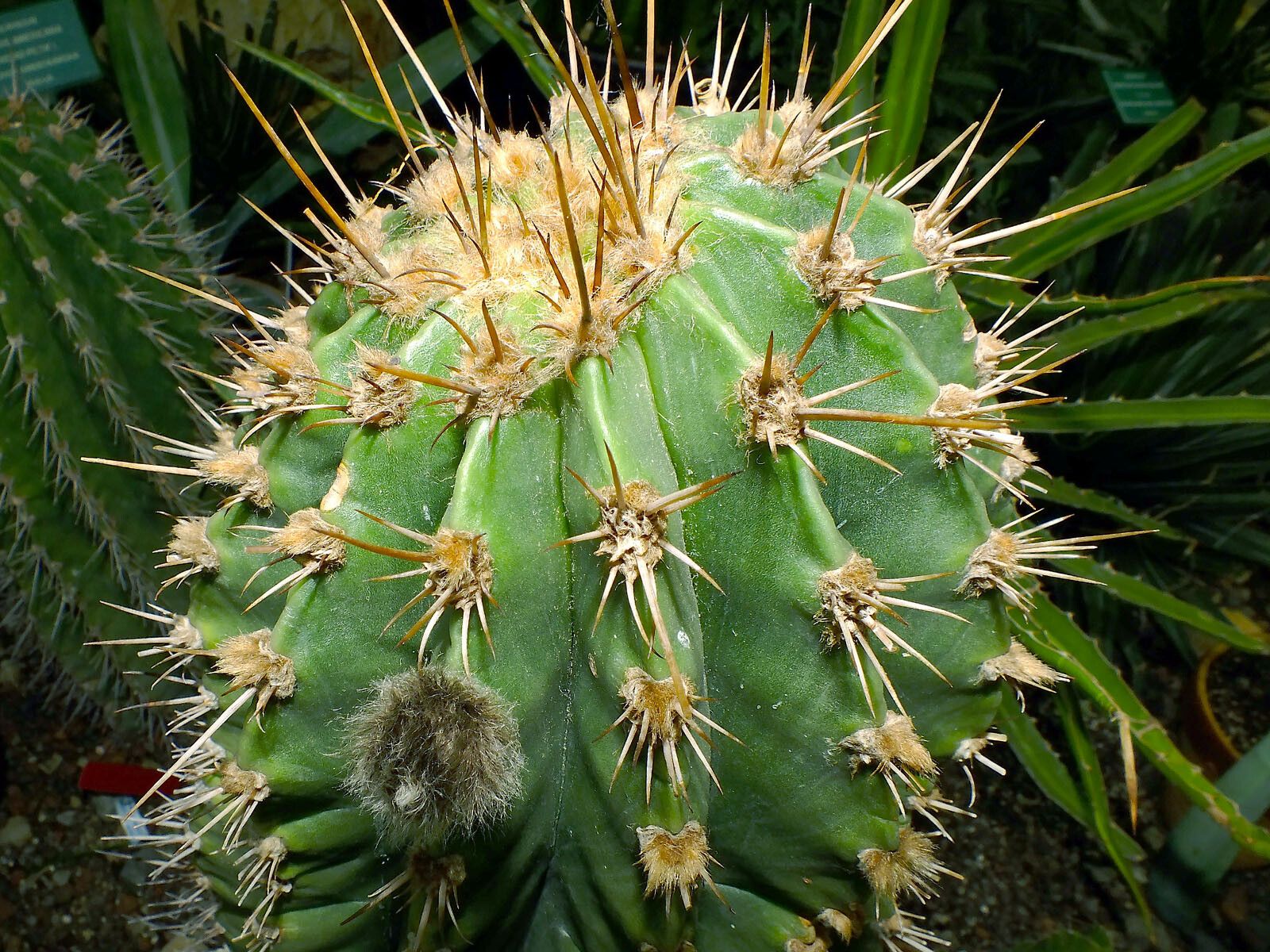
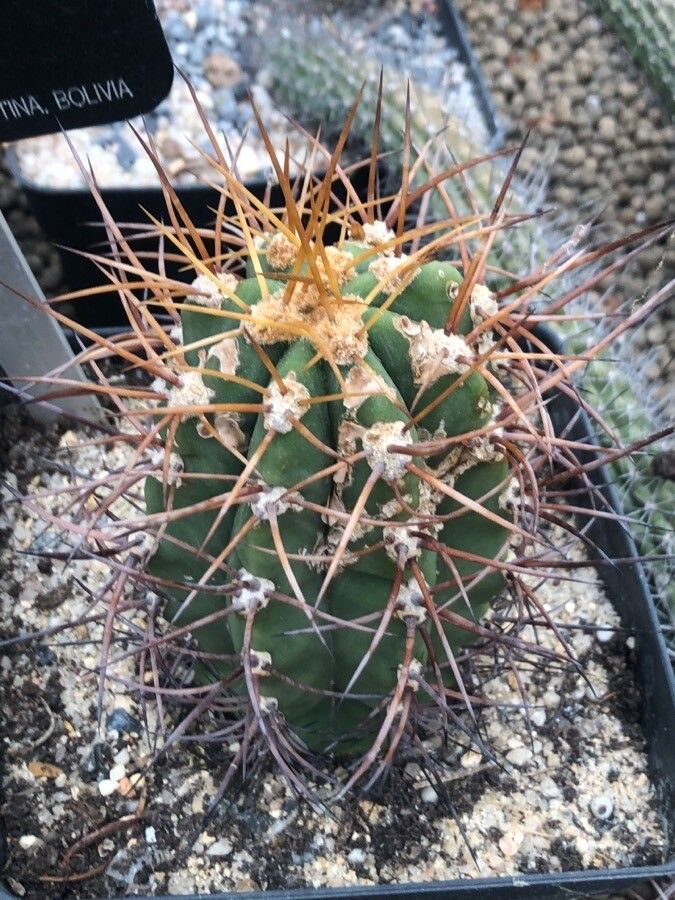
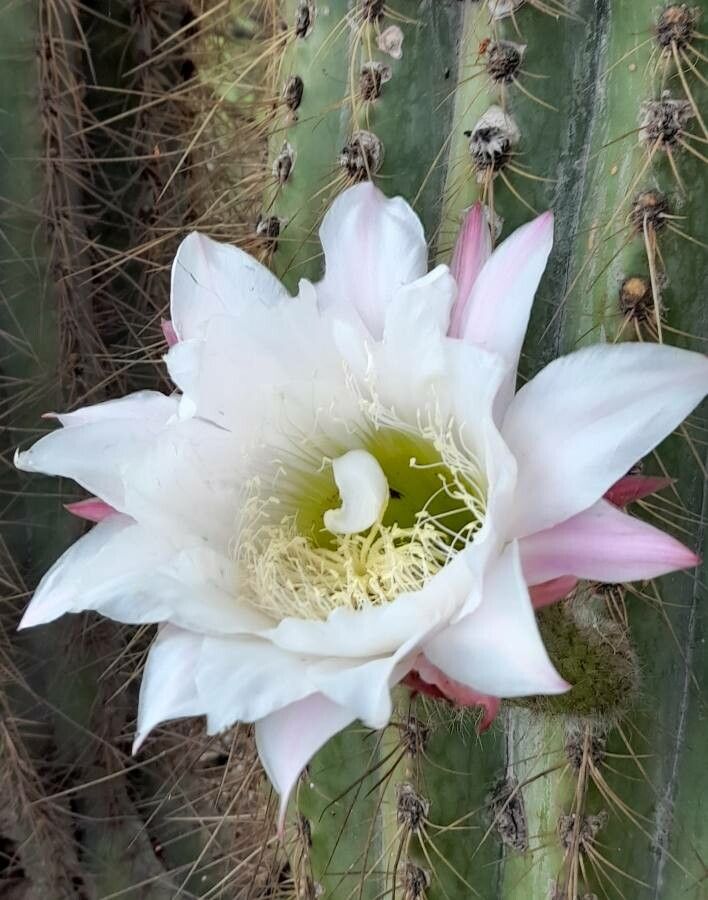
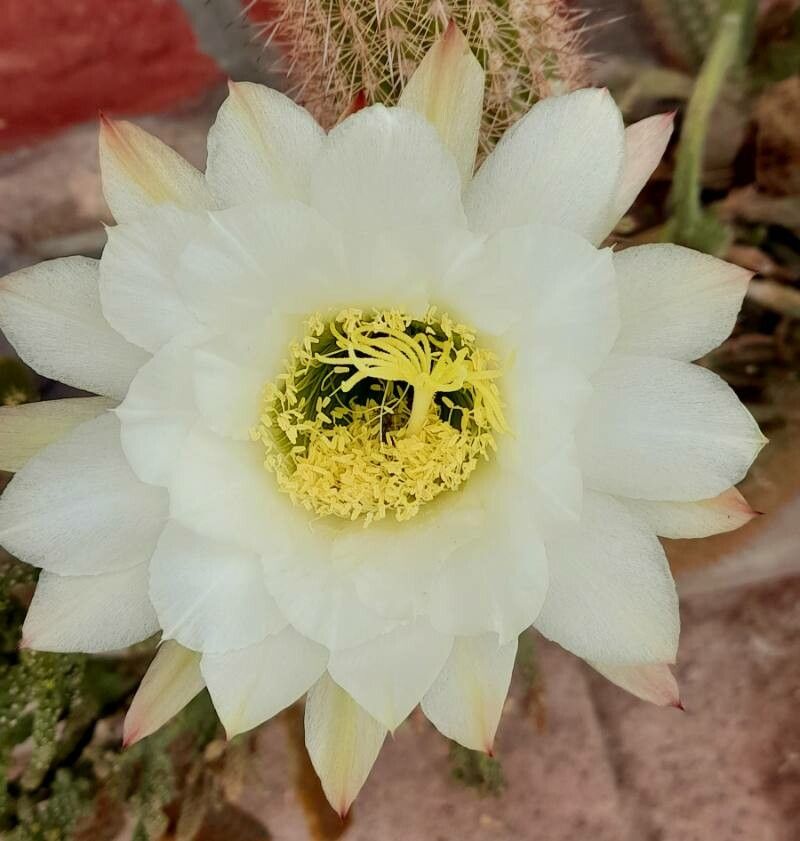
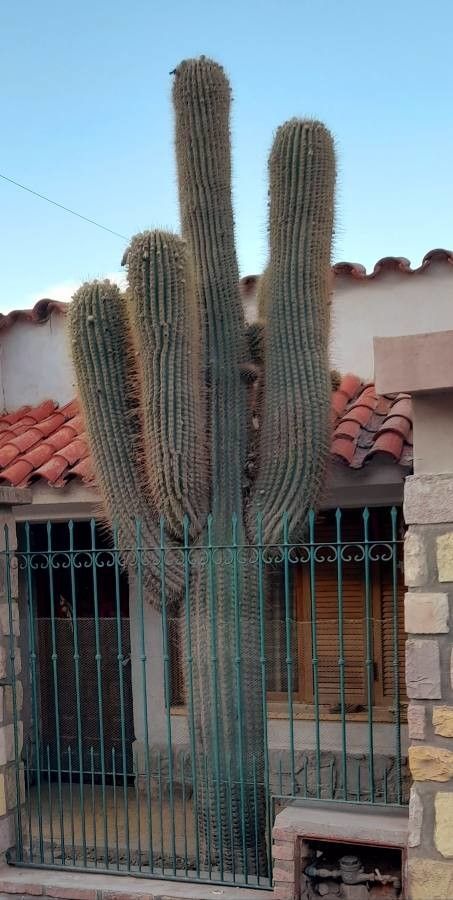
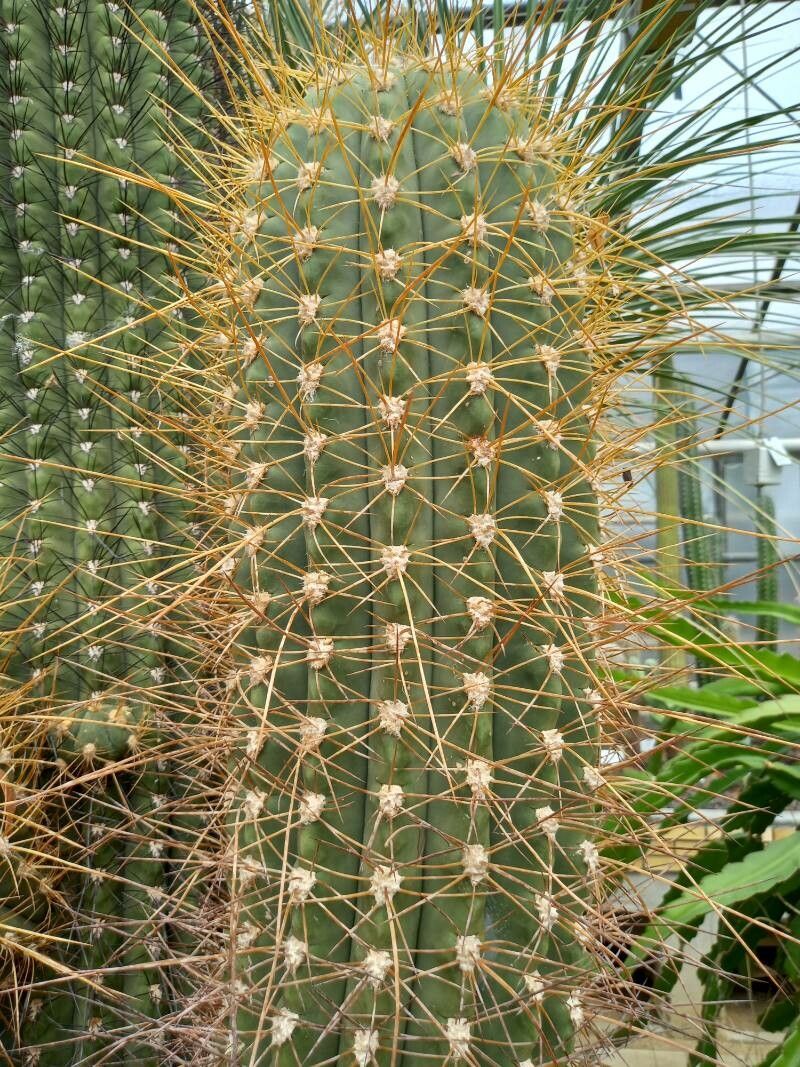
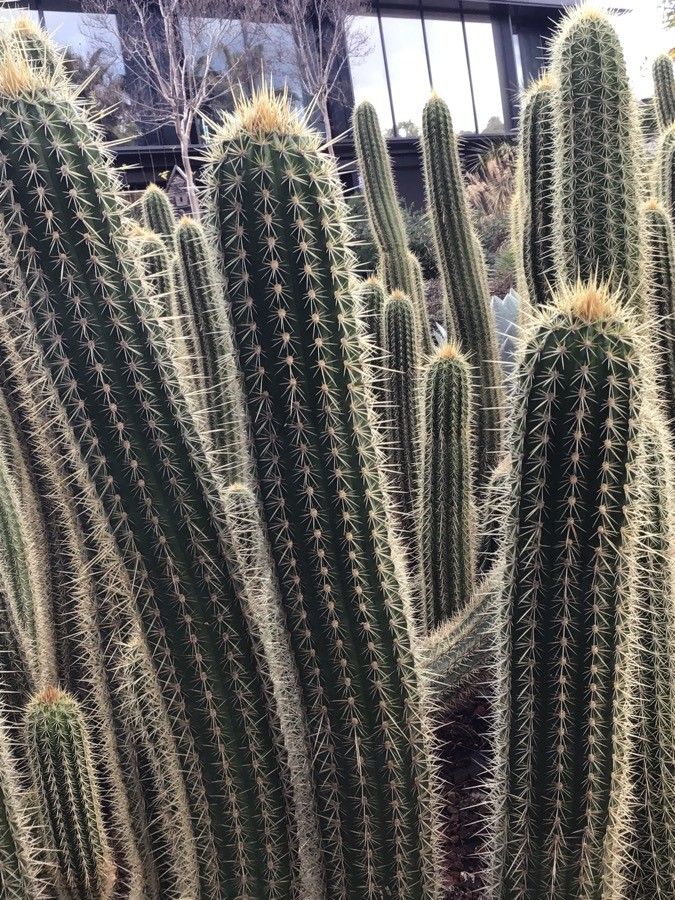
Echinopsis terscheckii, commonly known as the Argentine saguaro or cardón grande, is a large cactus species native to Argentina, Bolivia, and Paraguay. This slow-growing columnar cactus can reach heights of up to 10 meters and diameters of up to 1 meter. It is characterized by a greenish-blue hue and numerous ribs adorned with sharp spines. During the summer months, it produces large white flowers that bloom at night.
Well adapted to arid environments, Echinopsis terscheckii can endure long periods of drought by storing water in its thick stem. It thrives in well-drained soil and full sun exposure but can also tolerate partial shade.
Historically, indigenous peoples have utilized the Argentine saguaro for centuries due to its medicinal properties. The plant contains alkaloids that have been used as painkillers, anti-inflammatory agents, and even hallucinogens.
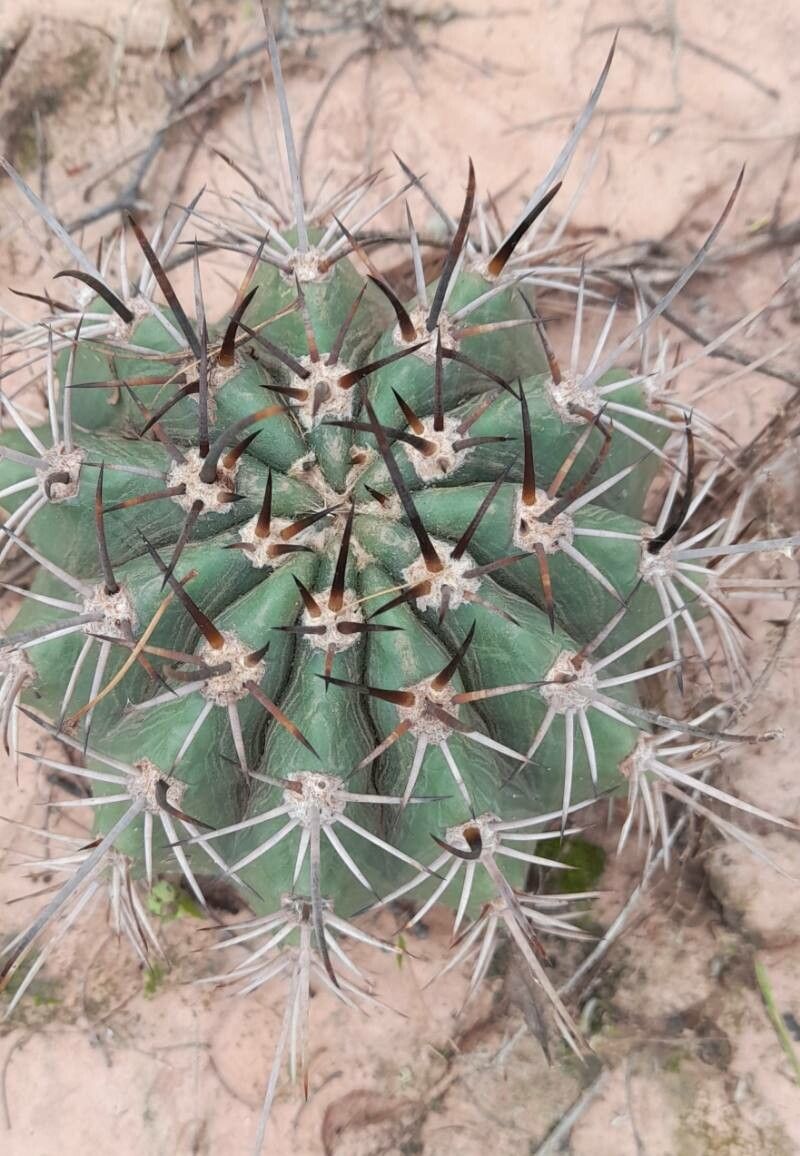
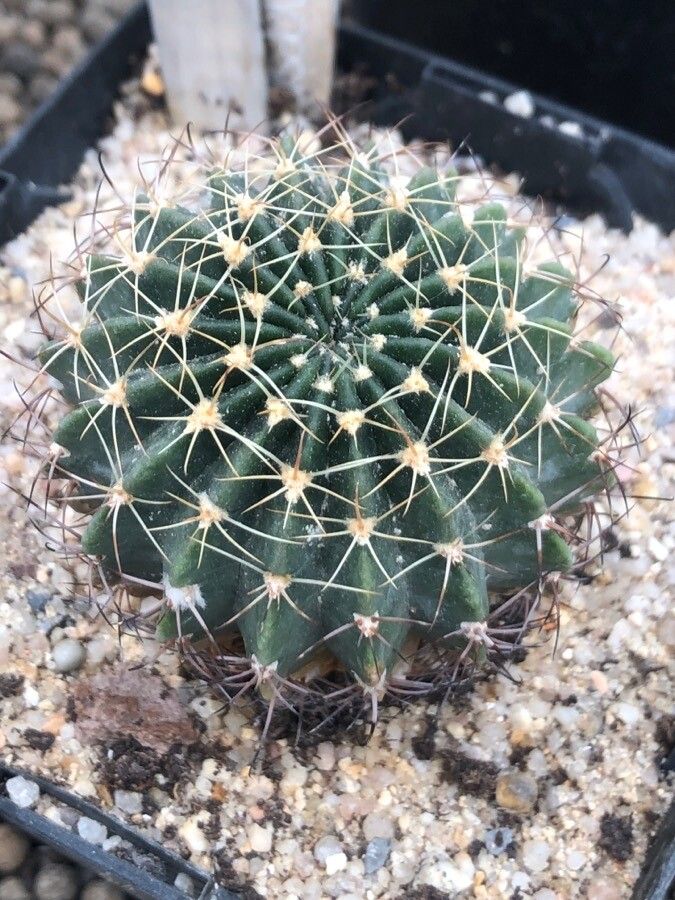
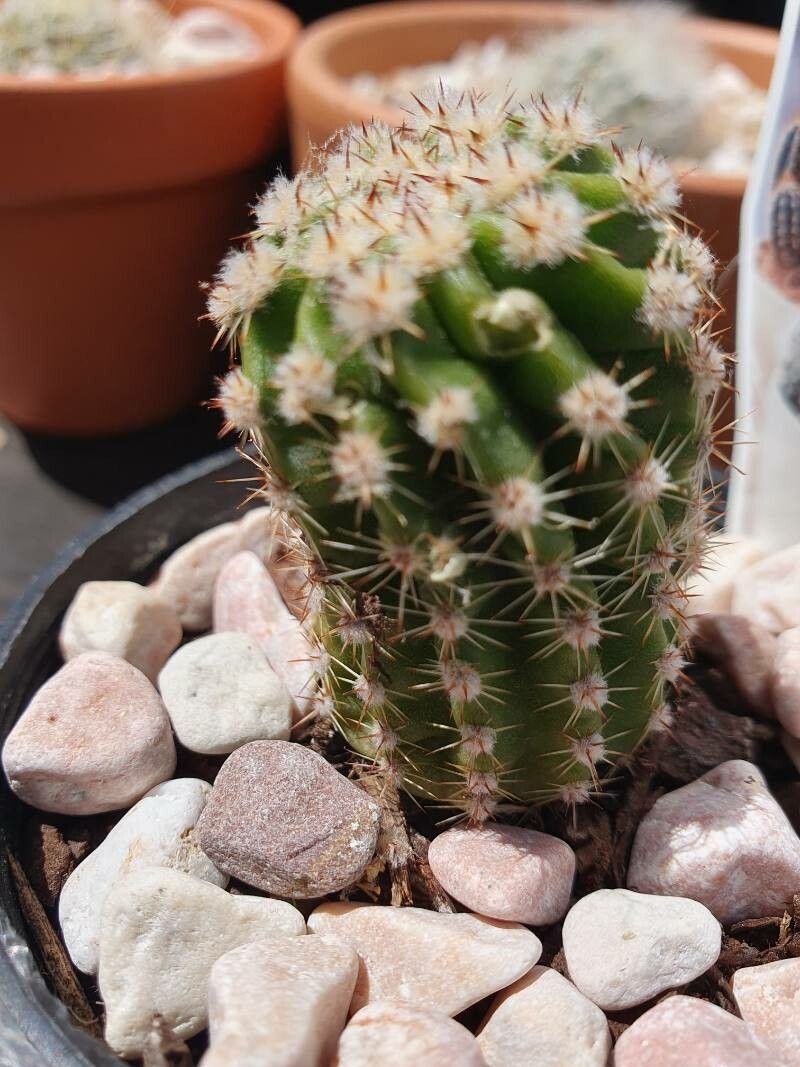
Echinopsis × wilkensii was initially a frail plant. It was as delicate as water and could be easily harmed by the slightest touch. Observing its vulnerability, God took pity on it and provided a suit of armor to protect its heart. This armor was as hard as iron and adorned with sharp, steel-like thorns. Any creature that ventured too close would inevitably be wounded. FUN FACT · FROM THE LIBRARY
In recent years, Echinopsis terscheckii has gained popularity among collectors of exotic plants due to its unique appearance and slow growth rate. This makes it an excellent addition to any garden or indoor collection. However, habitat loss from human activities such as logging and agricultural expansion has led to its classification as vulnerable according to the IUCN Red List of Threatened Species.
Argentine saguaro is fairly resistant to diseases and generally tolerates routine care without becoming ill easily. That said, it can be vulnerable to mealybugs; these pests may inflict some harm but typically do not pose a major danger. Regarding maintenance, Argentine saguaro is drought-tolerant and does not require frequent watering. It can endure extended intervals without water and needs little fertilizer. Nonetheless, it is very prone to root rot if exposed to inadequate light and excessive watering. In summary, Argentine saguaro is a good choice for those who prefer low-maintenance plants, though it remains important to meet its basic needs. It is especially appropriate for people who are away for long stretches and might forget to water regularly.
How to keep Echinopsis Terscheckii.
Light
The Argentine saguaro, a native of dry areas, flourishes under full sunlight, as its natural habitat features intense sunlight and scarce shade. It is still able to adapt and grow in partially sunny conditions, demonstrating some flexibility.
Water
The Argentine saguaro is a drought-tolerant plant that needs watering only when the soil is completely dry. During the growing seasons, from spring to fall, water it once or twice a week. In winter, reduce the watering frequency to about once a week. To prevent soil compaction from minerals found in tap water, use rainwater or distilled water.
Temperature
The Argentine saguaro flourishes in hot climates and needs increased temperature during its growth phase to boost its development and metabolic process. It prefers a generous amount of sunlight, suitable humidity, and sufficient air circulation. Yet, it can suffer harm from extremely low temperatures and over-irrigation. Maintaining a balance is crucial to prevent extreme heat and overly arid conditions as well.
Fertilizer
For the Argentine saguaro, applying a minimal amount of fertilizer once or twice annually during the growth period is adequate. It is best to abstain from fertilizing during the winter and summer periods when the plant is in its dormant stage. For plants which have been repotted, diminish the amount of fertilizer and wait for several months post repotting prior to fertilizing. The act of fertilizing promotes robust growth and stimulates flowering.
Pruning
The Argentine saguaro is a columnar cactus with a tree-like appearance and large white flowers. To keep the plant healthy and well-shaped, prune it in early spring by removing any unhealthy stems, which also helps prevent overcrowding. Always use sterilized tools when pruning to ensure the cactus's optimal health and to encourage vibrant growth, contributing to a robust presence in your garden.
Botanical profile.
- Plant Type
- Succulent
- Life Cycle
- Perennial
- Genus
- Echinopsis
- Family
- Cactaceae
- Hardiness Zone
- 9-11
- Mature Height
- 4.88 m to 10.06 m
- Mature Spread
- 49 cm to 91 cm
- Leaf Color
- Green, Dark Green
- Leaf Type
- Deciduous
- Flower Color
- White
- Flower Size
- 15.24 cm to 20.32 cm
- Bloom Time
- Summer, Early fall
- Planting Time
- Spring, Summer, Autumn
- Harvest Time
- Late summer, Fall
Other names.
Reader questions.
What are the sunlight requirements for an Argentine saguaro?
An Argentine saguaro requires full sun, which means it should receive above 6 hours of sunlight daily. It's important to observe the movement of sunlight through your garden to find spots that offer a perfect balance of light and shade. This ensures the best growth and happiness of your plants, including the Argentine saguaro.
What is the botanical name of the Argentine saguaro?
The botanical name of the Argentine saguaro is Echinopsis terscheckii.
What is the botanical name of the Argentine saguaro?
The botanical name of the Argentine saguaro is Echinopsis terscheckii.