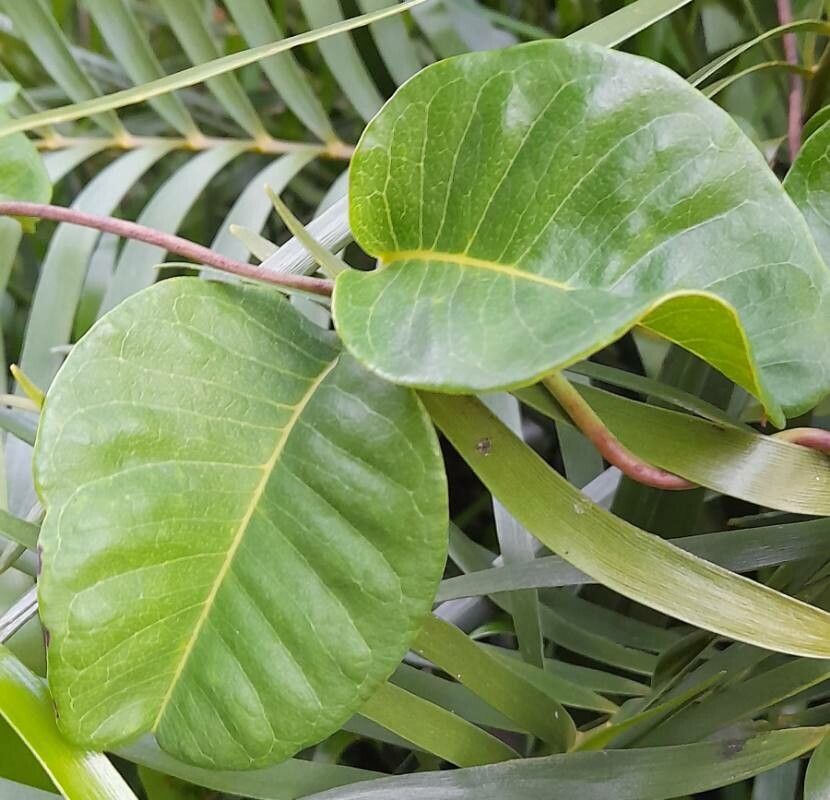
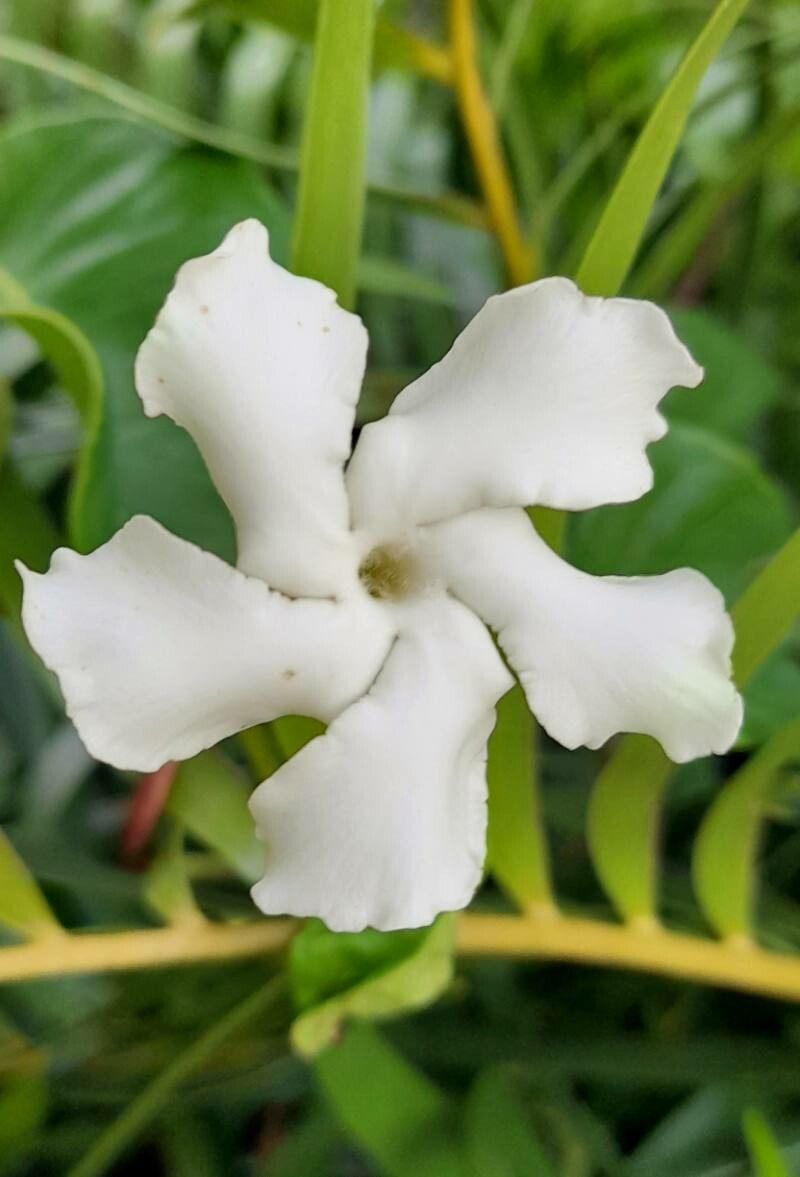
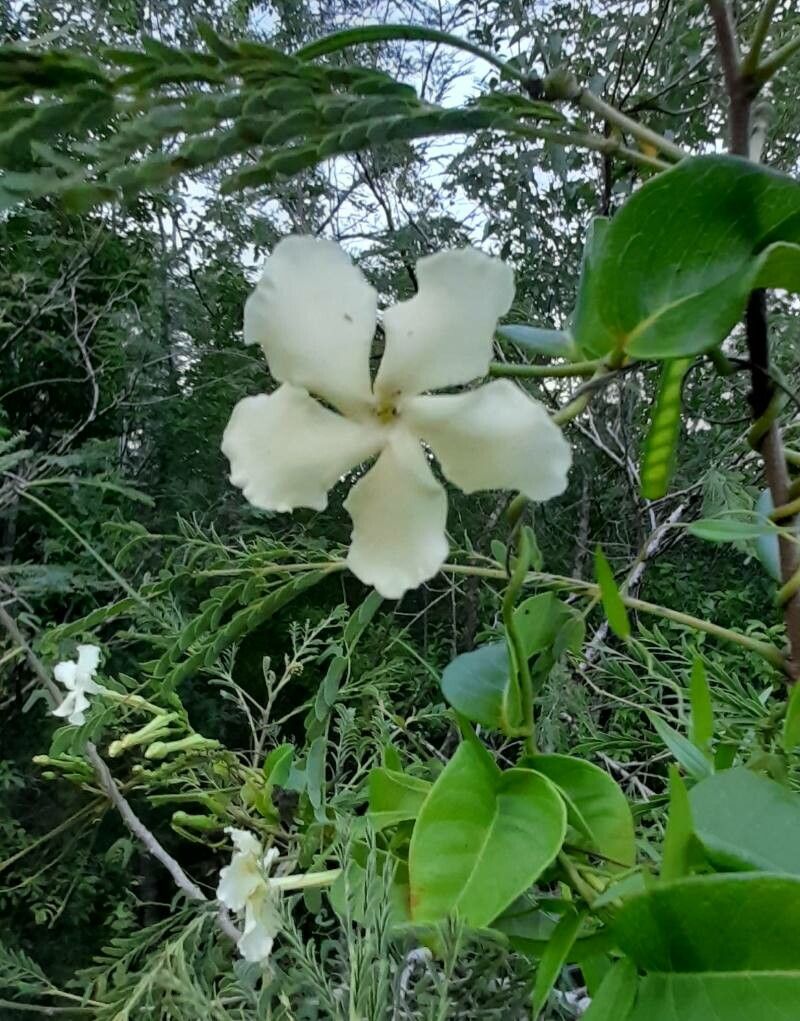
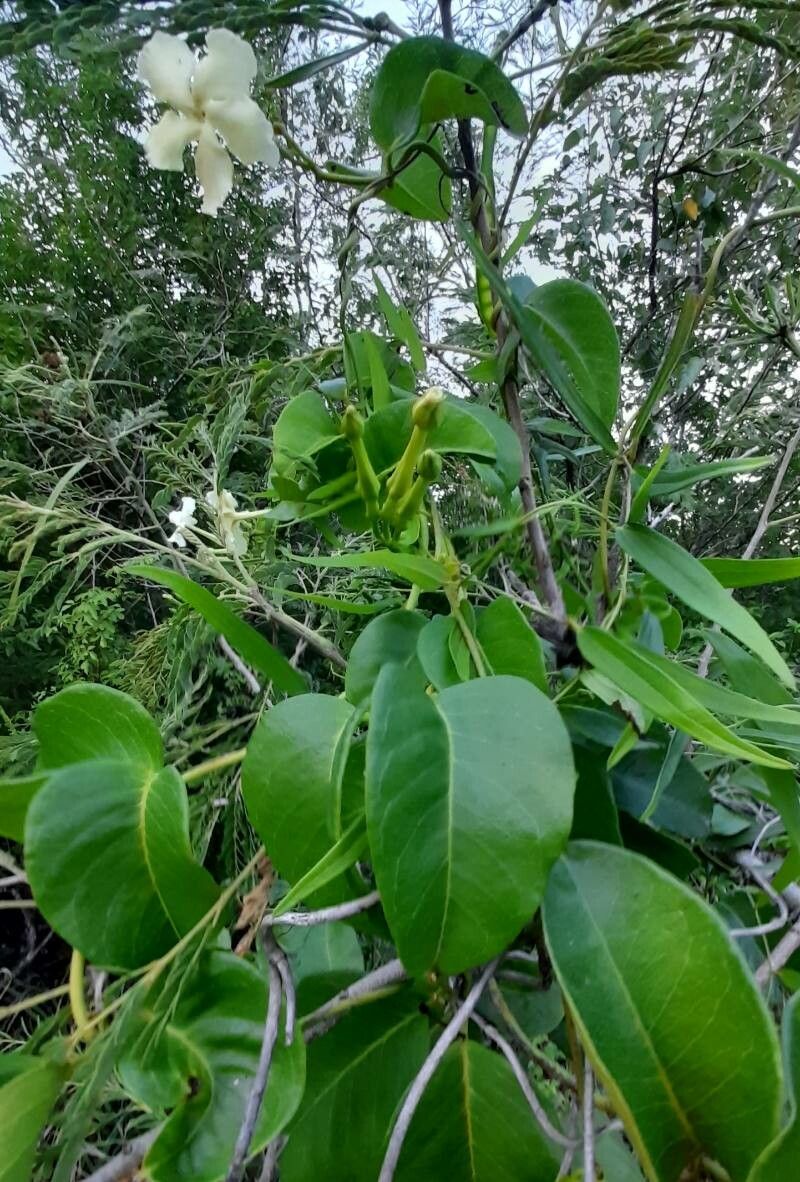
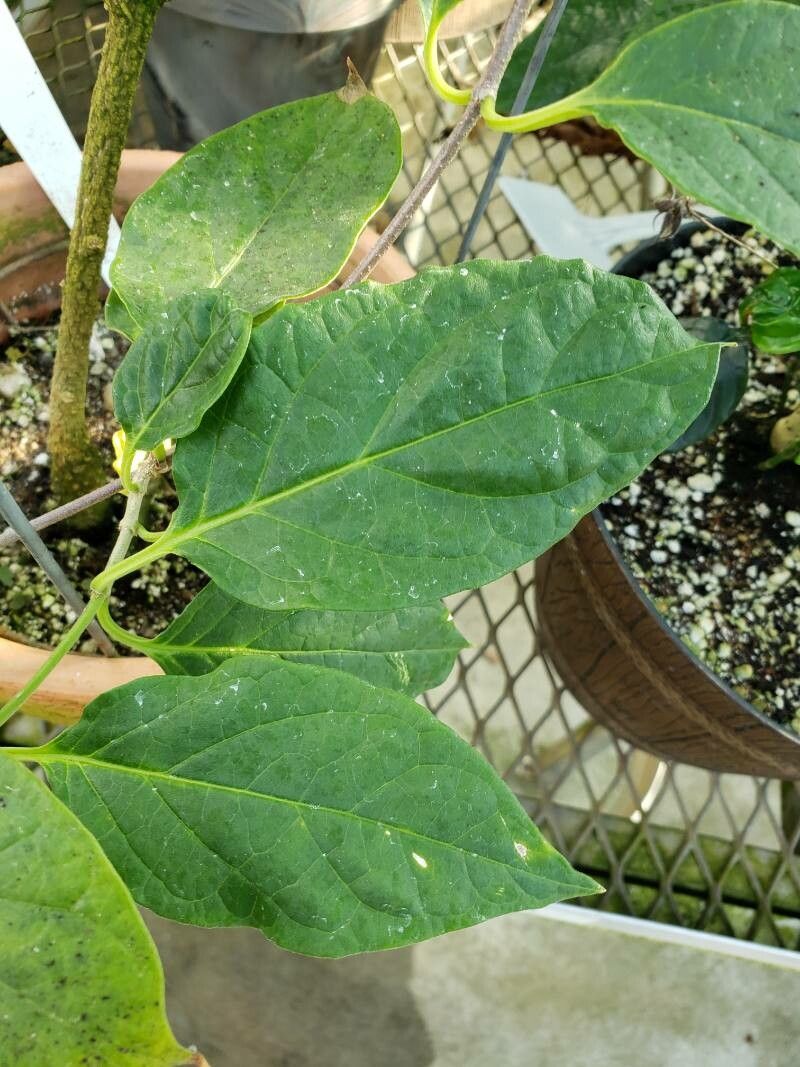
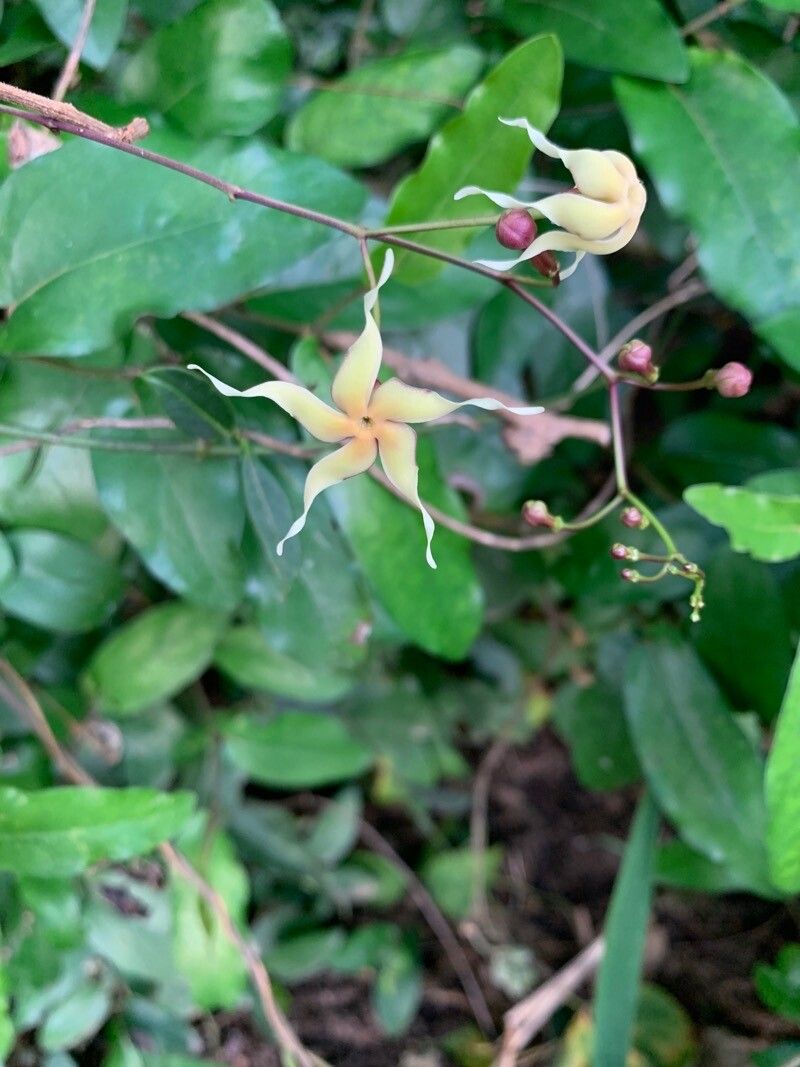
Echites umbellatus is a flowering climber, belonging to subfamily Apocynoideae of the family Apocynaceae and has the English common name devil's potato. It was first described in 1760 by Dutch botanist, Nikolaus Joseph von Jacquin. The species grows in parts of Florida, Tabasco, Yucatán Peninsula, Belize, Honduras, Cayman Islands, Cuba, Hispaniola, Jamaica, Leeward Islands, Bahamas, Turks and Caicos Islands, and the Colombian islands in the Western Caribbean.It is a perennial with white flowers and is toxic., containing lycopsamine-type pyrrolizidine alkaloids. Disease associated with consumption of PAs is known as pyrrolizidine alkaloidosis and many such alkaloids exhibit hepatotoxicity i.e. can cause severe liver damage, including hepatic veno-occlusive disease and liver cancer They are also tumorigenic.
Devil's potato has strong disease resistance and is generally not susceptible to illness. In terms of care, this plant is fairly low-maintenance. When planted outdoors it needs little watering, and larger specimens usually do not require pruning. However, smaller plants should be trimmed after they have finished blooming. Devil's potato is suitable for anyone with an outdoor area, such as a garden or deck, and does not demand much experience in plant care.
How to keep Echites Umbellatus.
Light
Devil's potato is native to open habitats, for example sunny meadows and forest margins, which supply abundant light. It does best in Full Sun but can also withstand Partial Sun, adapting well to different light conditions.
Temperature
Devil's potato comes from tropical areas, where the climate is generally warm and humid. Therefore it is adapted to high temperatures and moisture. It does not tolerate sudden temperature changes and prefers a steady thermal environment, so avoiding temperature swings indoors is important. It usually cannot endure cold and needs warmer conditions for growth. If the surrounding temperature drops too low, the plant may stop growing or even die.
Fertilizer
The best time to fertilize a Devil's potato is in early spring, as it breaks dormancy. This promotes overall growth and flower development. Fertilizing improves the foliage, stems, and branches, and encourages flowers that are large, vibrant, and long-lasting. It helps move nutrients from the roots to the flowers and enhances the plant’s health and resistance to disease.
Pruning
To ensure the Devil's potato plant thrives, perform a thorough pruning in early spring. Focus on removing damaged or overcrowded branches to enhance air circulation and improve the plant's shape. Make cuts just above a node to encourage healthy new growth. Regular maintenance is essential to prevent disease, promote flowering, and keep the plant manageable. For the best results, consult reliable gardening guides for effective pruning techniques.
Botanical profile.
- Plant Type
- Vine
- Life Cycle
- Perennial
- Genus
- Echites
- Family
- Apocynaceae
- Hardiness Zone
- 9-11
- Mature Height
- 2.13 m to 3.05 m
- Mature Spread
- 0.91 m to 2.13 m
- Leaf Color
- Dark Green
- Leaf Type
- Evergreen
- Flower Size
- 3.05 cm to 5.08 cm
- Bloom Time
- All year round
- Planting Time
- Spring, Summer, Autumn
- Harvest Time
- All year round
- Native Area
- Colombia, Bahamas, Belize, Cuba, Honduras, Mexico, Jamaica
Other names.