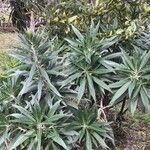
Echium pininana
Giant viper's-bugloss · Pine echium · Tree Echium · Tower of Jewels · Annual Borage
Description
Source: leafsnapEchium pininana, commonly known as the giant viper's bugloss or tree echium, is a striking flowering plant in the Boraginaceae family. Native to the Canary Islands and Morocco, it has also been introduced as an ornamental plant in various regions around the world. The giant viper's bugloss can reach heights of up to 4 meters and features a single stem with numerous branches adorned with clusters of blue or purple flowers in the summer. Its lance-shaped, hairy leaves have a rough texture. This plant thrives in well-drained soil and full sunlight but can tolerate partial shade. It is drought-tolerant once established, although it requires regular watering during its first year. Echium pininana is known for attracting bees, butterflies, and other pollinators with its nectar-rich flowers. However, it can self-seed aggressively if not properly managed. Overall, Echium pininana is an impressive addition to any garden or landscape, offering a striking appearance and the ability to attract pollinators while requiring minimal maintenance once established.
🌳 Although it is not commonly recognized for uses beyond ornamentation, giant viper's-bugloss serves as an important magnet for pollinators, particularly bees. Its tall flower spikes are full of nectar, offering considerable food for pollinating insects. This trait could be harnessed in beekeeping and conservation efforts to help support local ecosystems.
Care Guide
💧 Water Every 7 days
Native to the Canary Islands, the giant viper's-bugloss thrives in humid environments with consistent moisture. To keep the plant hydrated, water it weekly. Although it can withstand short dry spells, regular watering is beneficial. As an outdoor plant, the giant viper's-bugloss also benefits from rainfall that aligns with its seasonal growth cycles.
How should I water my Giant viper's-bugloss plant?
To care for the Giant viper's-bugloss, use filtered water at room temperature or slightly warmer. Tap water may contain harmful particles, so filtering is preferred. This plant is accustomed to a warm environment, so avoid using cold water as it can be a shock. Additionally, overhead watering should be avoided to prevent foliage complications. Instead, thoroughly soak the soil with your filtered, room temperature water. This will benefit the plant by moistening the roots and allowing them to spread and gather nutrients.
What should I do if I give too much or too little water to my Giant viper's-bugloss plant?
Overwatering is a common issue for Giant viper's-bugloss, and it can cause wilting, yellowing leaves, and serious diseases like root rot. Underwatering is less common, but it can make the leaves brittle and brown. It's important to recognize the signs of overwatering early on, as some diseases may be irreversible if left unchecked. Reduce watering and check the soil if you suspect overwatering, and increase watering if your plant shows signs of underwatering.
How frequently should I water my Giant viper's-bugloss plant?
If your Giant viper's-bugloss is in a pot, the best way to determine if it needs water is by checking the soil with your finger. If the top two to three inches are dry, it's time to water it. For those growing it outdoors in the ground, the same method applies. Once the first few inches of soil have dried out, it's time to water. Generally, during spring and early fall, watering once a week is sufficient. However, in extremely hot weather, watering may need to be increased to twice or more per week. It's important to note that mature, well-established Giant viper's-bugloss plants have a remarkable ability to tolerate drought.
How much water does my Giant viper's-bugloss plant need?
Here are some tips for watering your Giant viper's-bugloss plant: 1. Don't be hesitant to give it a generous amount of water. 2. Make sure the first two to three inches of soil are dry before watering. 3. Water the plant thoroughly to ensure all the soil is soaked. 4. The water should be enough to cause excess water to flow through the drainage holes at the bottom of the pot. 5. If you don't see water draining from the pot, you may have underwatered the plant. 6. Avoid letting water accumulate in the soil, as this is harmful to the plant. 7. Poorly draining soils should also be avoided, as they can be detrimental to the plant's health. 8. If the plant is outside, one inch of rain per week should be sufficient.
How should I water my Giant viper's-bugloss plant as it grows?
The water needs of the Giant viper's-bugloss can vary depending on its growth stages. When the plant is in its early years or has just been transplanted, it requires more water to support the growth of its new roots. These roots need extra moisture to thrive and facilitate future growth. As the plant matures, it will require less water. Additionally, during the bloom period, the Giant viper's-bugloss may need more water due to the significant moisture demands of flower development.
☀️ Light Full sun
Originating from habitats with abundant sunlight, giant viper's-bugloss performs best when it receives substantial sun each day. Insufficient light can impede its development, whereas too much light typically does not cause notable damage. Sunlight is important throughout its growth, allowing it to flower vigorously.
What are the sunlight requirements for Giant viper's-bugloss?
Giant viper's-bugloss requires above 6 hours of sunlight daily to thrive well. It is beneficial to observe how sunlight moves through your garden to find the perfect balance of light and shade for your plants, ensuring they remain happy and healthy. Derived from environments with ample sun exposure, this plant does best when getting extensive sunlight each day. Insufficient light may hamper its growth, but excessive light doesn't usually cause significant harm. The sun plays a crucial role in its growth stages, enabling it to bloom vigorously.
How can artificial lighting support indoor plants like Giant viper's-bugloss?
When natural sunlight is insufficient, especially in winter or in less sunny spaces, artificial lights provide a vital solution for indoor plants. These lights promote faster, healthier growth. LED lights are a popular choice for indoor plant lighting as they can be customized to provide specific wavelengths of light that plants need. Full sun plants require 30-50W/sq ft of artificial light, partial sun plants need 20-30W/sq ft, and full shade plants need 10-20W/sq ft. The light source should be placed 12-36 inches above the plant to mimic natural sunlight, and the duration of light exposure should mimic natural daylight hours, usually 8-12 hours per day.
What are signs of inadequate sunlight for Giant viper's-bugloss when grown indoors?
Symptoms of light deficiency in Giant viper's-bugloss include new leaves growing smaller in size, leggy or sparse growth with longer spaces between leaves or stems, faster leaf drop as the plant attempts to conserve resources, and slower or no new growth as the plant enters survival mode. Additionally, leaves may develop lighter coloration or irregular patterns, indicating a lack of chlorophyll and essential nutrients. These symptoms suggest the plant is not receiving adequate sunlight to thrive.
What solutions are available for Giant viper's-bugloss experiencing insufficient sunlight?
To combat insufficient sunlight, gradually move plants to a sunnier location each week until they receive at least 6 hours of direct sunlight daily. For indoor plants, use a south-facing window or consider using artificial light, such as a desk or ceiling lamp, for at least 8 hours daily. For outdoor plants, avoid sudden changes in light intensity to prevent sunburn. If it's large or not easily movable, investing in professional plant grow lights can provide ample light. Additionally, reducing obstructions like pruning branches from nearby trees or transplanting smaller plants during their dormant period to a location with more sunlight and good drainage can help achieve better light exposure.
🌡️ Temperature 15–35°C
Giant viper's-bugloss is a plant that grows best in temperatures from 68 to 95 °F (20 to 35 ℃). In its native habitat it is accustomed to moderate to warm climates and may need to be acclimated to cooler conditions in different seasons.
What is the ideal temperature range for Giant viper's-bugloss?
Giant viper's-bugloss thrives best in temperatures ranging from 68 to 95 °F (20 to 35 °C). In its native environment, it is accustomed to moderate to warm climates, adapting well to these conditions. It has some cold tolerance and does not generally require additional measures when the temperature is above 0°C. However, under temperatures expected to drop below 0°C, it is necessary to take temporary cold protection measures, such as wrapping the plant in materials like plastic film or fabric, which should be removed once the temperature rises again.
How does Giant viper's-bugloss react to low temperatures?
Giant viper's-bugloss has a moderate tolerance to low temperatures, thriving best above 20°C and needing to be kept above 0°C during winter. When temperatures plummet below -10°C, the leaves may begin to droop; they can recover in mild conditions but may wilt and fall off in severe cases. To protect the plant from frost damage, it is advised to trim off the frost-damaged parts and, prior to encountering low temperatures again, wrap the plant with non-woven fabric or cloth and construct a wind barrier to shield it from cold winds.
How does Giant viper's-bugloss react to high temperatures?
In the summer, it is best to keep Giant viper's-bugloss below 35°C. When the temperature surpasses 41°C, the leaves might fade in color, dry out at the tips, curl, and the plant can become more vulnerable to sunburn. The recommended solution for high temperature stress includes trimming away sunburned and dried portions of the plant, relocating it to a shaded area or using a shade cloth to block midday and afternoon sun, and watering it in the morning and evening to maintain soil moisture.
💨 Humidity
🪴 Soil 6-7
🌱 Fertilizer
Giant viper's-bugloss requires regular fertilization to encourage flowering but cannot tolerate excessive amounts. It needs small, frequent doses of fertilizer throughout its life, especially during the main period of active growth and while it is flowering. Continue feeding your Giant viper's-bugloss until it stops blooming.
Why should I put fertilizer on my Giant viper's-bugloss?
Properly fertilizing flowering plants like Giant viper's-bugloss can ensure healthier and more vibrant growth, resulting in brilliant blooms. These plants are known for their abundant blooming, making it essential to provide them with plenty of fertilizer to replenish the necessary nutrients for their growth. Nitrogen is particularly important as it promotes early season vegetative growth, while also maintaining green foliage through photosynthesis and chlorophyll production. Phosphorus plays a vital role in improving flower formation and strengthening the stems, as well as aiding in the capture and conversion of sunlight into usable energy for growth. Potassium is crucial for facilitating the movement of water, nutrients, and sugars within the plants, from the roots to the shoots. Additionally, it supports root growth and enhances the plants' ability to withstand periods of drought during the summer.
When should I fertilize my Giant viper's-bugloss?
Giant viper's-bugloss has a moderate appetite for fertilizer. It should be given small amounts of fertilizer regularly throughout its life, particularly during its peak growth and flowering periods. Feed your Giant viper's-bugloss until it stops blooming. Container-grown plants require more frequent fertilization compared to those planted in the ground due to the smaller root zone and limited nutrient availability.
When is it not a good idea to add fertilizer to my Giant viper's-bugloss plant?
Fertilizing can sometimes be harmful rather than helpful for Giant viper's-bugloss, especially when the plant is already stressed for other reasons. If the plant is dealing with diseases like downy mildew, powdery mildew, gray mold, or leaf spot, or if it has insect problems such as aphids, spider mites, or whiteflies, it is best to avoid fertilizing. Adding fertilizer in such cases weakens the plant's defenses and makes it more susceptible to other pest problems or disease infections. Additionally, it is important to avoid fertilizing when the soil surface has become hardened or too dry, as this increases the risk of fertilizer burn on the plant's roots. To address this, water the potting soil until slightly moist before applying fertilizer. Furthermore, during the hottest part of summer when Giant viper's-bugloss may go dormant, it is advised to refrain from fertilizing until growth resumes.
What kind of fertilizer does my Giant viper's-bugloss plant need?
Giant viper's-bugloss, a type of flowering bedding plant, thrives when given water-soluble or liquid fertilizers, particularly slow-release options. Granular fertilizers are not as ideal for container-grown plants as they tend to wash out of the container more quickly. When choosing a fertilizer, you can go for a balanced or all-purpose formula, or consider a bloom booster specifically designed for bedding plants. During the blooming period, bedding plants like Giant viper's-bugloss require more phosphorus. Fertilizers formulated to encourage flowering typically have lower nitrogen levels and higher phosphorus levels to promote bud development and blossoms rather than vegetative growth. Synthetic fertilizers with an approximate N-P-K ratio of 10-30-10 are suitable, while organic options with a ratio of 2-8-4 are also effective.
How do I make my Giant viper's-bugloss plant grow better?
When growing container plants, if your potting soil already contains slow-release fertilizer, there is no need to fertilize the seeds during planting. The initial fertilizer, combined with the nutrients in the seed's endosperm, will suffice for the first few weeks. However, if your potting soil lacks fertilizer, simply add a small amount of slow-release starter fertilizer to the potting mix before filling the containers. Once your plants reach six to eight weeks of age and you notice flower buds forming, you can begin fertilizing Giant viper's-bugloss every two weeks. Use one-third to one-half of the recommended rate mentioned on the product label. Maintain this fertilizing schedule until Giant viper's-bugloss stops blooming for the season.
🪴 Pot & Repot Every 12 months
✂️ Pruning
The giant viper's-bugloss is known for its vibrant flower spikes and thrives when pruned in early spring or late winter. By removing dead stems, you encourage new growth, and pinching back faded flowers extends the blooming period and reduces self-seeding. Pruning helps maintain shape and vigor, so be sure to use clean tools to prevent disease.
🌿 Propagating
🐛 Diseases & pets
☠️ Toxicity
Characteristics
- Plant Type
- Herb
- Life Cycle
- Biennial, Perennial, Annual
- Genus
- Echium
- Family
- Boraginaceae
- Hardiness Zone
- 8-10
- Mature Height
- 2.13 m
- Mature Spread
- 91 cm
- Leaf Color
- Silver, Green, Gray
- Leaf Type
- Evergreen
- Flower Color
- Blue, Purple
- Flower Size
- 2.54 cm
- Bloom Time
- Late spring, Early summer, Mid summer
- Planting Time
- Spring, Summer
- Harvest Time
- Early summer, Mid summer