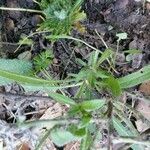
Echium plantagineum
Viper's-bugloss · Paterson's-curse · Blue echium · Purple echium · Lady Campbell-weed
Description
Source: leafsnapEchium plantagineum, commonly known as purple viper's-bugloss or Patterson's curse, is a species of the genus Echium native to western and southern Europe (from southern England south to Iberia and east to the Crimea), northern Africa, and southwestern Asia (east to Georgia). It has also been introduced to Australia, South Africa and United States, where it is an invasive weed. Due to a high concentration of pyrrolizidine alkaloids, it is poisonous to grazing livestock, especially those with very simple digestive systems, like horses.
🌳 Purple viper's bugloss has an uncommon ability to reveal the presence of certain metals in the soil, a characteristic that can be very useful for environmental monitoring. Its growth patterns and overall condition can mirror the concentrations of metals such as cobalt, and thus it can be applied in biogeochemical prospecting. The species is regarded as invasive in some areas, which, surprisingly, can benefit ecosystems by outcompeting more damaging invasive species and creating a naturalized balance.
Care Guide
💧 Water
Purple viper's bugloss is native to the Mediterranean region and thrives in environments with balanced moisture levels. It has some tolerance for short periods of drought, but to keep it healthy, especially during its critical flowering phase, it needs to be watered weekly. This plant is typically grown outdoors and can withstand moderate rainfall conditions.
How should I water my Purple viper's bugloss plant?
To water Purple viper's bugloss, you have a few options. You can use a garden hose with a spray nozzle, a watering can, or any other common watering tool. This plant isn't too picky about water sources - rainwater, tap water, or filtered water will all work. However, avoid watering from above as it can harm the leaves and flowers and potentially cause disease. Instead, consider using a drip irrigation system, as it evenly and directly applies water to the soil. If you have a container-grown Purple viper's bugloss, you can use the same watering approach but change the tools. A cup, watering can, or tap water can all be used to apply water directly to the soil.
What should I do if I give my Purple viper's bugloss plant too much or too little water?
The solution to underwatering Purple viper's bugloss is simple: water it more regularly when you notice it lacks moisture. However, overwatering can be a bigger issue, potentially leading to diseases and the plant's decline. To avoid this, choose a suitable location for your Purple viper's bugloss. It should receive plenty of sunlight to dry the soil and have good drainage to prevent water from pooling and causing waterlogged conditions. If your potted plant is overwatered, you may need to change it to a new pot. Ensure the new pot has proper drainage holes and use loose soil for repotting.
How often should I water my Purple viper's bugloss plant?
Purple viper's bugloss requires regular watering throughout the growing season. In the spring, water it once a week, and as the season progresses and gets warmer, increase watering to two to three times per week. However, excessive watering can harm the plant. It's important to keep the soil moist but not wet. When watering Purple viper's bugloss in a pot, the frequency should be higher compared to the plant in the ground. Generally, watering a container-grown Purple viper's bugloss a few times per week is recommended, whereas an in-ground plant only needs watering once a week.
How much water does my Purple viper's bugloss plant need?
Determining the proper amount of water to give your Purple viper's bugloss can be done through a few different methods. Some gardeners prefer to feel the soil to assess moisture levels, suggesting that watering should continue until the top six inches of soil are moist. Alternatively, you can use a set measurement, such as about two gallons per week, taking into consideration factors like temperature and soil dryness. However, it's important to avoid overwatering if your plant requires less water. In the case of growing in a container, a different approach is needed. Water should be applied until all layers of soil are moist, which can be gauged by inserting a finger into the soil or observing water drainage from the pot.
How do I know if I'm giving enough water to my Purple viper's bugloss plant?
Purple viper's bugloss plants have deep roots and need to be watered weekly, but they are prone to root rot if overwatered. Overwatering can also cause browning. Underwatering is less of a concern as these plants can survive without supplemental watering, but if they go too long without water, they may wilt and develop dry leaves.
☀️ Light Full sun
The purple viper's bugloss, native to sun-drenched environments, flourishes best when subject to generous sunlight during its various growth phases. Insufficient sunshine could compromise its health, reducing its flowering capacity. Generally, this plant can withstand direct sunlight, as it is native to areas with unobstructed solar exposure. However, when placed in an environment with inadequate light, its growth rate and color vibrancy can be somewhat diminished.
What are the sunlight requirements for Purple viper's bugloss?
Purple viper's bugloss requires full sun, which means it needs above 6 hours of sunlight each day to thrive optimally. Observing how sunlight moves through your garden can help you choose the perfect balance of light and shade for the plant, ensuring it stays healthy and happy. If the plant doesn't receive enough sunlight, it could lead to unhealthy growth and limited flowering, as it originally comes from sunny habitats and is accustomed to unfiltered solar rays in its natural environment.
How does insufficient sunlight affect Purple viper's bugloss and what are the symptoms?
When Purple viper's bugloss is grown indoors or in conditions with inadequate light, it may exhibit symptoms of light deficiency such as small leaves, leggy or sparse growth, faster leaf drop, slower or no new growth, and lighter-colored new leaves. These symptoms indicate the plant is struggling with the available light conditions. Additionally, excessive sunlight can lead to chlorosis, sunscald, leaf curling, wilting, and leaf scorching, demonstrating the plant's sensitivity to both under and overexposure to light.
What solutions are recommended for Purple viper's bugloss experiencing light-related issues?
For indoor situations, gradually moving your Purple viper's bugloss to a sunnier location each week until it receives at least 6 hours of direct sunlight daily is recommended. Using a south-facing window and keeping curtains open during the day can help. Artificial lighting, such as keeping a desk or ceiling lamp on for at least 8 hours daily or investing in professional plant grow lights, can also provide sufficient light. Outdoors, gradually moving plants to sunnier locations can prevent sunburn, while reducing obstructions or transplanting smaller plants during their dormant period to areas with ample sunlight can improve their health. Note that parts of the plant affected by insufficient sunlight may not recover, but new growth should be healthy after improving light exposure.
Can artificial lighting be used for Purple viper's bugloss and how should it be implemented?
Yes, artificial lighting can be used for Purple viper's bugloss, especially in situations where natural sunlight is insufficient, such as in winter or less sunny spaces. It's essential for indoor plants' optimal growth. LED lights are recommended because they can be customized to provide specific wavelengths of light that plants need. The right amount of artificial light varies: full sun plants need 30-50W/sq ft, partial sun plants 20-30W/sq ft, and full shade plants 10-20W/sq ft. The light source should be placed 12-36 inches above the plant to mimic natural sunlight, and most plants will benefit from 8-12 hours of light per day.
🌡️ Temperature 0–32.2°C
The purple viper's bugloss originates from areas with warm temperate climates, making it suitable for a temperature range of 68 to 95 °F (20 to 35 ℃). During the colder months, make sure the purple viper's bugloss receives enough heat to mimic its typical habitat.
What is the native climate for Purple viper's bugloss?
Purple viper's bugloss, scientifically known as Echium plantagineum, thrives in regions with warm temperate climates, ideally with temperatures ranging between 68 to 95 °F (20 to 35 ℃). It is adapted to maintain sufficient warmth during cooler months to emulate its natural environments, making it well-suited for areas within this temperature range.
Does Purple viper's bugloss require frost protection measures during winter?
Purple viper's bugloss exhibits strong cold resistance, usually negating the need for special frost protection measures in winter. However, in conditions where winter temperatures are expected to plummet below -35°C, it is crucial to provide cold protection. This can be achieved by covering the plant with insulating materials like soil or straw. Additionally, watering the plant abundantly before the first freeze in autumn, ensuring the soil stays moist, helps prevent drought and water scarcity through winter and early spring.
How does low temperature affect Purple viper's bugloss and what are the solutions?
Purple viper's bugloss is cold-tolerant, optimally thriving at temperatures over 20°C and should be maintained above 0°C during winter. Exposure to temperatures below -35°C might not show immediate changes during winter but could lead to a decrease in sprouting or even no sprouting in spring. To combat this, any un-sprouted parts should be removed at the beginning of spring.
What symptoms does Purple viper's bugloss show under high temperature stress, and how can they be mitigated?
When Purple viper's bugloss experiences temperatures above 35°C, particularly exceeding 38°C, its leaves may turn lighter, curl, become prone to sunburn, and, in severe cases, the entire plant might wilt and dry. Mitigation involves trimming away the sunburned and dried-up parts, moving the plant to a shaded location, or using a shade cloth to protect it from midday and afternoon sun. Additionally, watering the plant during morning and evening hours helps keep the soil moist, further aiding in its recovery and health.
💨 Humidity dry (<40%)
This plant prefers dry conditions, so don't mist it. However, watering it less often can also thrive in higher humidity.
🪴 Soil 6-7
🌱 Fertilizer
When the majority of the Purple viper's bugloss blossoms have fully opened, it signals the appropriate time to recommence fertilization. Commence fertilizing once more approximately every three to four weeks, weather permitting, when the flowering is at its maximum. Subsequently, when the Purple viper's bugloss starts generating fewer new blossoms, discontinue fertilizing as it's unnecessary when the plant ceases to produce further blooms.
🪴 Pot & Repot
✂️ Pruning
Purple viper's bugloss showcases stunning blue-purple flowers and benefits from regular pruning between early and late spring. To keep the plant healthy and looking its best, remove any dead stems and overgrown branches. This helps maintain its shape, improves airflow, and allows more sunlight to reach the plant. As a result, the plant becomes more vigorous, produces more flowers, and maintains an attractive appearance.
🌿 Propagating
🐛 Diseases & pets
☠️ Toxicity
Echium plantagineum contains pyrrolizidine alkaloids and is poisonous. When eaten in large quantities, it causes reduced livestock weight, and death in severe cases, due to liver damage.
Characteristics
- Plant Type
- Herb
- Life Cycle
- Annual, Biennial, Perennial
- Genus
- Echium
- Family
- Boraginaceae
- Hardiness Zone
- 3-8
- Mature Height
- 20 cm to 61 cm
- Mature Spread
- 40 cm to 49 cm
- Leaf Color
- Green
- Leaf Type
- Evergreen
- Flower Color
- Purple, Blue
- Flower Size
- 5.08 cm to 15.24 cm
- Bloom Time
- Late spring, Early summer, Mid summer
- Planting Time
- Spring, Summer
- Harvest Time
- Mid summer
- Native Area
- Libya, Egypt, Turkey, Tunisia, Montenegro, Cyprus, Bulgaria, Armenia, Greece, Croatia, Slovenia, Morocco, North Macedonia, Belarus, Lebanon, Russia, Serbia, Syria, Jordan, Italy, Spain, Bosnia and Herzegovina, Israel, France, Albania, Azerbaijan, United Kingdom, Algeria, Portugal