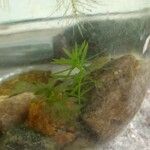
Egeria densa
Brazilian elodea · Brazilian waterweed · Egeria · Leafy elodea · Dense waterweed
Description
Source: leafsnapEgeria densa, commonly known as Brazilian waterweed or Anacharis, is a popular aquatic plant native to South America. It is a fast-growing submerged plant that can reach up to 2 meters in length, featuring long, slender stems adorned with whorls of bright green leaves. The leaves are narrow, pointed, and have a slightly serrated edge. This plant is widely used in aquariums as it provides excellent cover for fish and other aquatic creatures. Additionally, it helps to oxygenate the water by absorbing carbon dioxide and releasing oxygen through photosynthesis. Egeria densa can be easily propagated by stem cuttings, which can be planted directly into the substrate of an aquarium or pond. It prefers moderate lighting conditions but can also tolerate low light levels. Beyond its use in aquariums, Egeria densa is employed in phytoremediation due to its ability to absorb excess nutrients like nitrogen and phosphorus from water bodies, which are often responsible for algal blooms. Overall, Egeria densa is an attractive and beneficial aquatic plant, offering numerous aesthetic and environmental benefits.
Care Guide
💧 Water Every 7 days
The Brazilian waterweed thrives in warm temperate to tropical freshwater environments with consistent moisture. It can adapt to different water levels, and its growth is supported by weekly watering. As an aquatic plant, Brazilian waterweed plays a crucial role in oxygenating water, which helps maintain the ecological balance in indoor aquariums or ponds.
How should I water my Brazilian waterweed?
To properly care for the Brazilian waterweed, it is important to use filtered water at room temperature or slightly warmer. Tap water may contain harmful particles that can affect the plant's health. Since the Brazilian waterweed is accustomed to warm environments, using cold water can be a shock. It is also best to avoid overhead watering, as it can cause problems with the foliage. Instead, water the plant by applying filtered room temperature water directly to the soil until it is completely soaked. This method benefits the plant by moisturizing the roots and aiding in their spread through the soil to gather necessary nutrients.
What should I do if I give my Brazilian waterweed too much or too little water?
Overwatering is a common issue that can harm your Brazilian waterweed. When this happens, the stems and leaves may wilt and turn yellow. Overwatering over a long period can lead to diseases like root rot, mold, and mildew, which can be deadly for your plant. Underwatering is less common but still possible. In this case, the leaves may become brittle and brown. It's important to notice the signs of overwatering early to prevent irreversible damage. Reduce watering immediately if you see these signs and consider improving soil drainage. If your waterweed is receiving too little water, simply water more regularly until the signs disappear.
How often should I give water to my Brazilian waterweed?
If your Brazilian waterweed is in a pot, the most precise way to check if it needs water is to feel the soil with your finger. When you notice that the top two to three inches of soil are dry, it's time to water it. The same method can be used if you grow your Brazilian waterweed in the ground outdoors. Once the top few inches of soil are dry, it's time to water the plant. Generally, in the spring and early fall, watering once a week is sufficient. However, during extremely hot weather, you may need to water it twice a week or more. It's worth noting that mature, well-established Brazilian waterweed is quite resilient and can tolerate drought.
How much water does my Brazilian waterweed require?
To ensure the well-being of your Brazilian waterweed, don't hold back on watering it. Wait until the top two to three inches of soil are dry, then give the plant a thorough and extended watering. Make sure you add enough water to saturate the soil entirely. The water quantity should be sufficient to cause excess water to flow out from the drainage holes at the bottom of the pot. If you don't observe this excess water drainage, it means you haven't given enough water to the plant. However, be cautious not to let the water collect within the soil, as it can harm the plant. On the other hand, if the water is not draining properly from the pot, it indicates that the soil doesn't have good drainage. This condition can negatively affect the plant's health and should be avoided. If the plant is outdoors, receiving about 1 inch of rainfall per week will be enough.
How do I water my Brazilian waterweed as it grows?
The water needs of the Brazilian waterweed vary depending on its growth stages. When the waterweed is young or when it has recently been transplanted, it requires more water than usual. During these stages, the waterweed focuses on growing new roots to support future growth, requiring a slightly higher moisture level. As the waterweed matures, it will require less water. Additionally, during the bloom period, when the waterweed is developing flowers, it may need more moisture, so it's important to provide extra water during this time.
☀️ Light Full sun
The Brazilian waterweed does best in places with strong, plentiful sunlight. Native to light-rich habitats, both too little and too much light impair its healthy growth. At every stage of growth it needs continuous light. However, it can tolerate less-than-ideal lighting conditions.
What are the sunlight requirements for Brazilian waterweed?
Brazilian waterweed thrives in locations that receive full sun, defined as areas with more than 6 hours of sunlight daily. It's crucial for these plants, originating from habitats abundant in light, to have consistent access to sunlight throughout their various growth stages. While they can endure less than optimal light conditions, a lack or excess of sunlight can impair their health. Observing how sunlight moves through your garden will help you choose spots with the right balance of light and shade, ensuring the plants' happiness.
How can artificial lighting support Brazilian waterweed indoor growth?
When natural sunlight is insufficient for Brazilian waterweed, especially in winter or in less sunny spaces, artificial lighting becomes a vital alternative. Adequate lighting with artificial sources is essential for optimal growth. LED lights, which can be adapted to provide specific light wavelengths needed by plants, are a popular choice. The appropriate intensity depends on the plant's natural sunlight need, with full sun plants requiring 30-50W/sq ft, partial sun plants 20-30W/sq ft, and full shade plants 10-20W/sq ft. The light source should be placed 12-36 inches above the plant, mimicking natural sunlight, and provided for 8-12 hours per day to suit the plant species' natural day length.
What are common symptoms of inadequate lighting in Brazilian waterweed?
Symptoms of inadequate lighting in Brazilian waterweed include small or lighter-colored new leaves, indicating a lack of chlorophyll and essential nutrients. Plants may also exhibit leggy or sparse growth, faster leaf drop, and enter a survival mode, leading to slower or halted growth. Extreme sunlight conditions can cause chlorosis (leaf yellowing from chlorophyll breakdown), sunscald (damage from intense sunlight), leaf curling (a defense mechanism), wilting (due to increased water loss), and leaf scorching (brown, dry edges on leaves due to excessive sunlight). These symptoms highlight the plant's struggle in unsuitable light conditions.
What are some effective solutions for addressing light-related issues in Brazilian waterweed?
To address light-related issues in Brazilian waterweed, it's advised to gradually move plants to sunnier locations until they receive at least 6 hours of direct sunlight daily. For indoor plants, using a south-facing window or artificial lighting, such as desk lamps or grow lights for at least 8 hours daily can provide the necessary light. Outdoors, it's crucial to avoid sudden changes to prevent sunburn. Reducing obstructions and considering transplanting smaller plants to sunnier spots with good drainage are also effective strategies. It's important to note that while damaged parts may not recover, new growth will be healthy after adjusting the light exposure.
🌡️ Temperature 5–37.8°C
Brazilian waterweed originates from temperate regions and thrives at temperatures between 41 and 100.4 °F (5 to 38 ℃). In cold winters or very hot summers, you may need to adjust its surroundings to keep it within this ideal temperature range.
What is the native environment of Brazilian waterweed?
Brazilian waterweed, also known by its botanical name Egeria densa, thrives naturally in temperate climates. It prefers temperatures ranging from 41°F to 100.4°F (5°C to 38°C). This plant has a robust cold resistance, making it well-suited to a variety of weather conditions, though it may need environmental adjustments to stay within this optimal temperature range during extreme weather.
How do you protect Brazilian waterweed in winter?
Although Brazilian waterweed possesses strong cold resistance and typically doesn't require special frost protection measures, it is important to provide extra care if winter temperatures are expected to plunge below -25°C. Protection can be offered by covering the plant with insulating materials, such as soil or straw. Additionally, watering the plant abundantly before the onset of the first freeze in autumn is crucial. This ensures the soil remains moist and enters a frozen state, which helps prevent drought and water scarcity for the plant throughout the winter and early spring.
What are the key temperature-related symptoms and solutions for Brazilian waterweed?
Brazilian waterweed shows different symptoms and requires specific solutions based on the temperature. For low temperatures, while it is cold-tolerant and can survive above 5°C, it should ideally be kept above -20°C, and extra care is needed if temperatures drop below -25°C. In the latter scenario, there may not be any noticeable changes during winter, but a decrease or absence of sprouting can occur in spring. The solution involves removing any parts that fail to sprout. For high temperatures, when the thermometer climbs above 38°C and especially if it exceeds 43°C, the plant's leaves might lighten, become prone to curling and sunburn, and the plant may wilt and dry in severe cases. To combat this, trim the sunburned and dried parts, relocate the plant to a shaded area during intense sun exposure, or use a shade cloth. Ensuring the soil remains moist by watering the plant in the morning and evening is also beneficial.
💨 Humidity
🪴 Soil
🌱 Fertilizer
To ensure optimal growth, Brazilian waterweed needs a balanced fertilizer containing nitrogen, phosphorus, and potassium. During the growing season, apply this fertilizer monthly in a diluted form. When using liquid fertilizers in its aquatic habitat, exercise caution and consider using special formulations designed to protect water quality and prevent over-fertilization.
Why is it important to put plant food on my Brazilian waterweed?
The main structure of the Brazilian waterweed is formed by its leaves. To keep these leaves healthy and functioning properly, fertilization is crucial. By fertilizing the plant, you can ensure that its leaves maintain a consistent color and a healthy texture. Additionally, fertilization plays a role in the plant's root system. It helps the plant develop new roots and maintain existing ones, enabling it to absorb nutrients from the soil more effectively in the future. Therefore, fertilization not only keeps your plant healthy in the present, but also improves its ability to absorb soil nutrients in the long term.
When should I fertilize my Brazilian waterweed?
To maximize the growth of your Brazilian waterweed, start by looking for new growth in early spring. This is your cue to begin fertilizing. Usually, a single application of fertilizer is enough. However, if you really want to boost growth, you can fertilize multiple times throughout the spring and early summer, about once every month to a month and a half.
When is it best to not put fertilizer on my Brazilian waterweed?
During late fall and winter, your Brazilian waterweed goes into a dormant phase, meaning it stops growing. During this time, it's important to avoid fertilizing it. As spring and summer approach, if you choose to fertilize, start reducing the amount because the growth rate of the Brazilian waterweed also slows down. It's never a good idea to fertilize when the weather is unusually hot or the soil is very dry, as it can cause stress and premature death of the plant.
What kind of fertilizer does my Brazilian waterweed require?
Choosing the best fertilizer for a Brazilian waterweed is actually straightforward. These plants thrive on a general-purpose garden fertilizer with equal amounts of nitrogen, phosphorus, and potassium. A fertilizer with a ratio of 10-10-10 or something similar works well. Avoid fertilizers with high amounts of nitrogen if unsure. Granular fertilizers are most effective and easy to apply, especially slow-release ones. Additionally, feeding the waterweed with compost or other organic soil amendments can be beneficial.
How can I make my Brazilian waterweed grow better?
To ensure optimal growth of your Brazilian waterweed, wait until its first leaves emerge in early spring. Once you notice this, apply a balanced slow-release fertilizer to the soil surrounding the plant's base. You can repeat this process later in the season if desired. Remember to apply the fertilizer to the soil at the base of the plant, not directly onto the plant itself. This may involve moving some leaves to access the soil above the roots. Additionally, it's beneficial to water your Brazilian waterweed before and after fertilizing.
🪴 Pot & Repot
✂️ Pruning
Brazilian waterweed is an aquatic plant known for its dense growth and long stems. To manage its spread and improve water circulation, it is best to prune the plant from early to late spring. When pruning, make cuts just above the leaf nodes to encourage branching. Always use clean, sharp tools to prevent disease, which will help ensure that your plant remains healthy and attractive.
🌿 Propagating
🐛 Diseases & pets
☠️ Toxicity
Characteristics
- Plant Type
- Herb
- Life Cycle
- Perennial
- Genus
- Egeria
- Family
- Hydrocharitaceae
- Hardiness Zone
- 5-11
- Mature Height
- 3.96 m
- Mature Spread
- 2.13 m
- Leaf Color
- Green
- Leaf Type
- Semi-evergreen
- Flower Color
- White
- Flower Size
- 1.27 cm to 2.03 cm
- Bloom Time
- Summer, Early fall, Mid fall
- Planting Time
- Spring
- Harvest Time
- Mid summer, Late summer, Fall
- Native Area
- Uruguay, Colombia, Argentina, Bolivia, Venezuela, Brazil