Ehretia microphylla
Fukien-tea · Philippine-tea · Scorpion-Bush · Ceylon boxwood · Fukien tea tree
Description
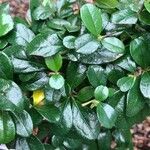
Source: leafsnapEhretia microphylla, also known as the Fukien tea tree or Philippine tea tree, is a small, evergreen tree or shrub native to Asia and Africa. Belonging to the family Boraginaceae, this plant features a dense, bushy growth habit with small, glossy, dark green leaves. In summer, it produces tiny white flowers in clusters, which are followed by small red berries. The Fukien tea tree is widely grown as an ornamental plant due to its attractive foliage and delicate flowers. It can be cultivated both indoors and outdoors in warm climates with well-draining soil that retains moisture well. Although the plant requires regular watering, overwatering should be avoided to prevent root rot. In traditional medicine, various parts of Ehretia microphylla have been used to treat ailments such as fever, coughs, sore throat, and other respiratory issues. Overall, Ehretia microphylla is an appealing ornamental plant with potential medicinal properties, making it a popular choice for gardeners worldwide.
🎭 Affection, dedication, fertile
Care Guide
💧 Water Every 7 days
The Philippine tea tree is drought-tolerant and thrives best with occasional moisture instead of constant wetness. It should be watered every 2-3 weeks, allowing the soil to dry slightly between waterings. Preferring well-draining soil, the Philippine tea tree is ideally grown outdoors to support its growth pattern and prevent root rot.
☀️ Light Full sun
The fukien tea tree grows best with abundant sunlight. This hardy plant can also tolerate spots with moderate light. However, too much direct sun can burn the leaves, and too little light can limit its growth. Native to areas that receive plenty of sunshine, it does well in comparable lighting conditions.
🌡️ Temperature 20–37.8°C
The fukien tea tree comes from tropical and subtropical regions where temperatures range from 68 to 100.4 ℉ (20 to 38 ℃). This temperate woody plant favors a warm, humid environment, with daytime temperatures of 70 to 80 ℉ (21 to 27 ℃) and nighttime temperatures of 55 to 65 ℉ (13 to 18 ℃). During hot summer months, it’s best to move the plant so it remains between 68 and 85 ℉ (20 to 29 ℃).
💨 Humidity
🪴 Soil 6-7
🌱 Fertilizer Every 40 days
Fertilizing is essential for the care of the Fukien tea tree. Regular applications during the growing season preserve the energy needed for its showy foliage and encourage overall growth. Failure to fertilize can lead to unhealthy leaves, reduced ornamental value, and stunted or fragile growth that is susceptible to breaking.
🪴 Pot & Repot 2-3 years
When repotting a Fukien tea tree, choose a pot 1-2 inches (2.5–5.1 cm) larger with ample drainage. Use a well-draining potting mix. Repot in spring or fall, making sure the root ball sits slightly below the rim of the flower pot. Water thoroughly after repotting and place in a warm spot with indirect sunlight.
✂️ Pruning
The Fukien Tea tree does not require extensive pruning as the leaves are naturally small and may retain its shape for a long period of time. Pruning is, however, not detrimental but beneficial to the plant. Use a sharp pruner to trim young shoots that have developed 6-8 leaves and also cut mature branches off. When pruning the shoots, ensure to leave at least two or three leaves to avoid damage to your tree. It is great to do this throughout the year as required.
🌿 Propagating
🐛 Diseases & pets
☠️ Toxicity
Although the Fukien Tea is edible and is used in the Philippines as a herbal remedy to treat some stomach disorders and coughs, the leaves of the tree can be mildly toxic to humans and pets(dogs, cats) if ingested in excessive quantities, causing irritation to the stomach and oral cavity. It is best to keep them out of reach of inquisitive children and household pets, and contact a veterinarian if you notice symptoms of irritation after excessive consumption.
Characteristics
- Plant Type
- Shrub
- Life Cycle
- Perennial
- Genus
- Ehretia
- Family
- Boraginaceae
- Hardiness Zone
- 10-11
- Mature Height
- 0.91 m to 3.05 m
- Mature Spread
- 40 cm
- Leaf Color
- Green
- Leaf Type
- Evergreen
- Flower Color
- White
- Flower Size
- 2.54 cm
- Bloom Time
- All year round
- Planting Time
- Spring, Autumn
- Harvest Time
- All year round
- Native Area
- Sri Lanka, India, Malaysia, Indonesia, Cambodia, Vietnam, Myanmar, Japan, Philippines, Laos, Australia, Thailand, China