Elaeagnus angustifolia
درخت سنجد · Russian olive · Oleaster · Trebizond-date · Eastern Oleaster
Description
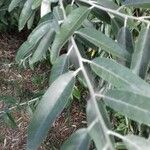
Source: leafsnapElaeagnus angustifolia, commonly known as Russian olive or oleaster, is a deciduous tree or large shrub native to central and southwestern Asia. It can grow up to 10 meters tall and features a spreading crown with thorny branches. The leaves are narrow and silvery-green, while the small, fragrant flowers are yellowish-white and bloom in late spring or early summer. The plant produces small, edible drupes that ripen in late summer or early fall. Russian olive has been widely introduced as an ornamental plant due to its attractive foliage, fragrant flowers, and drought tolerance. However, it has also become invasive in some areas of North America, where it outcompetes native vegetation. The plant has been used for various medicinal purposes, such as treating respiratory infections and skin conditions like eczema and psoriasis. It also contains antioxidants that help protect against cell damage caused by free radicals. Overall, Elaeagnus angustifolia is an interesting species with both positive attributes, such as its ornamental value, and negative impacts on local ecosystems where it becomes invasive.
🌳 Russian olive is valued for more than just ornamentation and its tart fruits being made into preserves. Its seeds yield an oil that serves as a vital fuel source in areas with few resources and is also used to condition leather. Surprisingly, its tough wood is fashioned into decorative furniture. Additionally, its unique flavor is prized by enthusiasts of natural sweeteners.
🎭 Restoration, Tranquility, Fertility
Care Guide
💧 Water Every 7 days
The Russian olive is a drought-tolerant plant that thrives in regions with sporadic rainfall. It requires moderate watering every 1-2 weeks and prefers well-draining soil to avoid waterlogging during active growth. Although typically grown outdoors, it adapts well to the natural variability in precipitation.
How should I water my Russian olive tree?
To promote excellent root development, place a garden hose at the base of your plant, avoiding direct spraying of the leaves. If the leaves are outdoors and in direct sunlight, they will need more watering. You can also use bubblers to moisten the roots of each plant, and soaker hoses to cover the entire garden or bed when adding or removing plants to ensure deep root growth. Make sure to drain any excess water and wait for the soil to dry before watering again. Water at ground level to prevent diseases. On a sunny day, consider spraying the entire bush with water. Whether your Russian olive is potted or in the ground, remember to give it deep watering rather than light sprinkling.
What should I do if I give the Russian olive tree too much or too little water?
An overwatered Russian olive can show signs such as yellowing, dropping leaves, and wilting. The plant may also appear dull and unhealthy, with mushy stems. In these cases, it's best to adjust your watering schedule if possible. Wilting can also occur due to under watering, which will cause the leaves to become crispy and dry. When the soil is dry and simply watering is insufficient, give the plant a thorough watering. Sufficient water will help the Russian olive recover, but it may still have dry, yellow leaves for a few days due to root damage. Once it returns to normal, the yellowing of the leaves will cease. When keeping a Russian olive indoors, always check the moisture levels in the pot. Avoid overwatering, and look for signs of black spots. If present, allow the soil to dry out by refraining from watering for a few days. Overwatering can lead to root rot, so if you notice discolored and slimy roots, consider transferring the plant to a different pot. Take measures to prevent root rot, and avoid making the soil too soggy. When planting Russian olives outdoors, dig a bit deeper. If you find that the soil is too dry when checking with your fingers, it could be a sign of under watering. Proper watering is necessary to help the plant recover.
How frequently do I need to water my Russian olive tree?
The Russian olive prefers deep and infrequent watering. If you have them planted in pots, be sure to soak them with a gallon of water each time, as the soil in pots tends to dry out quickly. In colder regions, water the plants every 3 to 5 days, preferably in the morning when the soil is dry. You can tell if the plant needs water by checking the top 2-3 inches of soil - if it's dry, it's time to water fully. On hot days, check the moisture daily as the heat can dry out the soil fast. If you have a garden, you'll need to water the soil regularly, perhaps once a week in hot climates. Make sure the top 2-3 inches of soil aren't too dry before watering. Take into account rainfall and avoid overwatering to prevent root rot. Russian olive plants typically grow in spring and fall, so mulching with 3 to 4 inches of depth can help conserve water. If you have sandy soil, water more frequently, as it drains faster. But if you have clay soil, water less frequently, allowing 2-3 days for the plant to dry out and prevent root rot. Keep track of watering dates on the calendar, and if you notice the leaves drooping, you may need to water a day earlier.
How much water should I give my Russian olive tree?
The Russian olive tree needs about a gallon of water on a regular schedule. For potted plants, water them deeply until water is dripping from the bottom of the pot. Then, allow the soil to dry before watering again. Use a water calculator or moisture meter to track the amount given to your plant each week. Water well during flowering, but allow moisture to evaporate to avoid root rot. If the Russian olive tree is planted outdoors with sufficient rainfall, additional watering may not be necessary. In the beginning, make sure it receives 1-2 inches of rain per week. As the tree grows, it can survive on rainfall alone. Only water during extreme heat or prolonged dry periods.
Should I change how often I water my Russian olive tree depending on the time of year or the weather?
To ensure the healthy growth of Russian olive, proper watering practices are important. During the spring and fall seasons, it is necessary to keep the soil moist but not overly saturated. Alternating between dry and moist soil conditions will promote optimal growth. In the hot summer weather, water can evaporate quickly, so additional watering may be required if there is a lack of rainfall. However, during the winter when the plant is dormant, less watering is needed. A well-draining soil mixture like terracotta can help with proper water evaporation. Once the Russian olive starts to leaf out in the spring, watering can be skipped, as it can rely on rainfall during the dormant period. When cultivating Russian olive, good drainage is crucial, especially in winter. In pots, the plant's root growth is limited, so proper watering is essential, especially during summer. Deep soaking the entire root system once or twice a week is recommended, while shallow sprinkles should be avoided, as they can encourage fungal growth and don't reach the roots effectively. During fall and winter, it's important not to let the Russian olive dry out completely, even in dormancy. Avoid overwatering, as prolonged waterlogging can be harmful, particularly during winter. Applying mulch when possible can help reduce stress, conserve water, and encourage healthy blooms.
☀️ Light Full sun
The Russian olive benefits from full-day sun exposure, promoting robust growth. It developed in an environment with plentiful light, which shaped its tolerance of sunlight. While it flourishes under continuous sun, it can endure periods of partial shade. Excessive shade can impede growth, while an abundance could cause scorching.
What are the sunlight requirements for Russian olive?
Russian olive, or Elaeagnus angustifolia, thrives with a full day's worth of solar exposure which is crucial for its vigorous growth. Originating from an environment with ample sunlight, it has developed a resilience to constant solar immersion. While it can withstand some semi-shade, excessive shade may impede its growth, and too much direct sunlight could cause scorching. It's beneficial to note that full sun is defined as over 6 hours of sunlight per day, while partial sun refers to about 3-6 hours of sunlight.
How can artificial lighting be used for Russian olive indoor care?
For Russian olive or other indoor plants lacking natural sunlight, especially in winter or less sunny spaces, artificial lighting serves as an essential growth promoter. LED lights are often recommended due to their ability to offer specific light wavelengths needed by plants. Full sun plants require 30-50W/sq ft, partial sun plants 20-30W/sq ft, and full shade plants 10-20W/sq ft of artificial light. The light source should be placed 12-36 inches above the plant, mimicking natural sunlight as closely as possible, with 8-12 hours of light per day to simulate natural daylight hours.
What are the common symptoms of insufficient sunlight in Russian olive?
When Russian olive does not receive enough sunlight, several symptoms might appear, including smaller new leaves, leggy or sparse growth, accelerated leaf drop, delayed or halted growth, lighter-colored new leaves, and even chlorosis where leaves lose their green color. Additionally, excessive sunlight exposure can lead to symptoms like sunscald, leaf curling, wilting, and leaf scorching. These conditions indicate the plant's struggle with its lighting environment.
What solutions can be applied to sunlight-related issues for Russian olive?
To tackle sunlight-related issues for Russian olive, inducing optimal growth involves gradually moving the plant to receive at least 6 hours of direct sunlight daily. For indoor plants, using south-facing windows or providing additional artificial light for at least 8 hours daily can help. Outdoors, adapting plants to sunlight gradually to prevent sunburn is crucial. For ground-planted Russian olive, reducing obstructions like pruning trees or transplanting to sunnier locations ensures better sunlight exposure. However, while adjusting light exposure can promote healthy new growth, parts previously affected may not recover fully.
🌡️ Temperature 5–35°C
The russian olive prefers to grow in its native environments where temperatures range from 23 to 77 ℉ (-5 to 25 ℃). Its temperature preferences span 41 to 95 ℉ (5 to 35 ℃). In the summer months, extra watering is recommended when temperatures exceed 90 ℉ (32 ℃). During winter, it can tolerate temperatures down to 5 ℉ (-15 ℃) provided it is well-drained.
What are the temperature preferences and care guidelines for Russian olive trees?
Russian olive trees, or Elaeagnus angustifolia, thrive in temperatures ranging from 23 to 77°F (-5 to 25°C) in their native environments. They prefer temperatures from 41 to 95°F (5 to 35°C) and require extra water when temperatures exceed 90°F (32°C) during summer. In winter, they can endure temperatures as low as 5°F (-15°C) if the soil is well-drained. Despite their strong cold resistance, in regions where temperatures may fall below -30°C, it's advisable to wrap the plant's trunk and branches with non-woven fabric or cloth for cold protection. Additionally, before the first freeze in autumn, watering the plant abundantly to keep the soil moist helps to prevent drought and water scarcity during winter and early spring.
How should you care for Russian olive trees in low temperature conditions?
Russian olive trees are notably cold-tolerant and perform best when temperatures stay above 5°C. During the winter months, ensuring the temperature does not fall below -25°C is beneficial. If temperatures plummet below -30°C, you may not observe immediate damage during winter, but come spring, branches might become brittle and dry, and new shoots may fail to emerge. To mitigate this, prune away any dead branches in the spring that have not produced new leaves, thus helping the tree maintain its health and vigor.
What care do Russian olive trees require in high temperature conditions?
In high temperature conditions, particularly during the summer when temperatures rise above 35°C and even more so above 41°C, Russian olive trees can experience stress. The signs include leaves becoming lighter, tips drying and withering, and an increased susceptibility to sunburn. To care for your tree under these conditions, remove sunburned and dried parts. Transitioning the plant to a location with more shade during the midday and afternoon sun, or using a shade cloth, can provide relief. Ensuring the tree is watered in the morning and evening to keep the soil moist will also help protect it against the harsh temperatures.
💨 Humidity
🪴 Soil 6-7
🌱 Fertilizer Every 90 days
Fertilize your Russian olive in early spring to encourage healthy growth. Regular feeding boosts overall health, leading to vigorous growth, better resilience in harsh conditions, and improved resistance to diseases and pests. Stick to a specific fertilization schedule for your Russian olive to keep the foliage vibrant, richly colored, and lush.
Why should I put fertilizer on my Russian olive tree?
No matter which type of Russian olive you have, regularly fertilizing it will promote overall plant health. Providing the right nutrients will encourage stronger growth and enhance its ability to withstand difficult growing conditions, as well as resist diseases and pests. The foliage of your Russian olive is particularly appealing, so it's important to cultivate and maintain it. This can be achieved by following a consistent fertilization schedule tailored to your specific Russian olive. By doing so, you can expect vibrant and lush leaves with a rich color.
What is the ideal time to fertilize my Russian olive tree?
To ensure healthy growth, the first time you should fertilize your Russian olive is in late winter or early spring. This will provide the necessary nutrients for when the weather becomes warmer. If you live in a warm climate, it is also helpful to provide an additional fertilizer feeding during early fall. This not only adds nutrients for the next growing season but also makes your Russian olive more resilient to winter cold, preventing foliage damage. Fertilizing earlier ensures the new branches have enough time to grow and withstand the cold winter.
When is the best time to not fertilize my Russian olive tree?
Avoid fertilizing your Russian olive plant during certain times of the year. The first period is in the early and mid-winter months when the plant is dormant and doesn't require feeding. Additionally, it's not recommended to fertilize in late spring and throughout summer due to hotter and drier weather. These conditions can have a negative impact on the plant if fertilized. To prevent any issues, stick to a fertilization schedule that only involves feeding in early spring and early fall.
What kind of fertilizer does my Russian olive tree need?
A Russian olive tree primarily requires nitrogen as its most important nutrient. However, phosphorus and potassium should not be overlooked as they all contribute to its overall health. To ensure the tree receives a well-rounded supply of nutrients, a balanced fertilizer like a 10-10-10 can be beneficial. Yet, it's worth noting that a more specific nutrient ratio usually results in optimal growth. In particular, using a slightly higher nitrogen ratio, such as 10-6-4, often yields better results. When it comes to fertilizing, both granular and liquid-based fertilizers can be utilized.
How should I apply fertilizer to my Russian olive tree?
To fertilize your Russian olive, you have two options: using a granular fertilizer or a liquid fertilizer. For granular fertilizer, simply sprinkle it on the soil at the right time. The slow-release nature of this type of fertilizer means that nutrients will be released into the soil gradually. Before applying the granular fertilizer, it's recommended to lightly water your Russian olive. As for liquid fertilizer, it is less commonly used. To use it, mix the fertilizer with water and then pour the water onto the soil around the base of your Russian olive. If you want to ensure that the soil's pH is suitable for fertilization, it can be beneficial to conduct a soil test beforehand.
🪴 Pot & Repot 2-3 years
When repotting a Russian olive, pick a pot 1-2 inches (2.5–5.1 cm) larger that provides plenty of drainage. Use a well-draining potting mix. Repot in spring or fall, making sure the root ball sits slightly below the rim of the flower pot. Water well after repotting and place it in a warm spot with indirect sunlight.
✂️ Pruning
The Russian olive is a resilient and fast-growing deciduous tree, recognized for its silver-gray leaves and yellow flowers. To keep the tree healthy and well-shaped, it is best to prune it in early spring. Use sharp tools to remove any dead wood. By pruning at the right time and using the correct techniques, you can promote better growth, improve air circulation, and enhance the tree's overall health.
🌿 Propagating
🐛 Diseases & pets
☠️ Toxicity
Many people believe the Russian olive could be harmful, especially for humans, as its different parts contain metal, the ingestion of which can lead to neurotoxicity and renal toxicity.
Characteristics
- Plant Type
- Shrub
- Life Cycle
- Perennial
- Genus
- Elaeagnus
- Family
- Elaeagnaceae
- Hardiness Zone
- 4-10
- Mature Height
- 4.88 m to 7.01 m
- Mature Spread
- 7.01 m
- Leaf Color
- Green, Gray, Silver
- Leaf Type
- Deciduous
- Flower Color
- Yellow, White, Green, Silver
- Flower Size
- 0.51 cm to 1.02 cm
- Bloom Time
- Late spring, Early summer
- Planting Time
- Spring, Autumn
- Harvest Time
- Mid summer
- Native Area
- Tajikistan, Turkey, India, Pakistan, Belarus, China, Uzbekistan, Russia, Afghanistan, Kyrgyzstan, Kazakhstan, Mongolia, Iran, Azerbaijan, Moldova, Turkmenistan