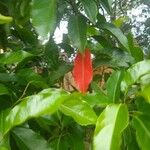
Elaeocarpus serratus
Ceylon-olive · Indian bead tree · Wild olive · জলফাই
Description
Source: leafsnapElaeocarpus serratus, commonly known as the Ceylon olive or Indian olive, is a tropical evergreen tree in the Elaeocarpaceae family. Native to Sri Lanka and southern India, it is also found in other parts of Southeast Asia. This tree can reach heights of up to 20 meters and features a dense crown of glossy, elliptical green leaves. The Ceylon olive blooms small white or pink flowers in clusters during the summer months. These flowers are followed by small, round fruits that change color from green to black as they ripen. Each fruit contains a single seed and is edible, though not commonly eaten. The wood of Elaeocarpus serratus is hard and durable, making it valuable for construction, furniture making, and boat building. The tree's bark has medicinal properties and is traditionally used to treat ailments such as fever, diarrhea, dysentery, and skin diseases. Elaeocarpus serratus prefers well-drained soils rich in organic matter but can also grow in rocky, low-fertility soils. It thrives best under full sun but is tolerant of partial shade. Overall, Elaeocarpus serratus is an important species due to its ecological significance and economic value. Local communities rely on it for medicinal uses and timber, underscoring its multifaceted importance.
Care Guide
💧 Water Every 7 days
The Ceylon olive thrives in environments with moderate water availability and needs watering every 2-3 weeks. As an evergreen plant, it keeps its leaves throughout the year, which leads to increased transpiration and potential water loss, especially when grown outdoors.
How should I water my Ceylon olive tree?
The Ceylon olive is not picky about how you water it. You can use any common watering tool like cans, hoses, or cups. It's best to water it by applying the water directly to the soil, making sure all areas are moistened equally to support the root system. Filtered water is preferable to tap water, as it may contain harmful particles. Water at or slightly above room temperature is recommended to avoid shocking the plant. However, the Ceylon olive usually responds well to any type of water.
What should I do if I give my Ceylon olive tree too much or too little water?
For outdoor plants, especially newly planted ones or seedlings, the lack of watering can be a common issue. It's important to consistently water these plants for the first few months, as they are still small or recently planted. This is because once their roots have established, Ceylon olive plants can rely on rain for moisture most of the time. When you have Ceylon olive plants in pots, overwatering often becomes more likely. If you accidentally overwater your plant, it's important to act quickly to address the situation. Stop watering the plant right away to minimize the impact of overwatering. Then, consider removing the Ceylon olive from its pot to check the roots. If you don't find any signs of root rot, it may be okay to return the plant to its container. However, if you do notice signs of root rot, trim away the affected roots and consider applying a fungicide to prevent further damage. Lastly, repot the Ceylon olive in well-draining soil. On the other hand, if you underwater your Ceylon olive, it's generally an easier problem to fix. The leaves may droop, dry out, and fall off. However, they will regain their fullness relatively quickly after sufficient watering. If you notice underwatering, adjust your watering frequency accordingly as soon as possible.
How often do I need to water my Ceylon olive plant?
If you live in an area with enough rainfall, most outdoor plants can grow naturally without any additional watering. However, if your area does not receive much rain, you should water your plants every two weeks in the spring and fall. In the summer, you will need to water more frequently. During the winter, when plants don't need as much water, you can water them less often or not at all. If you have a young or newly planted Ceylon olive tree, it will need more frequent watering to help it establish and become more drought tolerant. For potted plants, there are two ways to determine how often to water your Ceylon olive. The first is to have a set watering schedule, such as once a week or once every other week. However, this may not be accurate for your specific plant and growing conditions. Another approach is to check the soil moisture. Wait until the top two to four inches of soil have completely dried out before watering again. This is usually about one-third to one-half of the depth of the pot.
How much water does my Ceylon olive tree need?
Watering your Ceylon olive requires attention to soil moisture. Instead of giving a high volume of water, aim for about five to ten ounces each time. Monitor the soil's dryness between waterings and moisten all dry layers. If over half the soil is dry, give extra water until you see drainage. If your Ceylon olive is outside and it rains enough, it may not need extra watering. However, when it's young or establishing, ensure it receives 1-2 inches of rain per week. In hot weather with no rain for 2-3 weeks, consider a full watering to prevent stress.
How do I know if I'm giving enough water to my Ceylon olive plant?
When caring for a Ceylon olive, overwatering is a common problem to watch out for. There are clear signs to look for if this happens. Typically, an overwatered Ceylon olive will have yellowing leaves and may even drop some leaves. Overwatering can also cause the plant's overall structure to shrivel and promote root rot. On the other hand, an underwatered Ceylon olive will also show signs of wilting, alongside brown or brittle leaves. Regardless of whether you notice symptoms of overwatering or underwatering, it is important to take action and restore your Ceylon olive's health.
☀️ Light Full sun
Ceylon olive grows in open habitats, such as sunny meadows and forest edges, where light is abundant. It thrives in Full Sun but also tolerates Partial Sun, adapting well to various sunlight conditions.
What are the sunlight requirements for Ceylon olive?
Ceylon olive, known botanically as Elaeocarpus serratus, thrives in environments with ample light, similar to its natural habitat of sunny meadows and forest edges. It requires full sun, which is defined as above 6 hours of direct sunlight per day, but it can also tolerate partial sun, about 3-6 hours of sunlight per day. The plant's well-being depends on finding the right balance of light and shade in your garden, which mimics its native conditions and ensures optimal growth.
How does artificial lighting benefit indoor Ceylon olive plants?
For indoor Ceylon olive plants, adequate lighting is crucial, especially when natural sunlight is minimal. Artificial lights, particularly LED lights, can supplement the plant's light needs by offering the necessary wavelengths for faster and healthier growth. Generally, full sun plants need 30-50W/sq ft, partial sun plants require 20-30W/sq ft, and full shade plants should get 10-20W/sq ft of artificial light. The artificial light source should be placed 12-36 inches above the plant for 8-12 hours per day to mimic natural sunlight conditions effectively.
What are the symptoms of improper lighting for Ceylon olive?
Ceylon olive displays several symptoms when lighting conditions are improper. Light deficiency can result in smaller new leaves, leggy or sparse growth, faster leaf drop, slower or halted growth, and lighter-colored or yellowing leaves (chlorosis). Excessive sunlight exposure can lead to sunscald, leaf curling, wilting, leaf scorching, and chlorosis. These symptoms indicate the plant's struggle to adapt to its lighting conditions, either seeking more light or suffering from too much direct exposure.
What solutions can optimize light exposure for indoor and outdoor Ceylon olive plants?
To optimize light exposure for Ceylon olive plants, adjust their location gradually for increased sunlight, aiming for at least 6 hours daily. Indoors, use south-facing windows and consider artificial light if moving the plant isn't feasible, ensuring the light is on for a minimum of 8 hours daily. Outdoors, find the sunniest spot and move plants progressively to avoid shock. If trees block sunlight, pruning might be necessary. For smaller plants, consider transplanting during their dormant period to a sunnier location with good drainage. It's important to note that parts of the plant damaged by insufficient light may not recover, but new growth will be healthy with improved light conditions.
🌡️ Temperature 20–37.8°C
Ceylon olive comes from tropical areas, where the climate is generally warm and humid. Consequently, it is adapted to high temperatures and humidity. It does not tolerate sudden temperature changes and prefers a consistent temperature, so avoiding temperature fluctuations indoors is important. It typically cannot endure cold and needs warmer conditions to grow. If the surrounding temperature falls too low, the plant may stop growing or even die.
What is Ceylon olive?
Ceylon olive, scientifically known as Elaeocarpus serratus, is a species in the Elaeocarpaceae family. Unfortunately, there is no detailed information provided about its characteristics, uses, or origins in the provided data.
💨 Humidity
🪴 Soil 6-6
🌱 Fertilizer
Use organic fertilizers (for example, fish emulsion or compost) instead of chemical fertilizers for Ceylon olive. Give young plants increased nitrogen and phosphorus in spring. Work compost or fertilizer into the soil either before or after planting. For mature plants, add a balanced fertilizer in spring or one that addresses specific nutrient deficiencies. Nutrient shortages lead to small leaves, stunted branches, yellow or bronze foliage, sour-tasting fruit, early fruit drop, and splitting.
🪴 Pot & Repot
✂️ Pruning
The Ceylon olive is an evergreen tree that features serrated leaves and produces edible fruits. To keep it healthy, it's best to prune the tree during its dormant period, from early to late winter. Focus on removing dead branches and thinning out crowded areas to improve airflow. Pruning at the right time promotes growth and enhances fruit production.
🌿 Propagating
🐛 Diseases & pets
☠️ Toxicity
Characteristics
- Plant Type
- Tree
- Life Cycle
- Perennial
- Genus
- Elaeocarpus
- Family
- Elaeocarpaceae
- Hardiness Zone
- 10-11
- Mature Height
- 17.98 m
- Mature Spread
- 4.88 m to 10.06 m
- Leaf Color
- Green
- Leaf Type
- Evergreen
- Flower Color
- Cream
- Flower Size
- 7.62 cm to 10.16 cm
- Bloom Time
- Late spring, Early summer, Mid summer
- Planting Time
- Spring, Summer, Autumn
- Harvest Time
- Late summer, Early fall, Mid fall
- Native Area
- Nepal, Sri Lanka, India, Indonesia, Cambodia, Vietnam, Myanmar, Bhutan, Bangladesh, Thailand, China