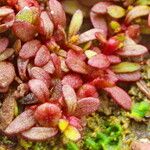
Elatine hydropiper
Waterwort · Eight-stamened waterwort · Octandrous waterwort
Description
Source: leafsnapElatine hydropiper, commonly known as waterwort or ditch stonecrop, is a small aquatic or semi-aquatic plant from the family Elatinaceae. Native to Europe and Asia, it has also been introduced to North America and other regions worldwide. This plant features a prostrate growth habit with small, oval-shaped leaves arranged in opposite pairs along its stem. The leaves are bright green and smooth in texture. Elatine hydropiper typically thrives in shallow water bodies such as ponds, ditches, streams, and wetlands with slow-moving currents. It prefers nutrient-rich soils high in organic content and can tolerate both acidic and alkaline conditions. The plant produces tiny white flowers that bloom from June to September. These flowers have five petals arranged in a star shape around a central yellow stamen. Elatine hydropiper serves as an important food source for aquatic animals like fish, snails, and insects. It also provides shelter for smaller organisms, such as algae, which can grow on its leaves. Due to its attractive appearance and ease of cultivation, Elatine hydropiper is often used as an ornamental plant in aquariums or garden ponds. It adds color contrast against other plants like mosses or ferns. Overall, Elatine hydropiper plays a significant role in maintaining healthy aquatic ecosystems. It provides food sources for animals and contributes to oxygen production through photosynthesis, which helps maintain healthy oxygen levels within its habitat.
Care Guide
💧 Water Every 3 days
☀️ Light Partial sun
🌡️ Temperature 5–35°C
Waterwort can tolerate a broad range of temperatures, but its distribution can still be constrained by different combinations of water and heat conditions. It performs best in warm summer climates when rainfall or watering is sufficient. Extended periods of cloudy, rainy weather, and prolonged high temperatures can raise the risk of Waterwort dying. During winter, adequate protection from cold can enhance the plant's survival rate.
💨 Humidity
🪴 Soil
🌱 Fertilizer
🪴 Pot & Repot
✂️ Pruning
🌿 Propagating
🐛 Diseases & pets
☠️ Toxicity
Characteristics
- Plant Type
- Herb
- Life Cycle
- Annual
- Genus
- Elatine
- Family
- Elatinaceae
- Hardiness Zone
- 5-9
- Mature Height
- 2 cm to 5 cm
- Mature Spread
- 5 cm to 10 cm
- Leaf Color
- Green
- Leaf Type
- Semi-evergreen
- Flower Color
- White
- Flower Size
- 0.10 cm to 0.20 cm
- Bloom Time
- Summer, Early fall
- Planting Time
- Spring, Summer, Autumn
- Harvest Time
- Late summer, Fall
- Native Area
- Sweden, Austria, Czech Republic, Slovakia, Bulgaria, Poland, Croatia, Slovenia, Belarus, Ukraine, Serbia, Russia, China, Lithuania, Norway, Germany, Hungary, Italy, Kazakhstan, Switzerland, Denmark, Estonia, Finland, France, Ireland, United Kingdom, Romania, Latvia, Belgium, Netherlands