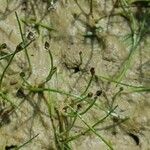
Eleocharis parvula
Dwarf Spike-rush · Dwarf Club-rush · Dwarf spikerush · Dwarf spikesedge · Little-head spike-rush
Description
Source: leafsnapEleocharis parvula, commonly known as dwarf hairgrass, is a popular aquatic plant native to North America. It belongs to the Cyperaceae family and is a perennial plant that thrives in freshwater settings such as ponds, lakes, and streams. Dwarf hairgrass features thin, grass-like leaves that can reach up to 10 cm in length, forming dense mats on the substrate of aquariums or ponds. Its bright green color makes it an aesthetic addition to any aquatic environment. This plant requires moderate lighting conditions for optimal growth and can tolerate temperatures ranging from 18-28°C. It also benefits from regular fertilization with nutrients such as iron, potassium, and nitrogen to ensure healthy development. Dwarf hairgrass can be propagated by dividing its runners or by planting individual stems into the substrate of an aquarium or pond. Once established, it provides excellent cover for small fish species and helps oxygenate the water. Overall, Eleocharis parvula is an easy-to-care-for aquatic plant that enhances the beauty and natural appeal of any freshwater environment, while also offering significant benefits for fish health.
Care Guide
💧 Water Every 7 days
Dwarf spike-rush, which originates from marshy environments, thrives in moist conditions and helps maintain balanced damp soil. To keep it lush, water it regularly, about once a week. It is ideal for containers or ponds and works perfectly as a natural filtration system in water gardens.
☀️ Light Full sun
Dwarf spike-rush comes from habitats with plentiful sunlight, such as the shallow margins of ponds and lakes. It favors full sun but can also tolerate partial sun.
🌡️ Temperature 5–37.8°C
Dwarf spike-rush can tolerate a wide range of temperatures, but its range may still be limited by different combinations of moisture and heat. It performs best in warm summer conditions with sufficient rainfall or irrigation. Extended periods of cloudy, rainy weather or prolonged high temperatures increase the likelihood of dwarf spike-rush dying. In winter, protecting the plant from cold can improve its chances of survival.
💨 Humidity
🪴 Soil
🌱 Fertilizer
🪴 Pot & Repot
✂️ Pruning
Dwarf spike-rush is characterized by its fine, grass-like foliage and compact growth, requiring minimal pruning. In spring, trim any yellowing stems and remove dead material to maintain the plant’s health. Be sure to clean your tools to prevent the spread of disease. This plant is ideal for low-maintenance aquatic or bog gardens, where it encourages denser and healthier foliage.
🌿 Propagating
🐛 Diseases & pets
☠️ Toxicity
Characteristics
- Plant Type
- Grass
- Life Cycle
- Annual, Perennial
- Genus
- Eleocharis
- Family
- Cyperaceae
- Hardiness Zone
- 5-11
- Mature Height
- 30 cm to 91 cm
- Mature Spread
- 2 cm to 5 cm
- Leaf Color
- Light Green, Dark Green
- Leaf Type
- Evergreen
- Flower Size
- 0.20 cm to 0.25 cm
- Bloom Time
- Summer
- Planting Time
- Spring, Summer, Autumn
- Harvest Time
- Late summer, Early fall, Mid fall
- Native Area
- Egypt, Sweden, Mexico, Guatemala, Croatia, Uzbekistan, Russia, Germany, Cuba, Venezuela, Estonia, Romania, Latvia, Portugal, France, Honduras, Poland, Greece, Ukraine, Norway, Italy, Kazakhstan, Spain, Switzerland, Denmark, Japan, Finland, Nicaragua, Ireland, United Kingdom