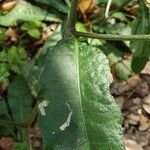
Elephantopus elatus
Florida Elephant's-foot · Tall elephantsfoot · Tall Elephant's-Foot
Description
Source: leafsnapElephantopus elatus, commonly known as Tall Elephant's Foot, is a perennial herbaceous plant belonging to the Asteraceae family. Native to Central and South America, it can be found in countries such as Mexico, Brazil, Colombia, and Venezuela. This plant can reach heights of up to 2 meters. It features a woody stem that branches into several smaller stems. Its large, oval-shaped leaves have serrated edges and can grow up to 30 cm in length. The small flowers, which are either white or pink with yellow centers, are arranged in clusters at the top of each stem. Indigenous people have used Elephantopus elatus for centuries for its medicinal properties, particularly its anti-inflammatory effects. It has been employed as an herbal remedy for respiratory issues such as asthma and bronchitis. The plant prefers moist soil conditions but is drought-tolerant once established. It thrives in full sun or partial shade but requires protection from strong winds. In conclusion, Elephantopus elatus is an attractive perennial herbaceous plant valued for both its aesthetic appeal in gardens and landscapes and its medicinal benefits for humans and animals.
Care Guide
💧 Water Every 7 days
The tall elephant's foot, a plant that thrives in areas with sporadic rainfall, exhibits moderate drought tolerance. To ensure optimal growth, it's important to water this plant weekly, maintaining consistent moisture levels without causing waterlogged conditions. As an herbaceous perennial, effective water management is crucial during the growing season to promote lush foliage and a sturdy structure.
☀️ Light Partial sun
Tall elephant's foot occurs naturally in habitats such as forest understories or rocky locations, where it typically receives natural shade. It favors partial sun but can tolerate full sun or deep shade, reflecting its adaptable, hardy character.
🌡️ Temperature 15–37.8°C
Tall elephant's foot shows good adaptability to temperature, able to tolerate higher heat and wide temperature fluctuations. When temperatures are high, attention should be paid to watering and to providing suitable shade to prevent sunburn. However, Tall elephant's foot is relatively intolerant of low temperatures. While it can endure some cold, excessively low temperatures can cause frost damage.
💨 Humidity
🪴 Soil 6-7
🌱 Fertilizer
Usually one fertilizer application in spring is enough for Tall elephant's foot, though repeated feedings can boost growth to the fullest. Feed it about once a month to every six weeks. Fertilizing improves the leaves' look and function, helping them keep an even color and healthy texture. It also encourages root development and better nutrient uptake for long-term plant health.
🪴 Pot & Repot
✂️ Pruning
The tall elephant's foot plant, known for its tufted leaves and purple flowers, thrives with early spring pruning. Pruning helps promote growth and encourages more blooms. Trim any dead stems and manage the plant's size to improve air circulation and reduce the risk of disease, thereby enhancing both its health and appearance.
🌿 Propagating
🐛 Diseases & pets
☠️ Toxicity
Characteristics
- Plant Type
- Herb
- Life Cycle
- Perennial
- Genus
- Elephantopus
- Family
- Asteraceae
- Hardiness Zone
- 8-11
- Mature Height
- 30 cm to 91 cm
- Mature Spread
- 20 cm to 40 cm
- Leaf Color
- Dark Green, Forest Green
- Leaf Type
- Semi-evergreen
- Flower Color
- Lavender
- Flower Size
- 1.02 cm to 1.52 cm
- Bloom Time
- Late summer, Early fall, Mid fall
- Planting Time
- Spring, Summer, Autumn
- Harvest Time
- Fall