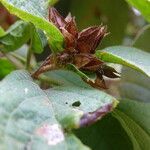
Elephantopus mollis
False tobacco · Tobacco-weed · Elephant's-foot · Elephantopus · Soft Elephant's-Foot
Description
Source: leafsnapElephantopus mollis, commonly known as Elephant's Foot, is a perennial herbaceous plant that belongs to the Asteraceae family. Native to both North and South America, it thrives in diverse habitats such as fields, meadows, and open woods. The plant can grow up to one meter tall and features a basal rosette of large, hairy leaves. Its stem is also hairy with small leaves attached along its length. The flowers are small, white, or pinkish, and are arranged in clusters at the top of the stem. For centuries, indigenous people have utilized Elephant's Foot for its medicinal properties. It has been used to treat respiratory issues such as asthma, coughs, and bronchitis, as well as digestive problems like diarrhea. The plant contains various compounds, including sesquiterpene lactones, which have anti-inflammatory properties that make it useful for alleviating arthritis pain. It also contains flavonoids, which possess antioxidant properties that help protect cells from damage caused by free radicals. Overall, Elephantopus mollis is an interesting herbaceous plant with medicinal properties that have made it valuable in traditional medicine practices around the world.
Care Guide
💧 Water Every 7 days
Originating from tropical regions, the Soft Elephantsfoot plant thrives in consistently moist environments, preferring to be watered weekly. While it has a moderate tolerance for drought, it is often grown outdoors, where it benefits significantly from natural rainfall. This rainfall is crucial for its health and flowering potential.
How should I water my Soft elephantsfoot?
To properly water the Soft elephantsfoot plant, it is recommended to use filtered water at room temperature. Tap water may contain harmful particles that can negatively affect its health. This plant prefers warm temperatures, so it is important to avoid cold water that could shock it. Additionally, overhead watering should be avoided as it can cause issues with the foliage. Instead, gently water the soil with filtered, room temperature water until it is completely soaked. This will help moisten the roots and promote their healthy growth and nutrient absorption.
What should I do if I give my Soft elephantsfoot plant either too much or too little water?
Overwatering can harm your Soft elephantsfoot plant, causing wilting, yellowing leaves, and potential diseases like root rot, mold, and mildew. Underwatering is less common, but can still occur, resulting in brittle, brown leaves. To prevent overwatering, it's important to promptly recognize the signs and reduce watering. If the soil does not drain well, replace it with a loose, well-draining potting mix. If underwatering is the issue, simply increase watering until the signs improve.
How much should I water my Soft elephantsfoot plant?
If your Soft elephantsfoot plant is in a pot, the best way to check if it needs water is by sticking your finger into the soil. If the top two to three inches of soil are dry, it's time to water it. If you're growing the plant outdoors in the ground, you can use the same method to test the soil. Once again, if the top few inches of soil are dry, it's time to water. During the spring and early fall, you'll usually need to water this plant about once a week. However, in extremely hot weather, you may need to increase watering to twice or more per week. Keep in mind that mature, well-established Soft elephantsfoot plants can tolerate drought well.
How much water does my plant need?
To ensure that your Soft elephantsfoot gets enough water, don't be hesitant to give it a generous amount. Wait until the top two to three inches of soil are dry before watering, and then provide a thorough watering that saturates the entire soil. Make sure you add enough water so that it drains out of the pot's drainage holes. If you don't see excess water draining, it means you haven't watered enough. However, be cautious not to let water accumulate in the soil, as it can harm the plant. On the other hand, if water doesn't drain well from the pot, it indicates poorly draining soils, which is bad for the plant's health. If the plant is outdoors, one inch of rain per week should be adequate.
How do I water my Soft elephantsfoot at different stages of growth?
The water needs of the Soft elephantsfoot can vary depending on its growth stages. In the first few years of its life or after transplanting, it requires more water to support the growth of new roots. These new roots are crucial for future growth and perform better with slightly more moisture. As the plant matures, it will require less water. Additionally, during the bloom period, the Soft elephantsfoot may need extra water to support flower development.
☀️ Light Full sun
Soft elephantsfoot grows best with plentiful sunlight but can tolerate its absence, reflecting its original habitat. Too much or too little light does not harm it. Its light requirements remain the same throughout all growth stages.
What are the sunlight requirements for Soft Elephantsfoot?
Soft Elephantsfoot requires exhaustive exposure to sunlight, thriving well in full sun conditions with above 6 hours of sunlight daily. However, it is adaptable and can handle environments with less sunlight, reflecting its natural habit. It's essential to observe the movement of sunlight in your garden to find a spot that provides a perfect balance of light and shade, ensuring the plant's happiness and health.
Can Soft Elephantsfoot grow with artificial lighting?
Yes, Soft Elephantsfoot can grow under artificial lighting, which is particularly useful when natural sunlight is insufficient, such as during winter or in areas with less sunlight. Indoor plants benefit from LED lights, which can be customized to provide specific wavelengths needed for optimal growth. The requirements for artificial light include 30-50W/sq ft for full sun plants, 20-30W/sq ft for partial sun plants, and 10-20W/sq ft for full shade plants. The light source should be placed 12-36 inches above the plant to mimic natural sunlight, and most plants need 8-12 hours of light per day.
What are the signs of insufficient light for Soft Elephantsfoot?
Signs of insufficient light in Soft Elephantsfoot include smaller new leaves, leggy or sparse growth, faster leaf drop, slower or no new growth, lighter-colored new leaves, chlorosis (leaves turning yellow), sunscald, leaf curling, wilting, and leaf scorching. These symptoms indicate that the plant is not receiving enough light, affecting its growth and health.
How can I address light deficiency issues in Soft Elephantsfoot?
To address light deficiency in Soft Elephantsfoot, gradually move the plant to a sunnier location each week until it receives at least 6 hours of direct sunlight daily. For indoor plants, consider using artificial light if the plant is large or not easily movable. A desk or ceiling lamp on for at least 8 hours daily or professional plant grow lights can provide sufficient light. Outdoor plants should also be moved gradually to avoid sunburn. Pruning trees that block sunlight or transplanting smaller plants to sunnier locations can also help. Note that parts of the plant affected by insufficient light may not recover, but new growth will be healthy after increasing light exposure.
🌡️ Temperature 20–35°C
Soft elephantsfoot is best suited to temperatures of roughly 68 to 95 °F (20 to 35 ℃). Originating from temperate regions, it thrives in conditions that mirror its native habitat. Minor adjustments may be necessary as the seasons change.
What is the ideal temperature range for Soft elephantsfoot?
Soft elephantsfoot thrives in temperatures ranging from 68 to 95 °F (20 to 35 °C), which mirrors the temperate climate of its natural habitat. It is important to make slight adjustments to its environment according to seasonal changes due to its preference for heat. During winter, it is advised to keep the plant in an environment above 20°C to promote growth, and it is crucial to avoid exposing it to temperatures near or below 5°C, as such conditions are harmful to the plant. For outdoor plants, it is recommended to bring them indoors in autumn, positioning them near a bright window but away from direct heat sources to prevent damage.
How do you care for Soft elephantsfoot in low temperatures?
Soft elephantsfoot is sensitive to cold temperatures and best thrives when the temperature remains above 20°C, particularly during winter, where it's vital to ensure the temperature stays above 5°C. Exposure to temperatures below 1°C can lead to lighter leaf colors, and frost damage may cause leaves to turn brown or black, with symptoms such as wilting and drooping. To care for Soft elephantsfoot in low temperatures, trim off any frost-damaged parts and move the plant indoors to a warmer environment. It should be placed near a south-facing window to ensure it gets enough sunlight while avoiding proximity to heaters or air conditioning vents, which can overly dry the air.
What should I do if my Soft elephantsfoot experiences high temperatures?
During the summer, it is crucial to maintain the temperature for Soft elephantsfoot below 35°C, as temperatures exceeding 41°C can cause the leaves to lighten and increase the plant's susceptibility to sunburn. If your Soft elephantsfoot suffers from high-temperature stress, trim away any sunburned or dried parts of the plant. Move it to a location that offers protection from the harsh midday and afternoon sun, and ensure to water the plant in the morning and evening to keep the soil adequately moist. This will help mitigate the effects of high temperatures and prevent further damage.
💨 Humidity
🪴 Soil 6-7
🌱 Fertilizer
Soft elephantsfoot needs the most fertilizer during its active growth phase, which occurs mainly in spring, summer, and early fall. Fertilizing is necessary to supply essential nutrients the soil may lack, encouraging healthy root and stem development and producing attractive foliage, a key feature of this plant.
🪴 Pot & Repot
✂️ Pruning
For optimal growth and health, prune the soft elephantsfoot plant from early to late spring. This encourages new growth and helps maintain the plant's vitality. Be sure to remove any dead foliage and thin out dense areas to improve airflow. Regular pruning not only shapes the plant but also enhances its blooming. To prevent infections during this rejuvenation process, use clean, sharp tools.
🌿 Propagating
🐛 Diseases & pets
☠️ Toxicity
Characteristics
- Plant Type
- Herb
- Life Cycle
- Perennial
- Genus
- Elephantopus
- Family
- Asteraceae
- Hardiness Zone
- 10
- Mature Height
- 20 cm
- Mature Spread
- 30 cm to 61 cm
- Leaf Color
- Dark Green, Forest Green
- Leaf Type
- Semi-evergreen
- Flower Color
- White, Lavender
- Flower Size
- 2.03 cm
- Bloom Time
- Mid summer, Late summer, Early fall, Mid fall
- Planting Time
- Spring, Summer, Autumn
- Harvest Time
- Fall
- Native Area
- Belize, Honduras, Mexico, Guatemala, Peru, Dominican Republic, Trinidad and Tobago, Panama, Jamaica, Uruguay, Colombia, Cuba, Paraguay, Argentina, Haiti, Bolivia, Venezuela, Brazil, Guyana, El Salvador, Nicaragua, Suriname, Costa Rica