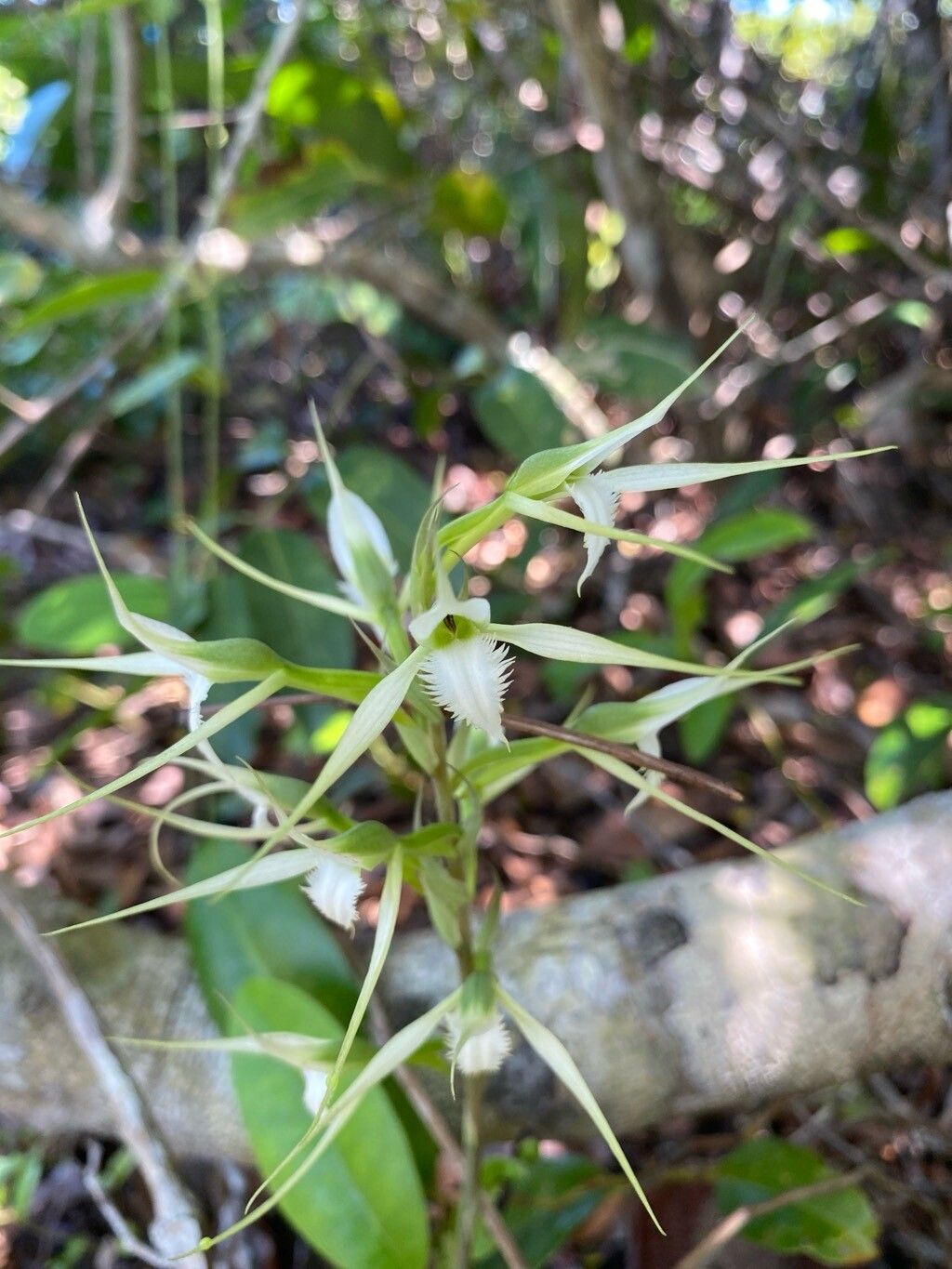
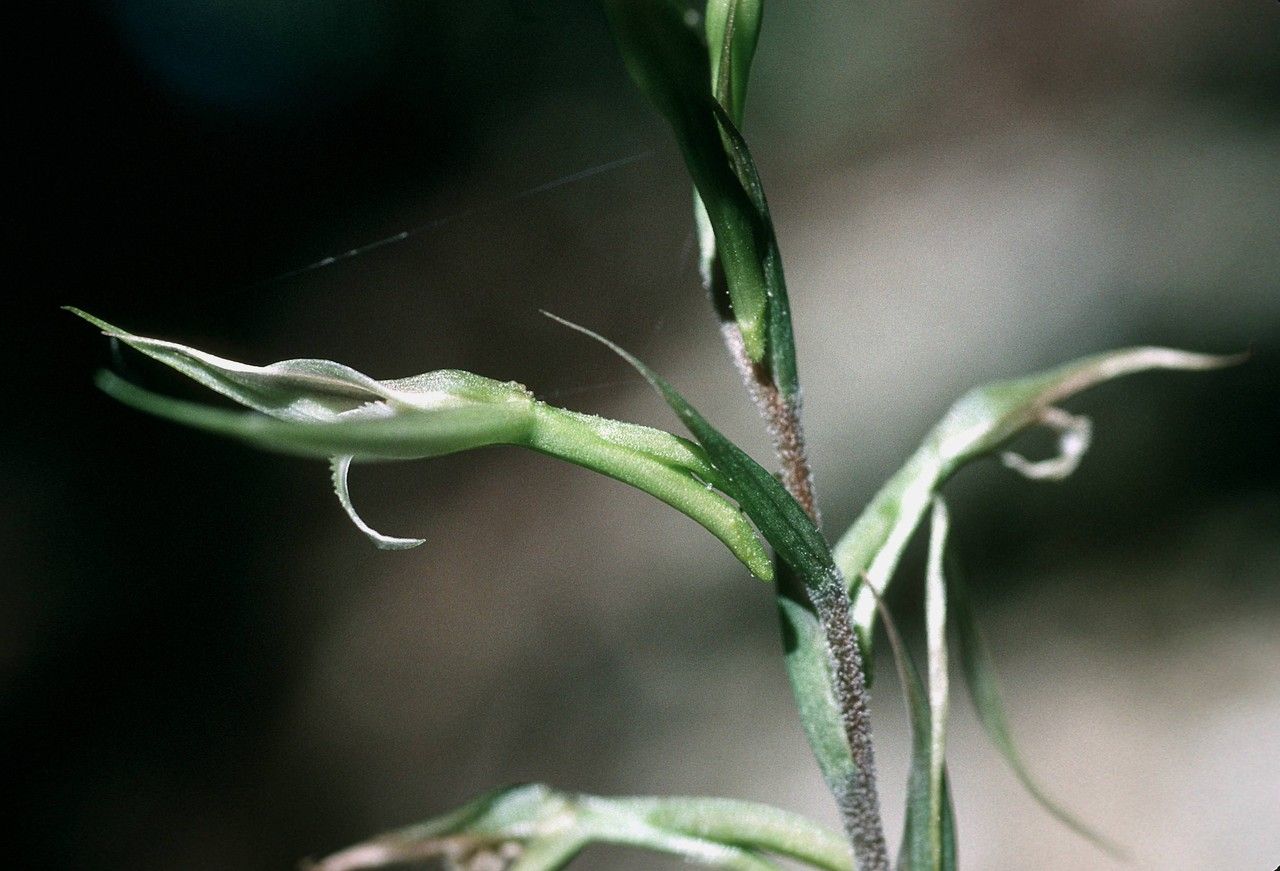
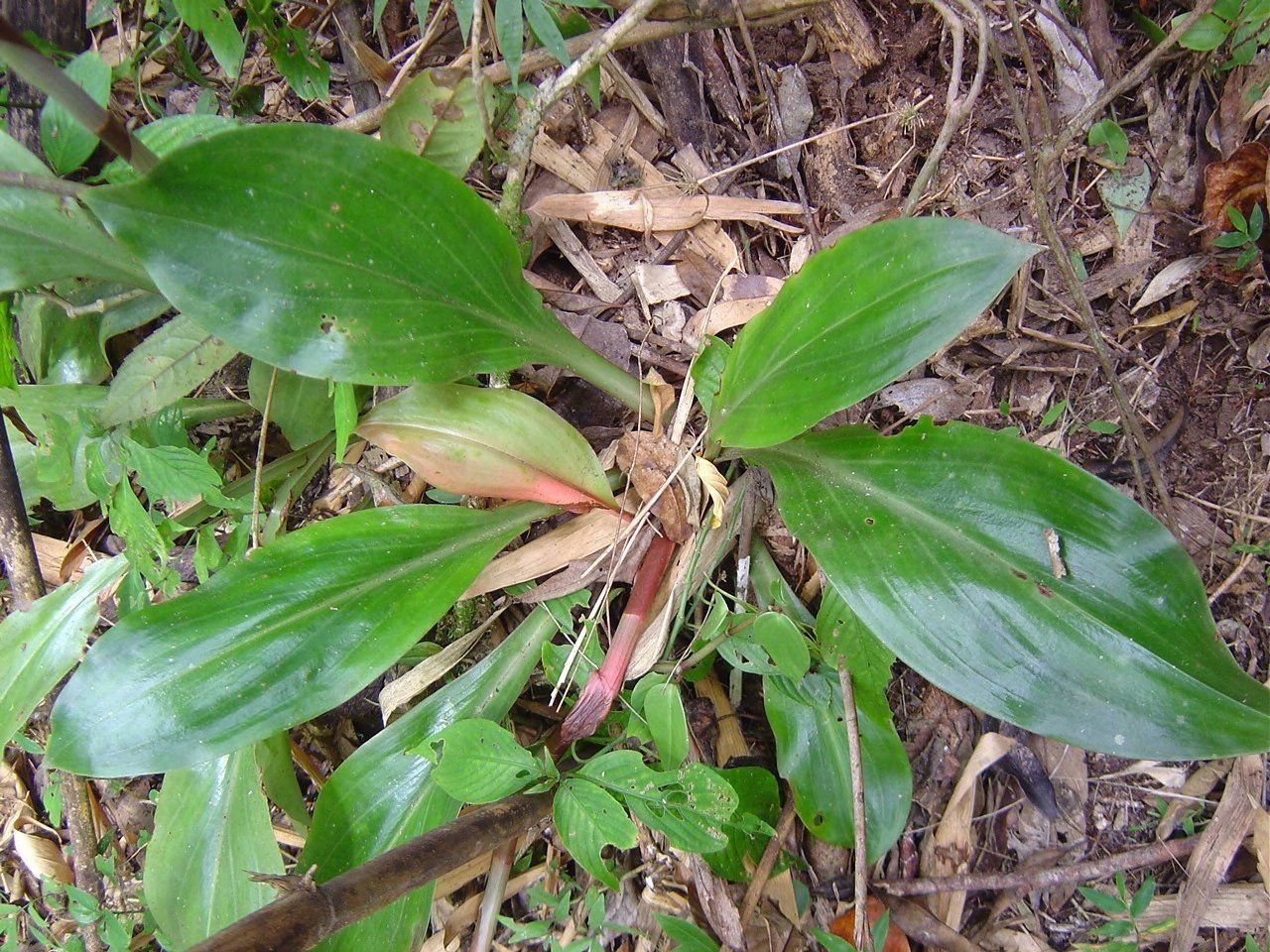
Eltroplectris calcarata, the longclaw orchid, is a terrestrial species of orchid. It is native to Florida, Bahamas, Cayman Islands, Cuba, Hispaniola, Jamaica, Puerto Rico, Windward Islands, Trinidad, Suriname, Venezuela, Colombia, Peru, Brazil, and Paraguay.
The Longclaw orchid is generally disease-resistant and is affected by relatively few insect pests. Its care is considered difficult because it requires high humidity along with good ventilation and an environment with few harmful pathogens. Too much watering can cause root rot. Anyone can grow the Longclaw orchid, but keeping it healthy and getting it to bloom again requires more cultivation experience.
How to keep Eltroplectris Calcarata.
Light
The Longclaw orchid originates from habitats like forest understories or rocky terrains where it is naturally sheltered from direct sunlight. It thrives best in partial sun conditions, yet it is flexible and resilient enough to adapt to either full sun or full shade.
Water
The Longclaw orchid flourishes when it receives enough moisture, but it can also tolerate drought conditions. Water it once a week during the summer and every 10 days in the fall and winter. Maintain humidity by misting the orchid, especially during dry weather. Use water with a neutral pH for watering, and neutralize tap or rainwater by letting it sit for a while to allow dissolved substances to dissipate.
Temperature
The Longclaw orchid flourishes in balmy climates. It thrives in moderately high but not excessively hotter and humid temperatures. The sun enhances the heat of the plant and encourages blooming. Nevertheless, extended exposure to direct sunlight during the summertime can result in sunburn; hence, modulating its sunlight intake during this season is necessary. The orchid often does not fare well in cold weather, hence it needs sufficient shelter and elevated temperatures throughout the winter to avoid freeze.
Fertilizer
The Longclaw orchid needs the highest amount of fertilizer in its active growth period, mainly happening in the spring, summer, and the beginning of fall. The soil might not contain all the vital nutrients it needs which is why fertilization is crucial. It stimulates the growth of the roots and stem, and promotes the beauty of the foliage, which is a significant characteristic of this specific plant.
Pruning
The Longclaw orchid, known for its long spurs, requires minimal pruning, primarily from early to late spring. To encourage growth, remove dead stems and spent flowers, but be careful not to over-prune. Regular, moderate pruning can enhance flowering and improve the plant's health. For more detailed care instructions, consider consulting horticultural resources.
Botanical profile.
- Plant Type
- Herb
- Life Cycle
- Perennial
- Genus
- Eltroplectris
- Family
- Orchidaceae
- Hardiness Zone
- 10-12
- Mature Height
- 20 cm to 40 cm
- Mature Spread
- 10 cm to 15 cm
- Leaf Color
- Dark Green
- Leaf Type
- Evergreen
- Flower Size
- 1.02 cm to 2.03 cm
- Bloom Time
- Early summer, Mid summer
- Planting Time
- Winter
- Harvest Time
- Late summer, Early fall
- Native Area
- Colombia, Bahamas, Cuba, Bolivia, Venezuela, Brazil, Jamaica
Other names.