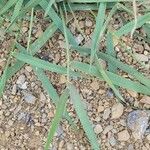
Elymus repens
Quack Grass · Couchgrass · Creeping Wildrye · Quitchgrass · Twitchgrass
Description
Source: leafsnapElymus repens, commonly known as quackgrass or couchgrass, is a perennial grass species native to Europe and Asia. Over time, it has been introduced to other parts of the world, including North America and Australia. Quackgrass features a creeping rhizome system that allows it to spread rapidly and form dense mats of vegetation. Its leaves are flat, narrow, and pointed, growing up to 30 cm in length. During the summer, the plant produces spikelets that contain small flowers. While quackgrass can be beneficial for forage or erosion control in certain regions, it is considered an invasive weed in others due to its aggressive growth habit and ability to outcompete native vegetation. Control measures for quackgrass include physical removal of the rhizomes and the use of herbicides specifically designed for grasses like quackgrass. However, complete eradication can be challenging due to its extensive root system. Overall, Elymus repens exemplifies how non-native species can have both positive and negative impacts on ecosystems, depending on their context within different regions around the world.
Care Guide
💧 Water Every 7 days
Quack grass grows best in moderate moisture conditions and is excellent at retaining water. To support its growth, especially during its active phases, watering it once a week is recommended. As an herbaceous perennial, it thrives outdoors, where natural precipitation helps meet its hydration needs.
How frequently should I water my Quack grass?
The watering needs of Quack grass depend on its location. In general, watering once a week is recommended. In hot climates, watering once or twice a week during the summer may be necessary. In moderate climates, watering once every seven days or more may be sufficient. Grass in containers usually requires more frequent watering than grass planted in the ground. However, the watering frequency also depends on the species and the amount of sunlight it receives. Grasses in shaded areas require less frequent watering compared to those planted in the ground. Only water Quack grass when the soil is dry. You can check the soil moisture by inserting your finger a couple of inches into the soil or by weighing the grass in a pot. If the blades appear folded and thin, it indicates a lack of water. Despite its drought tolerance, regular, deep waterings will result in vibrant color. While Quack grass is drought resistant, it still needs care and attention, including consistent watering. Newly planted Quack grass needs more frequent watering until it establishes deep roots. For potted Quack grass, the soil dries out quickly, especially when exposed to direct sun. Test the soil every 3 to 4 days and water only when it feels dry. The watering needs for Quack grass planted in the ground vary depending on the soil type. Clay soil retains water for longer periods, so it may feel dry at the surface while still holding moisture beneath the ground. Sandy soils drain more quickly and may require more frequent watering.
What do I need to watch out for when watering my Quack grass during different seasons, climates, or growth stages?
You can often determine if you are watering enough by observing the rate of growth of your grasses. Quack grass, in particular, tends to experience rapid growth during the hottest months and can double in size within a year. If you find that the weather is hot but the grass is not growing vigorously, it might be necessary to adjust your watering schedule. In winter, you may be able to get away with watering once a month, but it is still advisable to check the soil for moisture. During the growth cycle, especially in the warmest months, the grass will require more water than usual. However, during winter and cooler months, the need for water will be significantly reduced. It is crucial to remember that with Quack grass, the soil should always be allowed to completely dry out before adding water.
☀️ Light Full sun
Quack grass grows best when it gets plentiful sunlight each day, though it can tolerate situations with lower light levels. Sunlight promotes its vigorous growth. This tendency may be explained by an inherited trait from its native habitat. Too much or too little light can hinder optimal growth.
What are the sunlight requirements for Quack grass?
Quack grass requires a significant amount of sunlight each day to flourish, showing its adaptability to both full sun and partial sun conditions. In terms of sunlight: full sun means the plant should receive above 6 hours of sunlight daily, while partial sun implies about 3-6 hours of sunlight. It's crucial to observe the movement of sunlight through your garden to identify the best spots that offer a balance of light and shade, which ensures the plants' wellbeing. Quack grass's vigor in growth is attributed to its origin habitat, making it paramount to provide either natural or artificial light to meet its needs.
How does artificial lighting benefit indoor Quack grass plants, and what are the recommendations for its use?
Artificial lighting is essential for indoor Quack grass plants' growth, especially when natural sunlight is insufficient, such as in winter or less sunny locations. It promotes faster, healthier growth by compensating for the lack of natural light. LED lights are recommended due to their ability to offer specific wavelengths needed by plants. For full sun plants, 30-50W per square foot is suggested; partial sun plants should have 20-30W per square foot, and full shade plants need 10-20W per square foot. The light should be placed 12-36 inches above the plant and kept on for 8-12 hours per day to mimic natural daylight hours effectively.
What symptoms indicate that Quack grass is receiving inadequate light?
Symptoms of inadequate lighting in Quack grass include smaller new leaves, leggy or sparse growth, faster leaf drop, slower or halted new growth, paler new leaves, and chlorosis where leaves lose their green color. Furthermore, intense sunlight exposure can lead to sunscald, characterized by pale or bleached areas on the plant, leaf curling as a defense against excessive sunlight, wilting due to increased water loss, and leaf scorching, indicated by brown, dry, and crispy leaf edges. These symptoms arise from either too little or too much light exposure, affecting the plant's overall health.
What solutions can be implemented for Quack grass receiving inadequate sunlight?
To address inadequate sunlight for Quack grass: Indoors, progressively move the plant to sunnier spots, aiming for at least 6 hours of direct sunlight daily, using a south-facing window or artificial lighting for 8 hours daily if the plant is large or immovable. Outdoors, gradually adapt plants to sunnier locations to prevent sunburn. Removing obstructions, like pruning trees that shade the plant, and transplanting smaller plants during their dormant period to sunnier locations with good drainage, are effective strategies. Note that parts of the plant damaged by insufficient light may not recover, but new growth will be healthy with improved light conditions.
🌡️ Temperature 5–32.2°C
Quack grass does well in temperatures of 41 to 90°F (5 to 32℃) and prefers conditions similar to its native habitat. It can handle seasonal temperature changes, but avoid extremes for optimal growth.
What temperature conditions are optimal for quack grass growth?
Quack grass thrives in temperatures ranging from 41 to 90°F (5 to 32°C), reflecting its native habitat's conditions where it can handle seasonal temperature variations. Although it possesses strong cold resistance and typically doesn't need special frost protection, in extremely cold climates where temperatures are expected to drop below -30°C, providing some form of cold protection is advisable. Materials such as soil or straw can be used for this purpose, and it's beneficial to water the plant abundantly before the first freeze of autumn to maintain soil moisture through the winter.
How does low temperature affect quack grass, and what solutions are recommended?
Quack grass is known for its cold tolerance, performing best when temperatures stay above 5°C. During winters, ensuring the temperature doesn't fall below -25°C is vital since falling below -30°C could result in no noticeable changes initially, but may lead to a decreased sprouting or even absence of it by springtime. The recommended solution for these conditions is to remove any parts that have failed to sprout once spring arrives.
What are the effects of high temperature on quack grass, and how can they be mitigated?
In the summer, it's crucial to keep quack grass below 32°C as temperatures exceeding 35°C can cause the leaves to lighten in color, become prone to curling, suffer sunburn, and in severe cases, the entire plant might wilt and dry out. To mitigate these effects, it's advised to trim away the sunburned and dried parts, move the plant to a shadier location or use a shade cloth to protect it from the midday and afternoon sun. Additionally, watering the plant in the morning and evening will help keep the soil moist and prevent further stress.
What botanical name is associated with quack grass?
Quack grass is scientifically known as Elymus repens.
💨 Humidity
🪴 Soil 5-7
🌱 Fertilizer
Quack grass needs extra nutrients to encourage healthy new growth. In spring, spreading compost around the plant’s base can effectively supply the nutrition it requires. Fertilizing supports vigorous growth and helps the plant resist diseases and pests.
🪴 Pot & Repot
✂️ Pruning
To control the invasive spread of quack grass and promote healthy growth, prune it in early spring. Trim the shoots down to the base and remove any dead foliage. Regular pruning, combined with weeding and the use of potential root barriers, helps manage quack grass’s aggressive growth in garden areas.
🌿 Propagating
🐛 Diseases & pets
☠️ Toxicity
Characteristics
- Plant Type
- Grass
- Life Cycle
- Perennial
- Genus
- Elymus
- Family
- Poaceae
- Hardiness Zone
- 4-8
- Mature Height
- 0.52 m to 1.07 m
- Mature Spread
- 91 cm
- Leaf Color
- Green
- Leaf Type
- Deciduous
- Flower Color
- Green, Yellow
- Flower Size
- 0.76 cm to 1.52 cm
- Bloom Time
- Early summer, Mid summer
- Planting Time
- Spring, Summer
- Harvest Time
- Mid summer, Late summer