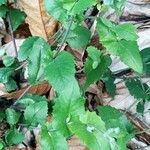
Emilia praetermissa
Care Guide
💧 Water
Yellow thistle grows best in well-drained soils and requires weekly watering. It shows a moderate tolerance to drought, making it well-suited for semi-arid environments. As an evergreen plant, yellow thistle efficiently conserves water, which helps it survive during dry periods.
☀️ Light Full sun
Yellow thistle comes from bright, open habitats and does best in full sun. It can tolerate partial sunlight but prefers direct sun for optimal growth. This plant, annual or biennial, is known for its sun-loving nature.
What are the sunlight requirements for Yellow thistle?
Yellow thistle, known botanically as Emilia praetermissa, thrives in full sun, requiring above 6 hours of sunlight to achieve optimal growth. It can tolerate partial sun but prefers direct sunlight to flourish. Watch how sunlight gracefully moves through your garden, and choose spots that provide a perfect balance of light and shade for your plants, ensuring their happiness.
How can artificial lighting support Yellow thistle's growth?
In environments where natural sunlight is insufficient, especially during winter or in less sunny spaces, artificial lighting becomes essential for Yellow thistle's growth. LED lights are recommended for their ability to mimic natural sunlight by providing specific wavelengths needed by plants. For full sun plants like Yellow thistle, 30-50 watts per square foot is necessary. The artificial light source should be placed 12-36 inches above the plant and kept on for 8-12 hours per day to mimic natural sunlight duration.
What are the symptoms of insufficient light for Yellow thistle?
When Yellow thistle is grown indoors with inadequate light, several symptoms may appear, indicating light deficiency. These include smaller new leaves, leggy or sparse growth, faster leaf drop, slower or no new growth, lighter-colored new leaves, and symptoms of too much light like chlorosis, sunscald, leaf curling, wilting, and leaf scorching. These signs help identify when the plant is not receiving the optimal amount of sunlight or is exposed to excessive sunlight.
What are the solutions for Yellow thistle experiencing insufficient sunlight?
To combat insufficient sunlight for Yellow thistle, gradually move the plant to a sunnier location until it receives at least 6 hours of direct sunlight daily. Indoors, consider using a south-facing window or artificial light to provide enough light. Outdoor plants should be moved gradually to avoid sunburn. If your plant is large and not easily movable, desk or ceiling lamps, or professional plant grow lights, can offer a solution for indoor plants. For plants grounded outside, reducing obstructions by pruning trees or transplanting to a sunnier location during the plant's dormant period can improve sunlight exposure.
🌡️ Temperature 20–37.8°C
Yellow thistle comes from tropical areas where the climate is generally warm and humid. Because of this, it is adapted to high heat and moisture. It does not tolerate sudden temperature changes and prefers a steady temperature, so it is important to prevent indoor temperature fluctuations. It usually cannot withstand cold and needs higher temperatures to grow. If the temperature drops too low, the plant may stop growing or even die.
💨 Humidity
🪴 Soil 6-7
🌱 Fertilizer
When most of Yellow thistle's blooms have opened to full size, resume fertilizing. During the period of peak bloom, feed the plant every three to four weeks, as the weather allows. Once Yellow thistle begins to produce fewer new blooms, stop fertilizing; there's no point in fertilizing when the plant can no longer produce more blooms.
🪴 Pot & Repot
✂️ Pruning
To keep yellow thistle healthy and vibrant, prune it from early to late spring. Start by removing dead stems to encourage new growth and flowering. Thin out crowded areas to improve air circulation and enhance its appearance. Regular trimming reduces the risk of disease, promotes abundant blooms, and helps maintain the plant's form and vitality throughout the growing season.
🌿 Propagating
🐛 Diseases & pets
☠️ Toxicity
Characteristics
- Plant Type
- Herb
- Life Cycle
- Annual
- Genus
- Emilia
- Family
- Asteraceae
- Hardiness Zone
- 9-11
- Mature Height
- 61 cm to 91 cm
- Mature Spread
- 20 cm to 30 cm
- Leaf Color
- Green
- Leaf Type
- Deciduous
- Flower Color
- Red
- Flower Size
- 1.27 cm
- Bloom Time
- Late spring, Summer, Early fall
- Planting Time
- Spring, Summer, Autumn
- Harvest Time
- Summer, Early fall, Mid fall
- Native Area
- Benin, Sierra Leone, Cameroon, Togo, Côte d'Ivoire, Nigeria, Guinea, Congo (DRC), Gabon