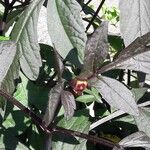
Encelia californica
California brittlebush
Description
Source: leafsnapEncelia californica, commonly known as California brittlebush, is a perennial shrub native to California and parts of Arizona and Nevada. This plant belongs to the Asteraceae family and typically grows 3 to 4 feet tall with a spread of 4 to 6 feet. It features gray-green leaves covered in fine hairs, which help retain moisture in arid conditions. In the spring, Encelia californica produces bright yellow flowers that bloom in clusters at the ends of its branches. These flowers are about 2 inches wide, with numerous petals surrounding a central disk, and they attract bees and other pollinators. California brittlebush thrives in full sun and well-drained soil but can also tolerate some shade. While it is drought-tolerant once established, it benefits from occasional watering during prolonged dry spells. Native Americans have used this plant for medicinal purposes for centuries due to its anti-inflammatory properties. The leaves were also used as a natural remedy for coughs, colds, fevers, headaches, and other ailments. Encelia californica is an excellent choice for xeriscaping or water-wise gardening because of its low water requirements and its ability to thrive in hot, dry climates with minimal maintenance.
Care Guide
💧 Water Every 7 days
The California brittlebush thrives in arid environments by conserving water and preferring dry conditions. It is generally grown outdoors and is ideal for xeriscaping, a landscaping method that reduces the need for irrigation. Watering should be done about once a week.
What should I do if I give my California brittlebush too much or too little water?
Outdoor plants, especially newly planted ones or plant seedlings, are prone to lack of watering. It's important to water them enough for a few months while they are small or newly planted. Once the roots are established, California brittlebush can rely on rain for most of its water needs. However, when California brittlebush is planted in pots, overwatering is more likely. If you accidentally overwater your California brittlebush, take immediate action to remedy the situation. Stop watering the plant right away to minimize the impact of overwatering. Remove the plant from its pot to check the roots. If no root rot is present, you can put the plant back in the pot. If root rot is found, trim the affected roots and consider using a fungicide to prevent further damage. Repot your California brittlebush in well-draining soil. In the case of underwatered California brittlebush, simply water the plant more frequently. Underwatering can easily be fixed. If you notice drooping, dry leaves that fall off, increasing the watering frequency will help the leaves regain fullness. Adjust your watering schedule as soon as you notice underwatering.
How frequently should I give water to my California brittlebush?
Most plants can grow naturally outdoors with rainfall. However, if your area lacks rainfall, you need to water your plants adequately every 2 weeks in spring and fall. In summer, you may need to water them more often. In winter, when plants grow slower and need less water, you should water them less frequently, and you may not need to water them at all. If you have a young or newly planted California brittlebush, you should water it more often to help it establish and grow. This will make it more adaptable and drought-tolerant in the future. For potted plants, there are two main ways to determine watering frequency. One is to have a set watering schedule, such as once a week or once every other week. However, this may not always be suitable as it doesn't consider the unique conditions of your growing environment. Another approach is to check the soil moisture. It is best to wait until the top two to four inches of soil (around 1/3 to 1/2 depth of the pots) have completely dried out before watering again. This method takes into account the specific needs of your California brittlebush and can be adjusted based on the season when water needs may be higher.
How much water does my California brittlebush plant need?
To water your California brittlebush, you don't always need to use a lot of water. If only a few inches of soil have dried since your last watering, give it about five to ten ounces of water. You can also adjust the amount of water based on how dry the soil is. If more than half of the soil has dried, give it more water until you see excess water draining from the pot's holes. If your plant is in an area that gets plenty of rain, it may not need extra watering. When the brittlebush is young, make sure it gets 1-2 inches of rain per week. As it grows, it can survive on rainwater alone, but if there's no rainfall for 2-3 weeks during hot weather, give it a thorough watering to prevent stress.
How can I know if I'm giving enough water to my California brittlebush?
California brittlebush commonly suffers from overwatering, and there are several signs to watch out for. An overwatered plant will have yellowing leaves and may shed some of them. Additionally, overwatering can cause the plant's structure to shrink and lead to root rot. Conversely, a brittlebush that is not receiving enough water will start to wilt and may develop brown or brittle leaves. Regardless of whether you notice signs of overwatering or underwatering, it's important to take action to revive your California brittlebush's health.
How do I water my California brittlebush as it grows?
When the California brittlebush is young, especially when it's in the seedling stage, it needs more water compared to when it's mature. It's important to consistently keep the soil moist during the early stages to help the roots grow. This also applies if you have transplanted a California brittlebush to a new location. Additionally, providing proper care can result in beautiful flowers and fruits. If your brittlebush is flowering or producing fruits, you may need to give it slightly more water than usual to support these structures.
☀️ Light Full sun
The california brittlebush prospers with prolonged exposure to sunlight and is indifferent to shade. Native to environments dominated by strong solar radiation, its healthy, vigorous growth is driven by continuous sun. Excessive light does not harm it, but insufficient exposure can impede its optimal growth.
What are the sunlight requirements for California brittlebush?
The California brittlebush requires above 6 hours of sunlight daily to thrive optimally, showing its need for full sun exposure. Originating from regions with significant solar radiation, its well-being and vigorous growth are highly contingent on uninterrupted sunlight. While the plant doesn't suffer from excessive light, insufficient exposure can negatively affect its growth. It's essential to observe how sunlight moves through your garden throughout the day and choose planting spots that ensure a balance of light and shade, catering to the plant's needs for happiness and health.
Can artificial lighting be used for California brittlebush, and if so, how?
Yes, artificial lighting can be beneficial for the California brittlebush, especially for indoor plants or during periods of insufficient natural sunlight, such as winter or in less sunny locations. Adequate lighting is crucial for optimal growth. LED lights are recommended due to their ability to be customized to provide specific wavelengths needed by plants. For full sun plants, 30-50W per square foot is needed; partial sun plants require 20-30W per square foot, and full shade plants need 10-20W per square foot. The light source should be placed 12-36 inches above the plant, mimicking natural sunlight as closely as possible, with most plants needing 8-12 hours of light per day.
What are the common symptoms of light deficiency in California brittlebush?
Common symptoms of light deficiency in California brittlebush include smaller new leaves, leggy or sparse growth, faster leaf drop, slower or no new growth, lighter-colored new leaves, chlorosis (leaves turning yellow), sunscald, leaf curling, wilting, and leaf scorching. These symptoms indicate that the plant is not receiving adequate sunlight, affecting its ability to photosynthesize, leading to weakened overall health and reduced growth.
How can I treat symptoms of inadequate sunlight exposure in California brittlebush?
To treat symptoms of inadequate sunlight in California brittlebush, gradually move the plant to a sunnier location, aiming for at least 6 hours of direct sunlight daily. For indoor plants, use a south-facing window or consider artificial lighting such as a desk or ceiling lamp on for at least 8 hours daily, or invest in grow lights. For outdoor plants, gradually move them to better sunlight to avoid sunburn. Note that parts of the plant affected by insufficient light may not recover, but new growth will be healthy. To reduce obstructions outdoors, consider pruning trees that block sunlight, or for smaller plants, transplant them during their dormant period to a location with ample sunlight and good drainage.
🌡️ Temperature 20–37.8°C
California brittlebush naturally occurs in areas where temperatures range from 68 to 100 °F (20 to 38 ℃). It is adapted to hot climates and favors warm temperatures to thrive. When growing california brittlebush in other weather, it is recommended to acclimate it to temperatures within that same range.
What is the preferred temperature range for growing California brittlebush?
California brittlebush, also known by its botanical name Encelia californica, thrives in environments where temperatures range between 68 to 100°F (20 to 38°C). This plant is native to hot climates and prefers warm temperatures to flourish. It is extremely heat-loving and sensitive to cold. During colder months, especially in autumn, it's advisable to move outdoor-grown California brittlebush indoors, placing it near a bright window but away from direct heat sources, to maintain ideal growing conditions. Keeping the temperature above 20°C (68°F) during winter is crucial for the plant's health, as temperatures approaching 0°C (32°F) can severely damage it.
How should I care for my California brittlebush during low temperature conditions?
When exposed to low temperatures, California brittlebush needs special care to survive. The plant prefers conditions above 20°C (68°F) and is vulnerable to temperatures below 0°C (32°F), with risks increasing significantly as temperatures fall below -5°C (23°F). During cold weather, symptoms like leaf discoloration to lighter shades, browning, or blackening after frost damage, and wilting or drooping may occur. To mitigate these issues, trim off the frost-damaged parts and move the plant to a warmer indoor environment immediately. Placing the plant near a south-facing window will ensure it receives ample sunlight. However, it's important to avoid placing the brittlebush near heaters or air conditioning vents as this can cause the air around the plant to become excessively dry.
What measures should be taken to protect California brittlebush from high temperatures?
During the summer, it's crucial to prevent California brittlebush from overheating, as it should be kept below 38°C (100°F) to avoid stress from high temperatures. Exposing the plant to temperatures over 43°C (109°F) can lead to lighter leaf colors and increase the risk of sunburn. To protect your plant in such conditions, promptly trim away any sunburned or dried-up parts. Relocate the plant to a shaded area, especially from the midday and afternoon sun, to avoid direct sun exposure. Additionally, watering the plant in the morning and evening can help maintain soil moisture and ensure the brittlebush remains healthy during extreme heat.
💨 Humidity
🪴 Soil 6-7
🌱 Fertilizer
The best time to fertilize a California brittlebush is in early spring, when it breaks dormancy. This encourages overall growth and the development of flowers. Fertilization improves foliage, stems, and branches, while encouraging large, vibrant, and long-lasting blooms. It helps transport nutrients from the roots to the flowers and enhances the plant's health and resistance to disease.
Why should I add fertilizer to my California brittlebush?
Fertilization plays a vital role in maintaining the overall health and well-being of a California brittlebush. It provides the necessary energy and nutrients for the plant to develop lush foliage and strong stems and branches. The flowers of a California brittlebush are particularly valuable to gardeners, and fertilization helps ensure that they are large, vibrant, and long-lasting. This is because the right fertilizer aids in the efficient transport of nutrients from the roots to the flowers. Additionally, proper fertilization supports the plant's overall health, making it more resilient against diseases.
When should I fertilize my California brittlebush plant?
To ensure proper growth and flowering, it is best to fertilize a California brittlebush in early spring as it emerges from dormancy. This provides the plant with energy for overall development. However, there is also an opportunity to fertilize in the fall, although a smaller amount will suffice. Some gardeners choose to fertilize during planting, but it is not always required.
When is the best time to not add fertilizer to my California brittlebush?
During the winter, California brittlebush is in a dormant phase and does not require fertilizer, as it does not need much energy from the soil for new growth. Fertilizing in winter increases the risk of overfertilization and its negative effects. The prime feeding times for a California brittlebush are in early spring and fall, meaning it generally does not need fertilizer during most of spring and summer. Additionally, it is advisable to refrain from feeding the plant if it is experiencing very hot or dry conditions.
What kind of plant food does my California brittlebush need?
California brittlebush plants often thrive when given a specific type of fertilizer, even though general-purpose fertilizers with balanced ratios of nitrogen, phosphorus, and potassium are typically fine to use. For these plants, nitrogen and phosphorus are the most crucial nutrients and should be present in higher amounts compared to potassium in the fertilizer. A fertilizer with an N-P-K ratio of 10-10-8 or similar should be effective. Additionally, using organic materials like compost for one of your yearly feedings can be beneficial. If you opt for fertilizer, granular fertilizer is the most commonly used form for California brittlebush plants.
How can I help my California brittlebush grow better?
Feeding your California brittlebush with fertilizer is an easy task that anyone can do, even if they have little gardening experience. To fertilize it with granular fertilizer, simply sprinkle the fertilizer onto the soil after moistening it with water. Another option is to improve the plant's soil by adding organic materials like compost or manure. To do this, place some of the material on top of the soil and use a hand rake to gently work it into the first few inches of soil without disturbing the roots.
🪴 Pot & Repot
✂️ Pruning
The California brittlebush is a drought-tolerant shrub known for its bright yellow flowers and aromatic foliage. To promote growth and improve air circulation, it's best to prune the plant in late spring after it has finished flowering. Be sure to remove any old stems during this process. Clean tools are essential to prevent disease, and regular pruning helps to maintain the shrub's vitality and enhance its appearance.
🌿 Propagating
🐛 Diseases & pets
☠️ Toxicity
Characteristics
- Plant Type
- Shrub
- Life Cycle
- Perennial
- Genus
- Encelia
- Family
- Asteraceae
- Hardiness Zone
- 9-11
- Mature Height
- 0.49 m to 1.52 m
- Mature Spread
- 1.22 m
- Leaf Color
- Green
- Leaf Type
- Evergreen
- Flower Color
- Yellow, Orange
- Flower Size
- 6.35 cm
- Bloom Time
- Spring
- Planting Time
- Autumn, Winter
- Harvest Time
- Late spring, Early summer, Mid summer
- Native Area
- Mexico