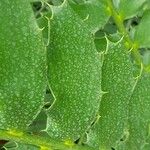
Encephalartos ferox
Zululand cycad · Kozi Cycad · Tongaland Cycad · Encephalartos
Description
Source: leafsnapEncephalartos ferox is a species of cycad native to South Africa, belonging to the family Zamiaceae and commonly known as the Eastern Cape blue cycad. This plant can grow up to 3 meters tall with a trunk diameter of up to 30 centimeters. The leaves are long and narrow, featuring a distinctive blue-green coloration and sharp spines along the edges. This cycad species is dioecious, meaning that male and female reproductive structures grow on separate plants. The male cones are cylindrical, while the female cones are more rounded in appearance. Encephalartos ferox thrives best in well-drained soil with plenty of sunlight but can also tolerate partial shade. Unfortunately, this species is listed as endangered due to habitat loss driven by urbanization, agriculture, and logging activities. Indigenous communities have historically used Encephalartos ferox for various purposes. The seeds were consumed as food, the leaves used for medicinal purposes, and the entire plant played a role in cultural ceremonies. Due to its endangered status, however, the plant is now protected under South African law, prohibiting unauthorized harvesting or trade without proper permits or licenses. Overall, Encephalartos ferox not only plays a crucial ecological role but also holds significant cultural importance for local communities in South Africa. This makes it a vital species for ongoing conservation efforts.
Care Guide
💧 Water Every 7 days
The Zululand cycad, native to subtropical regions, requires moderate watering. Ideally, water it every 1-2 weeks, allowing the soil to dry slightly between waterings. This plant thrives in environments with periodic moisture and benefits from mulching, which helps retain moisture in warmer climates and reduces the need for frequent watering.
☀️ Light Partial sun
The Zululand cycad naturally occurs in habitats like forest understories or rocky locations, where it grows in natural shade. It favors partial sun but can also tolerate full sun or full shade, demonstrating its versatile and hardy nature.
🌡️ Temperature 20–37.8°C
The Zululand cycad comes from tropical areas, where the climate is generally warm and humid. As a result, it is adapted to high heat and humidity. It dislikes abrupt temperature changes and prefers a steady temperature, so avoiding temperature swings indoors is important. It typically cannot tolerate cold and needs warmer temperatures to grow. If the surrounding temperature falls too low, the plant may stop growing or even perish.
💨 Humidity
🪴 Soil 6-7
🌱 Fertilizer
The Zululand cycad has specific nutrient needs and does not require heavy fertilization. Spring is the best time to fertilize for optimal growth. Providing nutrients improves its health, increases resistance to pests and diseases, and helps maintain its long lifespan.
🪴 Pot & Repot
✂️ Pruning
The Zululand cycad is characterized by its thick leaves and red seeds. To maintain the plant's health, it's best to prune it in early spring. This helps to remove dead foliage and improve air circulation. When pruning, carefully trim any damaged fronds, making sure to protect the central cone. Be sure to use sanitized tools for effective pruning, which promotes healthy growth and aligns with the natural growth cycle of the Zululand cycad.
🌿 Propagating
🐛 Diseases & pets
☠️ Toxicity
Characteristics
- Plant Type
- Shrub, Succulent
- Life Cycle
- Perennial
- Genus
- Encephalartos
- Family
- Zamiaceae
- Hardiness Zone
- 9b-11
- Mature Height
- 0.91 m to 2.13 m
- Mature Spread
- 2.13 m to 3.05 m
- Leaf Color
- Dark Green
- Leaf Type
- Evergreen
- Bloom Time
- Early summer, Mid summer
- Planting Time
- Spring, Summer, Autumn
- Harvest Time
- Fall