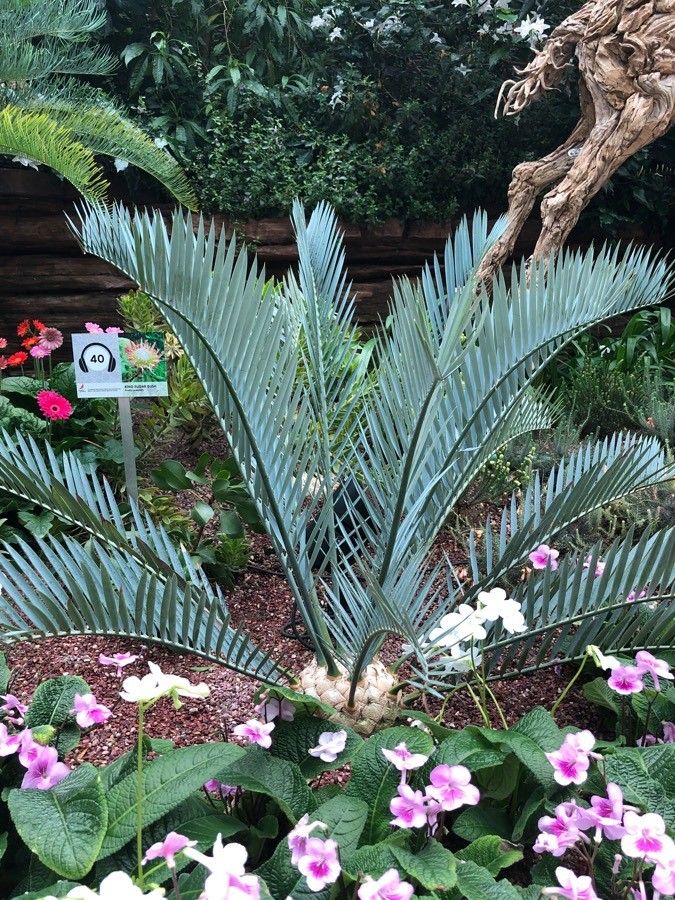
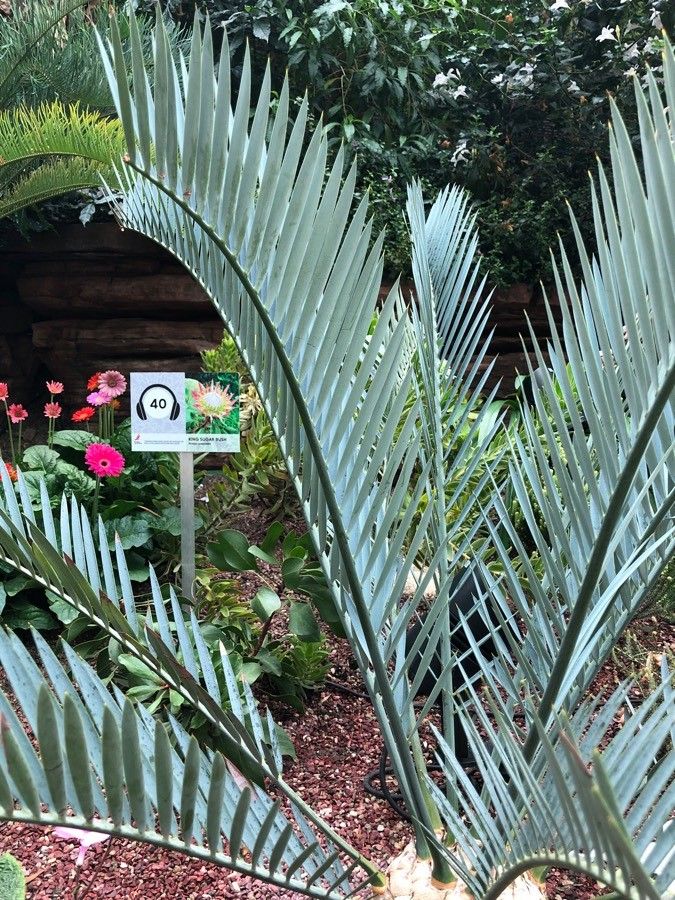
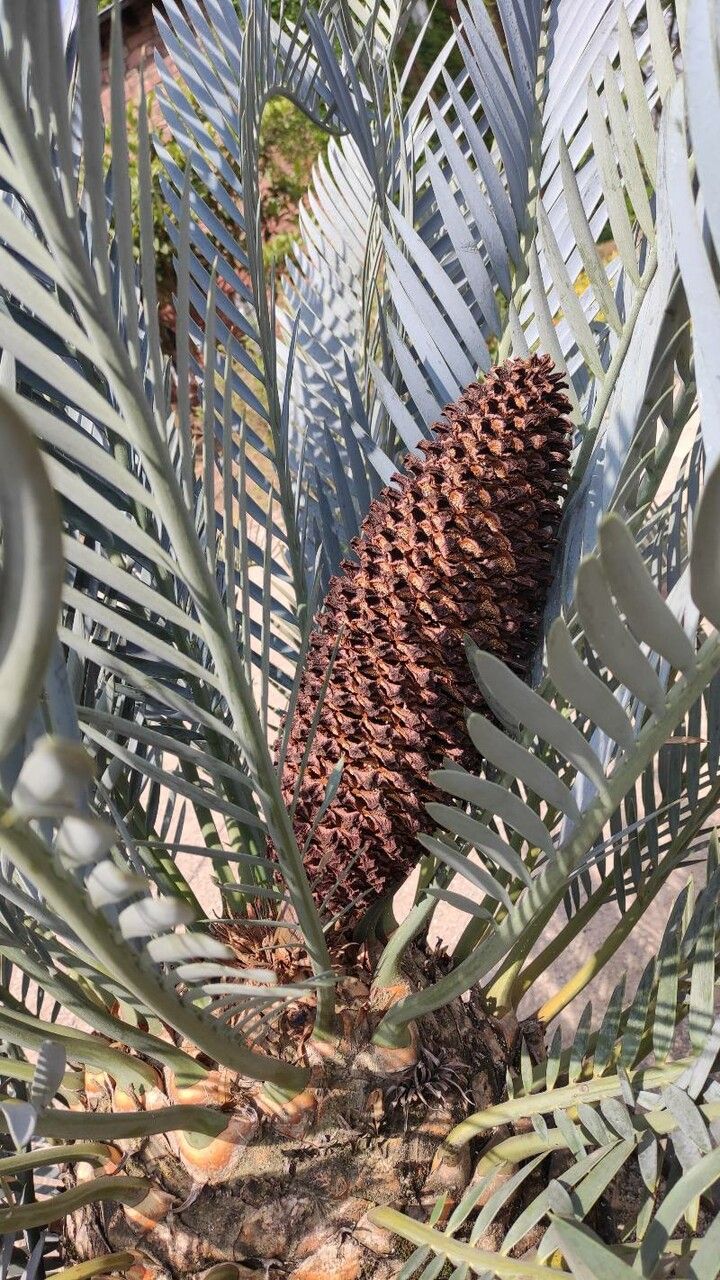
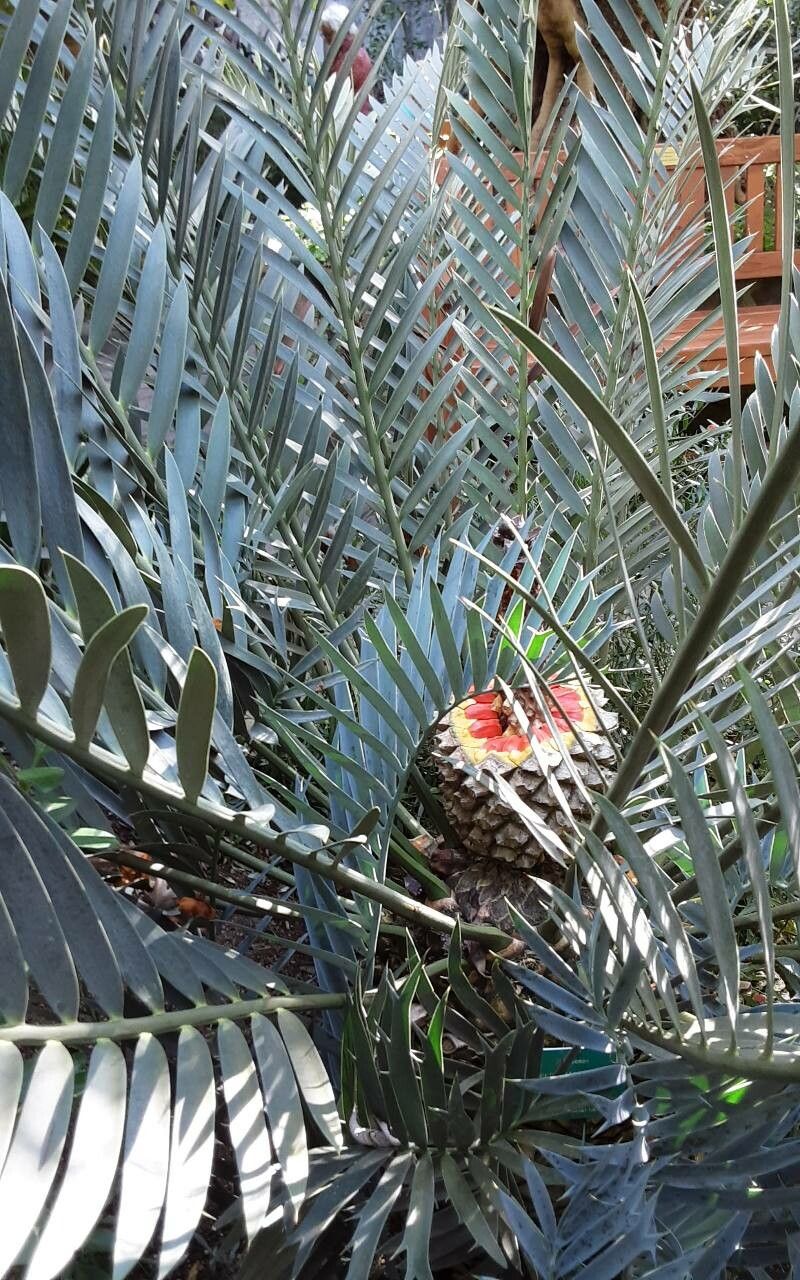
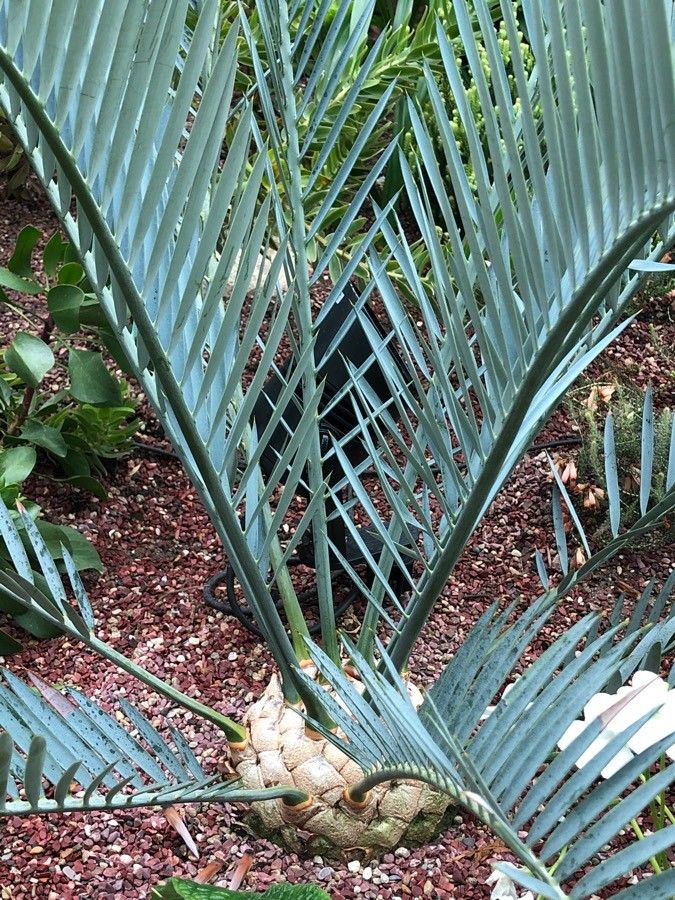
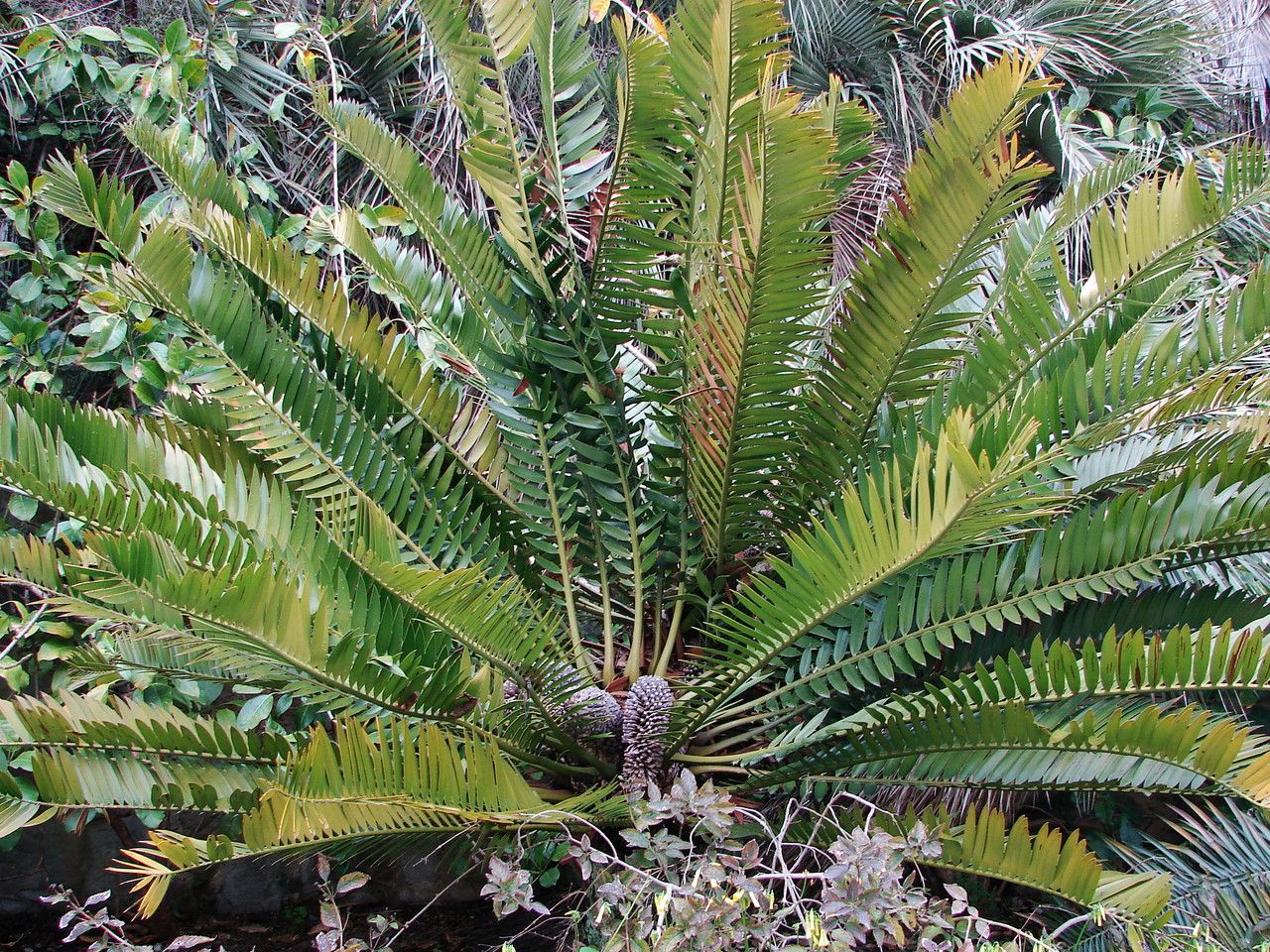
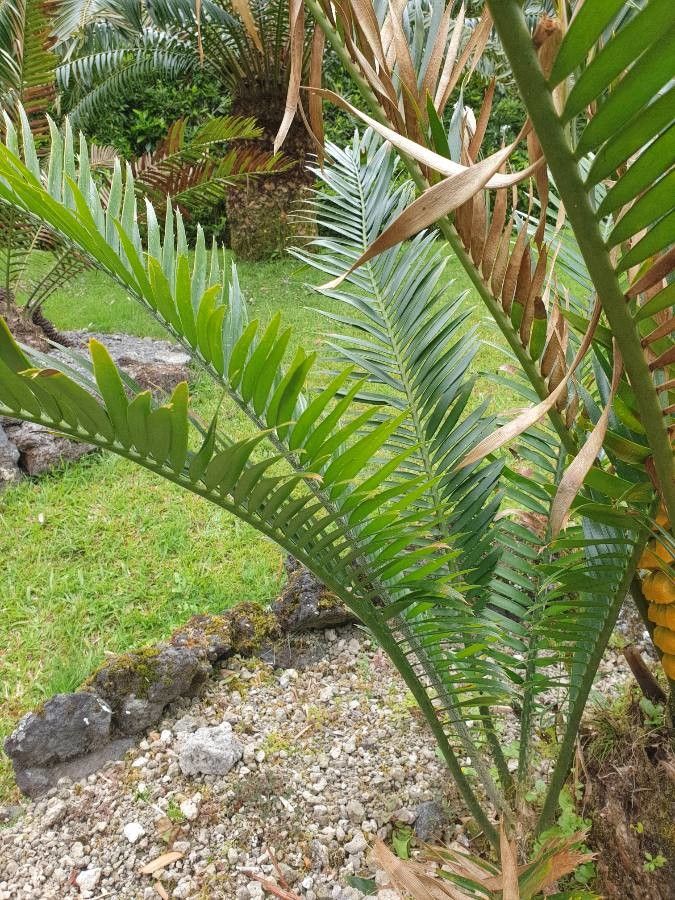
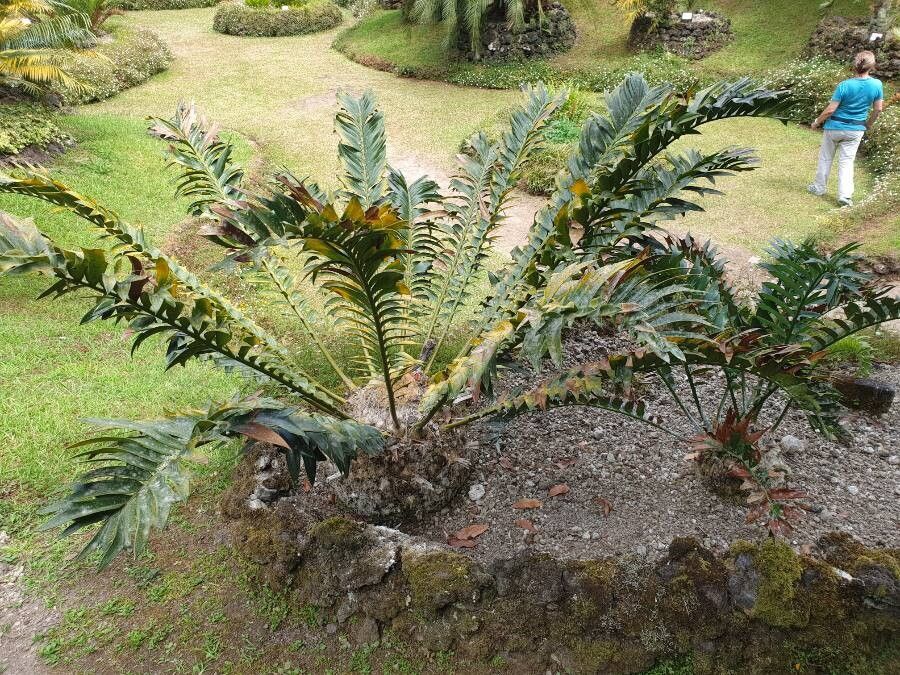
Encephalartos lehmannii, commonly known as Lehmann's cycad, is a species of cycad native to South Africa. Belonging to the family Zamiaceae, this plant is characterized by its long, narrow leaves that grow in a rosette pattern from its central stem. The leaves are dark green with sharp, pointed tips, giving the plant a distinct appearance.
Lehmann's cycad can grow up to 3 meters tall, but it has a slow growth rate and takes several years to reach maturity. It prefers well-drained soil and partial shade but can also tolerate full sun exposure.
This species is considered endangered due to habitat loss from urbanization, agriculture, and logging. It also faces threats from illegal harvesting for ornamental purposes.
Despite its endangered status, Encephalartos lehmannii remains popular among collectors because of its unique appearance and rarity in cultivation. Conservation efforts, such as habitat restoration programs and strict regulations on harvesting, are underway to protect this species from extinction.
The Karoo cycad is well resistant to disease and, in general, is not susceptible to illnesses. With regard to care, this plant is fairly low-maintenance. When grown outdoors it needs little watering, and larger specimens typically do not require pruning. Smaller specimens, however, should be pruned after they have finished blooming. The Karoo cycad is appropriate for anyone who has outdoor space, such as a garden or a deck, and it does not demand extensive gardening experience.
How to keep Encephalartos Lehmannii.
Light
The Karoo cycad is native to habitats like forest understories and rocky areas, where it grows under natural shade. It prefers partial sun but can adjust to full sun or full shade, illustrating its hardy and versatile nature.
Humidity
This plant prefers dry conditions, so don't mist it. However, watering it less often can also thrive in higher humidity.
Temperature
The Karoo cycad is quite adaptable to temperature, able to withstand heat and considerable temperature fluctuations. In hot weather, be sure to keep it well-watered and provide appropriate shade to prevent sunburn. On the other hand, it has limited tolerance for low temperatures; while it can handle some cold, very low temperatures can cause frost damage.
Fertilizer
The Karoo cycad has specific nutrient needs and does not require heavy fertilization. Spring is the best time to fertilize for optimal growth. Providing nutrients enhances its health, strengthens its resistance to pests and diseases, and helps maintain a long lifespan.
Botanical profile.
- Plant Type
- Palm, Tree
- Life Cycle
- Perennial
- Genus
- Encephalartos
- Family
- Zamiaceae
- Hardiness Zone
- 9-11
- Mature Height
- 0.91 m to 2.13 m
- Mature Spread
- 1.52 m to 2.44 m
- Leaf Color
- Dark Green
- Leaf Type
- Evergreen
- Bloom Time
- Mid spring, Late spring
- Planting Time
- Autumn
- Harvest Time
- Late summer, Early fall, Mid fall
- Native Area
- South Africa
Other names.