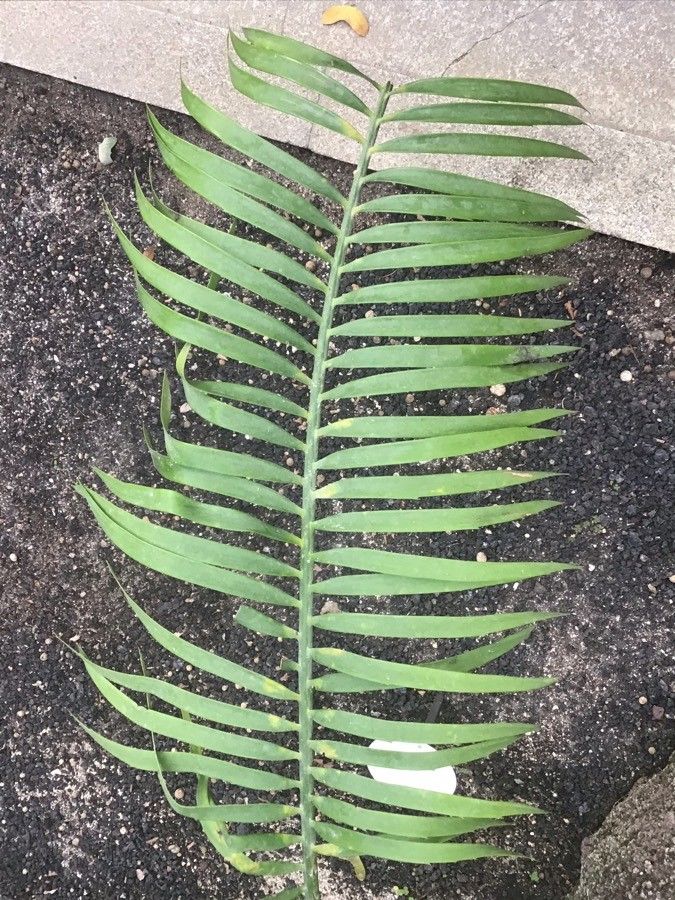
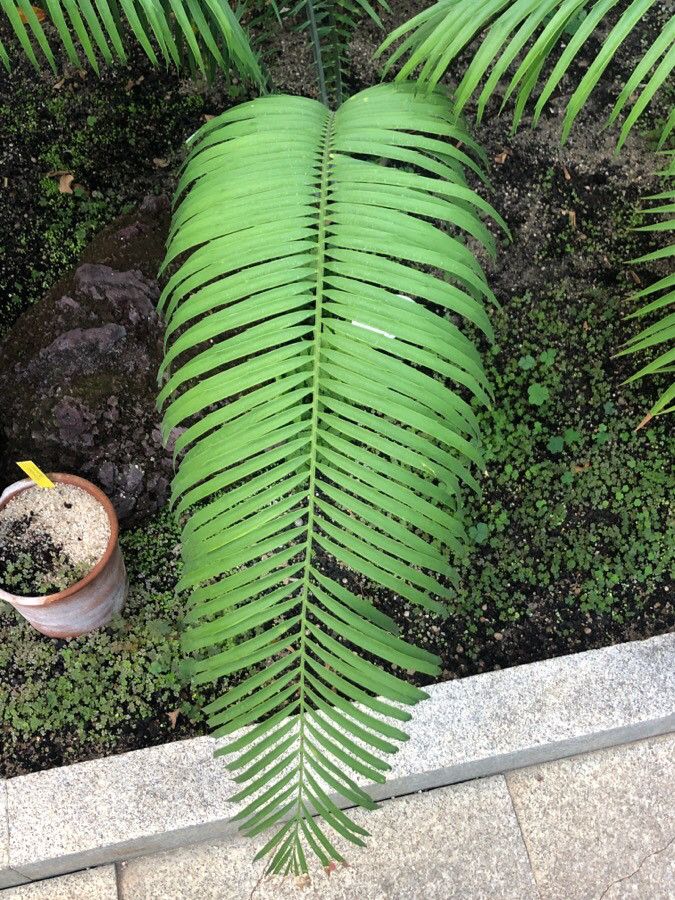
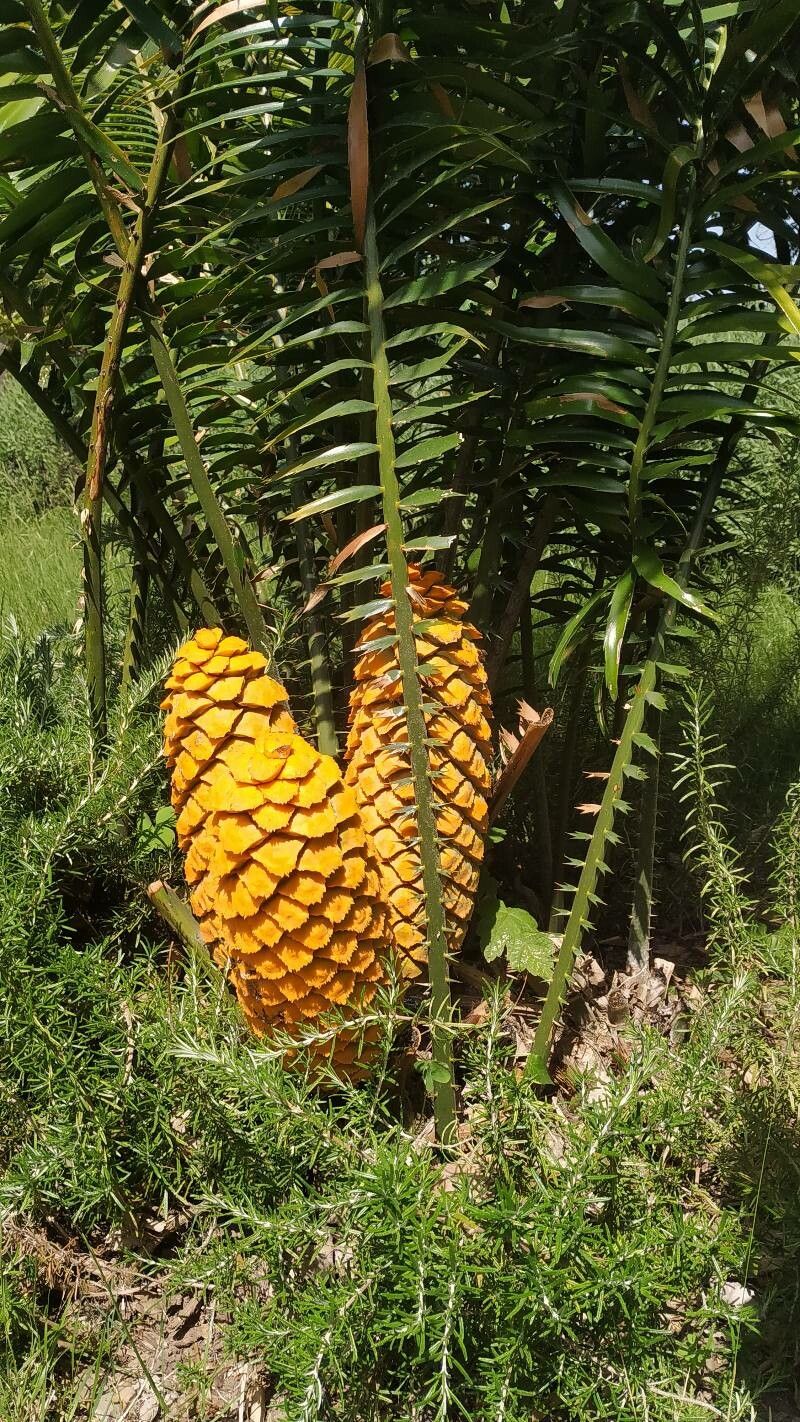
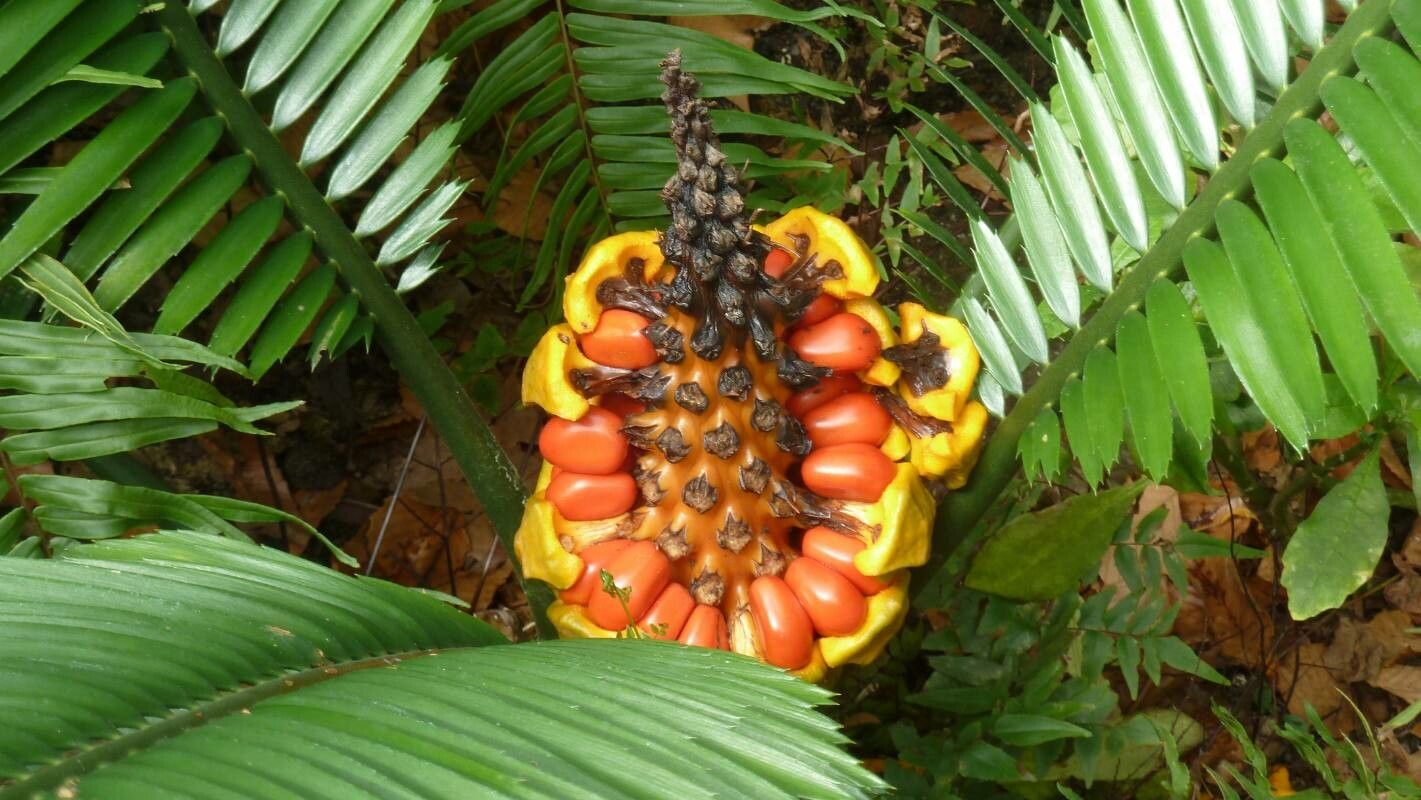
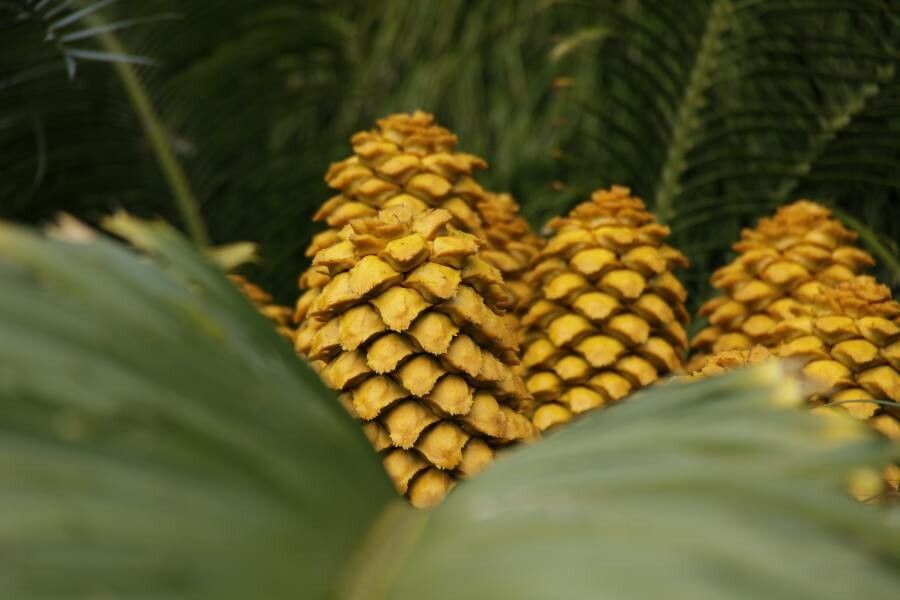
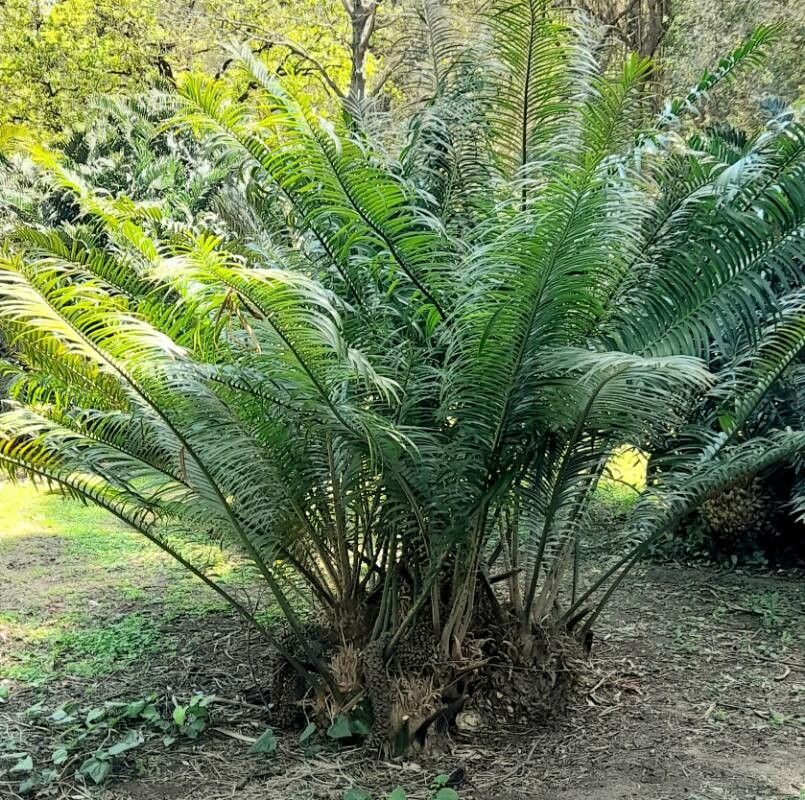
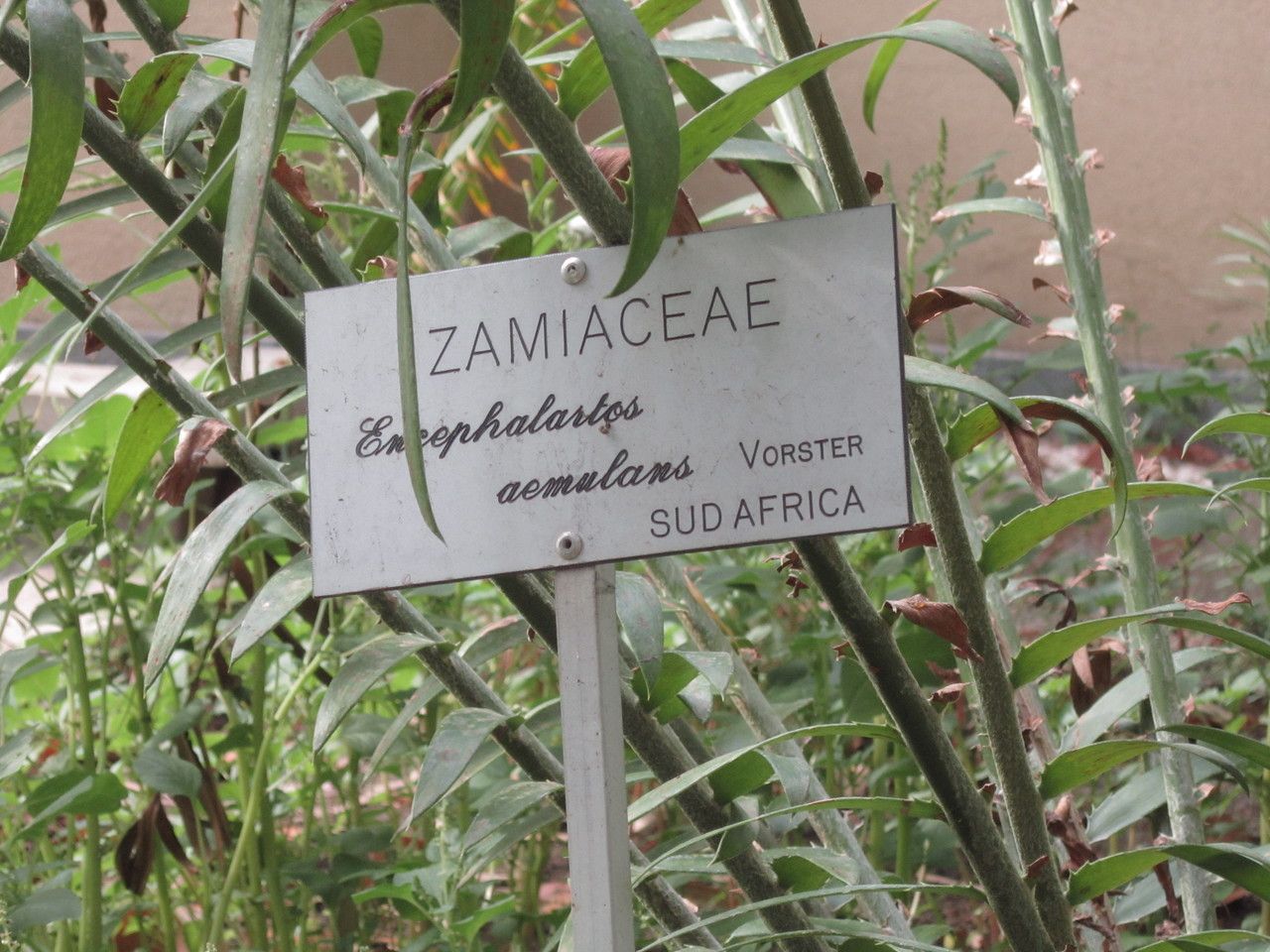
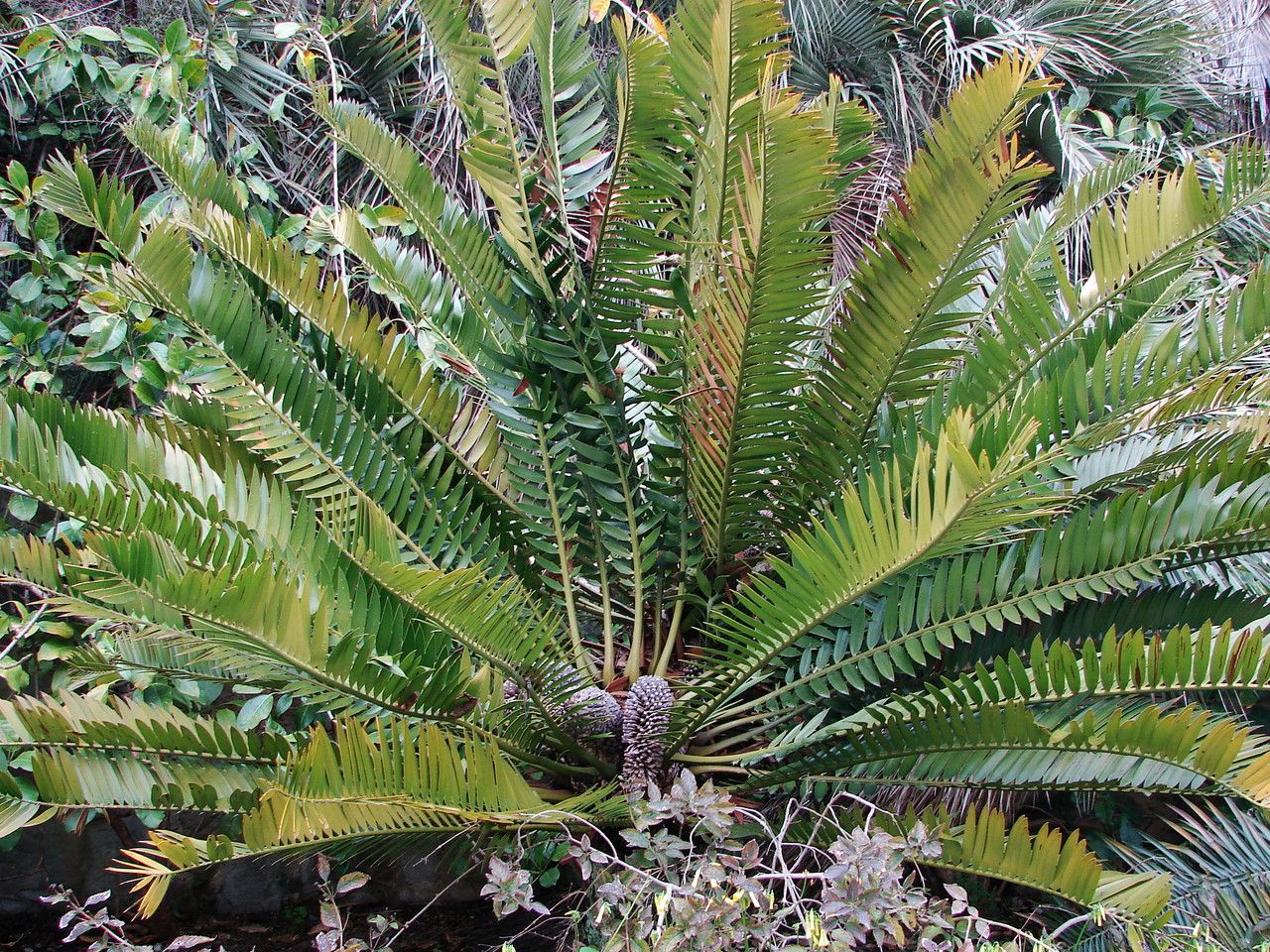
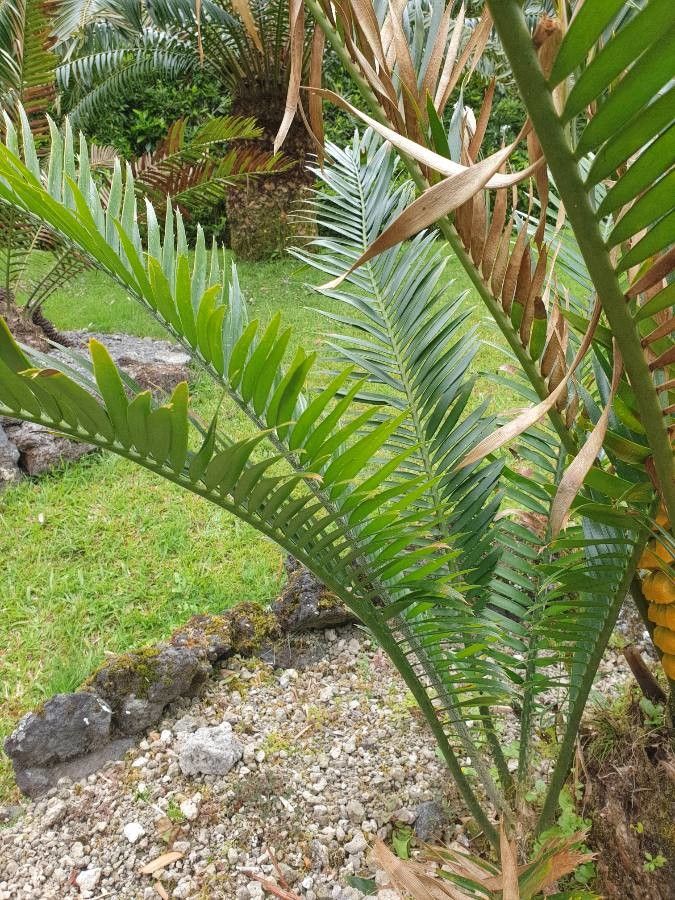
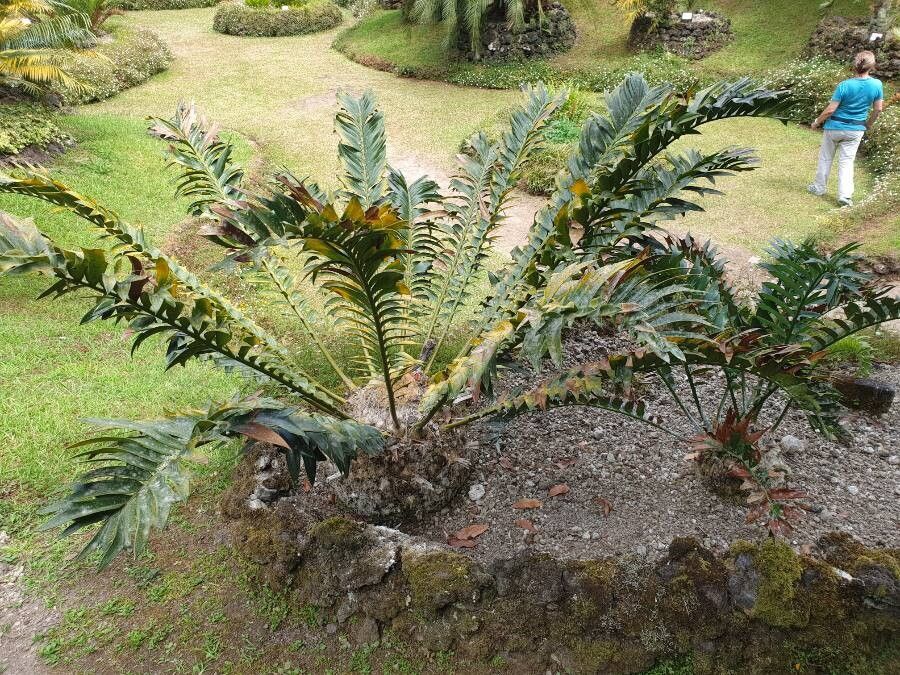
Encephalartos villosus is a South African cycad occurring from the East London vicinity, where it is found near the coast, to the northern border of Eswatini (Swaziland) where it may grow as far as 100 km inland. The species is common throughout its range and is the most frequently cultivated in Southern Africa, largely because of its affordable price. As a result of its large geographical distribution, it is notably variable in leaf and cone shape. A largely underground trunk results in very little of the plant being visible, so that it is described as a dwarf species. The preferred habitat of this species is frost-free coastal bush. It hybridises readily with Encephalartos altensteinii in the Eastern Cape and with Encephalartos lebomboensis in the Pongola area. The crown normally consists of tightly-packed bracts covered in dense grey woolly hair (villosus = hairy). As with all cycads this species is dioecious. Male plants may carry up to 15 cones, whereas only one or two occur on the females. The seeds, embedded in bright-red flesh are eaten and distributed by the purple-crested lourie (Tauraco porphyreolophus) and by the trumpeter hornbill (Bycanistes bucinator).
Poor's man cycad is resistant to diseases and is usually not susceptible to them. Regarding upkeep, this plant is fairly easy to care for. Outdoors it needs only light watering, and mature specimens typically do not require pruning. Smaller specimens, however, should be trimmed once they have finished flowering. Poor's man cycad is appropriate for anyone with outdoor space—like a garden or a deck—and does not demand extensive gardening experience.
How to keep Encephalartos Villosus.
Light
Poor's man cycad is native to habitats like forest understories or rocky areas, where it receives natural shade. It prefers partial sun but can tolerate full sun or full shade, illustrating its versatile and hardy nature.
Temperature
Poor's man cycad is quite adaptable to temperature, able to handle high heat and wide temperature fluctuations. In hot weather it’s necessary to monitor watering and provide proper shade to avoid sunburn. On the other hand, its resistance to cold is fairly limited. It can tolerate some cold, but very low temperatures may cause frost damage.
Fertilizer
Poor's man cycad has specific nutrient needs and does not require heavy fertilization. Spring is the best time to fertilize for optimal growth. Supplying nutrients improves its health, increases resistance to pests and diseases, and helps sustain its long lifespan.
Pruning
To ensure the optimal care of a poor man's cycad, it is best to prune it in early spring. This helps remove dead leaves and improves air circulation around the plant. Always use clean, sharp tools to make precise cuts. Be careful not to over-prune, as this can stress the plant. Moderate pruning supports healthy growth and increases the plant's vigor and resistance to disease.
Botanical profile.
- Plant Type
- Shrub
- Life Cycle
- Perennial
- Genus
- Encephalartos
- Family
- Zamiaceae
- Hardiness Zone
- 9-11
- Mature Height
- 0.91 m to 2.13 m
- Mature Spread
- 2.13 m to 3.05 m
- Leaf Color
- Dark Green
- Leaf Type
- Evergreen
- Bloom Time
- Early summer, Mid summer
- Planting Time
- Spring, Summer, Autumn
- Harvest Time
- Fall
- Native Area
- South Africa, Eswatini, Mozambique
Other names.