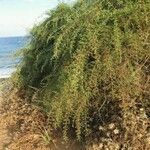
Enchylaena tomentosa
Ruby Saltbush · Sturt-saltbush · Barrier-saltbush
Description
Source: leafsnapEnchylaena tomentosa, commonly known as Ruby Saltbush, is a small shrub in the family Amaranthaceae. Native to Australia, this plant thrives in the country's arid and semi-arid regions. It typically grows up to 1 meter in height and has a rounded shape with dense foliage. The leaves of Enchylaena tomentosa are small, oval-shaped, and covered with fine hairs, giving them a silvery-grey appearance. The plant produces tiny greenish-yellow flowers that bloom from late winter through spring. One of the most distinctive features of Enchylaena tomentosa is its edible fruit, which resembles small red berries. These fruits have a salty taste due to their high sodium content, hence the common name "Ruby Saltbush." Indigenous Australians traditionally used these fruits as a food source. Enchylaena tomentosa is an adaptable plant that can grow in various soil types, including sandy and clay soils, as well as coastal areas where it tolerates salt spray. It also has good drought tolerance, making it an ideal choice for xeriscaping or water-wise gardening. Overall, Enchylaena tomentosa is an attractive shrub with unique features, such as silvery-grey leaves and edible salty fruits, making it both ornamental and functional for landscaping purposes.
Care Guide
💧 Water Every 7 days
Barrier saltbush is exceptionally drought-tolerant and thrives in arid environments with very little moisture. It only needs to be watered every 2-3 weeks, which mimics the infrequent rainfalls of its native habitat. This makes it an ideal choice for outdoor settings, especially in landscapes that prioritize water conservation.
☀️ Light Full sun
Barrier saltbush does best when it draws the energy it needs from sunlight for growth and health. It originated in habitats where the sun is unobstructed for much of the day. Too little light can result in poor growth, while too much may scorch the leaves.
🌡️ Temperature 15–37.8°C
Barrier saltbush is native to habitats with large temperature fluctuations and performs best at 68 to 100.4 °F (20 to 38 ℃). To encourage healthy growth, consider adjusting temperatures to match seasonal changes.
What is the native environment of Barrier Saltbush?
Barrier Saltbush, scientifically known as Enchylaena tomentosa, is native to environments that experience significant temperature fluctuations. It thrives best in temperatures ranging between 68 to 100.4 °F (20 to 38 °C), indicating its preference for environments where there are distinct seasonal changes. This plant has developed adaptations that allow it to flourish under varying temperature conditions, making it versatile in different climates.
Does Barrier Saltbush have any cold tolerance?
Yes, Barrier Saltbush does exhibit some degree of cold tolerance. It generally can withstand temperatures above 0°C without needing specific protective measures. However, in instances where the temperature is anticipated to drop below freezing, it is advisable to temporarily safeguard the plant. Protective methods include wrapping the plant with plastic film, fabric, or other materials to insulate it against the cold. Once the temperature returns to a safer range, these protections should be removed to avoid any potential negative impacts on the plant.
How should Barrier Saltbush be taken care of in low temperature conditions?
In low temperature conditions, particularly when temperatures fall below -10°C, Barrier Saltbush's leaves may begin to droop, indicating stress from the cold. While the plant has moderate tolerance to low temperatures and can recover from mild frosts, severe cold can cause irreversible damage, such as wilting and leaf drop. To prevent such damage, it's crucial to trim off frost-affected parts of the plant and implement protective measures like wrapping the plant in non-woven fabric or cloth. Additionally, constructing a wind barrier can help shield the plant from cold winds, further ensuring its survival during colder months.
What precautions should be taken for Barrier Saltbush during high temperatures?
High temperatures, especially those exceeding 43°C, can be detrimental to Barrier Saltbush, leading to symptoms like lighter leaf color, dry and withered leaf tips, curling leaves, and increased susceptibility to sunburn. To mitigate these effects, it's advisable to trim away any sunburned or dried parts of the plant. Relocating the plant to a shaded area or using a shade cloth can provide protection from intense midday and afternoon sun. Additionally, maintaining soil moisture by watering the plant in the morning and evening can help alleviate stress from high temperatures.
💨 Humidity
🪴 Soil 6-7
🌱 Fertilizer
To promote healthy growth, fertilize your Barrier saltbush in early spring. Regular fertilization improves overall health, leading to vigorous growth, better resilience to harsh conditions, and increased resistance to diseases and pests. Maintain a specific fertilization schedule for your Barrier saltbush to ensure vibrant foliage with deep color and a lush appearance.
🪴 Pot & Repot
✂️ Pruning
To keep your barrier saltbush healthy and looking its best, it's important to prune it from early to late winter. Start by removing any dead or diseased branches, and then thin out any dense areas to improve air circulation and allow more sunlight to reach the plant. Be careful not to over-prune, as maintaining the shrub's natural shape encourages healthy growth, enhances its appearance, and reduces the risk of disease.
🌿 Propagating
🐛 Diseases & pets
☠️ Toxicity
Characteristics
- Plant Type
- Shrub
- Life Cycle
- Perennial
- Genus
- Enchylaena
- Family
- Amaranthaceae
- Hardiness Zone
- 8-11
- Mature Height
- 0.1 m to 2.13 m
- Mature Spread
- 91 cm
- Leaf Color
- Gray, Light Gray
- Leaf Type
- Evergreen
- Flower Color
- White
- Bloom Time
- Late summer, Early fall, Mid fall
- Planting Time
- Spring, Autumn
- Harvest Time
- Mid fall, Late fall, Early winter