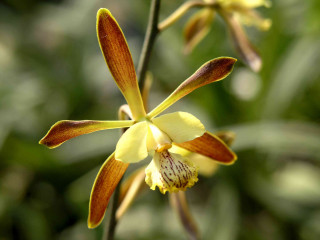
Encyclia cochleata
Encyclia orchid · Cockleshell or cochleata orchid · clamshell orchid
Description
Source: leafsnapSouth American species require a very little amount of water because they also get moisture from high humidity. Species in Brazil also do not need to be watered often either. For the orchids in Florida and Caribbean, they need to be wanted every five to seven days with tepid or rainwater. Water every two weeks when the orchid is dormant and that is during winter. Start watering regularly again as it produces new growth.
Care Guide
💧 Water Every 5-7 days during the growing season
For south american species, they require a very little amount of water because they also get moisture from high humidity. Species in Brazil also do not need to be watered often either. For the orchids in Florida and Carribean, they need to be wanted every five to seven days with tepid or rainwater. Water every two weeks when the orchid is dormant and that is during winter. Start watering regularly again as it produces new growth.
☀️ Light
🌡️ Temperature
Encyclia are hardy in zones 9 to 11. These zones have semi-tropical conditions. It is best for these orchids to maintain a warm daytime temperature of about 85°F. At night, it has a temperature preference of 70°F.
💨 Humidity
🪴 Soil
🌱 Fertilizer
Use a 20-20-20 balanced fertilizer. Add a tree fern or charcoal with it. You can also use 30-10-10 npk ration with a fir bark. Fertilize the plant with non-urea-based feed at a half-strength during warm months and on a weekly basis during the time that the soil is moist. While if it is winter, feed it only once every month.
🪴 Pot & Repot
✂️ Pruning
If your orchid is still young, the best way to encourage them to grow is by pruning. While they are still young, trim the stalk from the base of the plant all the way back to 1 inch. You will notice that it will grow with stronger roots, bigger leaves, and larger blooms.
🌿 Propagating
🐛 Diseases & pets
☠️ Toxicity
This specie of orchid is not-toxic to either cats or dogs. They are also completely safe for humans. However, even if it is safe, it is not an excuse to eat these plants as they can still cause stomach discomfort.
Characteristics
- Plant Type
- Epiphyte
- Hardiness Zone
- 9-11
- Bloom Time
- Spring
- Native Area
- Damp forests, woodlands and swamps of southern Florida, Mexico, the West Indies, and Central and South America