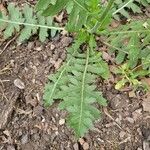
Engelmannia peristenia
Engelmann's daisy
Description
Source: leafsnapEngelmannia peristenia, called Engelmann daisy or cutleaf daisy, is a North American species of flowering plants in the family Asteraceae. It is native to the south-central United States, primarily from Texas, New Mexico, Oklahoma, and southeastern Colorado, but with more isolated populations in Arizona, Louisiana, Arkansas, Missouri, Nebraska, and South Dakota.Engelmannia peristenia is a branching perennial herb up to 100 cm (40 inches) tall. Leaves at the base can be up to 30 cm (1 foot) long, with the leaves progressively getting smaller higher on the stem. The plant produces many small flower heads, each generally with 8 ray florets and 40-50 disc florets. Flowers bloom March to July. Its habitats include grasslands, roadsides, and pinion-juniper woodlands.
🌳 The Engelmann daisy is more than a decorative plant; it is essential to prairie restoration because of its resilience and adaptability. This modest yellow flower is highly valued by conservationists and land managers for its ability to stabilize soil, increase biodiversity, and act as a forage source for wildlife. Not often used in commercial products, its main usefulness is in environmental reclamation and in supplying sustenance to pollinators such as bees.
🎭 Faithful affection, Tenderness, Purity
Care Guide
💧 Water Every 1-2 weeks
The Engelmann daisy, which comes from semi-arid regions, thrives with moderate watering and typically needs to be watered once every 1-2 weeks. Its drought resistance and ability to manage water effectively enhance its survival in fluctuating temperatures, making it well-suited for outdoor growth in temperate zones.
☀️ Light Full sun
For an Engelmann daisy to thrive, it requires abundant sunlight. It comes from habitats that are exposed to sun all day, so its growth is strongly affected by those conditions. Both insufficient and excessive light can impede its growth, resulting in stunted development or possible wilting.
What are the sunlight requirements for Engelmann Daisy?
Engelmann Daisy requires full sun to thrive optimally, meaning it needs above 6 hours of direct sunlight daily. It's vital to observe your garden's sunlight patterns to identify spots that offer a perfect balance of light and shade, ensuring the plants' growth and happiness. Originating from environments that are exposed to intense solar glare throughout the day, Engelmann Daisy's development is significantly influenced by adequate sunlight exposure. Both insufficient and excessive light can adversely affect its growth, potentially leading to stunted growth or wilting.
How can artificial lighting be utilized for Engelmann Daisy?
Indoor Engelmann Daisy plants require adequate lighting to support their growth, especially when natural sunlight is lacking. Artificial lighting can be an essential solution, promoting healthier and faster growth. LED lights are a popular choice due to their ability to provide specific wavelengths needed by plants. For full sun plants, 30-50W per square foot is recommended; for partial sun, 20-30W per square foot; and for full shade, 10-20W per square foot. The artificial light source should be placed 12-36 inches above the plant, mimicking natural sunlight, with 8-12 hours of light per day to ensure the best growth conditions.
What are the symptoms of inappropriate light conditions for Engelmann Daisy?
Symptoms of inadequate sunlight in Engelmann Daisy include small and pale new leaves, leggy or sparse growth, faster leaf drop, slowed or halted growth, and chlorosis. Excessive sunlight can lead to sunscald, leaf curling, wilting, leaf scorching, and the breakdown of chlorophyll which affects photosynthesis. These symptoms highlight the importance of providing the right light conditions for Engelmann Daisy to maintain its health and vitality.
What solutions can be applied to manage light conditions for Engelmann Daisy?
To address light conditions for Engelmann Daisy, gradually move plants to sunnier locations to receive at least 6 hours of direct sunlight daily. For indoor plants, use south-facing windows or artificial light sources like desk lamps or professional grow lights for at least 8 hours daily. Outdoor plants should be moved gradually to avoid sunburn. If lack of sunlight is due to physical obstructions, consider pruning or transplanting to a location with better light. Although parts of the plant affected by insufficient light may not recover, new growth should be healthy with improved light exposure.
🌡️ Temperature 5–35°C
Engelmann daisy tolerates a wide range of temperatures, from 41 to 95 °F (5 to 35 ℃). Native to temperate regions, this plant tolerates seasonal temperature fluctuations. In particularly cold winters, make sure it is insulated to prevent frost damage.
What are the ideal temperature conditions for Engelmann daisy?
The Engelmann daisy thrives in a wide temperature range, from 41 to 95 °F (5 to 35 °C), making it well-suited for temperate regions that experience seasonal temperature shifts. While it has strong cold resistance and doesn't usually require special frost protection, in regions where winters can drop below -25°C, it's essential to insulate the plant using materials like soil or straw. Additionally, before the onset of the first freeze in autumn, generous watering is recommended to keep the soil moist and help prevent winter and early spring droughts.
How does Engelmann daisy react to low temperatures?
Engelmann daisy is notably cold-tolerant, performing best in temperatures above 5°C. It should be kept above -20°C during winter to avoid damage. If temperatures fall beneath -25°C, the plant might not show immediate signs of distress, but the likelihood of decreased or absent sprouting in spring increases. To mitigate any damage from such cold exposure, removing any parts of the plant that fail to sprout in spring is advisable.
How should I care for Engelmann daisy in high temperatures?
In the summer months, it's crucial to ensure that Engelmann daisy's surroundings do not exceed 35°C. Exposure to temperatures above 41°C can cause the plant's leaves to lighten in color, curl, and in more severe cases, lead to overall wilting and drying. To prevent this, trim away any sunburned or dry sections, and consider moving the plant to a shadier spot or utilizing shade cloth to protect it from intense midday and afternoon sun. Regular watering during the cooler morning and evening hours is also essential to maintain soil moisture and plant health.
What is the botanical name of Engelmann daisy?
The botanical name for Engelmann daisy is Engelmannia peristenia.
💨 Humidity
🪴 Soil 6-7
🌱 Fertilizer
The best time to fertilize an Engelmann daisy is in early spring, when it is coming out of dormancy and beginning active growth. Fertilizing supplies essential nutrients for healthy development. Although Engelmann daisies have relatively low fertilizer needs, applying fertilizer once a year can improve their survival and encourage better, longer-lasting flowers.
🪴 Pot & Repot
✂️ Pruning
The Engelmann daisy features bright yellow flowers and thrives in sunny areas. To encourage healthier blooms and growth, prune dead stems from late winter to early spring. Regular pruning helps maintain the plant's shape, improves air circulation, and prevents disease. Be sure to use clean, sharp tools to minimize damage and reduce sap loss.
🌿 Propagating
🐛 Diseases & pets
☠️ Toxicity
Characteristics
- Plant Type
- Herb
- Life Cycle
- Perennial
- Genus
- Engelmannia
- Family
- Asteraceae
- Hardiness Zone
- 5-10
- Mature Height
- 91 cm
- Mature Spread
- 30 cm to 61 cm
- Leaf Color
- Green, Blue
- Leaf Type
- Evergreen
- Flower Color
- Yellow
- Flower Size
- 2.54 cm to 3.81 cm
- Bloom Time
- Late spring, Early summer, Mid summer
- Planting Time
- Spring, Summer, Autumn
- Harvest Time
- Summer
- Native Area
- Mexico