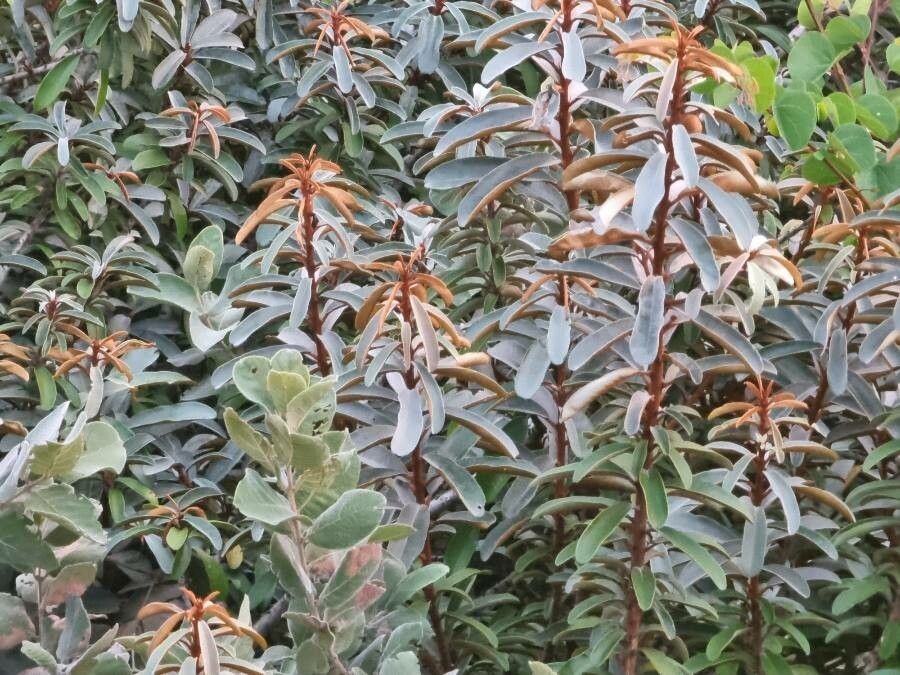
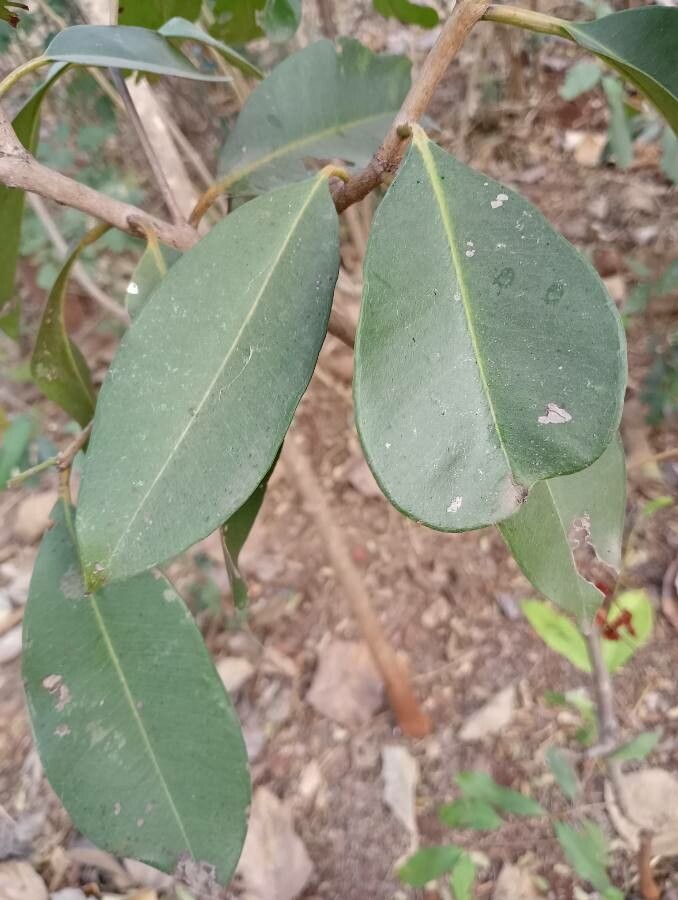
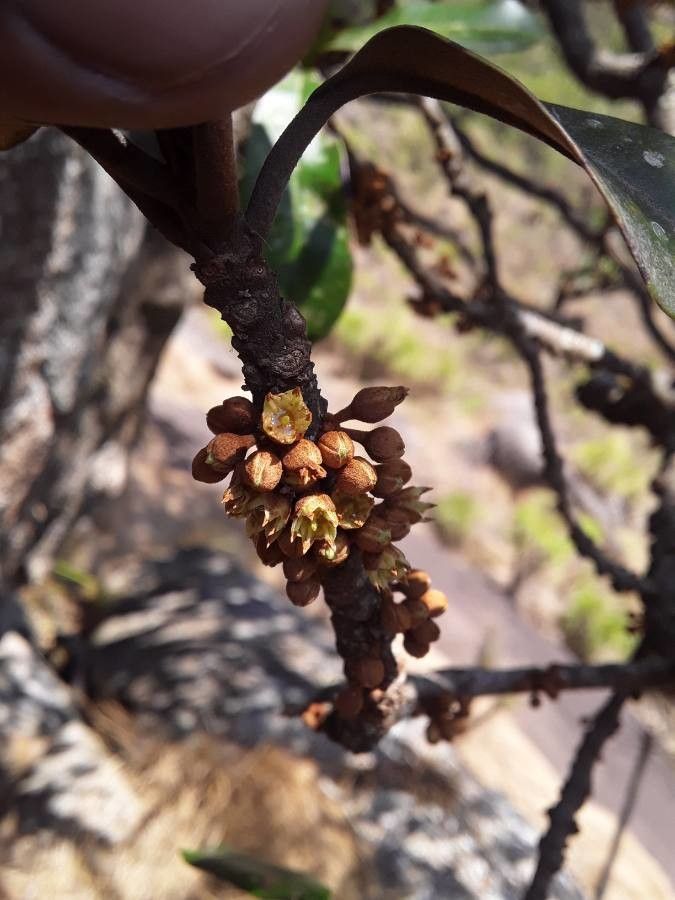
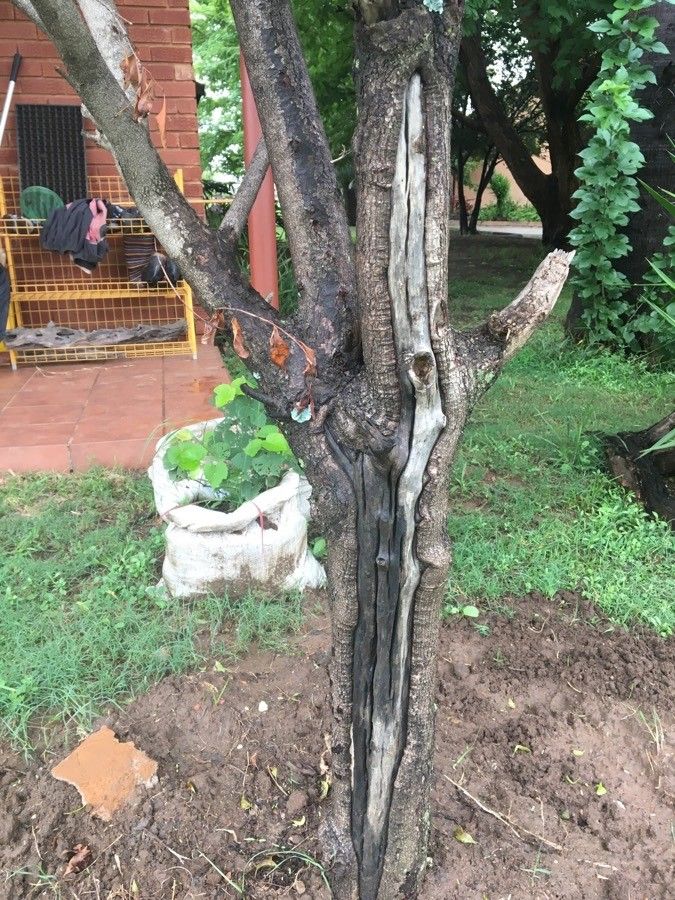
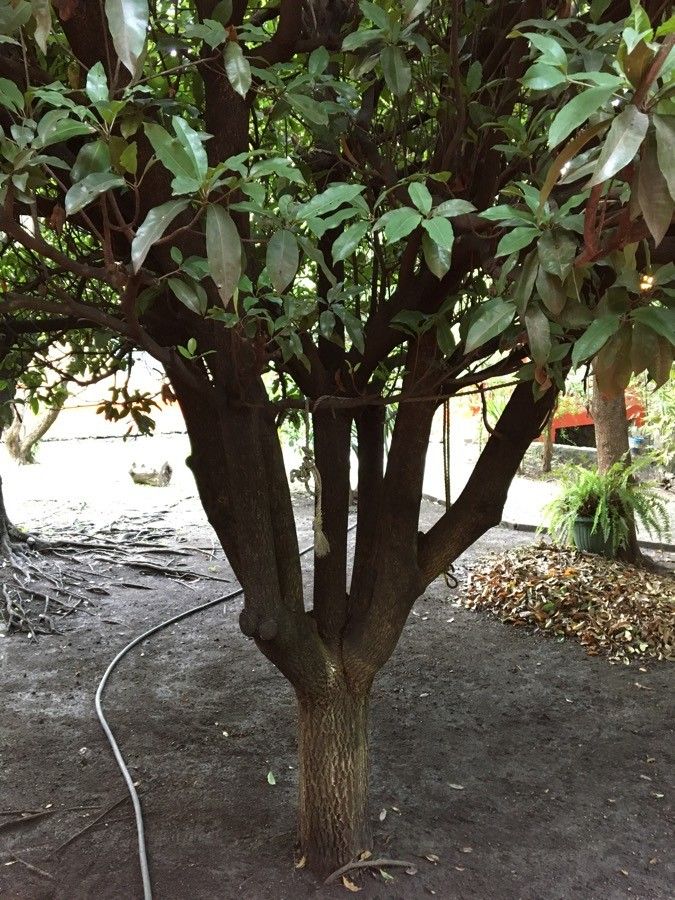
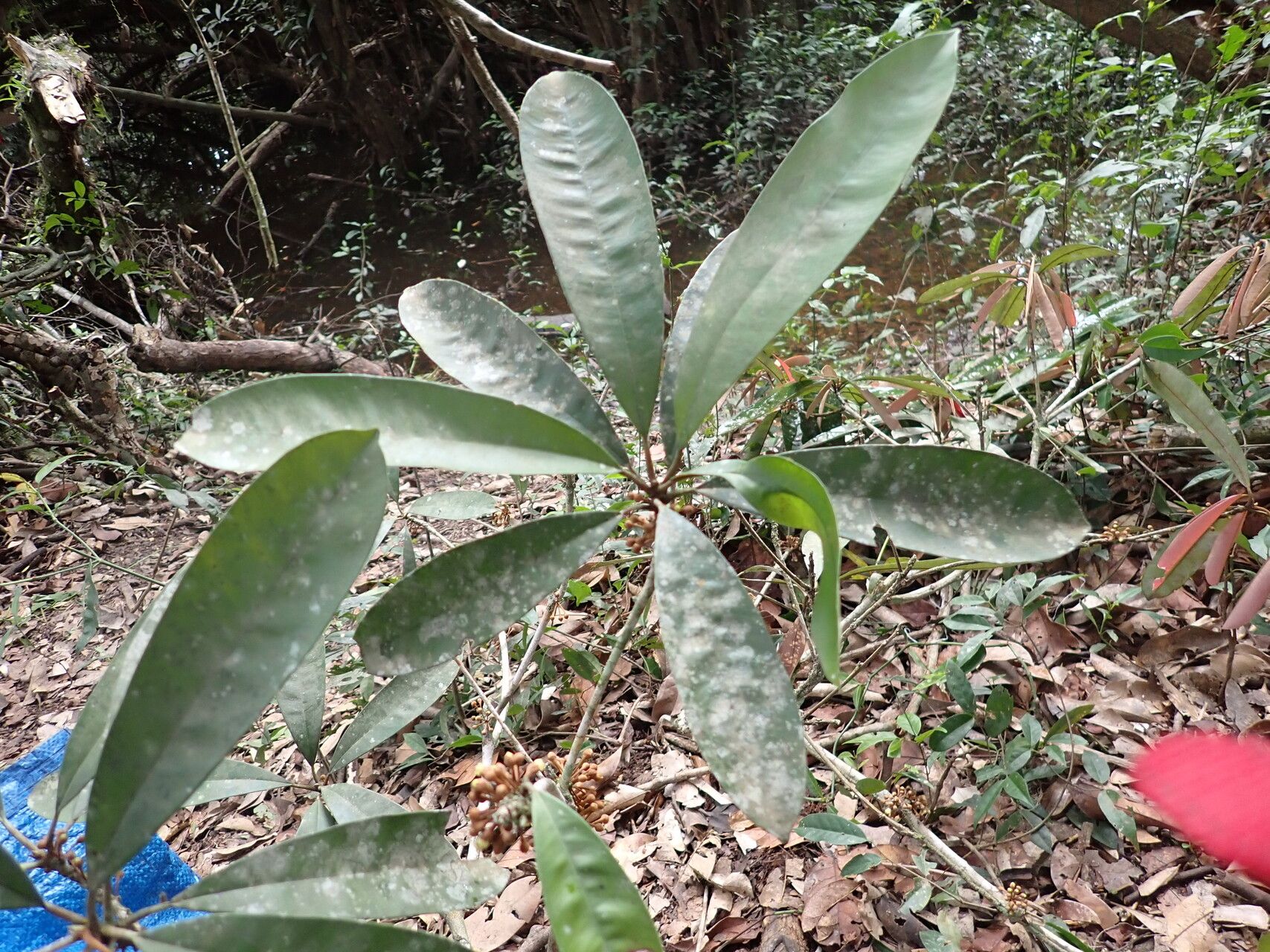
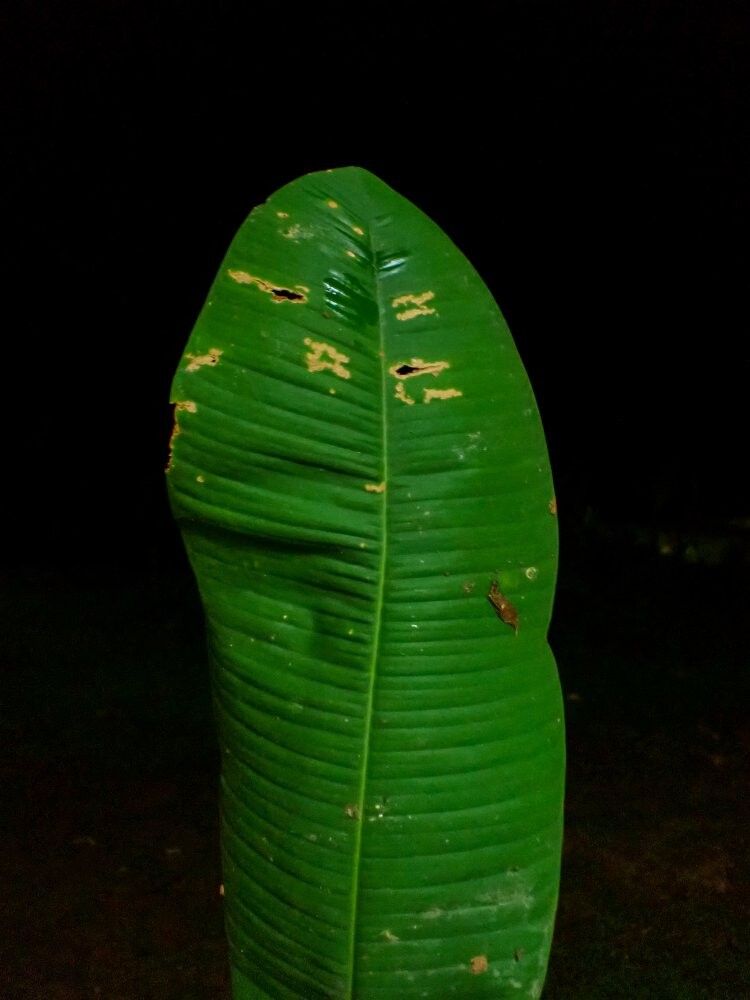
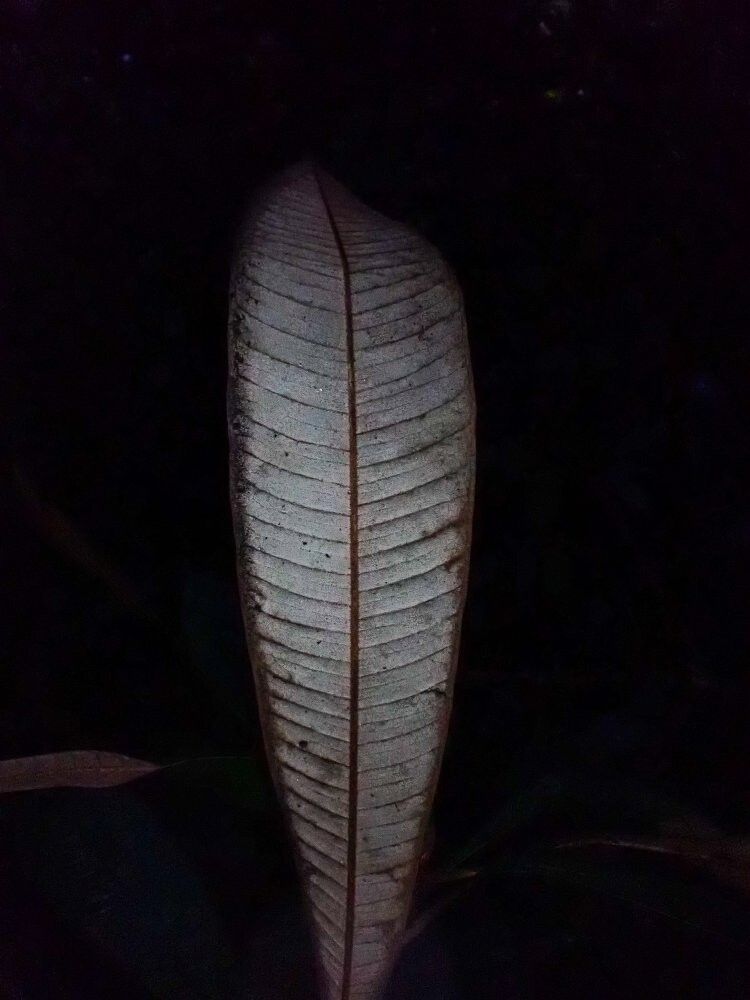
Englerophytum magalismontanum, commonly known as the African cherry or umsinsi, is a large tree native to southern Africa. Belonging to the Fabaceae family, it can grow up to 30 meters tall with a trunk diameter of up to 1 meter. The tree features a dense crown of dark green, compound, pinnate leaves.
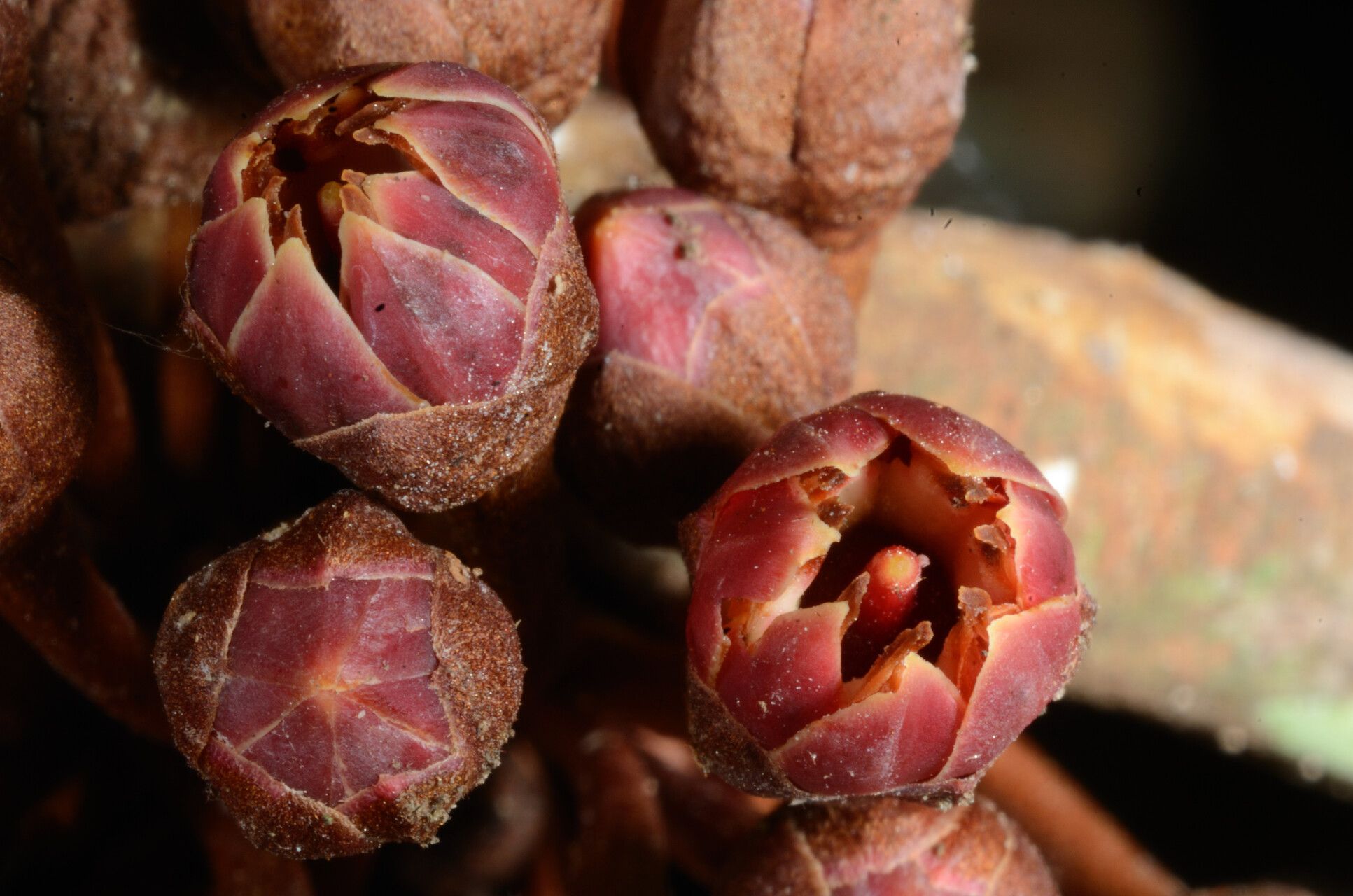
The African cherry produces small, fragrant, white or cream-colored flowers that bloom from September through November. Its fruit is an edible drupe, resembling a small cherry, and turns orange-red when ripe. Indigenous communities have traditionally utilized the fruit for its medicinal properties.
The wood of Englerophytum magalismontanum is highly valued for its durability and strength, making it a popular choice for furniture making, construction, and carving. Unfortunately, overexploitation has led to declining populations in some regions.
Ecologically, Englerophytum magalismontanum is significant as it provides food for various animals, including birds and monkeys, and serves as a habitat for insects such as bees, which aid in pollination.
In response to declining populations, various organizations have implemented conservation efforts, including planting programs aimed at restoring degraded areas where this species once thrived.
Stem-fruit has strong resistance to disease and is generally not susceptible to illnesses. In terms of care, this plant is fairly low maintenance. When grown outdoors it needs only light watering, and larger specimens typically do not require pruning. Smaller plants, however, should be pruned after they have finished blooming. Stem-fruitt is appropriate for anyone with outdoor space, such as a garden or deck, and does not demand extensive care experience.
How to keep Englerophytum Magalismontanum.
Light
Stem-fruit is native to habitats like forest understories or rocky areas, where it grows in natural shade. It prefers partial sun but can tolerate full sun or full shade, highlighting its versatile, hardy nature.
Water
Stem-fruit is moderately drought-tolerant and thrives in areas with irregular rainfall. It needs watering only every 2 to 3 weeks to resemble its natural environment. As an evergreen plant, stem-fruit keeps its leaves throughout the year, which allows for continuous photosynthesis and reduces the need for frequent watering.
Temperature
Stem-fruit is fairly adaptable to temperature, able to endure higher heat and greater temperature fluctuations. In hot conditions, care should be taken to water properly and provide suitable shade to avoid sunburn. On the other hand, Stem-fruit is not very tolerant of low temperatures; it can tolerate some cold, but very low temperatures may cause frost damage.
Fertilizer
The Stem-fruit plant needs adequate nutrients to produce fruit optimally. Fertilize in early spring to encourage new growth and flower development. Regular feeding keeps the plant healthy, results in tastier fruit, and prevents nutrient deficiency problems like yellowing leaves and poor fruit yield.
Pruning
Pruning stem-fruit in early spring encourages healthy growth by removing dead branches and thinning out crowded areas to improve air circulation. Shaping the plant not only enhances its appearance but also boosts its productivity. This practice promotes quick recovery, supports disease prevention, and ensures a strong growing season.
Botanical profile.
- Plant Type
- Tree
- Life Cycle
- Perennial
- Genus
- Englerophytum
- Family
- Sapotaceae
- Hardiness Zone
- 9-11
- Mature Height
- 3.05 m to 14.94 m
- Mature Spread
- 2.13 m to 3.96 m
- Leaf Color
- Dark Green, Forest Green
- Leaf Type
- Deciduous
- Flower Color
- Yellow, Green
- Flower Size
- 1.02 cm
- Bloom Time
- Mid fall, Late fall, Early winter
- Planting Time
- Spring, Autumn
- Harvest Time
- Late winter, Early spring, Mid spring
- Native Area
- Malawi, Angola, Mozambique, South Africa, Zambia, Eswatini, Botswana, Zimbabwe
Other names.