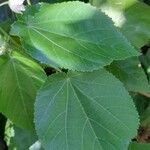
Entelea arborescens
New Zealand-mulberry · Corkwood · Evergreen-lime · Whau · New Zealand whau
Description
Source: leafsnapEntelea arborescens or whau is a species of malvaceous tree endemic to New Zealand. E. arborescens is the only species in the genus Entelea. A shrub or small tree to 6 m with large lime-like leaves giving a tropical appearance, whau grows in low forest along the coast of the North Island and the northern tip of the South Island. The dry fruit capsules are very distinctly brown and covered with spines. The common name whau is a Māori word that appears to derive from the common Polynesian word for hibiscus, other malvaceous trees which whau superficially resembles. Alternate names include 'New Zealand mulberry', 'corkwood' and 'evergreen lime'.
Care Guide
💧 Water
The evergreen lime is a drought-tolerant plant that thrives when watered every 2-3 weeks. Its evergreen nature helps it retain moisture in its foliage, which aids in transpiration and regulates soil moisture in various climates.
☀️ Light Full sun
Evergreen lime comes from open habitats, like sunny meadows and forest edges, which provide plenty of light. It performs best in Full Sun but can also tolerate Partial Sun, adapting well to a range of sunlight conditions.
What are the sunlight requirements for Evergreen lime?
Evergreen lime, botanically known as Entelea arborescens, thrives in full sun conditions, requiring above 6 hours of direct sunlight each day. It can also tolerate partial sun, which means about 3-6 hours of sunlight per day. Originating from open environments like sunny meadows and forest edges, Evergreen lime is well-adapted to various sunlight conditions. However, it's essential to observe your garden's sunlight exposure throughout the day to ensure your plants receive the ideal balance of light and shade, promoting their health and happiness.
How does artificial lighting affect indoor Evergreen lime plants?
Indoor Evergreen lime plants require adequate lighting for optimal growth, especially when natural sunlight is insufficient, such as during winter or in less sunny indoor spaces. Artificial lighting can offer a vital solution, ensuring faster, healthier plant growth. It's recommended to choose the right type of artificial light, with LED lights being a popular choice because they can be customized to provide specific wavelengths needed by plants. Full sun plants need 30-50W/sq ft of artificial light, partial sun plants 20-30W/sq ft, and full shade plants 10-20W/sq ft. The appropriate distance to place the light source is 12-36 inches above the plant, mimicking natural sunlight, and most plants require 8-12 hours of light per day.
What are the symptoms of light deficiency in Evergreen lime?
Evergreen lime may exhibit several symptoms when exposed to suboptimal lighting, indicating a light deficiency. These symptoms include smaller-sized new leaves compared to older ones, leggy or sparse growth, with increased spaces between leaves or stems leading to a stretched-out appearance. The plant may experience faster leaf drop as it attempts to conserve resources, slower or halted growth, and lighter-colored new leaves due to insufficient sunlight. Conditions like chlorosis, sunscald, leaf curling, wilting, and leaf scorching can also manifest, each illustrating various stress responses to inadequate light exposure or excessive sunlight.
What solutions can address light deficiency problems in Evergreen lime?
To address light deficiency in Evergreen lime, a gradual adjustment to more suitable light conditions is essential. For indoor plants, moving them to a sunnier location each week, until reaching at least 6 hours of direct sunlight daily, is beneficial. Use south-facing windows and keep curtains open for maximum light exposure. If necessary, provide additional light with artificial sources, like desk or ceiling lamps, for at least 8 hours daily. For outdoor plants, avoid sudden changes in light intensity to prevent sunburn, and consider pruning or relocating plants that are in the shade to a sunnier spot. Remember, parts of the plant affected by insufficient light might not recover, but new growth should be healthy with improved light conditions.
🌡️ Temperature 15–37.8°C
The evergreen lime is suited to a native growing environment with temperatures ranging from 15 to 38 °C (59 to 100 °F). It grows best within this temperature range and may need seasonal adjustments in areas where temperatures vary greatly.
What are the ideal temperature conditions for Evergreen Lime?
Evergreen Lime, botanically known as Entelea Arborescens, is best adapted to temperatures ranging from 15 to 38 °C (59 to 100 °F). These conditions are typical of its native growth environment. While the plant shows some cold tolerance, it generally does not require additional measures if the temperature is above -5°C. However, if temperatures are expected to drop below -5°C, temporary protection methods such as covering the plant with plastic film, fabric, or other materials are advised. Once temperatures rise again, these protective measures should be removed to avoid any potential damage to the plant.
How does Evergreen Lime respond to low temperatures, and what steps should be taken?
Evergreen Lime can moderately tolerate low temperatures and performs optimally when the temperature remains above 15°C. It should be protected during winters to ensure the temperature stays above -5°C. Exposure to temperatures below -10°C may cause the leaves to droop, and without recovery, severe cases lead to leaf wilt and loss. To protect Evergreen Lime from low temperature damage, frost-damaged parts should be trimmed, and the plant should be wrapped with non-woven fabric or cloth. Additionally, constructing a wind barrier can help shield the plant from cold winds.
What are the effects of high temperatures on Evergreen Lime, and how can they be mitigated?
During summer, Evergreen Lime thrives when temperatures are kept below 38°C. Exceeding 43°C can lighten the color of the leaves, cause dryness and withering at the leaf tips, curl the leaves, and increase susceptibility to sunburn. To protect the plant from high temperature stress, sunburned and dried parts should be trimmed away. Moving the plant to a shaded location or using a shade cloth can protect it from the harsh midday and afternoon sun. Additionally, watering the plant in the morning and evening helps keep the soil adequately moist, further mitigating the effects of high temperatures.
💨 Humidity
🪴 Soil 6-7
🌱 Fertilizer
Timing is essential for fertilizing Evergreen lime. Begin fertilization in early spring and continue once a month until early summer. Fertilizer encourages attractive blooms and provides energy both during dormant periods and times of active growth.
🪴 Pot & Repot
✂️ Pruning
To keep your evergreen lime thriving, prune it in early spring for the best results. Start by removing dead branches to improve both the health and shape of the plant. This encourages denser growth and more abundant flowering. Pruning also helps manage the size of the tree, increases air circulation, and reduces the risk of disease. Be sure to use sharp tools for clean cuts, which will aid in quick healing.
🌿 Propagating
🐛 Diseases & pets
☠️ Toxicity
Characteristics
- Plant Type
- Tree, Shrub
- Life Cycle
- Perennial
- Genus
- Entelea
- Family
- Malvaceae
- Hardiness Zone
- 8-11
- Mature Height
- 6.1 m
- Mature Spread
- 2.44 m to 3.66 m
- Leaf Color
- Green, Blue
- Leaf Type
- Deciduous
- Flower Color
- White
- Flower Size
- 2.03 cm
- Bloom Time
- Mid fall, Late fall, Early winter
- Planting Time
- Spring, Summer, Autumn
- Harvest Time
- Winter
- Native Area
- New Zealand