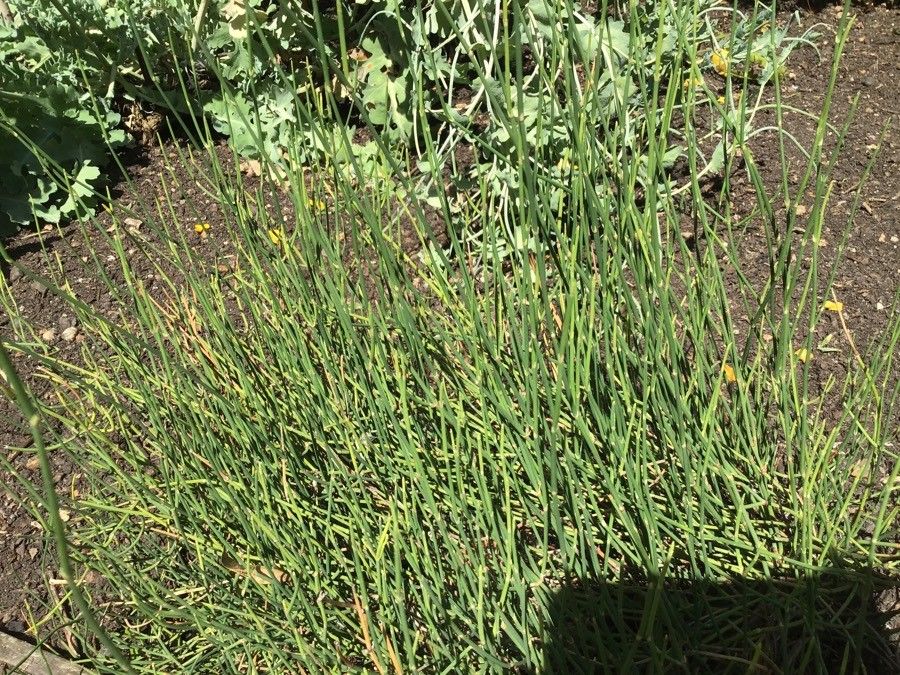
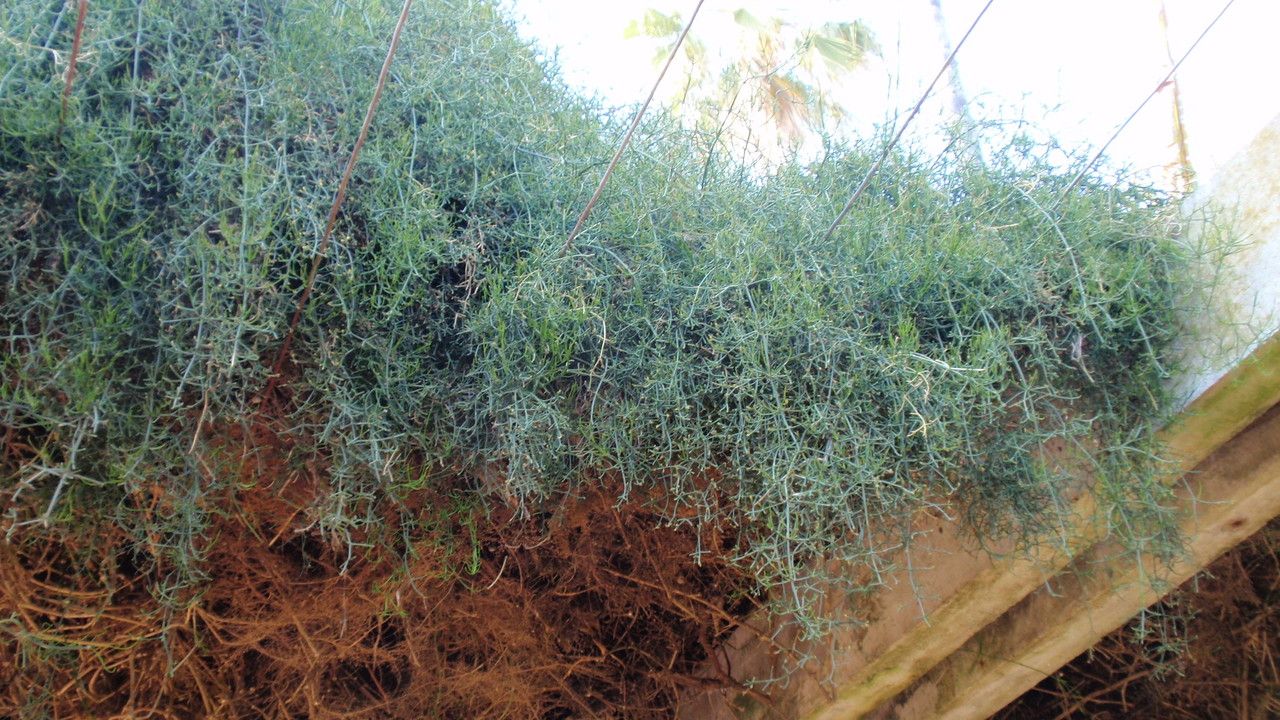
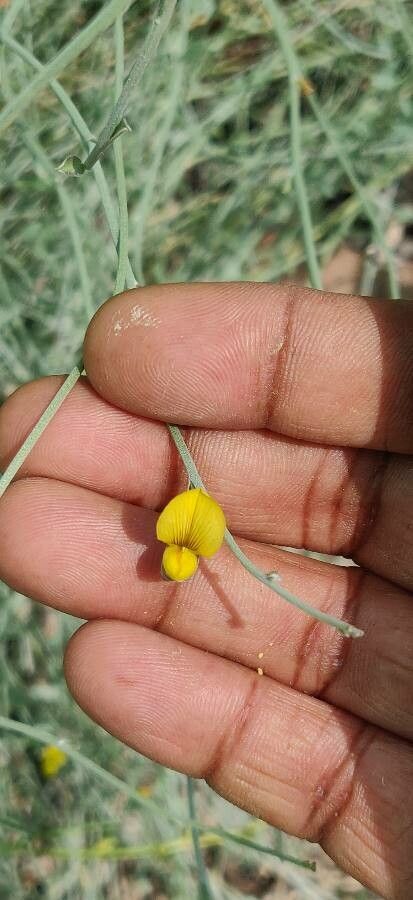
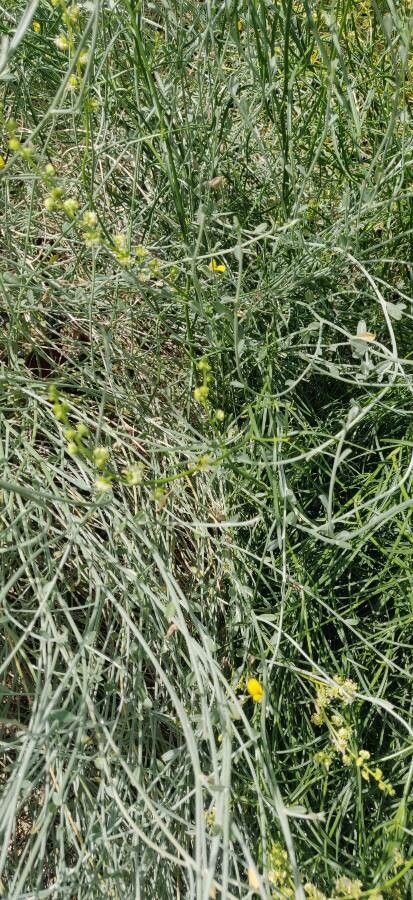
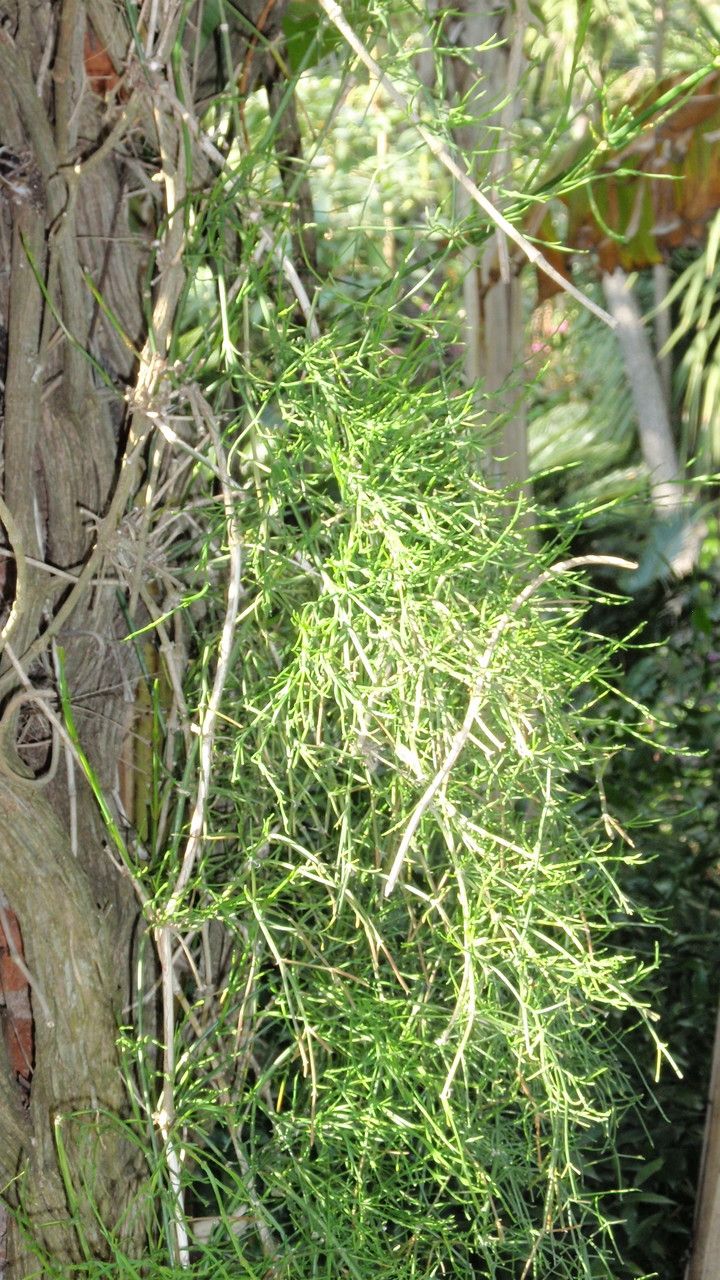
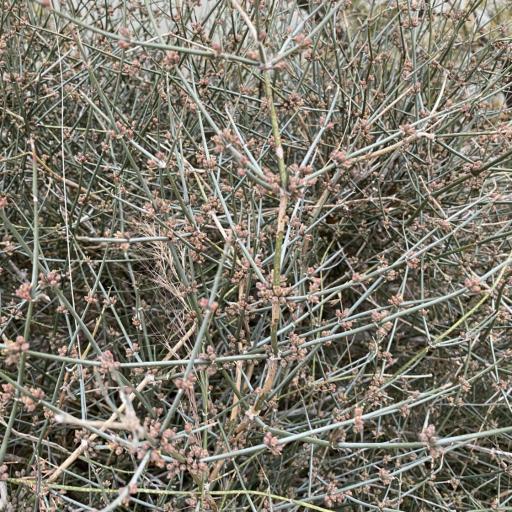
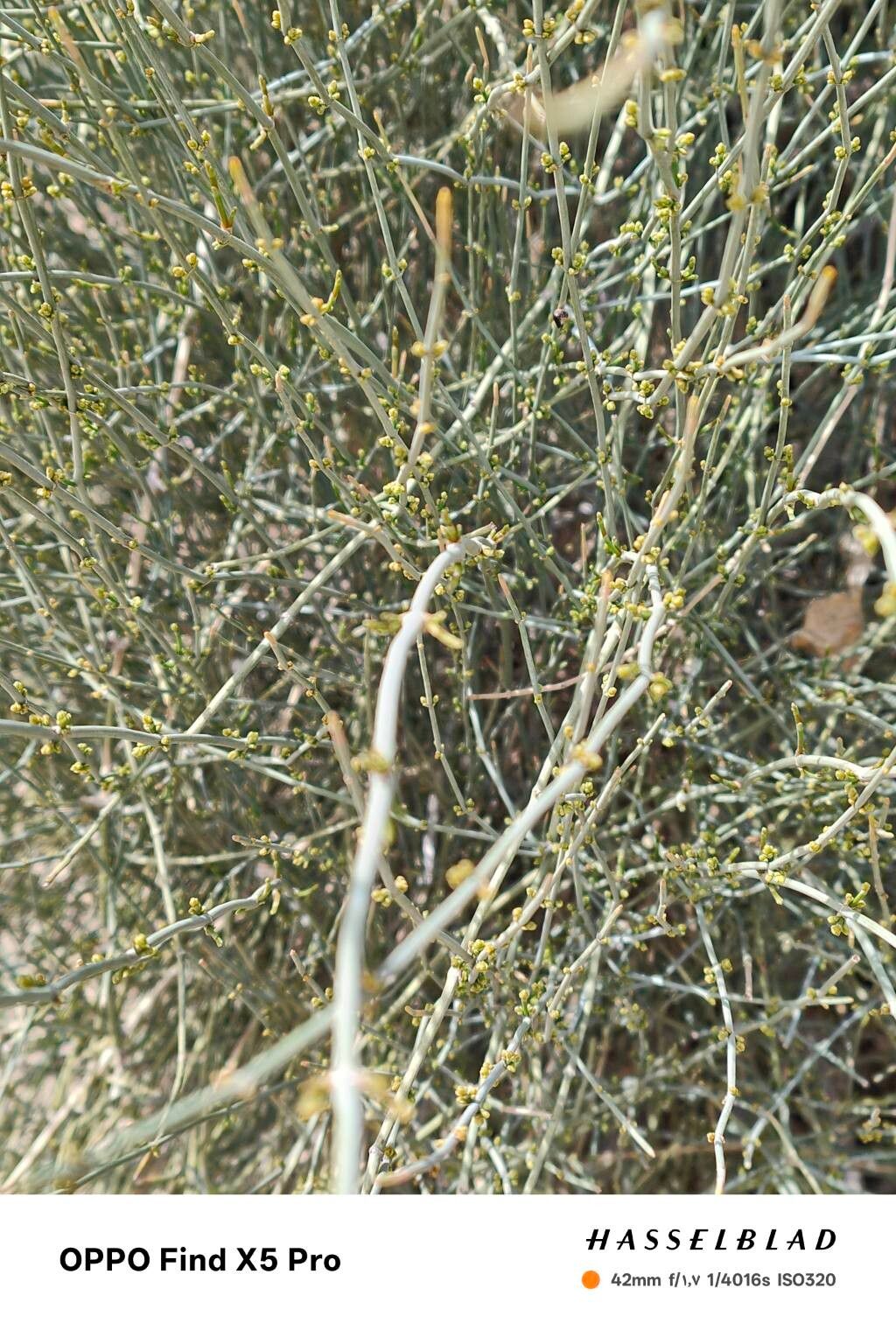
Ephedra altissima, commonly known as tall jointfir or mountain jointfir, is a shrub species in the Ephedraceae family. It is native to the western regions of North America, including California, Nevada, and Arizona. The plant typically reaches heights of up to 3 meters and features thin, green branches.
Historically, Native American tribes have used Ephedra altissima for its medicinal properties. The plant contains ephedrine alkaloids, which have been utilized as decongestants and bronchodilators in traditional medicine.
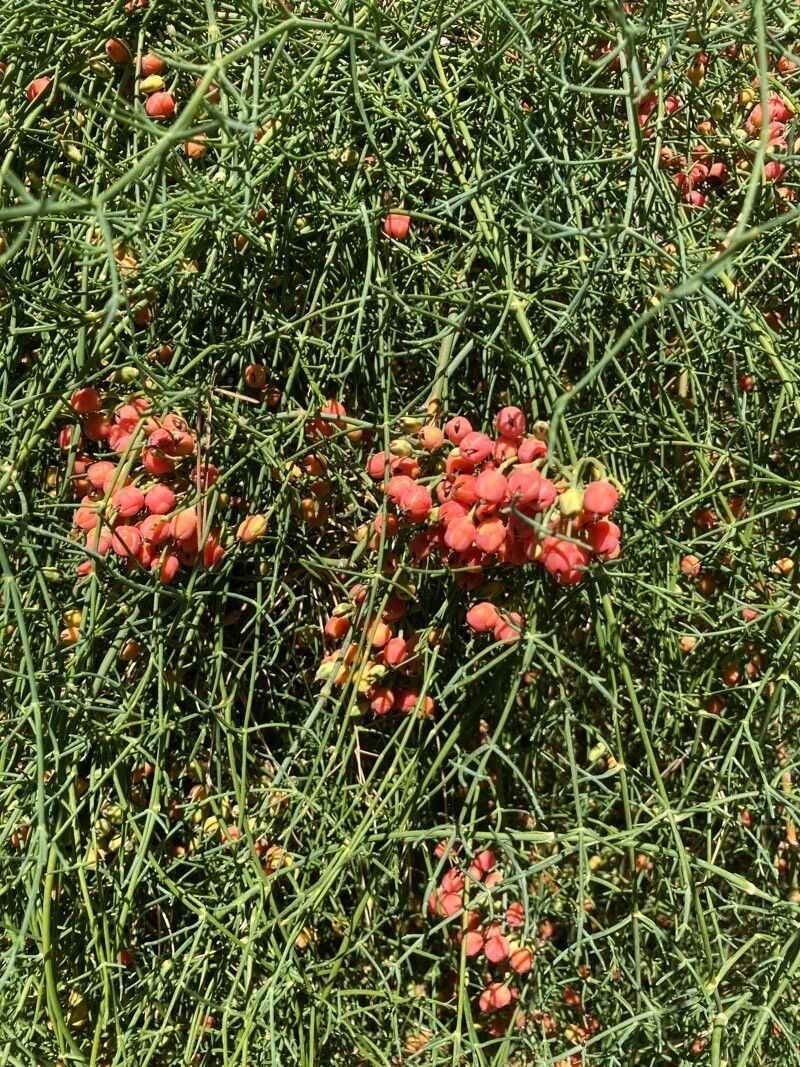
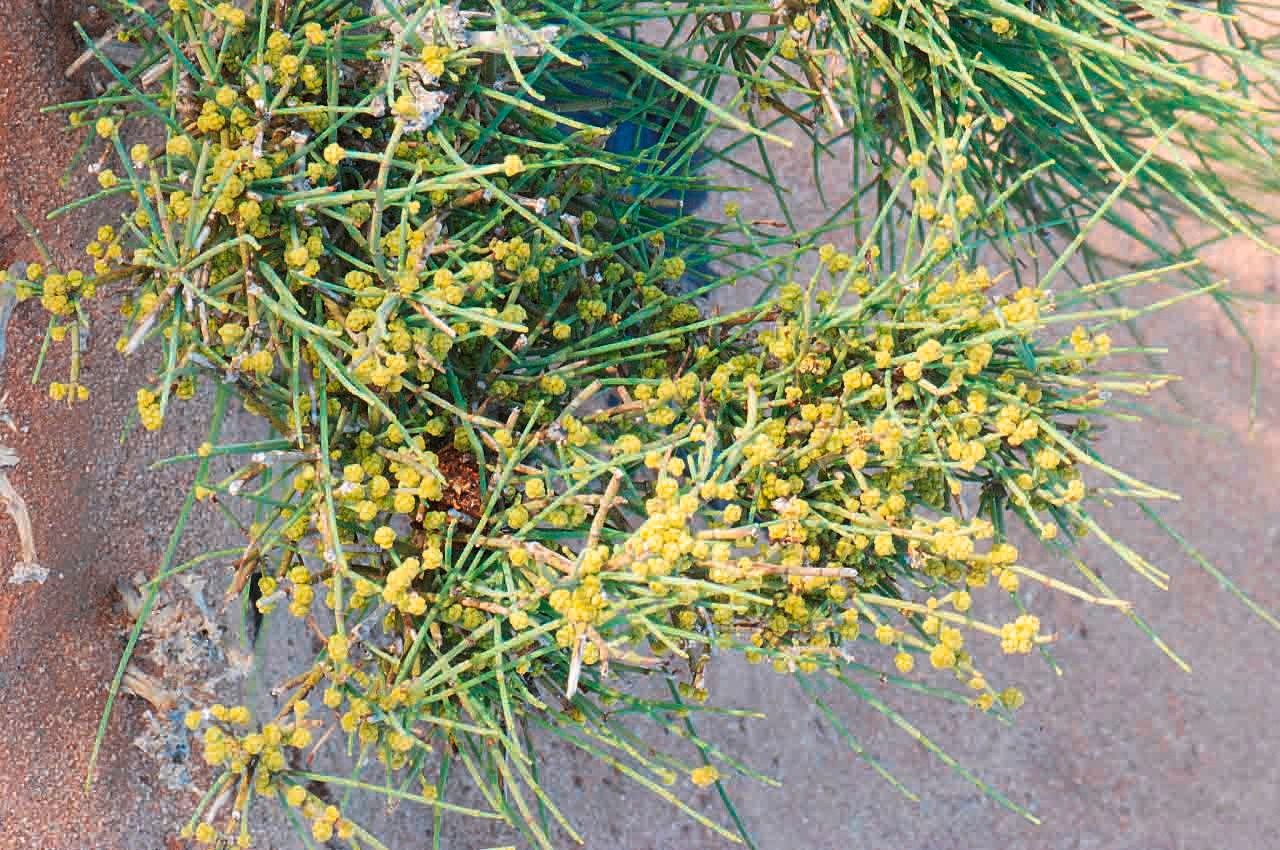
The leaves of Ephedra altissima are reduced to small scales arranged in whorls around the stem. The male cones are small and yellow, while the female cones are larger and contain red berries with seeds.
This drought-tolerant plant prefers dry, rocky soils at high elevations but can also grow in sandy or gravelly soils at lower elevations. It can withstand occasional flooding as well.
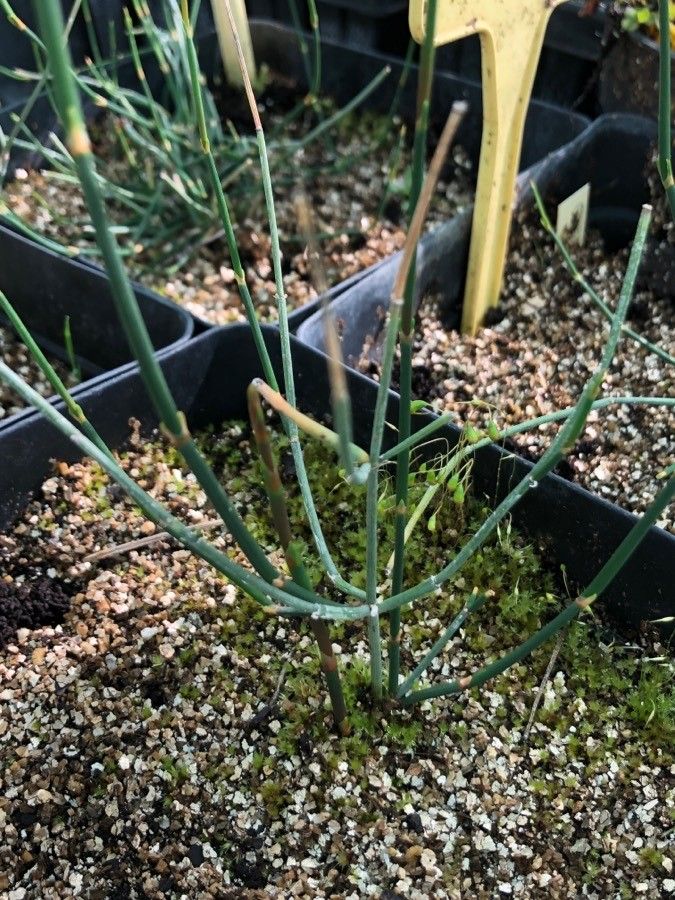
Due to its medicinal properties, Ephedra altissima has been over-harvested, leading to its status as an endangered species in some states, such as California. There, it is illegal to harvest the plant for commercial purposes without a state-issued permit. Conservation efforts, including propagation programs, have been implemented to preserve this valuable species. These measures allow its use under controlled conditions by licensed practitioners only.
High-climbing jointfir is disease-resistant and is usually not vulnerable to illnesses. In terms of maintenance, this plant is fairly low-maintenance. When grown outdoors it needs only light watering, and larger specimens typically do not require pruning. Smaller specimens, however, should be trimmed after they finish blooming. High-climbing jointfirt is appropriate for anyone with an outdoor area, like a garden or deck, and does not need extensive care experience.
How to keep Ephedra Altissima.
Light
High-climbing jointfir comes from open habitats, such as sunny meadows and forest edges, which offer plenty of light. It thrives in Full Sun but can also tolerate Partial Sun, adjusting well to different sunlight conditions.
Temperature
High-climbing jointfir comes from tropical regions, where the climate is usually warm and humid. Consequently, it is well adapted to high temperatures and humidity. It is sensitive to sudden temperature changes and prefers a stable temperature environment, so it is important to avoid temperature fluctuations indoors. It typically cannot tolerate cold temperatures and requires higher temperatures to grow. If the environmental temperature falls too low, the plant may stop growing or even die.
Fertilizer
Fertilization is essential to the care of High-climbing jointfir. Regular feeding during the growing season maintains the energy for its showy foliage and supports overall growth. Failing to fertilize can cause unhealthy leaves, reduced ornamental value, and stunted or weak growth that is prone to breakage.
Botanical profile.
- Plant Type
- Shrub
- Life Cycle
- Perennial
- Genus
- Ephedra
- Family
- Ephedraceae
- Hardiness Zone
- 7-10
- Mature Height
- 2.13 m to 3.96 m
- Mature Spread
- 0.91 m to 2.13 m
- Leaf Color
- Dark Green
- Leaf Type
- Evergreen
- Bloom Time
- Mid spring, Late spring
- Planting Time
- Spring, Autumn
- Harvest Time
- Mid summer, Late summer, Early fall
- Native Area
- Libya, Tunisia, Mauritania, Algeria, Morocco, Chad
Other names.