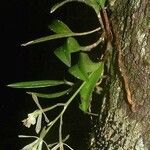
Epidendrum magnoliae
Green fly orchid
Description
Source: leafsnapEpidendrum magnoliae, sometimes called Epidendrum conopseum or the green-fly orchid, is a species of orchid in the genus Epidendrum. It is the most northern-growing epiphytic orchid in North America, being found wild in the southeastern United States from Louisiana to North Carolina, and also in northeastern Mexico (Nuevo León, San Luis Potosí, Tamaulipas).Epidendrum magnoliae grows on the branches of evergreen and deciduous trees at low elevations less than 100 m (330 ft) above sea level. Leaves are broadly elliptical, up to 10 cm (3.9 in) long, thick and almost leathery. One plant will produce 6-14 flowers, pale green to bronze-colored.The diploid chromosome number of E. magnoliae has been determined as 2n = 40, the haploid chromosome number as n = 20.
Care Guide
💧 Water Every 1-2 weeks
The Greenfly orchid thrives in its native tropical rainforest environment, where it enjoys consistent moisture and high humidity. To care for this plant, water it every 1-2 weeks, ensuring the soil remains moist but not waterlogged. It grows best outdoors in areas where natural light and rainfall match its growth cycles.
☀️ Light Full sun
The greenfly orchid prefers to be placed in areas with plenty of light, however, it can also live in places with just a fair amount of sunlight. Coming from a habitat where there is ample sunlight, the greenfly orchid flourishes whenever adequate light conditions are met. Both insufficient and overly intense lighting can have detrimental effects on the plant's health and development.
What are the sunlight requirements for the Greenfly orchid?
The Greenfly orchid, or Epidendrum magnoliae, thrives in conditions where it can be exposed to plenty of light. Though it prefers abundant light, matching its native habitat's conditions, it can also tolerate moderate sunlight. For optimal growth, ensuring it receives the right amount of sunlight is crucial. Full sun exposure means the plant should receive above 6 hours of sunlight daily, while partial sun is about 3-6 hours of sunlight. Observing how sunlight moves through your garden will help in choosing spots that offer a balance of light and shade, crucial for the plant's well-being.
What solutions exist for providing sufficient light to indoor Greenfly orchids?
To cater to the Greenfly orchid's light needs indoors, especially when natural sunlight is limited, artificial lighting can be a great solution. Indoor plants require adequate lighting for optimal growth. LED lights are recommended due to their ability to be customized to the specific wavelengths needed by plants. For full sunlight plants, 30-50W/sq ft of artificial light is needed, for partial sun plants, 20-30W/sq ft, and for full shade plants, 10-20W/sq ft. Position the light source 12-36 inches above the plant to mimic natural sunlight and adjust the duration to mimic natural daylight hours, generally 8-12 hours per day.
What are common symptoms of inadequate lighting in Greenfly orchids?
Greenfly orchids can show several symptoms when they aren't receiving enough light, including smaller new leaves, leggy or sparse growth, quicker leaf drop, halted or no new growth, and leaves developing lighter colors or chlorosis. Conversely, excessive sunlight can cause symptoms like sunscald, leaf curling, wilting, and leaf scorching. These symptoms indicate that the plant is either not receiving enough light or is being overexposed to sunlight, affecting its health and growth negatively.
How can I address lighting issues for my Greenfly orchid?
Addressing lighting issues for your Greenfly orchid involves ensuring it receives enough sunlight or suitable artificial light. Gradually move the plants to a sunnier location until they get at least 6 hours of direct sunlight daily. For large or immovable indoor plants, consider using artificial light, maintaining it for at least 8 hours a day. If the plant is outdoors, gradually adjust its location to increase sunlight exposure while avoiding sudden changes to prevent sunburn. Additionally, for plants on the ground, minimize obstructions by pruning obstructive branches or transplanting the plant to a sunnier spot, ensuring it's done during the plant's dormant period for best results.
🌡️ Temperature 20–37.8°C
The greenfly orchid is indigenous to regions with a temperate climate, prospering in temperatures ranging from 68 to 100°F (20 to 38℃). Mimic its original climate by meticulously modulating the temperatures with each season, especially in areas with extreme weather conditions.
What is the native climate of the Greenfly orchid, and how should it be cared for across different seasons?
The Greenfly orchid, botanically known as Epidendrum magnoliae, thrives in temperate regions with temperatures ranging from 68 to 100\u00b0F (20 to 38\u00b0C). To ensure the plant flourishes, it's essential to adjust indoor temperatures according to the seasons, especially in extreme climates. During winter, if temperatures fall below 0\u00b0C, it's recommended to bring the orchid indoors to maintain a temperature above 20\u00b0C. Providing a south-facing window for ample sunlight and using a humidifier or misting the plant regularly can help maintain appropriate humidity levels. For orchids that must remain outdoors, ensuring they are placed in a sheltered, sunny spot is crucial. In cold environments, using plastic film or fabric to protect the plants, or setting up a temporary greenhouse, can offer necessary insulation.
How does low temperature affect Greenfly orchid, and what steps can be taken to protect it?
Greenfly orchid prefers warm conditions and doesn't tolerate low temperatures well. Optimal growth occurs when temperatures are above 20\u00b0C. During winter, temperatures should remain above 0\u00b0C to avoid damage. Exposure to temperatures below -5\u00b0C can cause leaves to show signs of extensive water-soaked necrosis, wilting, and drooping. To mitigate these issues, affected areas should be trimmed off, and the plant should be moved indoors to a warmer location near a south-facing window to ensure it receives enough sunlight. Additionally, the orchid should not be placed near heaters or air conditioning vents to prevent the air around it from becoming excessively dry.
What is the impact of high temperature on Greenfly orchid, and how can the plant be protected?
During summer, the Greenfly orchid should be kept in conditions below 38\u00b0C, as temperatures above 43\u00b0C halt its growth and cause the leaves to gradually wilt. High temperatures increase the plant's susceptibility to root rot and make it prone to sunburn when exposed to direct sunlight for extended periods. To protect the orchid under these conditions, sunburned or dried parts should be trimmed away. Moving the plant to a shadier location during the midday and afternoon sun can prevent further damage. Additionally, watering the plant in the morning and evening helps maintain moisture for both the plant and its surrounding environment.
💨 Humidity
🪴 Soil 5-6
🌱 Fertilizer
Appropriate fertilizing is essential for the health and look of the Greenfly orchid. During the summer, apply fertilizer to the Greenfly orchid on a monthly basis. Nutrients serve as catalysts for growth and sustain various plant parts. By fertilizing, the flowering display of the Greenfly orchid gets improved, guaranteeing top-quality blooms.
🪴 Pot & Repot
When transplanting Greenfly orchid, pick out a pot that is marginally larger and has excellent drainage. An ideal choice would be a transparent orchid pot. Employ a draining potting blend specifically designed for orchids, that includes components like bark or moss. Delicately cleanse the roots, trimming off any that have died or are decaying. The best time to repot is after the flowering period, typically in the spring or autumn. After the process, drench the plant with water, and position it in a location with plenty of bright but indirect sunlight. Make sure not to disturb the roots once they have been repotted.
✂️ Pruning
The Greenfly orchid is an epiphytic plant known for its small green flowers. To maintain its health and appearance, it is best to prune the orchid from early to late spring. During pruning, remove any dead growth and thin out crowded areas to improve airflow and reduce the risk of disease. This not only enhances the plant's aesthetics but also promotes healthier blooms and vigorous growth.
🌿 Propagating
🐛 Diseases & pets
☠️ Toxicity
Characteristics
- Plant Type
- Herb
- Life Cycle
- Perennial
- Genus
- Epidendrum
- Family
- Orchidaceae
- Hardiness Zone
- 9-11
- Mature Height
- 30 cm
- Mature Spread
- 10 cm to 20 cm
- Leaf Color
- Green
- Leaf Type
- Evergreen
- Flower Color
- Green, Yellow
- Flower Size
- 2.54 cm
- Bloom Time
- Summer, Early fall, Mid fall
- Planting Time
- Summer, Autumn
- Harvest Time
- Fall, Early winter, Mid winter
- Native Area
- Mexico