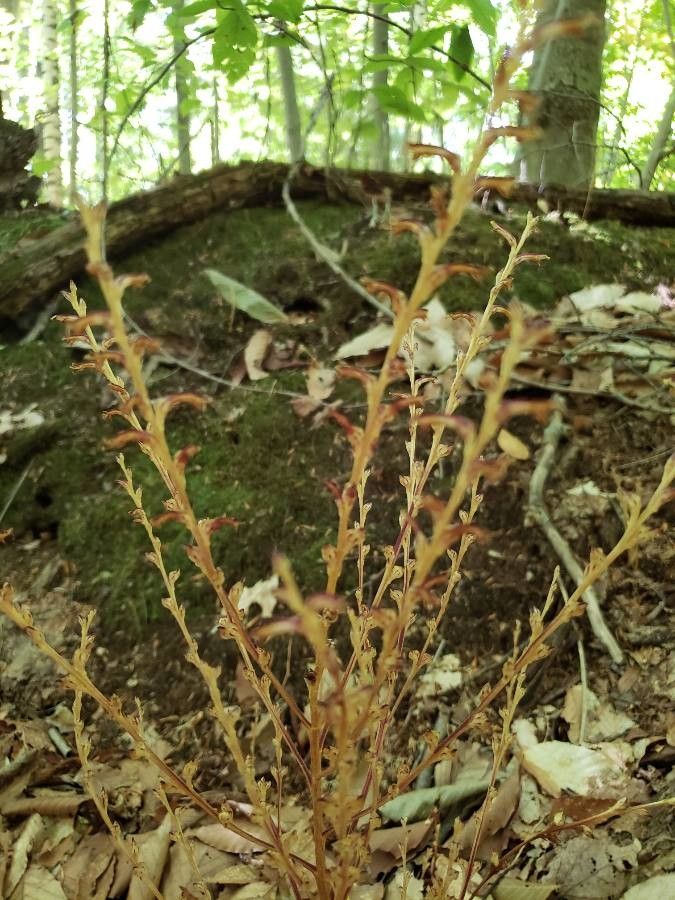
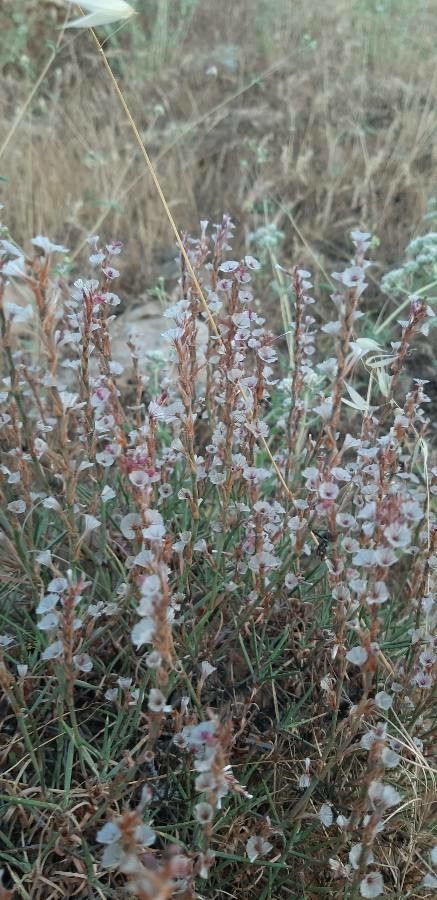
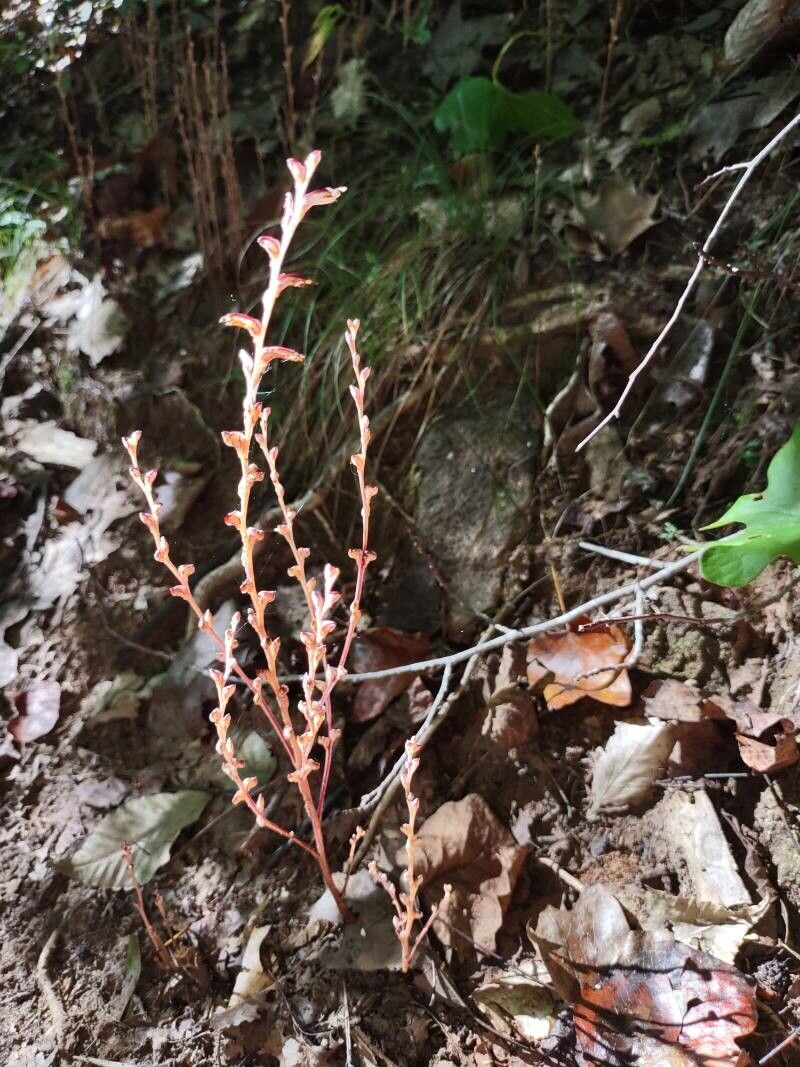
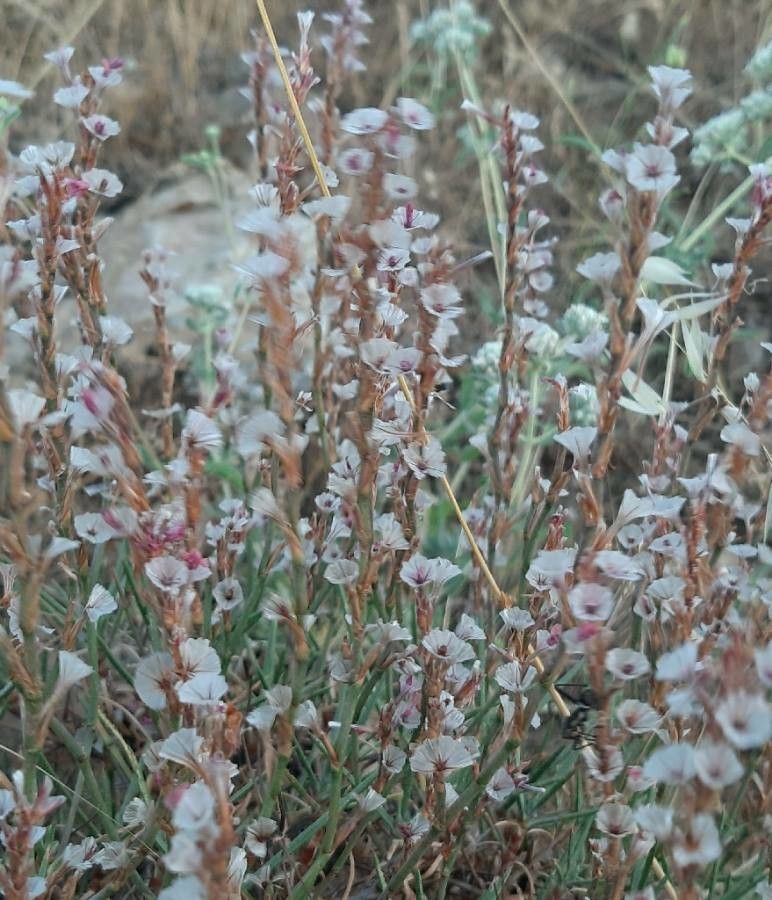
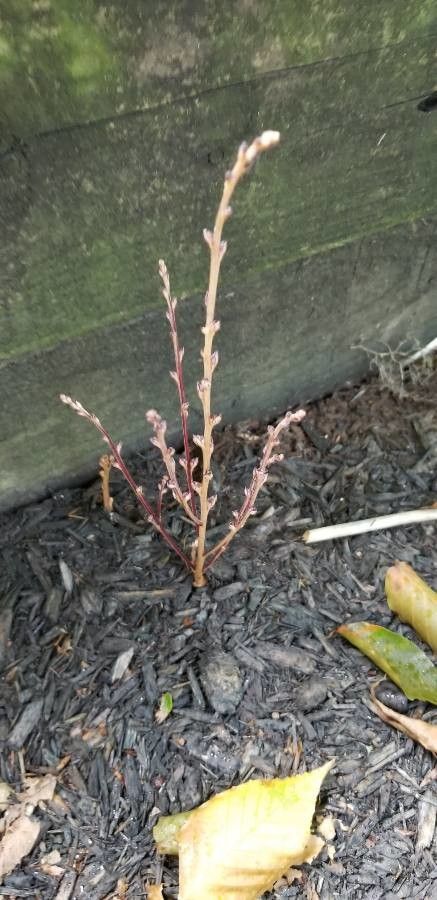
Epifagus virginiana, commonly known as beechdrops, is a parasitic plant that belongs to the family Orobanchaceae. It is native to North America and is found in deciduous forests from Canada to Florida.
Beechdrops are small, leafless plants that can grow up to 30 cm tall. They have yellowish-brown stems with small scales and attach themselves to the roots of beech trees using specialized structures called haustoria. Through these structures, they obtain their nutrients from the host plant.
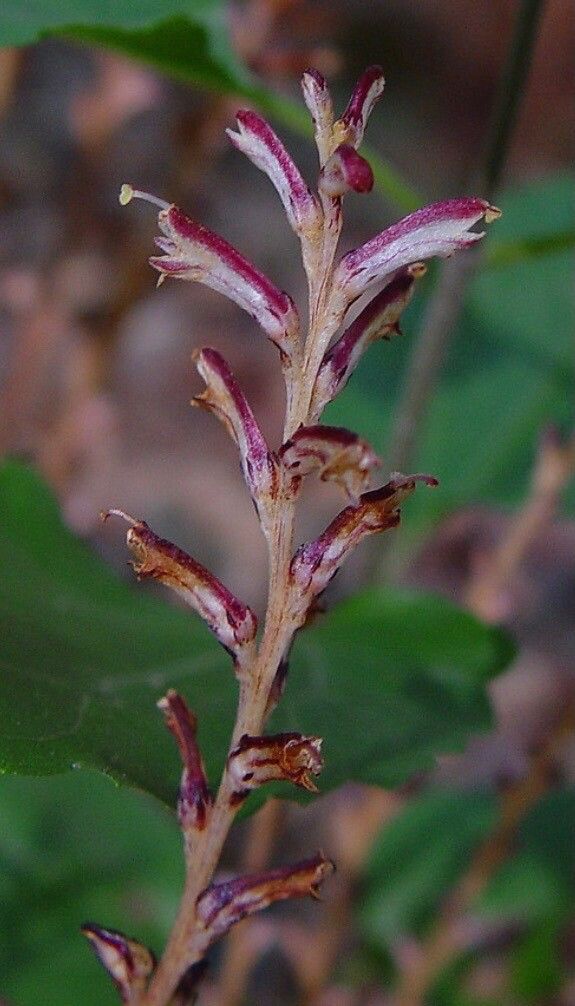
The flowers of Epifagus virginiana are small and tubular, with a reddish-brown color, and they bloom in late summer or early fall. The plant produces tiny capsules that contain numerous minute seeds.
Native Americans have used beechdrops for medicinal purposes to treat various ailments, including fever, diarrhea, dysentery, and tuberculosis.
While Epifagus virginiana is a parasitic plant that can sometimes harm its host tree by reducing its growth rate or, in severe cases, causing premature death, it also plays an important role in forest ecosystems. It provides habitat for insects such as bees, which pollinate its flowers.
Overall, Epifagus virginiana is a fascinating species due to its unique parasitic nature that allows it to survive without photosynthesis, while also contributing to the biodiversity of forest ecosystems.
Beech drops has good resistance to disease and is generally not prone to illnesses. It can, however, be affected by pests and diseases present in its environment; these problems are typically not serious. Regarding care, this plant needs moderate maintenance. It should be pruned regularly to preserve a neat appearance and encourage healthy growth. Fertilizing can also help promote flowering. Beech drops is suitable for anyone with an outdoor area, such as a garden or patio, and does not demand much prior plant-care experience. It may require more attention when grown indoors.
How to keep Epifagus Virginiana.
Light
Beech drops does well with plenty but not overpowering sunlight, demonstrating the ability to tolerate a full day of sun. It originates from areas with high levels of sunlight and has adapted to those conditions over time. Optimal growth takes place under moderate to abundant light. Too much or too little light can negatively affect the plant's health and growth.
Water
Beech drops thrive in moderately humid environments with consistent soil moisture and prefer to be watered weekly. As a parasitic plant, they extract water and nutrients from tree roots. This adaptation results in minimal independent water needs and reflects their habitat in the forest understory of North America.
Temperature
Beech drops grow naturally in climates with temperatures from 68 to 100 °F (20 to 38 °C). The plant prefers a stable, moderate ambient temperature. During extreme weather, adjustments are necessary to maintain temperatures within its preferred range.
Fertilizer
Beech drops benefit from regular, mild fertilizer applications to encourage healthy leaf growth. Apply fertilizer about once a month during the summer. Nitrogen is essential for foliage, and providing nitrogen-rich sources helps Beech drops thrive.
Pruning
Beech drops require minimal pruning because they are parasitic on beech roots. Light pruning in the early to late spring can improve their health, but heavy pruning should be avoided. It is best to trim them during dormancy, using clean tools to prevent infections.
Botanical profile.
- Plant Type
- Herb
- Life Cycle
- Annual
- Genus
- Epifagus
- Family
- Orobanchaceae
- Hardiness Zone
- 3-11
- Mature Height
- 10 cm to 46 cm
- Mature Spread
- 5 cm to 15 cm
- Leaf Color
- Purple, Brown, Lavender
- Leaf Type
- Deciduous
- Flower Color
- Yellow, Purple, Brown, Cream, Red, Lavender, Burgundy, Gold
- Flower Size
- 0.76 cm
- Bloom Time
- Late summer, Early fall, Mid fall
- Planting Time
- Spring, Summer
- Harvest Time
- Mid fall, Late fall
- Native Area
- Mexico
Other names.
Reader questions.
How should I water my Beech drops?
To water Beech drops, you have several options. You can use a garden hose with a spray nozzle, a watering can, or any other common watering tool. Beech drops is not very picky about its water source and can survive on rainwater, tap water, or filtered water. However, it is best to avoid watering this plant from overhead as it can harm the leaves and flowers and make it susceptible to disease. Instead, a drip irrigation system works well for watering Beech drops as it delivers water evenly and directly to the soil. If you have a container-grown Beech drops, you can follow a similar watering method but use a cup, watering can, or a tap to water directly onto the soil.
What are the sunlight requirements for Beech drops?
Beech drops thrive under generous sun exposure but are resilient enough to withstand a day of full sun exposure, having adapted well to habitats with substantial sunlight. These plants optimally grow under moderate to ample light conditions. However, both excessive and deficient light exposure can impact the plant's growth negatively. It's vital to watch how sunlight moves through your garden to choose spots that ensure the perfect balance of light and shade for your plants.
What is the native climate for Beech drops?
Beech drops (Epifagus virginiana) is native to climates with temperatures ranging from 68 to 100 °F (20 to 38 °C). It thrives in a well-balanced environmental temperature, requiring adjustments during extreme weather to maintain a temperature within its preferred range.
What should I do if I give my Beech drops too much water or too little water?
To help your underwatered Beech drops, simply water it more regularly when you notice it lacks moisture. Overwatering, on the other hand, can be a serious problem. It can lead to diseases and death for your plant if not detected early. To prevent this, choose a suitable location with ample sunlight to dry the soil and good drainage to prevent water from pooling. If you overwater your potted Beech drops, you may need to change to a new pot with better soil drainage and more drainage holes. When repotting, use loose soil and an efficiently draining pot.
How can artificial lighting benefit indoor Beech drops?
Indoor Beech drops require adequate lighting for optimal growth, especially when natural sunlight is insufficient, like in winter or less sunny spaces. Artificial lights, such as LED lights which can be customized to provide specific wavelengths of light, offer a vital solution. For full sun plants, 30-50W/sq ft of artificial light is recommended, partial sun plants need 20-30W/sq ft, and full shade plants need 10-20W/sq ft. To mimic natural sunlight, the light source should be placed 12-36 inches above the plant for 8-12 hours per day.
How does Beech drops handle cold temperatures?
Beech drops has strong cold resistance and typically does not require special frost protection measures during winter. However, for winters where temperatures are expected to drop below -35°C, it is important to provide cold protection by covering the plant with soil or straw. Watering the plant abundantly before the first freeze in autumn is recommended to keep the soil moist and prevent drought and water scarcity for the plant during winter and early spring.
How often do I need to water my Beech drops?
To keep your Beech drops healthy, make sure to consistently water it throughout the growing season. In spring, watering once a week is usually sufficient. However, as the weather gets warmer, you may need to increase the frequency to two to three times a week. But be careful not to overwater, as it can harm the plant. It's important to keep the soil moist but not overly wet. If you have Beech drops in a pot, you'll need to adjust your watering routine. Potted plants tend to dry out faster than those in the ground due to the heat absorbed by the pot. In most cases, you should water container-grown Beech drops a few times per week, compared to just once a week for plants in the ground.
What are the symptoms of inadequate light exposure in Beech drops?
When Beech drops are cultivated indoors with inadequate light, symptoms may include smaller new leaves, leggy or sparse growth, faster leaf drop, slower or no new growth, and lighter-colored or yellow leaves (chlorosis). Excessive sunlight can also harm, causing symptoms like sunscald, leaf curling, wilting, and leaf scorching. These conditions indicate that the plant's light requirements are not met, affecting its health and ability to photosynthesize properly.
What should be done if Beech drops experiences low temperatures below 0°C?
Beech drops is cold-tolerant, best thriving at temperatures above 20°C and should be kept above 0°C during winter. If temperatures fall below -35°C, there may be a decrease in sprouting or no sprouting during springtime. In such cases, any parts that have failed to sprout should be removed in the spring.
How much water do my Beech drops need?
Determining how much water to give to your Beech drops can be done in a few different ways. Some gardeners prefer to rely on the feel of the soil to determine water volume. This method suggests watering until the first six inches of soil feel moist. Alternatively, you can use a set measurement to determine water amount. Generally, Beech drops require about two gallons of water per week, depending on temperature and soil dryness. However, following strict guidelines like this can result in overwatering if your plant needs less water for any reason. If you are growing Beech drops in a container, a different method is needed to determine water supply. You should water enough to moisten all layers of dry soil. To test this, you can insert your finger into the soil to feel for moisture. Another indicator is when you see a slight excess water trickling out of the drainage holes in the pot.
How can I manage light exposure for healthier Beech drops growth?
To optimize Beech drops growth, gradually acclimatize them to increasing sunlight by moving them to sunnier spots weekly until they receive 3-6 hours of direct sunlight daily. If the plant is large or not easily movable for additional indoor light, keep a desk or ceiling lamp on for at least 8 hours daily or invest in professional plant grow lights. Outdoors, avoid sudden light intensity changes to prevent sunburn. If light is obstructed, consider pruning or transplanting to a location with better sunlight and good drainage. Note that parts of the plant affected by prior insufficient light may not recover, but new growth will be healthy after correcting light exposure.
How should Beech drops be cared for in high temperatures?
During summer, it is important to keep Beech drops below 38°C. Exposure to temperatures exceeding 43°C can make the leaves lighter in color, prone to curling, susceptible to sunburn, and in severe cases, may cause the entire plant to wilt and dry. To mitigate these issues, sunburned and dried-up parts should be trimmed away. Moving the plant to a shaded location or using a shade cloth can provide protection from the midday and afternoon sun. Additionally, watering the plant in the morning and evening helps keep the soil moist.