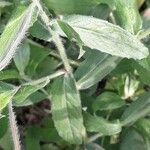
Epilobium hirsutum
علف فر پشمالو، بید علفی کرکی · Great Hairy Willow-herb · Rosebay willow-herb · Great willowherb · Hairy Willowherb
Description
Source: leafsnap_Epilobium hirsutum_, commonly known as Great Willowherb or Hairy Willowherb, is a perennial herbaceous plant in the Onagraceae family. Native to Europe and Asia, it has also been introduced to North America and other regions worldwide. This plant can grow up to 2 meters tall and features a hairy stem with lance-shaped leaves arranged alternately. Its flowers, which are pink-purple and have four petals, bloom from June through September. The fruit of _Epilobium hirsutum_ is a long, narrow capsule containing numerous small seeds. _Epilobium hirsutum_ thrives in moist soils and can grow in either full sun or partial shade, though it can tolerate dry conditions once established. It is commonly found along riverbanks, in wetlands, meadows, and disturbed areas. For centuries, the plant has been used for medicinal purposes. It contains compounds with anti-inflammatory properties, which may help alleviate symptoms of conditions such as arthritis and asthma. Additionally, _Epilobium hirsutum_ serves as an important food source for various insects like bees and butterflies that feed on its nectar, as well as for birds that eat its seeds. Overall, _Epilobium hirsutum_ is an attractive wildflower with significant ecological and medicinal benefits, making it an essential species in many ecosystems around the world.
🎭 Magic power
Care Guide
💧 Water Every 3 days
Hairy willowherb thrives in moist environments, such as near streams and wetlands. To keep it healthy, it needs weekly watering to maintain consistent moisture without becoming waterlogged. Its strong root system adapts well to changing water levels, making it resilient during rainy seasons.
How should I water my Hairy willowherb?
To ensure the health of the Hairy willowherb, it is recommended to water it with filtered water at room temperature. Tap water may have harmful particles that can affect the plant's well-being. Since the Hairy willowherb is native to warm environments, using cold water can be a shock to its system. It is also important to avoid watering from above, as this can cause problems with the plant's leaves. Instead, simply apply the filtered room temperature water directly to the soil until it becomes completely soaked. This method can provide multiple benefits to the plant, such as moistening the roots and helping them spread through the soil to collect necessary nutrients.
What should I do if I give my Hairy willowherb too much water or too little water?
Both overwatering and underwatering can harm your Hairy willowherb, but overwatering is more common. Excessive watering causes wilting and yellowing of the stems and leaves. It can also lead to diseases like root rot, mold, and mildew, which can be fatal for your plant. Hairy willowherb is relatively drought-tolerant, so underwatering is less likely but still possible. In such cases, the leaves will become brittle and brown. It's important to recognize the signs of overwatering early on. If you notice them, reduce your watering immediately. Check the soil's drainage, and if it's poor, replace it with a loose, well-draining potting mix. Conversely, if your Hairy willowherb shows signs of insufficient water, simply increase your watering frequency until the signs disappear.
How frequently do I need to water my Hairy willowherb?
If your Hairy willowherb is in a pot, the best way to determine if it needs water is by sticking your finger into the soil. If the top two to three inches of soil feel dry, it's time to water it. If you have your Hairy willowherb growing outdoors in the ground, you can use a similar method to test the soil. Once again, if the top few inches of soil have dried out, it's time to water it. Generally, during spring and early fall, you'll likely need to water this plant about once a week using this method. However, during hot weather, you may need to increase watering to twice a week or more. It's worth noting that mature, well-established Hairy willowherbs can tolerate drought conditions well.
How much water does my Hairy willowherb plant need?
To properly water your Hairy willowherb, don't hold back on the amount of water you use. Make sure the top two to three inches of soil are dry before watering, and then give it a good, thorough soaking. You want to add enough water to completely saturate the soil, causing excess water to drain out of the pot's drainage holes. If you don't see excess water draining, you may not have watered enough, but be careful not to let the water accumulate in the soil, as this can harm the plant. On the other hand, if water doesn't seem to be draining well, it could indicate that the soil doesn't drain properly, which is bad for the plant's health. Finally, if your plant is outside, one inch of rain per week should be enough.
How do I water my Hairy willowherb as it grows?
The water requirements of the Hairy willowherb can vary depending on its growth stages. In the early years or after transplanting, it will need more water because it is focused on developing new roots for future growth. These roots perform best when they receive extra moisture. After a few seasons, the Hairy willowherb will require less water. Another stage that might require more water is the blooming period, as the flower development can utilize a significant amount of moisture.
☀️ Light Full sun
Hairy willowherb flourishes in places that receive plentiful sunlight throughout the day. This bright exposure is essential for its healthy development. It requires steady sunlight at every stage of its life. Because it originated in environments with abundant sun, the plant can suffer reduced growth and diminished flowering when light is limited.
What are the sunlight requirements for Hairy Willowherb?
Hairy Willowherb requires full sun exposure, which means it should receive above 6 hours of sunlight daily to thrive. It's important to observe the movement of sunlight in your garden to ensure that the plants get an optimal balance of light and shade, supporting their overall health and happiness. Throughout its life cycle, from seedling to full-grown plant, consistent sunlight is crucial for its healthy growth and flower production. Inadequate sunlight can lead to stunted growth and diminished flowering.
How can artificial lighting support Hairy Willowherb growth indoors?
When natural sunlight is insufficient, especially during winter or in spaces that don't get much sun, artificial lights can be a great solution for supporting Hairy Willowherb's growth indoors. LED lights are popular for providing the specific wavelengths that plants need. The artificial light intensity recommended varies based on the plant's sunlight needs: full sun plants require 30-50W/sq ft, partial sun plants 20-30W/sq ft, and full shade plants 10-20W/sq ft. The light source should be placed 12-36 inches above the plant to mimic natural sunlight conditions. To ensure optimal growth, the duration of artificial light should replicate natural daylight hours, typically 8-12 hours per day.
What are the symptoms of light deficiency in Hairy Willowherb?
Symptoms of insufficient light in Hairy Willowherb include smaller new leaves, leggy or sparse growth, faster leaf drop, slower or no new growth, lighter-colored new leaves or irregular color patterns indicating a lack of chlorophyll, chlorosis (leaves turning yellow), sunscald (damaged leaves from intense sun), leaf curling as a defense mechanism against excessive sunlight, wilting due to increased water loss, and leaf scorching characterized by brown, dry edges on leaves. These symptoms highlight the plant's struggle with inadequate light conditions, impacting its photosynthesis process and overall health.
What are the remedies for inadequate sunlight exposure for Hairy Willowherb?
To counter inadequate sunlight exposure for Hairy Willowherb, consider gradually moving the plants to sunnier locations to ensure they get at least 6 hours of direct sunlight daily. For indoor plants, utilize south-facing windows and keep curtains open or use desk, ceiling lamps, or professional plant grow lights for at least 8 hours daily. For outdoor plants, avoid sudden and drastic changes in light intensity to prevent sunburn. Reducing obstructions like pruning branches or leaves that block sunlight or transplanting smaller plants during their dormant period to sunnier locations with good drainage can also help. Remember, while parts of the plant that have suffered might not recover, new growth after increasing light exposure will be healthy.
🌡️ Temperature 0–35°C
Hairy willowherb originates from habitats where temperatures range from 68 to 95 °F (20 to 35 ℃). This plant favors warmer conditions. Aligning temperatures with this range is recommended to promote optimal growth throughout the seasons.
What is the native temperature range for Hairy Willowherb?
Hairy Willowherb thrives in environments where the temperature ranges between 68 to 95°F (20 to 35°C). This temperature range is ideal for the plant's optimal growth, indicating a preference for warmer conditions. To ensure the plant grows well throughout different seasons, adjusting the surrounding temperatures to fit within this range is recommended.
Does Hairy Willowherb need frost protection in winter?
Hairy Willowherb possesses strong cold resistance, thus special frost protection measures are generally unnecessary during winter. Nevertheless, protection is advised if temperatures are expected to drop sharply below the plant's cold tolerance limit. In such cases, safeguarding the plant with insulating materials like soil or straw can be beneficial. Additionally, before the onset of the first freeze in autumn, watering the plant abundantly helps keep the soil moist and prevents drought and water scarcity during the cold months.
How does low temperature affect Hairy Willowherb and what are the solutions?
Hairy Willowherb has a good tolerance to cold and thrives best when temperatures are kept above its minimum suitable growth temperature. During winter, temperatures should not fall below its tolerable growing minimum. If the temperature drops below its growth limit, the plant may not show noticeable changes immediately but might exhibit reduced sprouting or fail to sprout at all come spring. The recommended solution for reduced or failed sprouting in spring is to remove any parts of the plant that did not sprout.
How does high temperature affect Hairy Willowherb and what remedies are suggested?
During the summer, it's crucial to maintain the temperature of Hairy Willowherb below its maximum suitable growth temperature. Exceeding its tolerable maximum growth temperature can cause the leaves to lighten in color, curl, become susceptible to sunburn, and, in severe cases, the entire plant may wilt and dry out. To mitigate these issues, trim away any sunburned or dried parts of the plant. Relocating the plant to a shaded area during the peak sun hours of the day or using a shade cloth can help avoid further damage. Additionally, watering the plant during cooler times of the day, such as in the morning and evening, helps keep the soil adequately moist.
💨 Humidity
🪴 Soil 6-7
🌱 Fertilizer
The ideal time to fertilize a Hairy willowherb is in early spring, as it breaks dormancy and begins active growth. Fertilization supplies essential nutrients for healthy development. Although Hairy willowherb has fairly low fertilizer requirements, applying fertilizer annually can improve its survival and encourage better, longer-lasting flowers.
🪴 Pot & Repot
✂️ Pruning
🌿 Propagating
🐛 Diseases & pets
☠️ Toxicity
Characteristics
- Plant Type
- Herb
- Life Cycle
- Perennial, Annual
- Genus
- Epilobium
- Family
- Onagraceae
- Hardiness Zone
- 2-9
- Mature Height
- 0.49 m to 1.83 m
- Mature Spread
- 91 cm
- Leaf Color
- Green
- Leaf Type
- Deciduous
- Flower Color
- Pink
- Flower Size
- 2.54 cm
- Bloom Time
- Early summer, Mid summer
- Planting Time
- Spring
- Harvest Time
- Mid summer
- Native Area
- Libya, Turkey, Sweden, India, Slovakia, Montenegro, Pakistan, Slovenia, Morocco, Croatia, Uganda, Tanzania, Belarus, Germany, Koppen, Ethiopia, Romania, Latvia, Belgium, Portugal, Netherlands, Saudi Arabia, Tunisia, Cyprus, Bulgaria, Ukraine, Chad, Lebanon, China, Afghanistan, Syria, Kyrgyzstan, Kazakhstan, Italy, Japan, Mongolia, Eswatini, Iran, Azerbaijan, Congo (DRC), Lesotho, Egypt, Angola, Austria, Namibia, Eritrea, Yemen, Kenya, Zimbabwe, Uzbekistan, Russia, Iraq, Estonia, South Korea, France, Nepal, Tajikistan, Czech Republic, South Africa, Sudan, Armenia, Poland, Greece, Serbia, Lithuania, Spain, Switzerland, Denmark, Albania, Ireland, United Kingdom, Hungary, Algeria, Turkmenistan