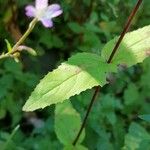
Epilobium montanum
Broad-leaved Willowherb · Willowherb · Broadleaf willowherb · Toothed willowherb · Fire Weed
Description
Source: leafsnapEpilobium montanum or Broad-leaved Willowherb is a species of flowering plant in the willowherb family Onagraceae.
🌳 The rapidly growing and hardy broad-leaved willowherb can unexpectedly enhance informal flower gardens with its striking appearance. This beautiful perennial can be planted in flower beds or borders alongside other vibrant flowering plants. It blooms from summer through fall, providing significant ornamental value to any garden.
🎭 Letting go, rebirth, possibility of something new and innovative
Care Guide
💧 Water
Broad-leaved willowherb thrives in moist environments and requires consistent moisture to stay healthy. It has low tolerance for drought, so it needs to be watered weekly. As an outdoor perennial herb, broad-leaved willowherb also benefits from rainfall, which helps keep the soil at optimal moisture levels.
How should I water my Broad-leaved willowherb plant?
To best care for the Broad-leaved willowherb, it is recommended to use filtered water at room temperature or slightly warmer. Tap water may contain harmful particles, so filtered water is preferable. The plant is accustomed to warm environments, so cold water can be a shock to its system. To avoid foliage issues, avoid overhead watering and instead, thoroughly soak the soil with your filtered, room temperature water. This helps moisten the roots and promotes the spread of nutrients throughout the soil.
What should I do if I give my Broad-leaved willowherb too much water or too little?
Overwatering is a common issue for Broad-leaved willowherb, while underwatering is less likely. When overwatered, the plant's stems and leaves may wilt and turn yellow. Prolonged overwatering can lead to diseases like root rot, mold, and mildew, which can be fatal for the plant. On the other hand, underwatering is not a frequent problem due to the plant's drought tolerance. However, when underwatering occurs, the leaves will become brittle and brown. It is important to spot signs of overwatering early on as some diseases may be irreversible if left untreated. If you notice these signs, reduce your watering schedule and check the soil's drainage. Replace poorly draining soil with a loose, well-draining potting mix. If signs of underwatering are present, simply water the plant more regularly until the signs diminish.
How frequently should I water my Broad-leaved willowherb?
If your Broad-leaved willowherb plant is in a pot, the most precise way to determine if it needs water is by checking the soil. Stick your finger into the soil and if the top two to three inches are dry, it's time to water it. For outdoor plants in the ground, you can use a similar method to test the soil. Once the top few inches have dried out, it's time to add water. Normally, watering this plant about once a week during spring and early fall will suffice. However, during extremely hot weather, you may need to water it twice or more per week. It's important to note that mature, well-established Broad-leaved willowherb plants have a good ability to withstand drought.
How much water does my Broad-leaved willowherb plant require?
To properly water your Broad-leaved willowherb, make sure the top two to three inches of soil are dry. Give the plant a good soaking, enough to completely wet the soil. You should add enough water that it starts to drain out of the pot's bottom holes. If you don't see any drainage, it means you haven't watered enough, but be careful not to let the water collect inside the soil. On the other hand, if water doesn't drain out, it could mean the soil doesn't drain well, which is bad for the plant's health. If the plant is outside, it only needs about 1 inch of rain per week.
How should I water my Broad-leaved willowherb as it grows?
The water requirements of the Broad-leaved willowherb can vary depending on its growth stages. In the first few years of its life, or after transplanting to a new location, more water is necessary as the plant focuses on developing new roots to support future growth. These young roots require additional moisture compared to mature phases. As the Broad-leaved willowherb matures over the seasons, it will require less water. Additionally, during the bloom period, when flowers are developing, more water may be needed to provide the necessary moisture for this process.
☀️ Light Partial sun
Fireweed prefers partly sunny conditions but can also tolerate full sun or complete shade. Coming from habitats with variable sunlight exposure, it is usually undemanding when it comes to light needs.
What are the sunlight requirements for Broad-leaved Willowherb?
Broad-leaved Willowherb requires full sun, meaning it needs above 6 hours of sunlight daily for optimal growth. It can also thrive in partial sun to full shade, requiring about 3-6 hours of sunlight. However, it's important to observe how sunlight moves through your garden to choose the best spots that provide a balance of light and shade, ensuring the plant's happiness. This plant demonstrates strong adaptability to diverse lighting conditions because of its origins in varied habitats. Excessive or insufficient sunlight can, respectively, cause scorching or slow growth.
How can artificial lighting be used for indoor Broad-leaved Willowherb?
When natural sunlight is insufficient, artificial lighting becomes essential for indoor plants' growth. LED lights are recommended due to their ability to provide specific wavelengths needed by plants. For full sun plants, 30-50W/sq ft of artificial light is needed; partial sun plants require 20-30W/sq ft, and full shade plants need 10-20W/sq ft. The light source should be placed 12-36 inches above the plant, mimicking natural sunlight as much as possible. Additionally, the duration of artificial lighting should replicate the natural daylight hours, with most plants needing 8-12 hours of light per day.
What are the symptoms of inadequate lighting for Broad-leaved Willowherb?
When Broad-leaved Willowherb is grown in inadequate lighting conditions, it may exhibit symptoms such as smaller new leaves, leggy or sparse growth, faster leaf drop, slower or no new growth, lighter-colored new leaves, chlorosis (leaves turning yellow), sunscald, leaf curling, wilting, and leaf scorching. These signs indicate either too little or too much exposure to light, adversely affecting the plant's ability to photosynthesize and maintain overall health.
How can you improve sunlight exposure for Broad-leaved Willowherb?
To optimize sunlight exposure for Broad-leaved Willowherb, gradually move the plant to sunnier locations each week until it receives at least 6 hours of direct sunlight daily. For indoor plants, this can involve using a south-facing window and keeping curtains open during daylight. Artificial lighting, like desk or ceiling lamps on for at least 8 hours daily or professional plant grow lights, can supplement sunlight. Outdoors, avoid sudden changes in light intensity to prevent sunburn. Minimize obstructions by pruning or moving the plant to a location with more sunlight and good drainage. Remember that parts of the plant damaged by insufficient sunlight may not recover, but new growth will be healthy with improved light exposure.
🌡️ Temperature 5–35°C
Fireweed is native to cool environments and prefers temperatures between 41 and 95 ℉ (5 to 35 ℃). It can tolerate colder temperatures but not extreme heat. In hotter months it may require more frequent watering and shade to avoid high temperature stress.
What is the native environment and ideal temperature range for Broad-leaved Willowherb?
Broad-leaved Willowherb, botanically known as Epilobium montanum, thrives natively in environments that can tolerate a temperature range of 32 to 70 °F (0 to 21 °C). It is crucial to monitor the temperature closely, especially during extreme weather conditions, and adjust accordingly to stay within this preferred range. This plant is exceptionally cold-tolerant and does not require additional frost protection measures during winter. However, to help the soil retain moisture and prevent drought and water scarcity for the plant during the colder months and early spring, it is advisable to water the plant generously before the first freeze in autumn.
How does Broad-leaved Willowherb respond to low temperatures?
Broad-leaved Willowherb shows remarkable cold tolerance, yet it is important to maintain winter temperatures above -40°C. Even though there might not be noticeable changes during the winter, temperatures dropping below this threshold could lead to reduced sprouting or a complete lack thereof come springtime. To mitigate this issue, it is recommended to remove any parts of the plant that have failed to sprout in the spring.
What should be done if Broad-leaved Willowherb is exposed to high temperatures?
Broad-leaved Willowherb is not tolerant of high temperatures. Exposure to temperatures exceeding 21°C can halt its growth and make it more susceptible to rot. Solutions include trimming away any sunburned and dried-up parts of the plant, relocating it to a spot with shade from the midday and afternoon sun, or protecting it with a shade cloth. It’s also beneficial to water the plant in the morning and evening to maintain soil moisture, thus helping the plant cope with the heat.
💨 Humidity
🪴 Soil 6-7
🌱 Fertilizer
One fertilizer application in spring is typically enough for Fireweed, though several feedings can maximize growth. Apply fertilizer every month to six weeks. Fertilization improves the leaves' appearance and performance, helping maintain consistent color and a healthy texture. It also promotes root development and nutrient uptake, supporting the plant's long-term health.
🪴 Pot & Repot 2-3 years
When repotting Fireweed, pick a pot 1-2 inches (2.5–5.1 cm) larger that has good drainage. Use a well-draining potting mix. Repot in spring or fall, making sure the root ball sits slightly below the rim of the flower pot. Water thoroughly after repotting and place the pot in a warm location with indirect sunlight.
✂️ Pruning
Broad-leaved willowherb is known for its broad leaves and vigorous growth. To ensure healthy development, prune the plant from early to late spring, after the last frost. Remove any dead stems and thin out crowded areas to improve air circulation, encourage blooming, and reduce the risk of disease. Be sure to use clean, sharp tools for precise cutting.
🌿 Propagating
🐛 Diseases & pets
☠️ Toxicity
Characteristics
- Plant Type
- Herb
- Life Cycle
- Perennial
- Genus
- Epilobium
- Family
- Onagraceae
- Hardiness Zone
- 4-9
- Mature Height
- 0.61 m to 1.52 m
- Mature Spread
- 40 cm
- Leaf Color
- Green, Dark Green
- Leaf Type
- Deciduous
- Flower Color
- Purple, White, Pink, Red
- Flower Size
- 2.54 cm
- Bloom Time
- Summer
- Planting Time
- Spring, Summer, Autumn
- Harvest Time
- Late summer, Early fall, Mid fall