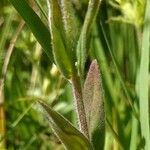
Epilobium parviflorum
Smallflower hairy willowherb · Weed · Hoary Willowherb · Small-flower willowherb · Small-Flower Hairy Willowherb
Description
Source: leafsnapEpilobium parviflorum, commonly known as small-flowered willowherb, is a perennial herbaceous plant belonging to the Onagraceae family. Native to Europe and Asia, this plant has also been introduced and naturalized in North America. It grows up to 1 meter tall and features a slender stem with narrow leaves arranged alternately along its length. The flowers of Epilobium parviflorum are small and pink or purple, blooming from June to September. These hermaphroditic flowers, which contain both male and female reproductive organs, are pollinated by bees, butterflies, moths, and other insects. For centuries, Epilobium parviflorum has been prized for its medicinal properties, particularly its anti-inflammatory effects. It has been used as a natural remedy for various ailments, including diarrhea, urinary tract infections (UTIs), prostate problems such as benign prostatic hyperplasia in men, and menstrual cramps in women. This plant thrives in moist soils such as those found along riverbanks or in wet meadows but can also grow well in dry soils with good drainage. It can be propagated by seeds or by dividing the root system. Overall, Epilobium parviflorum is an attractive herbaceous perennial that offers both ornamental and medicinal benefits, making it an excellent addition to any garden or landscape design project.
Care Guide
💧 Water Every 7 days
Hoary willowherb flourishes in moist environments, though it can tolerate brief dry spells. It prefers well-hydrated soil and needs weekly watering to stay healthy. The growth and flowering of this herbaceous perennial depend greatly on the availability of water.
How should I water my Hoary willowherb plant?
To properly water the Hoary willowherb, use filtered water at room temperature to avoid any harmful particles found in tap water. The plant prefers warmer water because it is native to warm environments, and cold water can be a shock. Instead of watering from above, pour the filtered room temperature water directly onto the soil until it is completely saturated. This method helps moisten the roots and allows them to spread through the soil and collect necessary nutrients.
What should I do if I give my Hoary willowherb too much or too little water?
Overwatering is a more common issue than underwatering for Hoary willowherb. When Hoary willowherb receives too much water, its stems and leaves may wilt and turn yellow. Overwatering for a prolonged period can also lead to diseases like root rot, mold, and mildew, which can kill the plant. Underwatering is less common but still possible, resulting in brittle, brown leaves. It's important to recognize signs of overwatering early, as some diseases may be irreversible if not addressed promptly. Reduce watering immediately and consider replacing poorly draining soil with a well-draining potting mix. For underwatering, simply increase watering until signs subside.
How often do I need to water my Hoary willowherb?
If your Hoary willowherb is in a pot, the easiest way to tell if it needs water is to stick your finger in the soil. If the top two to three inches feel dry, it's time to water it. If your Hoary willowherb is growing outside in the ground, you can use the same method to check the soil. If the top few inches are dry, it needs water. Usually, you'll need to water it once a week in spring and early fall. In very hot weather, you might need to water it twice a week or more. However, mature, well-established Hoary willowherb plants can handle periods of drought.
How much water does my Hoary willowherb require?
To properly water your Hoary willowherb, don't hold back on the amount of water you give it. If the top two to three inches of soil are dry, give the plant a good, thorough watering. Make sure to soak the soil completely, allowing excess water to flow out of the drainage holes at the bottom of the pot. If you don't see water draining from the pot, you may have not given enough water. However, be careful not to let the water accumulate inside the soil, as this can harm the plant. On the other hand, if water is not draining well, it could indicate that the soil is not draining properly, which is not good for the plant's health. If the plant is outside, around 1 inch of rain per week should be enough.
How much water does my Hoary willowherb need at different points of its growth?
The water needs of the Hoary willowherb can vary depending on its growth stages. In the first few years of its life or after transplanting it, you will need to water it more than usual. During this time, the plant focuses on developing new roots that will support future growth, and these roots benefit from slightly higher moisture levels. As the Hoary willowherb matures, it will require less water. Another growth stage that requires additional watering is during the bloom period when the plant uses a significant amount of water for flower development.
☀️ Light Full sun
Hoary willowherb grows best with abundant sunlight and can tolerate moderate shade. Sun exposure plays a major role in the plant's hardiness and vigorous growth. Insufficient light can stunt growth, while too much may scorch the leaves. It comes from habitats with plentiful light, yet can manage in shaded areas.
What are the sun requirements for Hoary willowherb?
Hoary willowherb thrives when exposed to full sun, defined as above 6 hours of direct sunlight daily, but it can also tolerate partial sun, meaning about 3-6 hours of sunlight. It's crucial to observe the movement of sunlight through your garden to identify spots that offer a suitable balance of light and shade, optimizing the plant's health and growth.
How does sunlight affect the growth of Hoary willowherb?
Sunlight significantly influences the hardiness and robust growth of Hoary willowherb. This plant performs best when it receives ample sunlight, coming from environments that offer plentiful light while still managing to grow in shaded areas. However, too little light can hinder growth, and too much can cause leaf scorch, highlighting the importance of finding the right balance of sun exposure.
Can Hoary willowherb grow with artificial lighting?
Yes, Hoary willowherb can grow under artificial lighting, which becomes particularly beneficial when natural sunlight is insufficient, like in winter or less sunny spaces indoors. Optimal growth under artificial lights can be achieved by selecting LED lights, which can be tailored to provide specific wavelengths necessary for the plant. The amount of artificial light needed varies with the plant's natural sunlight requirements: 30-50W/sq ft for full sun plants, 20-30W/sq ft for partial sun plants, and 10-20W/sq ft for full shade plants. The lights should be positioned 12-36 inches above the plant and operated for 8-12 hours per day to mimic natural daylight hours.
What are the signs of insufficient light for Hoary willowherb?
When Hoary willowherb does not receive enough light, it may exhibit several symptoms, including smaller new leaves, leggy or sparse growth, accelerated leaf drop, halted new growth or none at all, and pale or irregularly colored new leaves. These signs indicate that the plant is not receiving the optimal light conditions for its growth, which can lead to reduced health and vigour.
What symptoms indicate too much sunlight for Hoary willowherb?
Excessive sunlight can harm Hoary willowherb, leading to conditions such as chlorosis, where leaves lose their green color, sunscald characterized by pale or necrotic patches on leaves or stems, leaf curling as a defensive mechanism against too much light, wilting from excessive water loss, and leaf scorching with brown or crispy leaf edges. These symptoms suggest that the plant is receiving more sunlight than it can handle, negatively impacting its health.
🌡️ Temperature 5–25°C
Hoary willowherb is naturally adapted to a temperate climate and prefers temperatures from 41 to 77 °F (5 to 25 °C). To keep hoary willowherb healthy during seasonal temperature changes, try to maintain the temperature within that range.
What is the preferred temperature range for hoary willowherb to thrive?
Hoary willowherb thrives in a temperate climate and prefers a temperature range of 41 to 77 °F (5 to 25 °C). To ensure the plant remains healthy across varied seasonal temperatures, it's advisable to maintain the environment within this temperature range. Hoary willowherb is quite resilient to cold and does not require extra frost protection measures during the winter months. However, to prep the plant for winter, it's recommended to water it generously before the first freeze of autumn. This practice helps the soil stay moist when it freezes, preventing drought and water scarcity during winter and early spring.
How does low temperature affect hoary willowherb, and what should be done in spring?
Hoary willowherb is extremely cold-tolerant, capable of withstanding temperatures above -30°C without displaying noticeable changes during winter. However, a drop below this threshold could lead to reduced sprouting or possibly no sprouting when spring arrives. To manage this, in spring, it's advisable to remove any parts of the plant that have failed to sprout, ensuring healthier growth for the rest of the season.
What happens to hoary willowherb when exposed to high temperatures, and how can this be mitigated?
Exposure to high temperatures (above 25°C) can halt the growth of hoary willowherb and make it more prone to rot. If the plant suffers from sunburn or drying due to elevated temperatures, it is best to trim away the affected parts. To protect the plant further, it should be moved to a location that provides shade during the midday and afternoon sun, or a shade cloth can be used to reduce exposure. Also, watering the plant in the morning and evening can help keep the soil sufficiently moist, alleviating some of the stress caused by high temperatures.
💨 Humidity
🪴 Soil 6-7
🌱 Fertilizer
One fertilizer application in spring is generally enough for Hoary willowherb, although several feedings can maximize growth. Fertilize every one to one-and-a-half months. Feeding improves the leaves' appearance and function, helping maintain even color and a healthy texture. It also promotes root development and nutrient uptake for the plant's long-term health.
🪴 Pot & Repot Every 12 months
✂️ Pruning
The Hoary willowherb is a perennial herb known for its pale flowers. To encourage new growth, it's best to prune it from early to late spring. During pruning, trim away any dead stems and thin out dense areas to improve air circulation. Make sure to use clean, sharp tools and cut the plant back by one-third to achieve a more compact shape.
🌿 Propagating
🐛 Diseases & pets
☠️ Toxicity
Characteristics
- Plant Type
- Herb
- Life Cycle
- Perennial
- Genus
- Epilobium
- Family
- Onagraceae
- Hardiness Zone
- 4
- Mature Height
- 30 cm to 76 cm
- Mature Spread
- 20 cm to 40 cm
- Leaf Color
- Green
- Leaf Type
- Deciduous
- Flower Color
- Pink
- Flower Size
- 0.51 cm to 0.76 cm
- Bloom Time
- Early summer, Mid summer
- Planting Time
- Spring
- Harvest Time
- Mid summer
- Native Area
- India, Austria, Turkey, Sweden, Slovakia, Montenegro, Pakistan, Croatia, Slovenia, Morocco, Belarus, Uzbekistan, Russia, Iraq, Germany, Estonia, Romania, Latvia, Belgium, Portugal, Nepal, Netherlands, France, Tajikistan, Tunisia, Czech Republic, Cyprus, Bulgaria, Poland, Armenia, Greece, Ukraine, Serbia, Lebanon, Lithuania, Norway, China, Afghanistan, Kyrgyzstan, Kazakhstan, Italy, Spain, Switzerland, Denmark, Myanmar, Finland, Iran, Albania, Ireland, United Kingdom, Hungary, Algeria, Azerbaijan, Turkmenistan