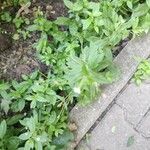
Epilobium roseum
Pale willowherb · Small-flowered willowherb
Description
Source: leafsnapEpilobium roseum is a species of flowering plant belonging to the family Onagraceae.Its native range is Europe to China. .
Care Guide
💧 Water
Pale willowherb thrives in moist environments and needs soil that is both well-hydrated and well-drained. To support its growth, it should be watered weekly. When grown outdoors, it particularly benefits from natural rainfall, which boosts flowering throughout the growing season.
☀️ Light Full sun
Broad-leaved willowherb grows best with plenty of sun, although it can also tolerate some shade and even a complete absence of sunlight. This flexibility comes from its origins in varied habitats. Too much or too little sunlight can affect its healthy growth, causing either scorching or slow growth respectively.
What are the sunlight requirements for Pale willowherb?
Pale willowherb is a sun-loving perennial that thrives best in full sun conditions, which means it needs above 6 hours of sunlight daily. However, it can also tolerate partial sun, with about 3-6 hours of sunlight. It's essential to observe how sunlight moves through your garden to ensure you pick an area that offers the right balance of light and shade, promoting the health and happiness of your plants.
What are some essential facts about Pale willowherb?
Pale willowherb, or Epilobium roseum, is a perennial herbaceous plant that loves the sun. Originally from open habitats like meadows and grasslands, it requires full sun to flourish but can also grow under partial sun conditions. For indoor plants, adequate lighting is crucial for optimal growth. In scenarios where natural sunlight is insufficient, artificial lights such as LEDs can provide the necessary wavelengths of light. These plants may need 30-50W/sq ft of artificial light for full sun conditions, 20-30W/sq ft for partial sun, and 10-20W/sq ft for full shade plants. Placement should be 12-36 inches above the plant, and the duration should mimic natural daylight hours, typically 8-12 hours per day.
What symptoms indicate inadequate lighting for Pale willowherb?
Symptoms of inadequate lighting in Pale willowherb include smaller new leaves, leggy or sparse growth, faster leaf drop, slower or no new growth, and lighter-colored new leaves. These signs suggest that the plant is not receiving enough light, affecting its growth and overall health. In contrast, too much light can cause chlorosis, sunscald, leaf curling, wilting, and leaf scorching, indicating the plant is receiving excessive sunlight.
How can I address lighting issues for my Pale willowherb?
To address lighting issues for Pale willowherb, gradually increase sunlight exposure to achieve at least 6 hours of direct sunlight daily for indoor plants. Consider using south-facing windows and keeping curtains open. If the plant is large or not easily movable, supplement with artificial light for at least 8 hours per day. For outdoor plants, avoid sudden light intensity changes to prevent sunburn, and gradually move plants to sunnier locations each week. If sunlight is blocked by obstacles such as trees, prune them to allow more light through. For smaller plants, consider transplanting during their dormant period to a sunnier location with good drainage. Note that parts of the plant damaged by insufficient sunlight may not recover, but new growth will be healthy after adjusting light exposure.
🌡️ Temperature 0–21.1°C
Broad-leaved willowherb occurs naturally in habitats with temperatures ranging from 32 to 70 °F (0 to 21 °C). Monitor the temperature, especially during severe seasons, and make adjustments as necessary to keep it within this preferred range.
What is the ideal temperature range for growing pale willowherb?
Pale willowherb thrives in temperate climates, with an ideal temperature range between 50 to 77 °F (10 to 25 °C). It is important to mimic these conditions if you're growing the plant in a location with different environmental conditions. Seasonal adjustments may be necessary to ensure the plant's native habitat conditions are replicated as closely as possible.
Does pale willowherb require any special care during winter?
Pale willowherb is highly cold-tolerant and does not usually require additional frost protection measures during the winter months. However, it is beneficial to water the plant generously before the first freeze of autumn to ensure the soil is moist when it freezes. This practice helps prevent drought and water scarcity for the plant during the winter and early spring seasons.
What should I do if the temperature falls below -25°C in the area where I'm growing pale willowherb?
Pale willowherb can tolerate cold conditions well but should be kept in temperatures above -25°C. If temperatures drop below this level, you might not see immediate damage, but there could be a decrease in sprouting or even no sprouting at all in the following spring. In such cases, it's advised to remove any parts of the plant that have failed to sprout once spring arrives.
How does pale willowherb react to high temperatures, and how can I protect it?
Pale willowherb is not tolerant of high temperatures. Exposure to temperatures above 25°C can halt its growth and increase its susceptibility to rot. To protect the plant, trim away any sunburned or dried-up parts. Moving the plant to a shaded area during the midday and afternoon sun or using a shade cloth can also help. Additionally, watering the plant in the morning and evening to maintain soil moisture can mitigate the effects of heat.
💨 Humidity
🪴 Soil 5-7
🌱 Fertilizer
Usually a single fertilizer application in spring is enough for Broad-leaved willowherb, though repeated feedings can help maximize growth. Feed every month to a month and a half. Fertilization improves the leaves' appearance and function, maintaining even color and a healthy texture. It also encourages root development and nutrient uptake, supporting long-term plant health.
🪴 Pot & Repot
✂️ Pruning
To help your pale willowherb thrive, prune it from early to late spring, focusing on removing dead or diseased stems to encourage healthy growth and blooming. Light pruning helps maintain the plant's shape, improves air circulation, and reduces pest problems. Avoid heavy pruning, as it can stress the plant. By doing so, you can promote a vibrant and long-lived pale willowherb.
🌿 Propagating
🐛 Diseases & pets
☠️ Toxicity
Characteristics
- Plant Type
- Herb
- Life Cycle
- Perennial
- Genus
- Epilobium
- Family
- Onagraceae
- Hardiness Zone
- 2
- Mature Height
- 61 cm
- Mature Spread
- 61 cm
- Leaf Color
- Green, Dark Green
- Leaf Type
- Deciduous
- Flower Color
- Pink
- Flower Size
- 0.76 cm
- Bloom Time
- Early summer, Mid summer
- Planting Time
- Spring, Summer, Autumn
- Harvest Time
- Mid summer
- Native Area
- Turkey, Sweden, Austria, Slovakia, Montenegro, Slovenia, Croatia, Belarus, Russia, Germany, Estonia, Romania, Latvia, Belgium, Netherlands, France, Czech Republic, Bulgaria, Armenia, Poland, Greece, Ukraine, Lebanon, Serbia, Lithuania, Norway, Italy, Kazakhstan, Spain, Switzerland, Denmark, Japan, Finland, Iran, Albania, Ireland, United Kingdom, Hungary, Azerbaijan