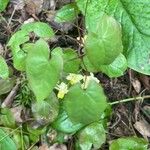
Epimedium alpinum
Barrenwort · Pink epimedium · Alpine Barrenwort · Happy Medium · Grå småfingerört
Description
Source: leafsnapEpimedium alpinum, commonly known as Alpine barrenwort, is a perennial herbaceous plant belonging to the Berberidaceae family. Native to the mountainous regions of Europe and Asia, this plant thrives in rocky areas, woodlands, and meadows. The plant forms clumps of heart-shaped, glossy green leaves, which can be evergreen or semi-evergreen, depending on the climate. In spring, Epimedium alpinum produces delicate flowers on wiry stems that extend above the foliage. These small flowers, with four petals each, are typically white or pale yellow. Epimedium alpinum is notably hardy, tolerating cold temperatures as low as -20°C (-4°F). It prefers well-drained soil with moderate moisture levels but can also adapt to dry soil conditions once established. Historically, this plant has been valued for its medicinal properties, particularly its anti-inflammatory effects. Traditionally, it has been used as an herbal remedy for a range of ailments, including arthritis, osteoporosis, and impotence. Beyond its medicinal applications, Epimedium alpinum is also prized as an ornamental plant. Its attractive foliage and delicate flowers make it an excellent choice for ground cover or border planting when grown in large groups. In summary, Epimedium alpinum is a versatile perennial that offers both ornamental beauty and medicinal benefits, making it a valuable addition to any garden or landscape design project.
Care Guide
💧 Water Every 7 days
Barrenwort thrives in well-drained soil with consistent moisture and has moderate drought tolerance once it is well-established. To maintain its ideal environment, water it weekly. This plant is often used as ornamental ground cover in shaded areas. Applying mulch can help retain moisture and mimic its natural woodland habitat.
How should I water my Barrenwort plant?
To properly water the Barrenwort plant, it is recommended to use filtered water at room temperature. This is because tap water can potentially harm the plant due to the presence of harmful particles. The water temperature is also important, as the Barrenwort thrives in warm environments and cold water could shock its system. Instead of watering from above, it is best to pour the filtered room temperature water directly onto the soil until it is completely soaked. This not only benefits the plant by moistening its roots, but also helps them spread and gather necessary nutrients from the soil.
What should I do if I give my Barrenwort plant too much or too little water?
Overwatering is a more common problem than underwatering for Barrenwort plants. When Barrenwort receives too much water, its stems and leaves may wilt and turn yellow. Prolonged overwatering can also lead to diseases like root rot, mold, and mildew, which can be fatal for the plant. Barrenwort has decent drought tolerance, so underwatering is less likely to occur. However, if it does happen, the leaves may become brittle and brown. It is important to spot the signs of overwatering early to prevent irreversible damage. If you notice these signs, reduce your watering schedule immediately and check the soil's drainage. If the soil drains poorly, replace it with well-draining potting mix. On the other hand, if you see signs of underwatering, simply water more regularly until the plant recovers.
How many times should I water my Barrenwort?
If your Barrenwort plant is in a pot, the most precise way to determine if it needs water is by checking the soil moisture. Simply stick your finger into the soil, and if the top two to three inches are dry, it's time to water. Similarly, if you're growing Barrenwort outdoors in the ground, you can use the same method to test the soil. When you find that the top few inches are dry, it's a sign that you should add water. Typically, during spring and early fall, watering once a week is sufficient. However, during extremely hot weather, you may need to increase watering to about twice a week or even more. It's worth noting that mature, well-established Barrenwort plants have a remarkable ability to withstand drought.
How much water does my Barrenwort plant need?
When watering your Barrenwort, don't be afraid to give it a generous amount of water. Make sure the top two to three inches of soil are dry before watering, and then water thoroughly until the soil is completely soaked. You should add enough water that it drains out through the bottom of the pot. If you don't see any excess water draining, it means you haven't watered enough. On the other hand, be careful not to let water accumulate in the soil, as this can harm the plant. If there is no water draining from the pot, it may indicate that the soil does not drain well, which is not good for the plant's health. If the plant is outdoors, it typically only needs 1 inch of rain per week.
How should I water my Barrenwort at different stages of growth?
The watering needs of the Barrenwort plant can vary depending on its growth stages. In the first few years of its life or after transplanting to a new location, it requires more water than usual. During these stages, the plant focuses on developing new roots, which require extra moisture for optimal growth. As the plant matures over a few seasons, it will require less water. Another growth stage that requires increased watering is during the bloom period, as the development of flowers requires a significant amount of moisture.
☀️ Light Partial sun
Barrenwort originates from habitats like forest understories and rocky areas, where it grows under natural shade. It prefers partial sun but can tolerate both full sun and full shade, illustrating its versatile and hardy nature.
What are the sunlight requirements for Barrenwort?
Barrenwort, also known as Epimedium alpinum, thrives in environments with partial to full shade conditions. This plant prefers partial sun, receiving about 3-6 hours of sunlight daily, but it can also tolerate full shade where it gets less than 3 hours of sunlight. Observing how sunlight moves through your garden will help in finding the perfect spots that provide the right balance of light and shade for your Barrenwort, ensuring its growth and happiness.
How does artificial lighting support Barrenwort's growth indoors?
When natural sunlight is inadequate, especially during winter or in less sunny spaces, artificial lighting becomes essential for Barrenwort's growth indoors. Choosing the right type of artificial light, like LED lights, is crucial as they can be customized to provide specific wavelengths needed by the plant. For full sun plants, 30-50W/sq ft of artificial light is necessary, partial sun plants require 20-30W/sq ft, and full shade plants need 10-20W/sq ft. It's also important to place the light source 12-36 inches above the plant and mimic the natural daylight hours, generally keeping the lights on for 8-12 hours per day, promoting healthier and faster growth.
What are the signs of insufficient light for Barrenwort when grown indoors?
When Barrenwort is grown indoors with insufficient light, it may exhibit several symptoms indicating light deficiency. These include smaller new leaves compared to mature ones, leggy or sparse growth where the spaces between leaves or stems elongate, leading to a stretched-out appearance, early leaf drop to conserve resources, delayed or halted growth as the plant enters survival mode, pale or irregularly colored new leaves indicating a lack of chlorophyll and nutrients, chlorosis where leaves lose their green color, sunscald characterized by damaged leaves due to intense light exposure, leaf curling as a defense mechanism to minimize water loss, wilting from excessive water loss, and leaf scorching with brown, dry, and crispy edges caused by excessive sunlight.
What solutions are recommended for managing Barrenwort's light exposure both indoors and outdoors?
To optimize Barrenwort's growth in response to light exposure, consider gradual adaptation techniques and the use of artificial lighting for indoor plants. Gradually shifting plants to sunnier spots each week until they receive the desired 3-6 hours of sunlight daily can help with adaptation. For large or immovable indoor plants, keeping a lamp on for at least 8 hours daily or investing in professional grow lights ensures ample light. Outdoors, it's crucial to gradually move plants to better sunlight spots to avoid sunburn, avoiding sudden changes in light intensity. If sunlight is blocked by trees, pruning might be necessary to increase sunlight penetration. For smaller plants, transplanting during their dormant period in late winter or early spring to a location with ample sunlight and good drainage can be beneficial. Note that parts of the plant affected by insufficient light may not recover, but new growth should be healthy after adjusting the light exposure.
🌡️ Temperature 5–35°C
💨 Humidity
🪴 Soil 6-7
🌱 Fertilizer
The best time to fertilize a Barrenwort is in early spring, as it emerges from dormancy and begins active growth. Fertilizing supplies essential nutrients needed for healthy growth. Although Barrenwort has relatively low fertilizer requirements, giving it fertilizer once a year can improve its survival and encourage better, longer-lasting flowers.
Why should I put fertilizer on my Barrenwort?
The leaves of the Barrenwort are essential to its overall structure. Fertilization plays a key role in keeping these leaves healthy and attractive. By fertilizing properly, you can ensure consistent color and a vibrant texture in the leaves. Additionally, fertilization works beneath the soil to support the growth of new roots and maintain existing ones. This means that fertilization not only benefits your plant's current health but also enhances its ability to absorb nutrients from the soil in the future.
What is the best time to put fertilizer on my Barrenwort?
If you grow a Barrenwort perennial plant outdoors, it will start growing new leaves in early spring. This is a signal that it's time to fertilize it for the year. You can give it fertilizer once in the spring, which is usually enough. But if you want to maximize its growth, you can fertilize it multiple times in the spring and early summer. In this case, you can feed it about once every month to a month and a half.
When is the best time to not fertilize my Barrenwort plant?
During the late fall and winter, your Barrenwort goes into a dormant phase where it doesn't produce new growth. Therefore, it's recommended to avoid fertilizing it during this time. In spring and summer, you can fertilize multiple times, but as summer approaches and the growth rate of your Barrenwort slows down, you should start reducing the amount of fertilization. It's never a good idea to fertilize your Barrenwort when the weather is unusually hot or when the soil is excessively dry, as this can stress the plant and cause it to die prematurely.
What kind of plant food does my Barrenwort need?
Choosing the best fertilizer for a Barrenwort is luckily quite simple. These plants thrive on garden fertilizers that have equal amounts of nitrogen, phosphorus, and potassium, commonly known as a 10-10-10 ratio or something similar. It's best to avoid fertilizers with high nitrogen content when uncertain. The majority of recommended fertilizers for Barrenwort come in granular form, making them easy to apply to the soil. Opt for slow-release granular fertilizers, or even consider feeding your Barrenwort with organic soil amendments like compost, which can be quite beneficial.
How can I make my Barrenwort plant grow better?
To ensure proper growth, wait until your Barrenwort plant starts showing its first leaves in early spring. Once this happens, use a granular slow-release fertilizer with a balanced formula. Apply the fertilizer to the soil surrounding the base of the plant, rather than directly onto the plant itself. If needed, you may need to move some leaves to access the soil above the roots. You can repeat this process later in the season if desired. It is also a good idea to water the Barrenwort before and after feeding it.
🪴 Pot & Repot
✂️ Pruning
Barrenwort, known for its heart-shaped leaves and delicate flowers, benefits from pruning from early to late spring. After blooming, remove dead foliage and old stems to encourage new growth, prevent disease, and improve air circulation. For the best results and to maintain the plant's health, use clean, sharp tools for pruning.
🌿 Propagating
🐛 Diseases & pets
☠️ Toxicity
Characteristics
- Plant Type
- Herb
- Life Cycle
- Perennial
- Genus
- Epimedium
- Family
- Berberidaceae
- Hardiness Zone
- 5-9
- Mature Height
- 15 cm to 23 cm
- Mature Spread
- 30 cm
- Leaf Color
- Green, Red, Bronze
- Leaf Type
- Evergreen, Semi-evergreen, Deciduous
- Flower Color
- Yellow, Red
- Flower Size
- 1.02 cm to 2.03 cm
- Bloom Time
- Early spring, Mid spring
- Planting Time
- Spring, Autumn
- Harvest Time
- Late spring, Early summer