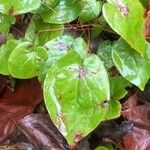
Epimedium pinnatum
Caucasian barrenwort · Barrenwort · Persian epimedium
Description
Source: leafsnapEpimedium pinnatum, commonly known as barrenwort or bishop's hat, is a perennial herbaceous plant from the Berberidaceae family. Native to the Caucasus region, it thrives in rocky areas and forests. The plant reaches up to 30 cm in height and features heart-shaped leaves with green and reddish edges. Its small, bell-shaped flowers range in color from white to pinkish-purple and bloom from late spring to early summer. Historically, Epimedium pinnatum has been valued for its medicinal uses, particularly its anti-inflammatory properties, and has also been employed as an aphrodisiac. Moreover, this plant is favored as an ornamental garden plant, admired for its attractive foliage and delicate flowers. It flourishes in partial to full shade and prefers moist soil conditions. In summary, Epimedium pinnatum is a beautiful and practical addition to gardens and natural areas, combining medicinal benefits with aesthetic appeal.
Care Guide
💧 Water Every 7 days
Barrenwort grows best in moist, well-drained soil with moderate humidity. To keep the soil moist, water the plant weekly. Using mulch during the growing season will help retain soil moisture and promote lush foliage.
☀️ Light Partial sun
Barrenwort does best with moderate sunlight and is commonly seen in its native environments where taller plants diffuse the light. It can maintain healthy growth even beneath a thick canopy, which highlights its tolerance for low-light situations. However, excessive sun exposure can lead to dehydration and suppress its growth.
What are the sunlight requirements for Barrenwort?
Barrenwort requires varying amounts of sunlight depending on its environment, needing about 3-6 hours of sunlight (partial sun) or less than 3 hours (full shade) daily. It's important to observe the movement of sunlight in your garden to place your plants in optimal light conditions. This delicate balance ensures your plants' growth and health by providing them with the right amount of light.
How does Barrenwort thrive best?
Barrenwort thrives best in conditions that mimic its native habitat, with moderate sunlight and the protection of a dense canopy, allowing for filtered light. The plant exhibits remarkable resilience under low-light conditions but can suffer from dehydration and inhibited growth if exposed to too much direct sunlight. Additionally, artificial lighting can be beneficial for indoor plants, especially during less sunny seasons or in darker spaces. Suitable artificial light includes LED lights, customized to offer specific wavelengths needed for plant growth, with varying wattage requirements based on the plant's sunlight needs.
What are the symptoms of light deficiency or excess in Barrenwort?
Symptoms of light deficiency in Barrenwort include small leaves, leggy or sparse growth, faster leaf drop, slower or halted growth, lighter-colored or pale new leaves, which indicate insufficient chlorophyll and nutrients. Conversely, exposure to excessive sunlight can cause chlorosis, sunscald, leaf curling, wilting, or leaf scorching, highlighting the importance of optimal sunlight exposure for plant health.
What solutions are recommended for sunlight-related issues in Barrenwort?
For sunlight-related issues in Barrenwort, it's advisable to gradually introduce the plant to sunnier spots to adapt to the change, aiming for 3-6 hours of sunlight daily. Indoor plants benefit from artificial lighting, keeping lamps on for at least 8 hours. For outdoor plants, gradual relocation to sunnier spots prevents sunburn. Reducing obstructions, like pruning branches that block light, or transplanting to a better-lit location, can significantly improve sunlight exposure. It's crucial to manage this transition carefully to avoid damaging the plant.
🌡️ Temperature 5–32.2°C
Barrenwort is a plant that naturally grows in temperate regions where temperatures range from 41 to 90 °F (5 to 32 ℃). To promote healthy growth, keep temperatures within this range through the seasons and adjust as necessary.
What are the ideal temperature conditions for Barrenwort?
Barrenwort thrives in temperate climates where temperatures range between 41 to 90 °F (5 to 32 °C), which should ideally be maintained throughout the different seasons for healthy growth. The plant has a strong cold resistance, making it generally unnecessary to take special frost protection measures even in winter. However, if temperatures are expected to drop below -25°C, providing some form of cold protection, such as covering the plant with soil or straw, becomes important. Additionally, it's recommended to water the plant abundantly before the first freeze in autumn to ensure the soil remains moist and enters a frozen state, which helps prevent drought and water scarcity during winter and early spring.
How does low temperature affect Barrenwort, and what are the solutions?
Barrenwort is a cold-tolerant plant that performs best when the temperature is above 5°C and should be kept from falling below -20°C. When temperatures plummet below -25°C, while there may not be immediate noticeable changes during winter, a decrease in sprouting or a complete lack of sprouting can be observed in spring. The solution to this issue is to remove any parts of the plant that have failed to sprout in the spring.
What happens to Barrenwort under high temperature conditions, and what should be done?
During summer, it is crucial to keep Barrenwort's temperature below 32°C. Exceeding 35°C, the leaves may begin to lighten in color, curl, become prone to sunburn, and in severe cases, the entire plant can wilt and dry out. To manage this, trim away the sunburned and dried-up parts of the plant. Relocate the plant to a shaded area, away from the midday and afternoon sun, or consider using a shade cloth to protect it. Moreover, ensure to water the plant during the morning and evening to maintain moist soil conditions.
💨 Humidity
🪴 Soil 6-7
🌱 Fertilizer
The best time to fertilize a Barrenwort is in early spring, as it emerges from dormancy and begins active growth. Fertilizing supplies essential nutrients needed for healthy growth. Although Barrenwort has relatively low fertilizer requirements, giving it fertilizer once a year can improve its survival and encourage better, longer-lasting flowers.
🪴 Pot & Repot
✂️ Pruning
Barrenwort, known for its heart-shaped leaves, benefits greatly from pruning in the spring. By trimming away dead foliage and spent flowers, you can promote healthy growth and more vibrant blooms. This practice not only enhances the plant's appearance but also prevents overcrowding and improves air circulation, which helps reduce the risk of disease. For the best results, prune just above a leaf node to encourage optimal regrowth.
🌿 Propagating
🐛 Diseases & pets
☠️ Toxicity
Characteristics
- Plant Type
- Herb
- Life Cycle
- Perennial
- Genus
- Epimedium
- Family
- Berberidaceae
- Hardiness Zone
- 5-8
- Mature Height
- 20 cm to 30 cm
- Mature Spread
- 15 cm to 30 cm
- Leaf Color
- Green
- Leaf Type
- Evergreen
- Flower Color
- Yellow
- Flower Size
- 2.54 cm
- Bloom Time
- Mid spring, Late spring
- Planting Time
- Spring, Autumn
- Harvest Time
- Early summer, Mid summer