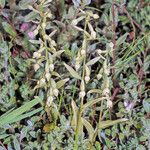
Epipactis phyllanthes
Green-flowered Helleborine · Green-Flowered Helleborne
Description
Source: leafsnapEpipactis phyllanthes, the green-flowered helleborine, is an orchid found in the western Palearctic realm.
Care Guide
💧 Water
The green-flowered helleborine thrives in moderately moist soil and requires stable hydration, though it can endure short dry spells. For optimal growth, water the plant weekly and maintain higher humidity levels indoors. As a perennial herbaceous plant, it is crucial to provide consistent moisture during its active growing season to ensure healthy development and successful flowering.
☀️ Light Partial sun
Green-flowered helleborine occurs naturally in habitats like forest understories or rocky areas where it receives natural shade. It prefers partial sun but can also tolerate full sun or full shade, showing its versatile and hardy nature.
🌡️ Temperature 10–35°C
Green-flowered helleborine can tolerate a broad range of temperature conditions, but its distribution may still be constrained by various combinations of moisture and heat. It performs best in warm summer climates with sufficient rainfall or watering. Extended periods of cloudy, rainy weather, as well as prolonged high temperatures, can raise the risk of Green-flowered helleborine dying. In winter, adequate protection from the cold can increase the plant's chances of survival.
What is Green-flowered helleborine?
Green-flowered helleborine is a plant known by the botanical name Epipactis phyllanthes. It does not have additional details provided regarding its essentials or symptoms in the given information.
💨 Humidity
🪴 Soil 6-7
🌱 Fertilizer
One application of fertilizer in spring is generally enough for Green-flowered helleborine, although repeated feedings can maximize growth. Fertilize roughly every month to every month and a half. Feeding improves the leaves' appearance and function, encouraging even color and a healthy texture. It also promotes root development and nutrient uptake, supporting the plant's long-term health.
🪴 Pot & Repot
✂️ Pruning
The green-flowered helleborine benefits from minimal pruning, ideally performed from early to late spring. To encourage its vigor, focus on removing dead foliage and spent flowers. Ensuring proper airflow and light is crucial for preventing disease. Regular light pruning helps maintain both the plant's aesthetics and health, according to horticultural experts.
🌿 Propagating
🐛 Diseases & pets
☠️ Toxicity
Characteristics
- Plant Type
- Herb
- Life Cycle
- Perennial
- Genus
- Epipactis
- Family
- Orchidaceae
- Hardiness Zone
- 6-9
- Mature Height
- 20 cm to 49 cm
- Mature Spread
- 10 cm to 20 cm
- Leaf Color
- Dark Green
- Leaf Type
- Deciduous
- Flower Color
- Green
- Flower Size
- 0.51 cm to 1.02 cm
- Bloom Time
- Early summer, Mid summer
- Planting Time
- Spring, Summer, Autumn
- Harvest Time
- Late summer, Early fall