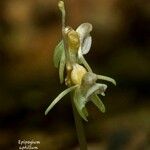
Epipogium aphyllum
Ghost Orchid · Leafless epipogium · Spurred coral-root · Spurred Coralroot
Description
Source: leafsnapEpipogium aphyllum, the ghost orchid (not to be confused with the American ghost orchid, Dendrophylax lindenii) is a hardy myco-heterotrophic orchid lacking chlorophyll. It is famous for its unpredictable appearance; in many localities it has been seen just once. It is found in beech, oak, pine and spruce forests on base-rich soils. It is a rare and critically endangered plant in habitat, and is believed to be extinct throughout much of its former range, although it has been recently confirmed in the United Kingdom (2009), an area where the plants were believed to have gone extinct.The plants are protected in many locales, and removing the plants from habitat or disturbing the plants, even for scientific study, can be a very serious matter in many jurisdictions. These plants are exceptionally rare and should never be removed from habitat or disturbed.In 1926 the Welsh botanist Eleanor Vachell was asked by the British Museum to investigate a report of the ghost orchid in England. For many years the Welsh National Herbarium at Amgueddfa Cymru (National Museum of Wales) had only a small rhizome that had been gathered by Vachell on 29 May 1926.
Care Guide
💧 Water
The ghost orchid thrives in environments with high humidity and consistent moisture, but it's important to avoid waterlogging. To maintain the right balance, it should be watered weekly. This orchid is particularly sensitive to changes in ambient moisture, especially during its active growing season. As an epiphyte, it can flourish indoors when its specific humidity needs are carefully managed.
How should I water my Ghost orchid?
The way you water your Ghost orchid depends on whether it's actively growing or not. During growth phases, you should water both the soil and leaves if it's warm. In winter or cool, wet weather, stick to watering the soil only. If the roots and leaves appear thin, dry, or discolored, it's time to water more. Overwatering will make the plant mushy and limp. Plant your Ghost orchid in a pot with good drainage. During the growing season, water it a few times per week, ensuring quick drainage. The pot size determines the watering frequency. Use rainwater or distilled water, matching the temperature with the air if possible.
What should I do if I give too much or too little water to my Ghost orchid?
One of the most common ways to kill your Ghost orchid is by letting it sit in overly moist soil for too long. While these plants need regular watering during active growth, they also require a well-draining growing medium. If you overwater your plant, it will become mushy and develop root rot. In such cases, it's important to use sterile pruning shears to remove any rotten roots. Afterward, you should repot your Ghost orchid in a container with good drainage and fill it with a fast-draining potting mix. However, keep in mind that excessive repotting may not be ideal for Ghost orchids, so it's crucial to find the right balance in your watering routine. If your Ghost orchid is underwatered, it will begin to shrivel and feel dry to the touch. In this situation, the soil may be drying out faster than expected, meaning you should increase your watering frequency.
How frequently should I water my Ghost orchid?
During the active growth stage, which is in the spring and summer, it's recommended to water your Ghost orchid once or twice a week. If the weather is hot and dry for a long time, increase the watering to three times a week or more. In the winter, you'll still need to water your Ghost orchid but not as frequently. Two to three times a month should be enough during the coldest months. However, if you keep your Ghost orchid indoors during winter, keep in mind that indoor locations can cause the soil to dry out faster. This might mean you need to water it more often. Use the fall season as a time to gradually decrease the watering frequency from multiple times a week to your reduced winter schedule.
What do I need to think about when watering my Ghost orchid during different seasons and growth periods?
When planning the watering schedule for your Ghost orchid, it is important to consider two growth phases. The first phase is the active growth period, which occurs in spring and summer. During this time, it is necessary to water the plant multiple times per week. The second phase is the rest period, which occurs in winter for about two to three months. During this period, the Ghost orchid requires minimal water and fertilization. It is recommended to water the plant once or twice per month. As fall approaches, you should gradually reduce the watering frequency from multiple times per week to once or twice per month to prepare for the winter rest period.
How should I change my watering routine for my Ghost orchid when I grow it indoors?
The Ghost orchid needs a humid growing environment, but most indoor locations lack the necessary air moisture. As a result, the plant and soil dry out faster than they would outdoors. To counteract this, consider using a humidifier and watering the plant more often. However, remember that Ghost orchids also need good air circulation to avoid excessive moisture and related diseases. To achieve this, it's advisable to include a fan in the growing room.
☀️ Light Full shade
The ghost orchid usually grows in environments protected from intense sunlight. Light is important for its development, but too much exposure can harm its health. While the ideal light level varies, it does best in places where sunlight is largely filtered.
What are the sunlight requirements for a Ghost Orchid?
The Ghost Orchid requires less than 3 hours of direct sunlight and typically thrives in full shade. It's important to monitor how sunlight moves through your garden to find spots that offer the right balance of light and shade, ensuring the plant's health and happiness. Despite needing protection from substantial sun irradiance, it’s crucial to provide the Ghost Orchid with some indirect, filtered sunlight for optimal growth.
How should artificial lighting be used for indoor Ghost Orchids?
Indoor Ghost Orchids require adequate lighting, especially when natural sunlight is scarce. Artificial lighting can be used to promote healthier growth. LED lights are recommended as they can be customized to provide specific wavelengths needed by the plant. For full sun plants, 30-50W/sq ft is needed; partial sun plants require 20-30W/sq ft, and full shade plants require 10-20W/sq ft of artificial light. The light source should be placed 12-36 inches above the plant, mimicking natural sunlight for 8-12 hours per day to meet the plant’s needs.
What are common symptoms of insufficient light in Ghost Orchids?
Insufficient light can lead to several symptoms in Ghost Orchids, including smaller new leaves, leggy or sparse growth, faster leaf drop, slower or no new growth, lighter-colored new leaves, chlorosis, sunscald, leaf curling, wilting, and leaf scorching. These symptoms indicate a lack of adequate sunlight or the effects of excessive exposure, which can impair the plant's ability to photosynthesize and maintain overall health.
How can light-related issues be mitigated for Ghost Orchids?
To address light-related issues in Ghost Orchids, follow these solutions: For indoor plants, move them closer to windows where they can receive ample filtered light, including direct morning sunlight, and consider using artificial light if relocation is not viable. Outdoors, gradually move plants to sunnier locations to prevent sunburn. Reduce obstructions by pruning or relocating plants to ensure they receive sufficient sunlight. Affected parts may not recover, but new healthy growth can emerge with improved lighting.
🌡️ Temperature 0–21.1°C
Ghost orchid is native to habitats with temperatures ranging from 32 to 70°F (0 to 21°C). It does best in mild conditions. Seasonal adjustments can involve providing warmer conditions during colder months.
What is the native environment temperature range for the Ghost Orchid?
The Ghost Orchid, known botanically as Epipogium aphyllum, is native to environments where the temperature ranges from 32 to 70°F (0 to 21°C). It prefers mild temperatures and requires seasonal adjustments, like warmer conditions during colder months, to thrive. Despite its high tolerance for cold, ensuring the soil remains moist before the first freeze in autumn by watering generously can help the plant through winter and early spring without additional frost protection measures.
How does the Ghost Orchid handle low temperatures, and what measures should be taken if temperatures drop too low?
The Ghost Orchid is extremely tolerant of cold temperatures, and it can withstand winter temperatures above -45°C. However, if temperatures drop below this threshold, the plant may not show immediate damage during winter but could experience decreased sprouting or a failure to sprout at all come spring. To counteract this, it's advised to remove any parts of the plant that have failed to sprout in the spring.
What should be done if the Ghost Orchid is exposed to high temperatures?
Ghost Orchids are not tolerant of high temperatures. Growth ceases and the plant becomes more prone to rot when exposed to temperatures above 21°C. In such cases, it is recommended to trim away any parts of the plant that have been sunburned or have dried up. Moving the plant to a shaded area during the midday and afternoon sun, or using a shade cloth, can provide protection. Additionally, watering the orchid in the morning and evening helps keep the soil moist and the plant healthy.
💨 Humidity
🪴 Soil 5-6
🌱 Fertilizer
The best time to fertilize a Ghost orchid is in early spring when its flowers are beginning to form. The appropriate fertilizer promotes improved blooms and helps the Ghost orchid produce attractive flowers. Fertilizing at that time supports excellent flowering throughout the season and supplies energy for its dormant growth phases.
🪴 Pot & Repot
✂️ Pruning
The ghost orchid is a delicate, leafless plant with a translucent appearance. When pruning, focus only on removing dead or diseased parts, and do so minimally. The best time for pruning is from early to late spring. Always use sterilized tools to prevent infections, and monitor the plant for any signs of stress after pruning. This will help promote its health and flowering.
🌿 Propagating
🐛 Diseases & pets
☠️ Toxicity
Characteristics
- Plant Type
- Herb
- Life Cycle
- Perennial
- Genus
- Epipogium
- Family
- Orchidaceae
- Hardiness Zone
- 1
- Mature Height
- 30 cm
- Mature Spread
- 5 cm to 10 cm
- Leaf Color
- Yellow, White, Purple
- Leaf Type
- Deciduous
- Flower Color
- Pink, White
- Flower Size
- 1.52 cm to 2.03 cm
- Bloom Time
- Early summer, Mid summer
- Planting Time
- Spring, Summer
- Harvest Time
- Mid summer, Late summer
- Native Area
- Turkey, Sweden, India, Austria, Slovakia, Slovenia, Croatia, Belarus, Russia, Germany, Estonia, Koppen, Romania, Latvia, Belgium, France, Nepal, Czech Republic, Bulgaria, Bangladesh, Poland, Armenia, Greece, Ukraine, China, Lithuania, Norway, Italy, Kazakhstan, Switzerland, Denmark, Myanmar, Mongolia, Japan, Finland, Bhutan, Albania, Azerbaijan, United Kingdom, Hungary