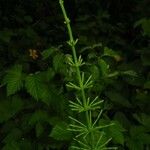
Equisetum arvense
دم اسب صحرایی · Common Horsetail · Field horsetail · Marestail · Coada-calului
Description
Source: leafsnapEquisetum arvense, the field horsetail or common horsetail, is an herbaceous perennial plant in the Equisetidae (horsetails) sub-class, native throughout the arctic and temperate regions of the Northern Hemisphere. It has separate sterile non-reproductive and fertile spore-bearing stems growing from a perennial underground rhizomatous stem system. The fertile stems are produced in early spring and are non-photosynthetic, while the green sterile stems start to grow after the fertile stems have wilted and persist through the summer until the first autumn frosts. It is sometimes confused with mare's tail, Hippuris vulgaris.Rhizomes can pierce through the soil up to 6 feet (1.8 m) in depth. This allows this species to tolerate many conditions and is hard to get rid of even with the help of herbicides.
🌳 Field horsetail isn't merely a leftover from prehistoric times; it also has practical uses today. Its high silica content makes it an effective natural abrasive, commonly known as 'Scouring rush'. That abrasive property is applied to polishing metals and in woodworking. Additionally, horsetails are used in biodynamic farming as a mineral-rich plant extract to support soil and plant health. Field horsetail has also been examined for bioremediation because it can absorb heavy metals from soil, making it useful for ecological restoration and pollution control.
🎭 Charming snakes, fertility
Care Guide
💧 Water
Field horsetail thrives in moist environments, similar to its natural habitats near water bodies. To stay healthy, it requires moderate watering twice a week and benefits from natural rainfall when grown outdoors. As a perennial herb, it is important to maintain consistent soil moisture during its growing season.
What should I do if I give too much or too little water to my Field horsetail?
Field horsetail is a plant that loves water, but it's important not to overwater it. If the plant sits in a pool of water or its planter doesn't have drainage holes, the roots will become too wet and won't be able to absorb nutrients and moisture. Excess moisture in the soil can also lead to fungal or bacterial diseases. Signs of overwatering include wilted and yellow leaves, drooping or mushy stems. However, it's essential to check for other causes of plant issues, as overwatering is hard to do with this plant. On the other hand, it's easy to let Field horsetail become too dry, especially if it's not in a self-watering planter. In dry conditions, the plant can rapidly turn from lush and green to brown and crispy. In extreme cases, the fronds may appear completely dead, but there's still a chance to save the plant if the roots are healthy. Simply remove all the dry and dead stems, water the plant thoroughly, and return it to its usual spot. With proper care, the plant can recover and start producing new fronds, although it may take a few months to regain its original size.
How do I make sure I water my Field horsetail correctly?
Your Field horsetail thrives in consistently moist soil, resembling its natural habitat. This means watering it every one or two days may be necessary. It is crucial to prevent the plant from drying out, so once you notice the top layer of soil becoming slightly dry, it is time to water again. Avoid giving it just a few drops of water - instead, thoroughly soak the soil until water begins to drain out from the pot's bottom. Afterward, be sure to discard any excess water so the pot does not sit in a puddle. This method ensures the soil never becomes too dry.
What things should I think about when watering my Field horsetail?
The frequency of watering your Field horsetail depends on the humidity in the air. Higher humidity means you need to water less often because evaporation is slower. To prevent the plant from drying out quickly, avoid placing it near heating or cooling vents and choose a location protected from drafts. Field horsetail prefers dappled and indirect sunlight with temperatures between 55-80 degrees F (13-27 degrees C). Avoid placing it in a warm and sunny spot on a windowsill as it can quickly become dehydrated. Rainwater or distilled water is ideal for this plant, but tap water generally works fine in most places. Tap water may contain minerals and chemicals that can cause brown leaf tips, particularly since Field horsetail has delicate leaves. Small pots can cause issues as they hold less potting medium and dry out faster, so it's best to provide more space in the pot for this plant. Consider using a self-watering planter for Field horsetail. This type of pot has a wicking system that continuously supplies water from a central reservoir, ensuring consistent moisture in the soil. It eliminates the need for frequent watering and benefits the roots by maintaining a constant water supply instead of fluctuating between dry and wet conditions.
☀️ Light Full shade
Field horsetail grows best in areas with full sun but can withstand a certain amount of shade. Extremely high or low light levels can restrict its growth: too much light may hamper development, while insufficient exposure can also limit it. It was originally adapted to open, treeless habitats, and its growth stages do not differ markedly in their sunlight needs. Both excessive and insufficient light can produce harmful effects on the plant.
What are the sunlight requirements for Field Horsetail?
Field Horsetail (Equisetum arvense) thrives in environments that are fully exposed to the sun but it can also tolerate a degree of shade. The plant requires more than 6 hours of sunlight for 'full sun' conditions and about 3-6 hours for 'partial sun' conditions. It's recommended to watch how sunlight moves through your garden and choose spots that offer a mix of light and shade, ensuring your plants grow happily. Field Horsetail has adapted to habitats without tree cover, and its growth stages are not significantly affected by varying levels of sun exposure. However, extreme light levels can inhibit its growth, while insufficient light may also deter development.
What artificial lighting requirements do indoor Field Horsetail plants have?
Indoor Field Horsetail plants require adequate lighting, especially when natural sunlight is not sufficient, such as during winter or in less sunny locations. Artificial lights can provide a vital solution, promoting faster and healthier growth. LED lights are recommended because they can be customized to offer specific wavelengths needed by plants. Full sun plants need between 30-50W per square foot, partial sun plants require 20-30W per square foot, and full shade plants need 10-20W per square foot. The light source should be placed 12-36 inches above the plant to mimic natural sunlight, and most plants will need between 8-12 hours of light daily.
What are the symptoms of light deficiency or overexposure in Field Horsetail?
Field Horsetail can show several symptoms when it experiences poor lighting conditions, including slower or halted growth, chlorosis (loss of leaf green color), sunscald (damage from intense sunlight), leaf curling (as a defense mechanism against extreme sunlight), wilting (due to increased water loss), and leaf scorching (characterized by brown, dry edges on leaves). Each of these symptoms indicates an issue with the plant's light exposure, whether it's too much or too little light.
How can I optimize light conditions for my Field Horsetail plants?
To ensure optimal growth for Field Horsetail, gradually move the plants to sunnier locations, ensuring they receive at least 6 hours of direct sunlight daily. For indoor plants, using a south-facing window can maximize sunlight exposure, and keeping curtains open during the day can be beneficial. If your plant is large or not easily movable, consider using a desk or ceiling lamp for at least 8 hours daily, or invest in professional grow lights. For outdoor plants, avoid sudden changes in light intensity to prevent sunburn. In case of obstructions like trees blocking sunlight, pruning branches can help. For smaller plants, transplanting during their dormant period, usually late winter or early spring, to a location with ample sunlight and good drainage can be effective.
🌡️ Temperature 0–32.2°C
The native temperature-related growth environment for field horsetail is a temperate climate zone with mild summers and cold winters. It prefers temperatures between 32 and 90 °F (0 to 32 °C). In cold seasons it can adapt and survive in temperatures from -22 to 50 °F (-30 to 10 °C).
What is the ideal growth environment for field horsetail?
Field horsetail, or Equisetum arvense, thrives in a temperate climate zone characterized by mild summers and cold winters. It prefers temperature ranges from 32 to 90°F (0 to 32°C). This plant has a robust capability to adjust to colder seasons, surviving temperatures from -22 to 50°F (-30 to 10°C). Its strong cold resistance means that special frost protection measures are not usually required in winter. Nevertheless, if temperatures are anticipated to drop below -40°C, implementing cold protection by covering the plant with soil or straw is advisable. Additionally, abundant watering before the first autumn freeze helps the soil to stay moist and prevents drought and water scarcity during winter and early spring.
How does field horsetail react to low temperatures and what are the solutions?
Field horsetail exhibits high cold tolerance and typically fares best when temperatures remain above 0°C. However, it should ideally be maintained above -35°C during the winter. Exposure to temperatures below -40°C may not visibly affect the plant during the winter, but it could lead to reduced or even nonexistent sprouting in the spring. To manage these situations, any parts of the plant that have failed to sprout by spring should be removed, facilitating healthier regeneration.
What should be done if field horsetail is exposed to high temperatures?
During the summer months, it is crucial to keep field horsetail below 32°C to prevent heat stress. Temperatures exceeding 35°C can cause the plant's leaves to lighten in color, curl, and become more susceptible to sunburn. In such cases, immediate action is required by trimming away the sunburned and dried-up parts of the plant. To protect the plant further, it should be moved to a shaded location or covered with a shade cloth, particularly from the midday and afternoon sun. Ensuring the soil around the plant remains moist through watering in the morning and evening is also beneficial in mitigating the effects of high temperatures.
💨 Humidity
🪴 Soil 6-7
🌱 Fertilizer
Since Equisetum arvense thrives best in poor soil, it doesn't require fertilizer. Actually, a rich, fertile soil mixture can only stunt the growth of the plant. In general, Equisetum arvense do not like particularly rich or fertile soil, so fertilizing is not necessary.
🪴 Pot & Repot
✂️ Pruning
🌿 Propagating
🐛 Diseases & pets
☠️ Toxicity
Equisetum arvense is rarely if ever lethal. Equisetum arvense poisoning in horses may be distinguished from bracken poisoning because animals poisoned with horsetails maintain their appetites even after clinical signs appear. Extracts of equisetum possess thiaminase activity. People with heart or kidney disorders, diabetes, or gout should not use Equisetum arvense. Equisetum arvense may flush potassium out of the body so people who are at risk for low potassium levels should not take Equisetum arvense.
Characteristics
- Plant Type
- Fern
- Life Cycle
- Perennial
- Genus
- Equisetum
- Family
- Equisetaceae
- Hardiness Zone
- 2-8
- Mature Height
- 10 cm to 91 cm
- Mature Spread
- 20 cm
- Leaf Color
- Green, Yellow, Variegated
- Leaf Type
- Deciduous
- Flower Color
- Yellow, Green, Brown
- Bloom Time
- Spring
- Planting Time
- Summer
- Harvest Time
- Early spring, Mid spring
- Native Area
- North America, Eurasia