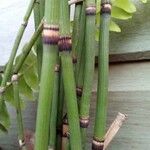
Equisetum laevigatum
Horsetail · Smooth Horsetail · Smooth Scouring-rush · Smooth Scouringrush · Summer Horsetail
Description
Source: leafsnapEquisetum laevigatum is a species of horsetail in the family Equisetaceae. It is known by the common names smooth horsetail and smooth scouring rush. This plant is native to much of North America except for northern Canada and southern Mexico. It is usually found in moist areas in sandy and gravelly substrates. It may be annual or perennial. It grows narrow green stems sometimes reaching heights exceeding 1.5 meters. The leaves at the nodes are small, scale-like brownish sheaths and there are occasionally small, spindly branches. The stems are topped with rounded cone-shaped sporangia.
🎭 Charming snakes, fertility
Care Guide
💧 Water
Smooth horsetail, a plant native to moist environments, thrives in wetland-like conditions. It requires consistent moisture and should be watered weekly to avoid waterlogging. Being near water sources can help maintain the humidity and soil moisture that align with its natural habitat preferences.
How should I water my Smooth horsetail plant?
To properly care for the Smooth horsetail plant, use filtered water at room temperature. Tap water may contain harmful particles, so filtration is important. The plant prefers warm water since it originates from a warm environment, and cold water can be stressful for it. Avoid overhead watering to prevent foliage issues. Instead, thoroughly water the soil with the filtered room temperature water until it is fully soaked. This helps moisten the roots and promote their spread for better nutrient absorption.
What should I do if I give my Smooth horsetail plant too much or too little water?
Overwatering and underwatering both harm Smooth horsetail plants, but overwatering is more common. When overwatered, the plant's stems and leaves wilt and turn yellow. Extended overwatering can cause diseases like root rot, mold, and mildew, which can be fatal. Underwatering is less likely because this plant can tolerate drought, but it is still possible. When underwatered, the leaves become brittle and brown. It's crucial to recognize signs of overwatering early to prevent irreparable damage. Reduce watering immediately if you see early signs. Check the soil's drainage quality; if it's poor, replace with a loose, well-draining potting mix. If signs indicate the plant is not getting enough water, increase watering until the signs improve.
How frequently should I water my Smooth horsetail plant?
If your Smooth horsetail plant is in a pot, the easiest way to determine if it needs water is to put your finger in the soil. If the top two to three inches of soil are dry, it's time to water it. If you have your Smooth horsetail plant outdoors in the ground, you can use the same method. When the top few inches of soil have dried out, it's time to water. During spring and early fall, watering about once a week is usually enough. In extremely hot weather, you might need to water twice or more per week. However, mature and well-established Smooth horsetail plants are quite drought-tolerant.
How much water does my Smooth horsetail plant need?
To properly water your Smooth horsetail, don't hold back on the amount of water you give. Make sure the top two to three inches of soil are dry before watering, and then water thoroughly until the soil is completely soaked. You should add enough water so that excess water drains out of the pot's drainage holes. If you don't see any excess water draining, it's likely that you haven't watered enough. However, be careful not to let water accumulate in the soil as this can harm the plant. Additionally, if water doesn't drain well through the pot, it could indicate poorly draining soil which is harmful to the plant's health. If the plant is placed outdoors, one inch of rain per week will be sufficient.
How should I water my Smooth horsetail as it grows?
The water needs of the Smooth horsetail can vary depending on its growth stages. In the first few years or when it has been recently transplanted, more water than usual is required. This is because the plant's energy is focused on developing new roots that will support future growth. These roots perform best with slightly more moisture. As the plant matures, it will require less water. Another stage that may require more water is during blooming, as the flower development utilizes a significant amount of moisture.
☀️ Light Full sun
Smooth horsetail is a sun-loving perennial herbaceous plant native to open habitats and commonly found in meadows and grasslands. It prefers full sun but can also tolerate partial sun.
What are the sunlight requirements for Smooth horsetail?
Smooth horsetail (Equisetum laevigatum) is a sun-loving perennial herb that thrives in full sun, requiring more than 6 hours of sunlight daily. It can also tolerate partial sun conditions, which means about 3-6 hours of sunlight per day. It's essential to watch how sunlight moves through your garden to find spots that provide the perfect balance of light and shade, ensuring the plant's happiness and optimal growth.
How do you compensate for insufficient natural sunlight for indoor Smooth horsetail plants?
When natural sunlight is insufficient, especially during winter or in less sunny spaces, artificial lighting can provide a vital solution for indoor Smooth horsetail plants. LED lights are a popular choice because they can be customized to offer the specific wavelengths needed by plants. For full sun plants like Smooth horsetail, 30-50W/sq ft of artificial light is recommended. The light source should be placed 12-36 inches above the plant, mimicking natural sunlight's distance, and it's essential to provide 8-12 hours of light per day to mimic natural daylight hours.
What are the symptoms of insufficient light in Smooth horsetail?
Smooth horsetail shows several symptoms when it receives inadequate light: new leaves may grow smaller, the plant may experience leggy or sparse growth, there might be faster leaf droppage to conserve resources, a halt in new growth indicating a survival mode, and leaves can develop irregular color patterns, appearing lighter or suffering from chlorosis. Additionally, excessive sunlight exposure can cause symptoms like sunscald, leaf curling, wilting, and leaf scorching, indicating the plant is receiving too much light.
How can you improve light conditions for Smooth horsetail?
To optimize light conditions for Smooth horsetail, you can gradually move indoor plants to locations with at least 6 hours of direct sunlight daily, using a south-facing window for natural light or supplementing with artificial light for at least 8 hours daily. For outdoor plants, avoid sudden changes in light intensity by gradually adjusting their position. If sunlight is blocked by obstructions, consider pruning or transplanting to a sunnier location. Note that parts of the plant damaged by insufficient light may not recover, but new growth will be healthy after adjusting light exposure.
🌡️ Temperature 0–35°C
Smooth horsetail can tolerate a wide range of temperatures, but its distribution may still be restricted by different combinations of moisture and heat. It grows best in warm summer conditions with sufficient rainfall or watering. Extended periods of cloudy, rainy weather or prolonged high temperatures can raise the chance of Smooth horsetail dying. In winter, proper protection from cold can increase the plant's survival rate.
💨 Humidity normal (40-60%)
This plant will thrive in moderate humidity, which is probably the level in your home. However, misting it a few times a week can be very beneficial. Make sure the room has good ventilation.
🪴 Soil 6-7
🌱 Fertilizer
Usually one fertilizer application in spring is adequate for Smooth horsetail, though repeated feedings can maximize growth. Apply fertilizer once every month to a month and a half. Fertilization improves leaf appearance and function, helping maintain consistent color and a healthy texture. It also encourages root development and nutrient uptake for long-term plant health.
🪴 Pot & Repot
✂️ Pruning
Smooth horsetail has long, slender, jointed stems and benefits greatly from regular pruning. Key techniques include removing dead stems and thinning out crowded areas to improve air circulation. It's best to prune from early to late spring to encourage healthy growth and prevent excessive spreading. Additionally, using clean tools helps minimize the risk of disease, ensuring the plant's optimal health.
🌿 Propagating
🐛 Diseases & pets
☠️ Toxicity
Characteristics
- Plant Type
- Herb
- Life Cycle
- Perennial
- Genus
- Equisetum
- Family
- Equisetaceae
- Hardiness Zone
- 3-9
- Mature Height
- 0.3 m to 1.22 m
- Mature Spread
- 30 cm to 91 cm
- Leaf Color
- Dark Green
- Leaf Type
- Deciduous
- Bloom Time
- Spring
- Planting Time
- Spring, Summer, Autumn
- Native Area
- Mexico