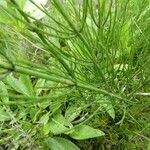
Equisetum palustre
Marsh horsetail
Description
Source: leafsnapEquisetum palustre, commonly known as marsh horsetail, is a perennial plant species from the Equisetaceae family. Native to Europe and Asia, it thrives in wetlands, marshes, bogs, and other damp habitats. The plant exhibits a distinct appearance with its hollow stems segmented by nodes, each joint adorned with whorls of small leaves. The green stems of Equisetum palustre can reach heights of up to 60 cm. Its leaves are small, scale-like, and pointed. Unlike many plants, it reproduces through spores rather than seeds. For centuries, Equisetum palustre has been valued for its medicinal properties, primarily due to its high silica content. This makes it beneficial for strengthening bones, hair, and nails, as well as for treating urinary tract infections. Ecologically, the plant is significant as it provides habitat for various insects, including dragonflies, and serves as a food source for grazing animals like deer and cattle. Overall, Equisetum palustre is an intriguing species that plays a crucial role both medicinally and ecologically, while also enhancing the aesthetic value of the wetland habitats where it grows.
Care Guide
💧 Water Every 7 days
Marsh horsetail flourishes in wetlands, where it prefers consistently moist, saturated soil. To mimic its natural environment, it's best to water the plant weekly. Typically grown outdoors, marsh horsetail benefits from natural rainfall, which helps align its growth cycles with water availability for optimal development.
How should I water my Marsh horsetail plant?
To properly water the Marsh horsetail plant, it is recommended to use filtered water at room temperature. Tap water should be avoided as it may contain harmful particles. The water temperature should match the plant's warm natural environment to prevent any shock. Overhead watering should be avoided to prevent foliage issues. Instead, pour the filtered room temperature water directly onto the soil until it is soaked completely. This process helps the roots stay moist and facilitates their spread through the soil to collect necessary nutrients.
What should I do if I give too much or too little water to my Marsh horsetail?
Overwatering is a common problem for Marsh horsetails. When this happens, the stems and leaves can wilt and turn yellow. It can also lead to diseases like root rot, mold, and mildew, which can be fatal for the plant. Underwatering is less common but still possible. Signs of underwatering include brittle and brown leaves. It's important to recognize the signs of overwatering early on to prevent irreversible damage. If you notice these signs, reduce your watering schedule and check the soil's drainage. Replace poorly draining soil with a well-draining potting mix. If your Marsh horsetail is receiving too little water, simply increase watering until the signs improve.
How often should I give water to my Marsh horsetail?
If your Marsh horsetail plant is in a pot, the most accurate way to determine if it needs water is to stick your finger into the soil. If the top two to three inches of soil feel dry, it's time to water it. If you have the plant growing outdoors in the ground, you can use the same method to check the soil. Once again, if the top few inches of soil have dried out, it's time to water. Typically, during spring and early fall, this plant will need watering approximately once a week using this method. However, during extremely hot weather, you may need to water it two or more times per week. Nonetheless, mature and well-established Marsh horsetail plants have an impressive ability to withstand drought.
How much water does my Marsh horsetail plant require?
When watering your Marsh horsetail, don't hold back on the amount of water. Make sure the first two to three inches of soil are dry before watering it thoroughly. It's important to soak the soil entirely, adding enough water that it flows through the drainage holes at the bottom of the pot. If there's no excess water draining, you may have underwatered the plant. However, be careful not to let water accumulate inside the soil, as it can be dangerous for the plant. Poorly draining soils should also be avoided, as they can harm the health of the plant. If the plant is outside, 1 inch of rain per week is enough.
How do I water my Marsh horsetail when it's growing at different stages?
The water needs of the Marsh horsetail can vary depending on its growth stages. In the first few years of its life or after being transplanted, it requires more water. During these stages, the plant focuses on growing new roots to support future growth, and these roots need more moisture. As the plant matures, it will need less water. Additionally, during the bloom period, the Marsh horsetail may require additional water as flower development utilizes a significant amount of moisture.
☀️ Light Full sun
Marsh horsetail thrives in areas with full sun, promoting vigorous growth, though it also tolerates moderate sunlight. Native to sun-drenched habitats, it fares poorly with insufficient light, which causes stunted growth, while excessive exposure can lead to wilting.
What are the sunlight requirements for Marsh horsetail?
Marsh horsetail requires full sunlight to thrive, which means it needs above 6 hours of sunlight daily. However, it can also sustain growth in partial sun, defined as about 3-6 hours of sunlight. It's important to watch how sunlight moves through your garden to choose spots that offer a balance of light and shade, ensuring the plant's health and happiness.
What are the essentials for growing Marsh horsetail?
Growing Marsh horsetail effectively requires full or generous solar exposure for robust growth, though it can also tolerate moderate solar exposure. These conditions mimic its natural habitat where sunlight is plentiful. Insufficient light results in stunted growth while excessive sunlight may cause wilting. For indoor plants lacking natural light, artificial lighting such as LED lights, which provide specific light wavelengths, are recommended. Full sun plants usually require 30-50W/sq ft, partial sun plants need 20-30W/sq ft, and full shade plants benefit from 10-20W/sq ft of artificial light. Placement of the light source should be 12-36 inches above the plant to mimic natural sunlight, and most species do well with 8-12 hours of light per day.
What symptoms indicate insufficient or excessive sunlight in Marsh horsetail?
Symptoms of insufficient sunlight include small new leaves, leggy or sparse growth, faster leaf drop, slower or halted new growth, lighter-colored new leaves, and symptoms of overexposure such as chlorosis (leaves turning yellow), sunscald, leaf curling, wilting, and leaf scorching. These symptoms signal the plant is not receiving its optimal light levels, whether it be too little or too much, impacting its health and growth.
How can I improve light conditions for my Marsh horsetail?
To ensure optimal growth for an indoor Marsh horsetail, gradually move it to a sunnier location each week until it gets at least 6 hours of sunlight. Consider using a south-facing window and keep the curtains open during the day. You might use artificial light, like a desk or ceiling lamp, for at least 8 hours daily or invest in professional grow lights if natural light is not sufficient. Outdoors, avoid sudden changes in light intensity; gradually move your plants to sunnier spots to prevent sunburn. Minimize obstructions like trees by pruning to allow more sunlight through. For smaller plants, transplanting them during their dormant period to a sunny location with good drainage might be necessary. New growth after increasing light exposure will be healthy, even if parts of the plant previously affected by poor light do not recover.
🌡️ Temperature 0–32.2°C
Marsh horsetail is adapted to native environments with temperatures that fluctuate between 32 to 90°F (0 to 32°C). It grows best within this range, and seasonal adjustments should be made to replicate its natural habitat.
What temperature range is ideal for Marsh horsetail?
Marsh horsetail thrives best in environments where temperatures fluctuate between 32 to 90°F (0 to 32°C). This range reflects its native habitat conditions, and seasonal adjustments should be made to simulate these natural surroundings. Marsh horsetail possesses strong cold resistance and typically doesn't require special frost protection measures, except when winter temperatures are expected to drop below -35°C. In such cases, covering the plant with soil or straw for cold protection is advisable. Additionally, watering the plant abundantly before the first freeze in autumn ensures the soil remains moist and enters a frozen state, aiding in preventing drought and water scarcity during winter and early spring.
How does Marsh horsetail cope with low temperatures?
Marsh horsetail is notably cold-tolerant, ideally kept above 0°C during winter and thriving best when temperatures remain above this threshold. However, it should be kept above -30°C, and when temperatures fall below -35°C, while there might not be noticeable changes in winter, a decrease in sprouting or even a lack of sprouting can occur during springtime. To manage this, it is recommended to remove any parts of the plant that have failed to sprout in the spring.
What should be done if Marsh horsetail experiences high temperatures?
During the summer, it's best to keep Marsh horsetail's environment below 32°C to prevent stress. If temperatures exceed 35°C, the plant's leaves may become lighter in color, curl, become prone to sunburn, and in severe cases, the entire plant may wilt and dry out. To mitigate these effects, trim away the sunburned and dried-up parts of the plant. Moving the plant to a shaded location or using a shade cloth to protect it from the midday and afternoon sun can also be beneficial. Ensuring the soil remains moist through watering in the morning and evening is another key strategy to help the plant cope with high temperatures.
💨 Humidity
🪴 Soil 6-7
🌱 Fertilizer
Typically one fertilizer application in spring is adequate for Marsh horsetail, though repeated feedings can boost growth. Apply fertilizer every one to one and a half months. Fertilizing improves the leaves' appearance and function, helping to maintain even color and a healthy texture. It also encourages root development and nutrient uptake, supporting the plant's long-term health.
🪴 Pot & Repot
✂️ Pruning
Marsh horsetail has jointed stems and needle-like branches. To manage its growth and maintain its health, it's best to prune it from early to late spring. During this time, remove any dead stems. Regular pruning not only controls the plant's spread but also rejuvenates it. Be sure to use clean, sharp tools to make precise cuts and prevent the spread of disease.
🌿 Propagating
🐛 Diseases & pets
☠️ Toxicity
Characteristics
- Plant Type
- Herb
- Life Cycle
- Perennial
- Genus
- Equisetum
- Family
- Equisetaceae
- Hardiness Zone
- 3-8
- Mature Height
- 25 cm to 46 cm
- Mature Spread
- 20 cm to 40 cm
- Leaf Color
- Green, Dark Green
- Leaf Type
- Evergreen
- Flower Size
- 1.02 cm to 3.05 cm
- Bloom Time
- Summer
- Planting Time
- Spring
- Harvest Time
- Summer
- Native Area
- Turkey, Sweden, India, Austria, Slovakia, Montenegro, Pakistan, Slovenia, Croatia, Belarus, Russia, Germany, Iceland, Estonia, Koppen, Romania, Latvia, South Korea, Belgium, Portugal, Nepal, Netherlands, France, Czech Republic, Bulgaria, Armenia, Poland, Greece, Ukraine, Serbia, Lebanon, Lithuania, Norway, China, Afghanistan, Kyrgyzstan, Kazakhstan, Italy, Spain, Switzerland, Denmark, Japan, Mongolia, Finland, Iran, Albania, Ireland, United Kingdom, Hungary, Azerbaijan