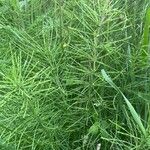
Equisetum pratense
Meadow horsetail · Shady horsetail · Shade Horsetail · Thicket Horsetail · Ängsfräken
Description
Source: leafsnapEquisetum pratense, commonly known as meadow horsetail, shade horsetail or shady horsetail, is a widespread horsetail (Equisetophyta) fern. Shade horsetail can be commonly found in forests with tall trees or very thick foliage that can provide shade and tends to grow closer and thicker around streams, ponds and rivers. The specific epithet pratense is Latin, meaning pasture or meadow dwelling.
🌳 Historically, meadow horsetail was used as a "scouring rush" to clean and polish metal cookware. Because it contains a high amount of silica, it had a mildly abrasive quality similar to modern steel wool. This use of meadow horsetail shows how significant a plant's role can be in everyday human activities, extending beyond simple nutritional or decorative purposes. Moreover, its use is not only historical; some people still employ it for the same purpose in situations where conventional cleaning materials are not available.
Care Guide
💧 Water
Meadow horsetail, which originates from moist habitats, thrives in consistently hydrated environments. To maintain its lushness, it requires weekly watering. As an herbaceous perennial, it prefers to grow outdoors but can also adapt to indoor cultivation if there is enough humidity.
How can I properly water my Meadow horsetail plant?
To properly water the Meadow horsetail, follow these guidelines: - Use filtered water at room temperature, as tap water may contain harmful particles. - Ensure the water is not too cold, as the Meadow horsetail prefers a warmer environment. - Avoid overhead watering to prevent any foliage issues. - Instead, slowly apply filtered room temperature water to completely saturate the soil. - By soaking the soil, the roots of the Meadow horsetail will be nourished and able to spread effectively to gather essential nutrients.
What should I do if I give my Meadow horsetail too much or too little water?
Overwatering is a common problem for Meadow horsetail plants, causing wilting, yellowing of leaves, and potentially deadly diseases like root rot, mold, and mildew. Underwatering is less common but can cause brittle, brown leaves. It's important to recognize signs of overwatering early and adjust your watering schedule accordingly. If the soil drains poorly, replace it with a well-draining potting mix. If your plant is not receiving enough water, simply increase watering until the signs of underwatering improve.
How frequently should I water my Meadow horsetail plant?
If your Meadow horsetail plant is in a pot, the easiest way to determine if it needs water is to stick your finger into the soil. If the top two to three inches of soil are dry, then it's time to water it. If you have your Meadow horsetail planted outdoors in the ground, you can use the same method to test the soil. When the top few inches of soil have dried out, you should water it. Typically, during the spring and early fall, you will need to water this plant about once a week using this method. However, when it gets extremely hot, you may need to water it two or more times per week. It's worth noting that mature, well-established Meadow horsetail plants have a remarkable ability to survive with minimal water during droughts.
How much water does my Meadow horsetail plant require?
When watering your Meadow horsetail, don't hold back on the amount of water you give. Make sure the top few inches of soil are dry, and then give the plant a good, thorough watering. Be generous with the water, enough to completely soak the soil and allow excess water to drain out of the pot's drainage holes. If you don't see any excess water draining, it means you haven't watered enough. However, be careful not to let water build up inside the soil, as that can harm the plant. On the other hand, if water isn't draining through the pot, it could indicate that the soil is not draining well, which is bad for the health of the plant. If the plant is outside, it should receive about 1 inch of rain per week, which will be enough.
How should I water my Meadow horsetail as it grows?
The water needs of the Meadow horsetail can vary depending on its growth stages. When the plant is in its early years or just transplanted, it requires more water because it is focused on developing new roots. These roots need additional moisture to support future growth. As the plant matures, it will need less water. Another stage that requires more water is the bloom period when flower development requires significant moisture.
☀️ Light Full sun
Meadow horsetail does best when it receives direct sunlight for most of the day, though it can also persist in locations with partial shade. Its native habitat is marked by abundant sunlight. Both excessive and insufficient sunlight can negatively affect its health.
What are the sunlight requirements for Meadow horsetail?
Meadow horsetail requires a significant amount of sunlight for optimal growth. It thrives best in full sun, characterized by above 6 hours of sunlight daily, but can also grow well in partial sun, which is about 3-6 hours of sunlight. Its original habitat is abundant in sunlight, suggesting that both over-exposure and under-exposure to sun rays may negatively impact its health. It’s important to watch how sunlight moves through your garden to find spots that offer a balanced environment for your plants.
How can artificial lighting benefit indoor plants?
Artificial lighting serves as an essential solution for indoor plants when natural sunlight is insufficient, especially in winter or less sunny spaces. These lights facilitate optimal growth and healthier development of the plant. LED lights are recommended because they can be customized to provide specific wavelengths needed by the plants. Full sun plants require 30-50W/sq ft of light, partial sun plants need 20-30W/sq ft, and shade plants need 10-20W/sq ft. The light source should be positioned 12-36 inches above the plant, mimicking natural sunlight for about 8-12 hours per day.
What are the symptoms of inadequate light exposure in Meadow horsetail?
Symptoms of light deficiency in Meadow horsetail include smaller new leaves, leggy or sparse growth, faster leaf drop, slower or no new growth, lighter-colored new leaves, chlorosis (leaves turning yellow), sunscald, leaf curling, wilting, and leaf scorching. Each of these symptoms signifies a different aspect of stress related to inadequate sunlight exposure, suggesting the need for improved lighting conditions.
What solutions can be implemented for Meadow horsetail suffering from inadequate sunlight?
To address inadequate sunlight for Meadow horsetail, indoor plants should be gradually moved to sunnier locations to receive at least 6 hours of direct sunlight daily, utilizing south-facing windows and keeping curtains open. Artificial lighting can also supplement sunlight exposure. Outdoor and ground-planted Meadow horsetails should be relocated to sunnier spots gradually to avoid sunburn, ensuring direct sunlight exposure. Minimizing obstructions like trees through pruning and transplanting smaller plants during dormant periods to areas with ample sunlight and good drainage are beneficial strategies.
🌡️ Temperature 5–32.2°C
Meadow horsetail is native to areas with temperatures from 41 to 89.6 °F (5 to 32℃). It favors temperate conditions and may need protection from frost during winter.
What climates is Meadow horsetail indigenous to?
Meadow horsetail is indigenous to climates with temperatures ranging from 41°F (5°C) to 89.6°F (32°C). It thrives in temperate weather conditions best and may require protective measures against frost in colder climates. Despite its strong cold resistance, in environments where winter temperatures are expected to plunge below -30°C, it is important to provide protection by covering the plant with materials like soil or straw. Additionally, watering the plant abundantly before the first freeze in autumn ensures the soil remains moist and enters a frozen state, which helps prevent drought and water scarcity during the winter and early spring.
How does Meadow horsetail react to low and high temperatures?
Meadow horsetail displays good tolerance to cold, thriving best when the temperature remains above 5°C. It is critical to keep it above -25°C during winters. At temperatures falling below -30°C, there may not be noticeable changes during winter, but there could be a decrease in sprouting, or in some cases, no sprouting might occur in the spring. The advisable solution for any parts that fail to sprout is removal during spring. In terms of high temperature, Meadow horsetail should be maintained below 32°C during summers. Exceeding 35°C, leaves may lighten in color, become prone to curling, and susceptible to sunburn, potentially leading to the entire plant wilting and drying out. Solutions include trimming away the sunburned and dried parts and moving the plant to a location that offers shade during midday and afternoon sun or using a shade cloth. Additionally, watering the plant in the morning and evening to keep the soil moist is beneficial.
💨 Humidity
🪴 Soil 6-7
🌱 Fertilizer
One fertilizer application in spring is generally enough for Meadow horsetail, though additional feedings can help maximize its growth. Apply fertilizer every one to one and a half months. Fertilizing improves the leaves' appearance and function, helping maintain even color and a healthy texture. It also promotes root development and increases nutrient uptake for sustained plant health.
🪴 Pot & Repot
✂️ Pruning
The meadow horsetail is characterized by its jointed stems and distinctive brush-like appearance. To keep it healthy and manage its potentially invasive nature, it's best to prune it from early to late spring. During this time, remove any dead or weak stems to improve airflow, encourage new growth, and lower the risk of disease. Make sure to use sharp, clean tools to minimize damage to the plant.
🌿 Propagating
🐛 Diseases & pets
☠️ Toxicity
Characteristics
- Plant Type
- Herb
- Life Cycle
- Perennial
- Genus
- Equisetum
- Family
- Equisetaceae
- Hardiness Zone
- 4-8
- Mature Height
- 20 cm to 40 cm
- Mature Spread
- 30 cm
- Leaf Color
- Light Green
- Leaf Type
- Deciduous
- Bloom Time
- Spring
- Planting Time
- Spring, Summer, Autumn
- Harvest Time
- Late spring, Early summer, Mid summer
- Native Area
- Sweden, Austria, Slovakia, Montenegro, Croatia, Belarus, Russia, Germany, Iceland, Estonia, Koppen, South Korea, Latvia, Belgium, France, Czech Republic, Poland, Ukraine, China, Lithuania, Norway, Italy, Kazakhstan, Switzerland, Denmark, Japan, Mongolia, Finland, Ireland, United Kingdom