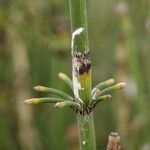
Equisetum ramosissimum
Branched horsetail · Boston horsetail · Branched scouringrush · Transvaal horsetail · Droukgrass
Description
Source: leafsnapEquisetum ramosissimum, commonly known as branched horsetail or branched scouring rush, is a perennial plant species belonging to the Equisetaceae family. Native to North America, it is typically found in wetlands, marshes, and along streams and rivers. This plant has a distinctive appearance with jointed, hollow stems that are ribbed. Small leaves are arranged in whorls around the stem nodes. The stems can grow up to 3 feet tall, starting off green in color when young and turning brown as they mature. Equisetum ramosissimum has been used for medicinal purposes by indigenous peoples for centuries, largely due to its high silica content, which makes it beneficial for treating wounds, skin conditions, and urinary tract infections, among other ailments. Ecologically, the plant plays an important role in preventing soil erosion along riverbanks. Its extensive root system helps stabilize the soil, making it an essential component of its natural habitat. In summary, Equisetum ramosissimum is a remarkable plant species with unique characteristics that contribute both medicinally and ecologically.
Care Guide
💧 Water Every 3 days
Branched scouringrush thrives in consistently moist conditions and prefers slightly damp soil, requiring weekly watering. While it is moderately drought-tolerant, it benefits from high humidity and regular access to water, especially in riparian zones. These conditions promote robust growth during the growing season.
How should I water my Branched scouringrush plant?
To properly water the Branched scouringrush, it is best to use filtered water at room temperature. Tap water may contain harmful particles, so filtration is preferred. Because the plant is accustomed to warm environments, using cold water can be a shock. It is important to avoid overhead watering, as this can cause problems with the foliage. Instead, gradually soak the soil with filtered, room temperature water until it is completely moist. This helps the roots spread and absorb nutrients effectively.
What should I do if I give too much or too little water to my Branched scouringrush?
Overwatering is a common issue that can harm your Branched scouringrush. It causes the stems and leaves to wilt and turn yellow. Over time, it can lead to diseases like root rot, mold, and mildew, which can kill the plant. Underwatering is less common but still possible. It can make the leaves brittle and brown. It's important to recognize the signs of overwatering early and reduce watering immediately. Check the soil's drainage and replace it if it drains poorly. If you see signs of underwatering, simply water more regularly until the signs go away.
How frequently do I need to water my Branched scouringrush?
If your Branched scouringrush is in a pot, you can check if it needs water by putting your finger in the soil. If the top two to three inches of soil feel dry, it's time to water it. If you have your Branched scouringrush planted in the ground outside, you can use the same method to test the soil. When the first few inches of soil have dried out, it's time to add water. In spring and early fall, you'll usually need to water this plant about once a week. But during really hot weather, you may need to water it twice a week or even more. However, mature and well-established Branched scouringrush plants can handle drought well.
How much water does my Branched scouringrush require?
To properly water your Branched scouringrush, you should be generous with the amount of water you provide. Wait until the top two to three inches of soil are dry, and then give the plant a thorough watering. Make sure to saturate the soil completely, allowing excess water to drain through the holes at the bottom of the pot. If you don't see any excess water draining, it means you haven't watered enough. However, be careful not to let water accumulate in the soil, as it can harm the plant. On the other hand, if water doesn't drain well, it may indicate that the soil is not draining properly, which is not good for the plant's health. If the plant is placed outdoors, one inch of rain per week should be sufficient.
How do I water my Branched scouringrush when it is growing at different stages?
The water needs of the Branched scouringrush can vary depending on its growth stages. When the plant is in its early years or has just been transplanted, it requires more water than usual. During these stages, the plant focuses on developing new roots to support future growth, which requires additional moisture. However, as the plant matures over several seasons, its water requirements decrease. Another stage in which the Branched scouringrush may need more water is during blooming, as the flower development relies on a significant amount of moisture.
☀️ Light Full sun
Branched scouringrush is a perennial herbaceous plant that prefers sunny sites and is native to open habitats, frequently occurring in meadows and grasslands. It favors full sun but can also tolerate partial sun conditions.
What are the sunlight requirements for Branched scouringrush?
Branched scouringrush, botanically known as Equisetum ramosissimum, thrives in full sun, requiring above 6 hours of sunlight daily but can also grow well in partial sun, with about 3-6 hours of sunlight. It's essential to observe how sunlight moves through your garden to position your plants in areas that offer an optimal balance of light and shade, contributing to their growth and well-being.
How does artificial lighting support Branched scouringrush growth indoors?
Indoor plants like Branched scouringrush may need additional lighting, especially when natural sunlight is insufficient. Artificial lights, particularly LED lights, are beneficial as they provide the specific wavelengths needed by the plants. For a plant that prefers full sun, ensure it receives 30-50W/sq ft of artificial light. The light source should be placed 12-36 inches above the plant to mimic the sun and kept on for 8-12 hours a day to simulate natural daylight hours, aiding in faster, healthier growth.
What are common symptoms of light deficiency in Branched scouringrush?
Inadequate lighting can lead to several issues in Branched scouringrush, including smaller new leaves, leggy or sparse growth, faster leaf drop, slower or halted growth, lighter-colored new leaves, chlorosis, sunscald, leaf curling, wilting, and leaf scorching. These symptoms range from changes in leaf size and color to physical damage such as wilting and scorching, indicating a need for improved lighting conditions.
What are the best practices to ensure Branched scouringrush receives adequate light?
To ensure Branched scouringrush gets enough sunlight, gradually move plants to sunnier locations each week until they receive at least 6 hours of direct sunlight daily. For indoor plants not easily moved or too large, consider supplemental lighting with artificial lights for at least 8 hours a day. Outdoors, choose the location wisely to avoid sudden increases in light intensity. Reducing adjacent obstructions, like pruning trees or transplanting during dormant periods, can also enhance sunlight exposure. Note that parts of the plant that have suffered due to low light might not recover, but new growth will flourish with adequate light adjustment.
🌡️ Temperature 0–37.8°C
Branched scouringrush is native to environments with temperatures ranging from 32 to 100 °F (0 to 38 ℃). It prefers cooler conditions and can adapt to various temperature fluctuations throughout the year. Seasonal temperature adjustments may not be necessary.
What temperature conditions are ideal for Branched Scouringrush?
Branched scouringrush, with its native habitat ranging from 32 to 100 °F (0 to 38 °C), thrives best in cooler conditions but can adapt to various temperature changes throughout the year. It possesses strong cold resistance, meaning special frost protection measures are typically unnecessary. Nevertheless, if winter temperatures are forecasted to plummet below -35°C, it's crucial to provide cold protection by covering the plant with materials like soil or straw and ensuring the soil is moist before the first freeze in autumn.
How does Branched Scouringrush react to low temperatures?
Branched scouringrush is cold-tolerant, flourishing best when temperatures remain above 0°C. During winter, it's advisable to keep it above -30°C. If temperatures dive below -35°C, while there may not be visible changes in the winter, a decrease in spring sprouting or a complete absence of sprouting can occur. To manage this, in spring, it's recommended to remove any parts of the plant that have failed to sprout.
What should be done if Branched Scouringrush is exposed to high temperatures?
During summer, keeping Branched scouringrush below 38°C is optimal. Exposure to temperatures above 43°C can lead to leaves turning a lighter color, curling, becoming prone to sunburn, and in extreme cases, the entire plant may wilt and dry out. To mitigate this, trim away any sunburned and dried parts. Moving the plant to a shaded location, especially from the midday and afternoon sun, or utilizing shade cloth can protect it. Additionally, ensuring the soil remains moist by watering in the morning and evening is beneficial.
💨 Humidity
🪴 Soil 6-7
🌱 Fertilizer
One application of fertilizer in spring is typically adequate for Branched scouringrush, though repeated feedings can promote maximum growth. Apply fertilizer every month to month and a half. Fertilization improves the leaves' appearance and function, encouraging even color and a healthy texture. It also promotes root development and nutrient uptake for the plant's long-term health.
🪴 Pot & Repot
✂️ Pruning
The branched scouringrush is a tall, reed-like plant. To promote new growth, prune it in early to late spring by cutting damaged stems at the base. Regular pruning helps control its spread and improves overall health. Always use clean, sharp tools to prevent disease.
🌿 Propagating
🐛 Diseases & pets
☠️ Toxicity
Characteristics
- Plant Type
- Herb
- Life Cycle
- Perennial
- Genus
- Equisetum
- Family
- Equisetaceae
- Hardiness Zone
- 3-11
- Mature Height
- 49 cm
- Mature Spread
- 20 cm to 49 cm
- Leaf Color
- Dark Green
- Leaf Type
- Deciduous
- Flower Color
- Yellow, Green, Brown
- Bloom Time
- Summer
- Planting Time
- Spring, Summer, Autumn
- Native Area
- Libya, India, Pakistan, Slovenia, Koppen, Ethiopia, Latvia, Netherlands, Tunisia, Philippines, Bulgaria, Bangladesh, Laos, Chad, China, Afghanistan, Kyrgyzstan, Kazakhstan, Japan, Mongolia, Eswatini, Angola, Austria, Vanuatu, Namibia, Zimbabwe, Uzbekistan, Russia, Oman, Botswana, France, Nepal, Tajikistan, Sudan, Mauritania, Armenia, Poland, Greece, Switzerland, Bhutan, United Kingdom, Algeria, Sri Lanka, Turkey, Slovakia, Madagascar, Montenegro, Croatia, Morocco, Fiji, Uganda, Tanzania, Germany, Indonesia, Mozambique, Romania, Belgium, Portugal, Saudi Arabia, Malawi, Cyprus, Turkmenistan, Ukraine, Lebanon, Syria, Italy, Iran, Azerbaijan, Kuwait, Congo (DRC), Somalia, Lesotho, Malaysia, Yemen, Kenya, Iraq, Cambodia, Burundi, Liberia, South Korea, Czech Republic, South Africa, Zambia, Serbia, Lithuania, Spain, Vietnam, Myanmar, Albania, Hungary, Thailand